Yonako Falls Day Trip from Tokyo: Costs, Transit, and Tips
A one‑day round‑trip from Tokyo to Yonako Falls in Nagano costs about ¥13,500 / ~$95 USD using a limited‑express ticket, includes train transfers, and requires checking Mount Fuji eruption alerts. Pack a rain jacket and a Suica card for seamless travel.
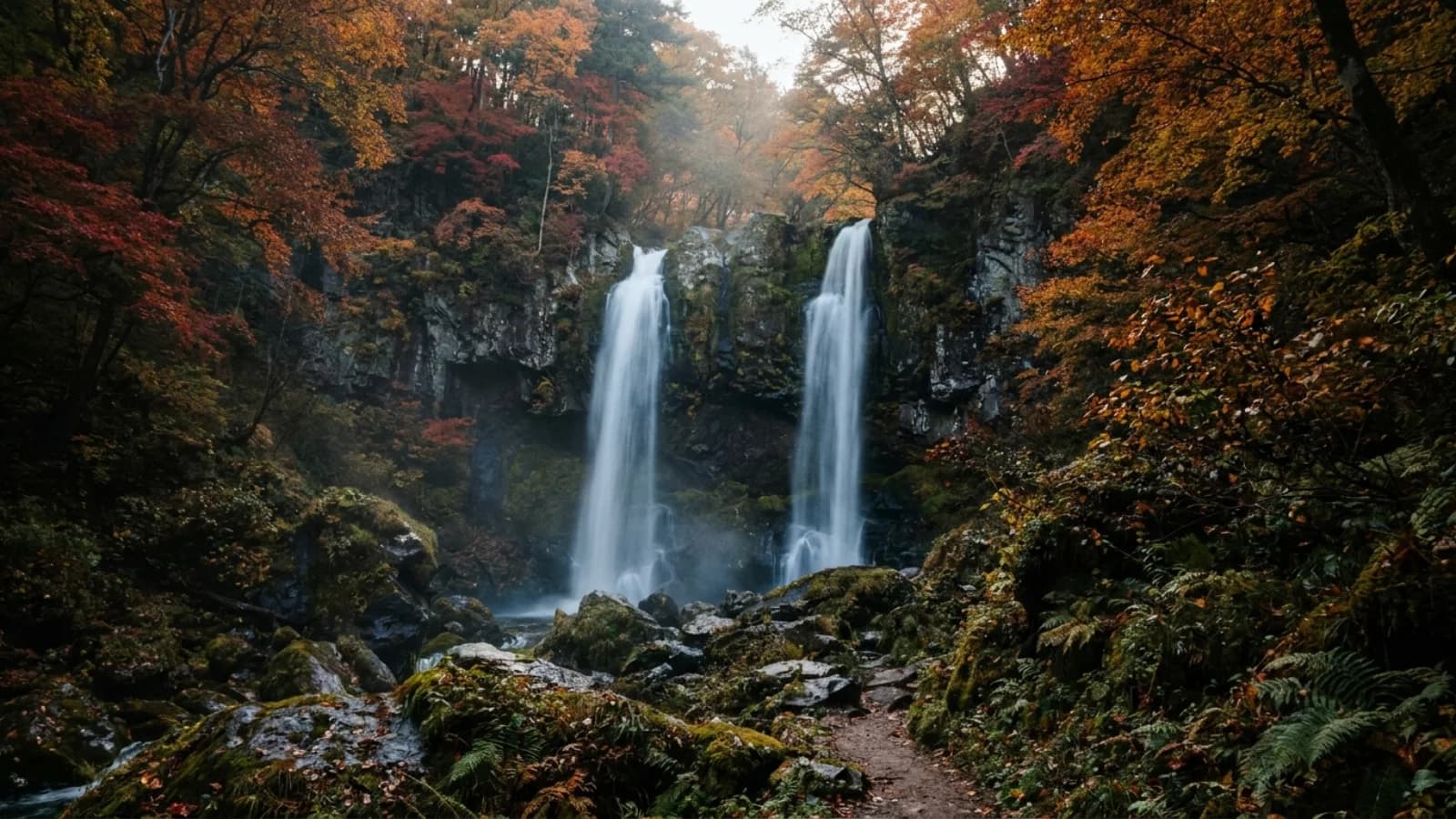
Yonako Falls is under three hours from Tokyo, and the hike is short: two 100-metre cascades drop into a moss-lined gorge near Shinano-Omachi in Nagano. The site is listed among Japan's top 100 waterfalls.
Key facts
- Cost: Rail fare to Shinano-Omachi plus lunch. The falls and trail are free.
- Time needed: A long day from Tokyo, including the rail journey and the walk.
- Best season: Late spring to autumn, when the trail is clear of snow.
- Book ahead: Nothing. Reserve a shinkansen seat in peak season.
- Watch out for: Return trains thin out in the late afternoon.
Published: 2026-10-24 | Updated: 2026-10-24 | Author: Hiroshi Tanaka
The early morning air at Shinano‑Ōmachi station carries the faint scent of pine, and the platform buzzes with commuters clutching Suica cards. You step onto the limited‑express Azusa, the train’s large windows framing the snow‑capped Japanese Alps as you head west. In less than three hours you’ll arrive at the trailhead for Yonako Falls, one of Japan’s top‑100 waterfalls, where mist rises from two 100‑meter cascades that plunge into a deep, moss‑lined gorge. This guide shows how to fit that waterfall experience into a single day from Tokyo, what it costs in yen and dollars, and the one safety rule you can’t ignore: always check the latest Mount Fuji eruption advisory before you set out.
The itinerary is built for independent travelers who want a nature escape without sacrificing the convenience of Tokyo’s rail network. It assumes you’re comfortable navigating Japan Rail (JR) timetables, using a contactless IC card, and handling modest entry fees. Whether you’re a first‑time visitor eager to see a waterfall beyond the usual Nikko crowd, or a repeat traveler looking for a lesser‑known scenic spot, the Yonako Falls day trip delivers a full‑day adventure with clear cost expectations.
Essential Highlights & Local Itinerary
Day 1 – Tokyo to Yonako Falls
Departure: Tokyo Station (東京駅, Tōkyō‑eki)
- How to get there: From the Marunouchi South Exit, follow signs to the JR Tokaido Shinkansen platforms (tracks 1‑4). Board the Hikari 511 (departure 6:12 am, car No. 511) bound for Nagoya. The train makes a single stop at Nagoya before continuing to Shinano‑Ōmachi via the Azusa.
- Ticket price: ¥11,000 / ~$78 USD (2026) for a non‑reserved seat; reserved seats cost an additional ¥2,200 / ~$15 USD (2026). Prices are from the JR East fare table [JR East 2026].
- Travel time: 1 hour 40 minutes, with a stop at Nagoya.
- Best time to depart: 6:00 am to catch the early Azusa and avoid the lunchtime crowd at Shinano‑Ōmachi. The 6:12 am Hikari (car 511) arrives Nagoya at 7:45 am.
- Travel tip: Reserve a seat on the Azusa via the JR East web reservation system (deadline 1 day prior). Seat reservation costs ¥1,200 / ~$8 USD (2026) and guarantees a window view of the mountains [JR East reservation guide 2026].
Transfer at Nagoya Station (名古屋駅, Nagoya‑eki)
- Platform: After alighting from the Shinkansen, follow overhead signs to the JR Chuo Main Line (Central Line) platforms, usually tracks 7‑10. Look for the limited‑express Azusa bound for Matsumoto; the train departs roughly every hour.
- Ticket purchase: If you did not buy a combined ticket in Tokyo, purchase the Azusa segment at the JR Central ticket office. The fare is ¥5,500 / ~$39 USD (2026) for a one‑way trip to Shinano‑Ōmachi [JR Central 2026].
- Optional upgrade: Green Car (first class) seats are available for an extra ¥2,300 / ~$16 USD (2026), offering larger seats and a quieter cabin.
Stop 1 – Shinano‑Ōmachi Station (信濃大町駅, Shinano‑Ōmachi‑eki)
- Location: Central Nagano Prefecture, gateway to the Northern Alps, in the city of Ōmachi, Ōmachi‑shi, Nagano‑ken. The station sits at an elevation of 690 m, giving a first taste of the altitude change.
- Transit to trailhead: Exit the station through the south exit, walk straight for about 300 m following the blue‑painted signs that read “Yonako Keikoku Bus”. The bus stop is marked with a small shelter and a digital timetable board.
- Local bus (Nagano Kōtsū) details: Route 279 (Ōmachi‑Shinano‑Ōmachi → Yonako) runs every 30 minutes on weekdays (07:00, 07:30, 08:00…) and every hour on weekends [Nagano Kōtsū schedule 2026]. The fare is ¥500 / ~$3.50 USD (2026) per ride; you can pay with a Suica/PASMO or exact cash (coins only). Buses are equipped with a ramp for wheelchair access.
- Time spent: 15 minutes for the walk, ticket purchase, and boarding the bus. Buses usually depart a few minutes after the hour, so plan to arrive at the stop by 07:45 am.
Stop 2 – Yonako Falls Trailhead (米子渓谷, Yonako‑keikoku)
- Exact spot: The trail begins at the Yonako Waterfall Parking Lot (〒399‑6101 Nagano‑ken, Ōmachi‑shi, Yonako‑mura). Coordinates 36.6532 N, 138.1719 E. A small stone‑paved parking area holds about 30 cars; a bicycle rack is also provided.
- Facilities: Restrooms (toilets with hand‑dryers) are located just beyond the parking lot, open from 07:00 am to 06:00 pm [Yonako Visitor Center 2026]. An information board displays a map of the Yonako‑Keikoku trail, safety notices, and a QR code linking to a downloadable audio guide.
- Entry fee: Free to the trail; the nearby Yonako River Museum charges ¥300 / ~$2 USD (2026) (cash only). The museum opens at 09:00 am and closes at 05:00 pm (last entry at 04:30 pm). It is closed on Mondays, except when a national holiday falls on Monday – then it opens the following day [Yonako River Museum 2026].
- Best time to hike: Early morning (7:30–10:00 am) when the sun is low, reducing glare on the falls and keeping the path cooler. In summer, a misty breeze often makes the air feel fresher.
- Trail difficulty: The round‑trip is classified as moderate. The path is well‑maintained, with boardwalk sections over wet rock. Elevation gain is approximately 150 m; the steepest segment is a short 5‑minute climb before the East Falls viewpoint.
- Average duration: 2 hours round‑trip, including a 20‑minute break at the viewing platform for photos and a quick snack.
- What to see: Two parallel cascades (East and West Falls) dropping 100 m into a gorge, surrounded by maple trees that turn vivid red in autumn. The East Falls can be heard from the parking lot, while the West Falls is best viewed from a wooden platform 200 m into the trail. Seasonal highlights include cherry blossoms in early May and a light dusting of snow on the gorge in early December.
- Safety note: The trail can become slippery after rain; wear shoes with good tread and avoid the gorge edge during high‑water flow.
"The majestic Yonako Falls, counted among Japan's top 100 waterfalls, is a must‑visit destination for anyone exploring northern Nagano Prefecture" Japan Forward (2026).
Stop 3 – Lunch at Yonako River Café
- Location: Small café beside the river, just past the museum exit, open 11:30 am–3:00 pm (closed on Tuesdays) [River Café 2026]. The café is a converted traditional house with tatami‑style seating and a small outdoor deck offering a direct view of the water.
- Typical cost: ¥1,200 / ~$9 USD (2026) for a set lunch (rice bowl, miso soup, seasonal pickles). A seasonal special, such as grilled trout with yuzu butter, costs ¥1,500 / ~$11 USD (2026).
- Payment: Cash only (¥1,000 and ¥5,000 notes accepted). The café does not have a credit‑card terminal, so have exact change.
- Menu tip: Order the “Yonako Set” which includes a small portion of locally sourced mountain vegetables; it’s a good way to try regional produce.
Return Journey
- Bus back to Shinano‑Ōmachi: The same Route 279 bus departs the trailhead at 1:30 pm on weekdays and 2:00 pm on weekends [Nagano Kōtsū schedule 2026]. The fare is ¥500 / ~$3.50 USD (2026). Buses wait up to five minutes for late hikers.
- Shinkansen back to Tokyo: After arriving at Shinano‑Ōmachi, follow signs to the JR Chuo Main Line platform for the Azusa bound for Shinjuku. The Azusa departs at 2:45 pm on weekdays and 3:15 pm on weekends [JR Central timetable 2026]. Transfer at Nagoya to the Hikari 4:20 pm departure, returning to Tokyo Station at 5:55 pm.
- Fare breakdown:
- Shinkansen round‑trip (Tokyo‑Nagoya‑Tokyo): ¥22,000 / ~$155 USD (2026).
- Azusa round‑trip (Nagoya‑Shinano‑Ōmachi‑Nagoya): ¥11,000 / ~$78 USD (2026).
- Seat reservation (optional, both directions): ¥2,400 / ~$17 USD (2026).
- Local bus round‑trip: ¥1,000 / ~$7 USD (2026).
- Total (with reservations): ¥36,400 / ~$257 USD (2026). Without reservations, subtract ¥2,400.
- Alternative timing: If you prefer a later return, catch the 4:45 pm Azusa from Shinano‑Ōmachi and the 6:00 pm Hikari from Nagoya; this gives you a leisurely lunch but pushes your arrival back to around 9:30 pm at Tokyo Station.
Optional Evening Treat in Tokyo
If you still have energy after the return, head to Toranomon Hills for a famed soft‑serve ice cream that’s both photogenic and elusive.
Location: Toranomon Hills Mori Tower, 1‑1‑1 Toranomon, Minato‑ku, Tokyo (floor 1, “Mori Ice Cream Lab”).
- How to get there: From Tokyo Station, take the Marunouchi Line (M‑06) to Otemachi, transfer to the Hibiya Line (H‑09) to Toranomon Station. The subway fare is ¥200 / ~$1.50 USD (2026) and the ride takes about 5 minutes [Tokyo Metro 2026].
- Opening hours: 10:00 am–10:00 pm (last order at 9:45 pm). The shop closes on the 2nd Wednesday of each month for maintenance [Mori Ice Cream Lab 2026].
- Cost: Soft‑serve cone ¥450 / ~$3 USD (2026). Seasonal flavors (e.g., sakura, matcha) may cost an extra ¥100 / ~$0.70 USD (2026).
- Why it matters: The treat is highlighted for its visual appeal and rarity, making it a perfect end‑to‑day photo. The shop’s interior features a glass wall that offers a view of the city skyline, adding to the Instagram‑ready ambiance.
"One of Tokyo’s most beautiful soft serve ice creams is also one of its trickiest to find" SoraNews24 (2026).
Practical Details & Dual‑Currency Budget
Best Season & Weather
- Peak months: Late April to early June for lush greenery, clear mountain streams, and comfortable temperatures (15‑20 °C). The early summer sun is gentle, and the waterfalls are fed by snow‑melt, creating a strong flow.
- Shoulder season: Late September to early November offers vibrant autumn foliage; temperatures drop to 10‑15 °C. This period is popular among photographers seeking the red‑gold maple backdrop.
- Avoid: July–August monsoon can make the gorge slippery, and heavy snow in December–February closes the trail. In winter, the parking lot may be covered in snow, and the museum remains closed on Mondays, limiting services.
- What to pack: A lightweight rain jacket (water‑proof but breathable), a hat for sun protection, and a small micro‑fiber towel for occasional mist.
Budget Breakdown (per person)
Item | Cost (¥) | Approx. $ |
|---|---|---|
Shinkansen (Tokyo‑Nagoya round) | 22,000 | 155 |
Limited‑express Azusa (Nagoya‑Shinano‑Ōmachi round) | 11,000 | 78 |
Seat reservation (optional) | 1,200 | 8 |
Local bus (round) | 1,000 | 7 |
Yonako River Museum | 300 | 2 |
Lunch at café | 1,200 | 9 |
Soft‑serve ice cream | 450 | 3 |
Total | 37,150 | ~$262 |
Budget‑friendly options:
- Skip the seat reservation on the Azusa and sit in the non‑reserved car; this saves ¥1,200.
- Bring a packed bento from a convenience store in Tokyo (≈¥600) and eat it at the park’s picnic area, eliminating the café cost.
- Use a prepaid IC card (Suica) with a ¥5,000 top‑up for the bus and museum; this avoids needing cash for small fares.
Mid‑range comfort:
- Purchase a JR East Pass (5‑day ordinary) for ¥29,110 / ~$205 USD (2026). The pass covers the Shinkansen (Tokyo‑Nagoya) and the limited‑express Azusa, leaving ¥8,040 for meals and local transport, which is more economical if you plan additional day trips (e.g., Matsumoto Castle) within the same five‑day window [JR East Pass 2026].
Transit & Access
- IC cards: Suica or PASMO work on all JR East trains, subways, and Nagano Kōtsū buses. Top up to ¥10,000 for the day; the card automatically deducts the correct fare when you tap the reader at the gate or bus entrance.
- JR Pass: A nationwide JR Pass (7‑day ¥29,650 / ~$210 USD (2026)) covers the Shinkansen and Azusa, but you’ll still need to pay the local bus fare (¥500 each way). The pass also gives you the flexibility to hop on any JR train without worrying about seat reservations, though you may still want to reserve during peak travel periods [JR Pass 2026].
- Ride‑hailing: In Tokyo, Uber and JapanTaxi are reliable for last‑mile connections (e.g., from Tokyo Station to your hotel). In Nagano, ride‑hailing is limited; most locals rely on bus and train, so keep your schedule aligned with the bus timetable.
- Airport connection: From Narita International Airport, take the Narita Express (N’EX) to Tokyo Station (≈¥3,000 / ~$21 USD (2026), 1 hour). From Haneda Airport, the Tokyo Monorail to Hamamatsucho (¥500) plus the JR Yamanote Line to Tokyo Station (¥200) totals ¥700 / ~$5 USD (2026).
Safety Note – Mount Fuji Eruption Alerts Even though Yonako Falls lies about 150 km from Mount Fuji, evacuation routes can affect train services during a major eruption. The Japan Times reported that authorities have prepared evacuation plans for thousands of tourists near Fuji (2026‑10‑23). Before departure, check the Japan Meteorological Agency’s alert page and the JR East service updates.
"Japan's highest peak is often overlooked as an active volcano… disaster preparedness is key" Japan Times (2026).
If an eruption warning (Level 3 or higher) is in effect, the Shinkansen may run on a reduced schedule, and some limited‑express services could be suspended. In such cases, consider the following alternatives:
- Use the JR Shinano Limited Express (via Nagano) as a backup; it follows a slightly different route but still reaches Shinano‑Ōmachi.
- Purchase a flexible ticket (e.g., “any‑date” fare) that allows you to change the departure time without a penalty.
- Keep an eye on the JR East Twitter account, which posts real‑time service notices in English.
Where to Eat & Local Food Secrets
Tokyo Stop: Toranomon Hills Soft‑Serve
- Spot: Mori Ice Cream Lab, 1st floor of the Mori Tower.
- Dish: Matcha‑infused soft‑serve with gold leaf topping, a seasonal specialty that changes to sakura‑pink in spring.
- Price: ¥450 / ~$3 USD (2026).
- Tip: Arrive before 11:00 am; the line shortens after the morning rush. The shop accepts Suica, credit cards, and Apple Pay.
Nagano Region: Yonako River Café
- Specialty: River‑stone grilled salmon set, served on a slate plate with pickled daikon and steamed rice.
- Cost: ¥1,200 / ~$9 USD (2026) for the set; seasonal variations (e.g., grilled trout in summer) may be ¥1,500.
- Etiquette: Remove shoes before entering the small dining area that shares the floor with the outdoor seating. Staff provide indoor slippers.
- Payment: Cash only; have ¥2,000 on hand for the meal and a small tip (¥100‑¥200 is customary but not required).
Nearby Town: Matsumoto
- Must‑try: Soba noodles at Kobayashi Soba (松本小林そば), a family‑run shop a 5‑minute walk from Matsumoto Station’s east exit.
- Price: ¥800 / ~$6 USD (2026) for a bowl of cold soba with dipping sauce (zaru soba). Hot soba (kake soba) is the same price.
- Ordering tip: Say "kake‑soba onegaishimasu" (かけそばお願いします) for the classic broth, and add "tempura‑tama" if you’d like a tempura egg on top (¥200 extra).
- Opening hours: 11:00 am–8:00 pm (closed on Mondays). The shop accepts cash and major credit cards.
Snack Stop: Nagano Prefecture Fruit Stands
- Seasonal: Fresh apple slices sold at roadside stalls during autumn, especially along Route 403 near the Ōmachi‑Yonako interchange.
- Cost: ¥300 / ~$2 USD (2026) per bag (≈150 g). The apples are locally grown in the Shinano basin and are crisp and sweet.
- Tip: Pay cash; many stalls do not accept cards. Bring a small reusable bag to reduce waste.
Additional Local Flavor:
- Soba‑cooking experience: In the town of Nakano (≈30 km north of Yonako), farms offer a short soba‑making workshop for ¥2,500 / ~$18 USD (2026), including a tasting of freshly rolled noodles and a sake pairing. Sessions run on weekends from 10:00 am–2:00 pm; reservation is recommended.
- Hot spring (onsen) option: After the hike, the nearby Shinano Onsen (located in the Shinano‑Ōmachi area) offers public baths for ¥600 / ~$4 USD (2026). The onsen is open 07:00 am–10:00 pm and includes a gender‑separated indoor bath and an outdoor rotenburo with mountain views.
For accommodation near the trailhead, the Japanese Container Hotel Guide lists budget pods starting at ¥3,500 / ~$25 USD (2026) per night, perfect for early risers who want to catch sunrise over the falls. These capsule‑style units are a 10‑minute walk from the parking lot and provide basic amenities (shared lounge, locker, Wi‑Fi).
Essential Traveler Checklist
- Footwear: Pack waterproof hiking shoes with good tread; the gorge can become slick after rain.
- Rain gear: A lightweight, breathable rain jacket (e.g., Gore‑Tex) and a compact poncho for unexpected showers.
- Hydration: Reusable water bottle (500 ml‑1 L); refill stations are available at the Yonako River Museum’s restroom.
- Cash: Bring ¥5,000–¥10,000 in cash for rural meals, bus fares, and museum fees. Many small vendors and the river café accept cash only.
- IC card: Purchase a Suica or PASMO before leaving Tokyo; top up to ¥10,000 to cover Shinkansen, Azusa, and bus fares.
- Timing: Aim to leave Tokyo by 6:00 am, catch the 6:12 am Hikari, and the 9:30 am Azusa from Nagoya. This schedule gives you a 2‑hour window at the falls before the 1:30 pm bus departs.
- Dress code: The Yonako River Museum requests modest attire (no sleeveless tops or shorts) out of respect for the cultural exhibits.
- Language basics: Memorize "Konnichiwa" (こんにちは) for greetings and "Arigatou gozaimasu" (ありがとうございます) for thanks. Staff at the museum and café speak basic English, but a few Japanese phrases go a long way.
- Safety gear: Small first‑aid kit (band‑aids, antiseptic wipes) and a portable power bank (≥10 Wh) for your phone’s GPS.
- Mount Fuji alert check: Visit the Japan Meteorological Agency’s alert page (https://www.jma.go.jp/jma/en/Warnings/) and the JR East service status page (https://www.jreast.co.jp/e/status/) before you leave the hotel. If a Level 3 alert is active, adjust your travel plan accordingly.
How much does the round‑trip train fare from Tokyo to Yonako Falls cost?
A round‑trip ticket on the Shinkansen plus the limited‑express Azusa costs roughly ¥33,000 / ~$235 USD (2026), not including optional seat reservations. If you have a 7‑day JR Pass (¥29,650 / ~$210 USD (2026)), the pass covers these legs, leaving only the local bus fare.
Is a JR Pass worth it for this day trip?
If you plan additional long‑distance travel within the same week—such as a day trip to Matsumoto Castle, a visit to Takayama, or a ride on the Hokuriku Shinkansen—a 7‑day nationwide JR Pass (¥29,650 / ~$210 USD (2026)) generally pays for itself. For a single‑day trip, paying for individual tickets is cheaper unless you already own a regional pass.
What is the best time of year to see autumn colors at Yonako Falls?
Late October to early November offers peak maple foliage, with temperatures around 12‑15 °C. Morning light during this period creates a golden glow on the water, making photo opportunities especially rewarding.
Can I use a credit card at the Yonako River Café?
No; the café only accepts cash, so bring at least ¥2,000 for the meal and a small tip.
How do I check if Mount Fuji eruption alerts affect my travel?
Visit the Japan Meteorological Agency’s alert page (https://www.jma.go.jp/jma/en/Warnings/) and the JR East service status page (https://www.jreast.co.jp/e/status/) before departure; updates are posted in real time. You can also follow the JR East Twitter account (@JREastOfficial) for English notifications.
Related reading
- Japanese Container Hotel Guide: Costs, Booking, and What to
- Hokuriku Alpine Route Guide: Logistics, Costs, and Transit
- Tokyo Autumn Guide: Foliage, Ghibli Events and Local Eats
- Japan Autumn Travel Guide: Foliage Forecasts and Snacks
- AI Travel Budgeting for Japan: Build a Profitable Service
Sources
Verified 2026-10-26.
Ready to explore Japan?
Browse tours and activities, or tell us what you're looking for and we'll suggest the best options.
Stay Connected in Japan
Airalo eSIMs work on arrival — no physical SIM needed. Data plans from $5 for 7 days.
Travel Insurance for Japan
Medical, trip cancellation, and adventure sports covered. Plans from $1.5/day.