
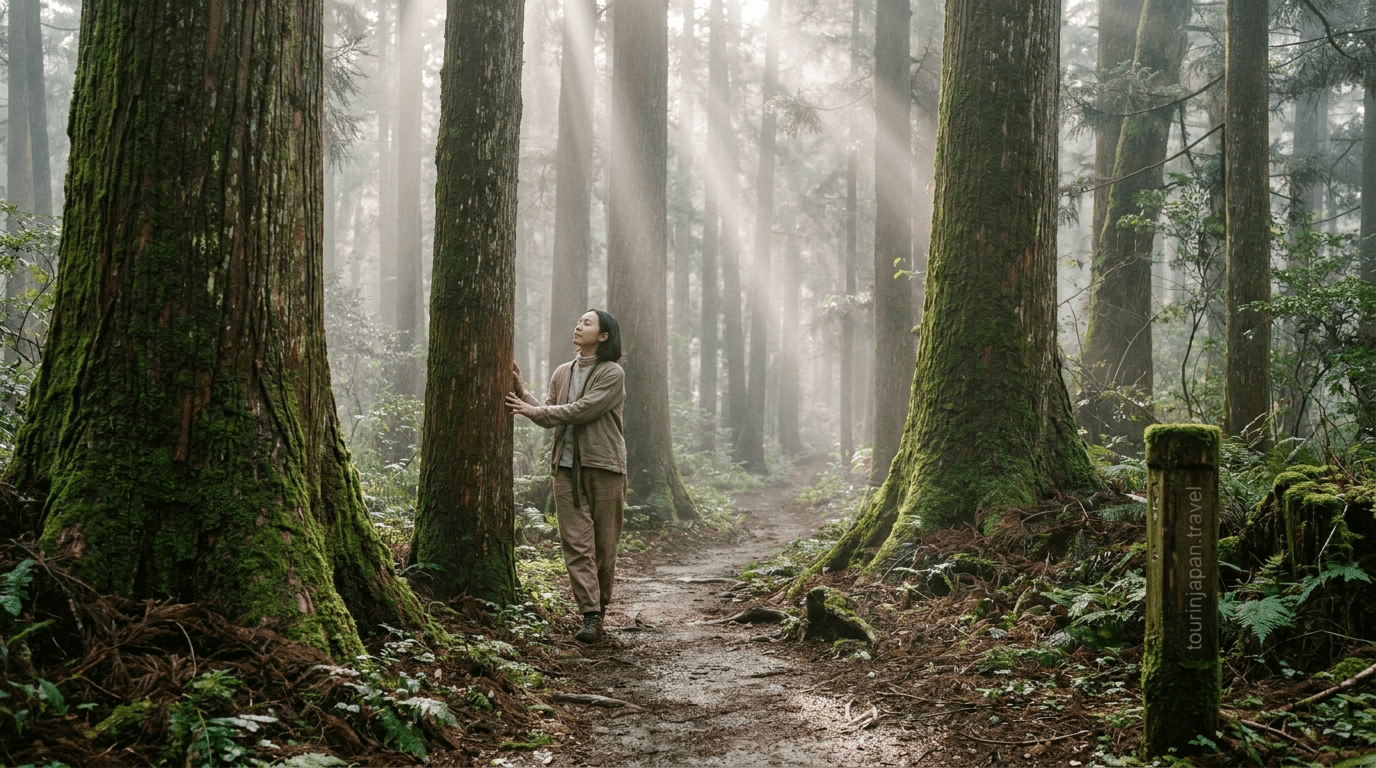
Forest Bathing (Shinrin-Yoku): Japan's Science-Backed Wellness Walk
By Tour in Japan editors · Updated
Shinrin-yoku (forest bathing) originated in Japan and is supported by decades of scientific research. Discover the best certified forests and guided programs for this unique wellness practice.
Shinrin-yoku — forest bathing — is one of Japan's most internationally influential wellness practices, and the experience of immersing yourself in a Japanese forest according to this tradition goes far beyond a simple walk in the woods. The term was coined by the Japanese Ministry of Agriculture, Forestry and Fisheries in 1982, and subsequent research by Dr. Qing Li and others at Nippon Medical School documented measurable physiological effects: lower cortisol, reduced blood pressure, increased activity of natural killer immune cells, and significantly improved mood. Japan has since designated 62 official Shinrin-yoku forests and trained hundreds of licensed guides.
The Science Behind the Practice
The proposed mechanism involves phytoncides — volatile organic compounds released by trees (particularly hinoki cypress and sugi cedar) that have documented antibacterial and immunostimulant effects when inhaled. Studies by the Forest Therapy Society of Japan found that a two-hour walk in a certified shinrin-yoku forest produced measurable increases in NK (natural killer) cell activity lasting up to 30 days after the walk. This is not guided meditation or physical exercise but sensory immersion — slow walking, conscious breathing, and using all five senses without a phone or destination.
Best Certified Shinrin-Yoku Forests
Akasawa Natural Recreation Forest in Nagano Prefecture — Japan's most famous shinrin-yoku destination — is a 300-year-old hinoki cypress plantation in the Kiso Valley, fragrant and cathedral-quiet. The forest has maintained walking paths, a wellness center, and offers 90-minute guided forest therapy sessions with certified guides for around 3,000 yen. It is reachable by bus from Agematsu on the JR Chuo Line. Other notable certified forests include Chichibu in Saitama (2 hours from Tokyo), Yakushima sugi forest in Kagoshima (ancient cedar trees up to 7,000 years old), and Aokigahara (Jukai) forest at the base of Mount Fuji.
Top forests and how to visit
- Akasawa, Nagano: Hinoki cypress plantation, guided sessions from 3,000 yen, Agematsu Station access
- Yakushima, Kagoshima: Ancient Jomon sugi cedar trees, 2-day trek for deep forest immersion, UNESCO site
- Okutama, Tokyo: Accessible old-growth forest 2 hours from central Tokyo, free walking trails
- Shirakami-Sanchi, Tohoku: Last virgin beech forest in East Asia, UNESCO, guided walks required in core zone
- Nikko sugi cryptomeria avenues: Historic cedar-lined roads 400 years old leading to Tosho-gu shrine
- Oirase Gorge, Aomori: Riverside forest path 14 km through cascades and moss-covered rocks
- Fushiogami no Michi, Kumano: Ancient pilgrim forest trail with certified shinrin-yoku guide options
How to Practice Shinrin-Yoku
The practice requires no equipment and no special training. Switch off your phone or leave it in your bag. Walk slowly — the recommended pace is roughly 2 kilometers in 2 hours, far slower than normal hiking. Stop frequently to focus on a single sensory input: the sound of water, the texture of bark, the smell of damp earth after rain. Sit against a tree for 10-15 minutes without doing anything. The Forest Therapy Society's research suggests that 2 hours is the minimum duration for measurable physiological effects.
Guided shinrin-yoku programs are available at most certified forests and typically cost 3,000-8,000 yen for a 2-3 hour session. Guides are certified by the Forest Therapy Society and can explain the ecological details of what you are experiencing, enhancing the mindful attention aspect of the practice. Programs are available in English at Akasawa and some Nikko-area forests.
Stay Connected in Japan
Yesim eSIMs work on arrival — no physical SIM needed. Japan data plans from $5.