
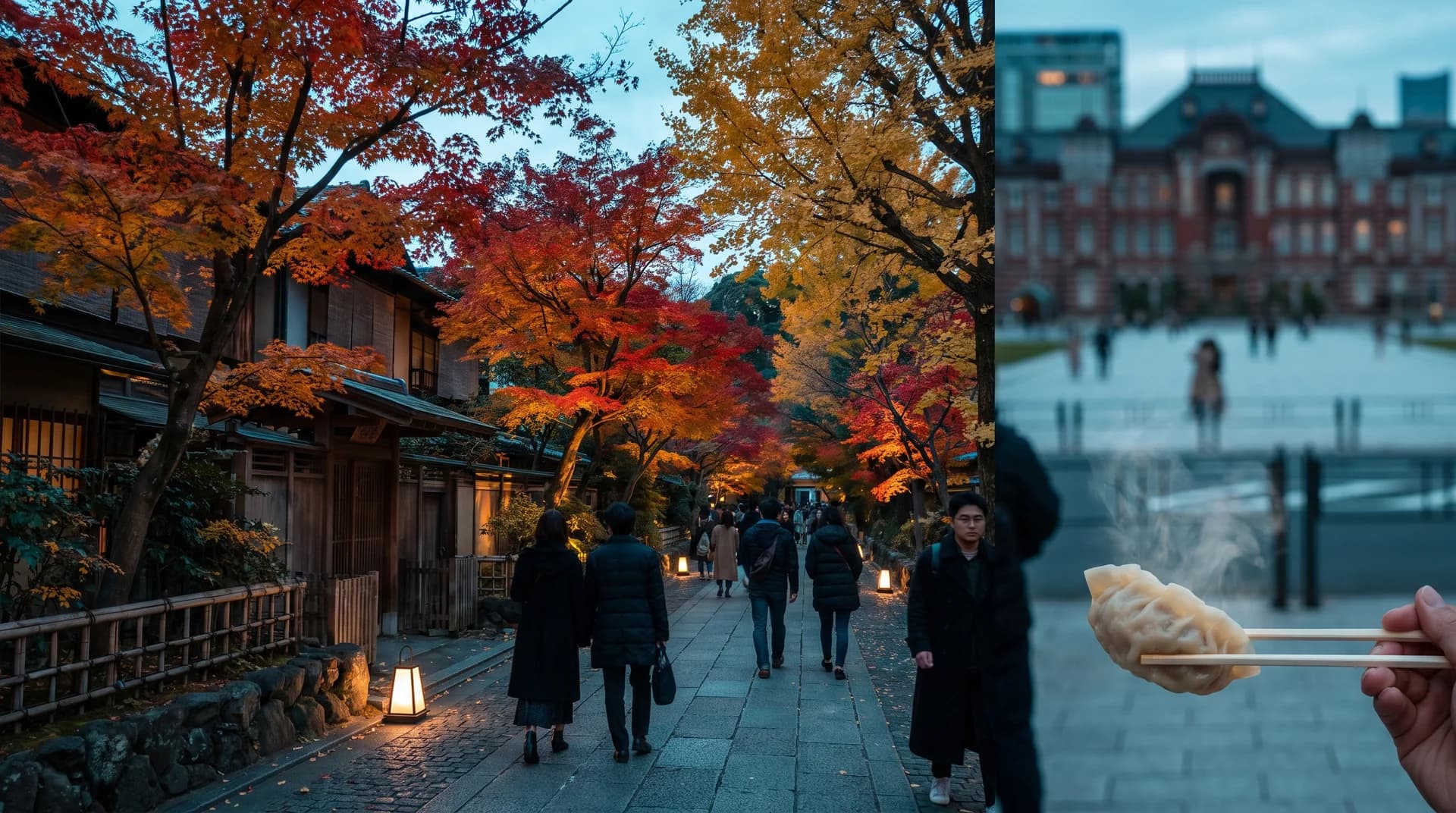
Tokyo Autumn Guide: Foliage, Ghibli Events and Local Eats
By Tour in Japan editors · Updated
Plan a late-autumn Tokyo trip with specific dates for Rikugien illuminations, Ghibli events in Aichi, and jumbo gyoza near Tokyo Station.
Title: Tokyo Autumn Guide: Foliage, Ghibli Events and Local Eats
The smell of roasting chestnuts and the crisp, dry air of late November signal the start of the most visually striking season in the Japanese capital. If you are timing your visit for late autumn, you are looking for more than just red leaves; you are looking for the specific window where the city's gardens light up at night, golden ginkgo trees line urban avenues, and limited-edition cultural events take place. This Tokyo autumn travel guide is designed for the independent traveler who wants to avoid generic tourist traps and instead time their visit to coincide with precise seasonal events, from nighttime garden illuminations to cinematic screenings and specialized regional eats.
Navigating Tokyo in the fall requires a sharp operational strategy. The crowds peak during the foliage season (koyo), and the most coveted events—like the evening illumination at Rikugien Garden or entry into Ghibli Park—require tight booking timelines and exact transit coordination. To make this work seamlessly, you need to coordinate your hotel stays near major urban transit hubs like Tokyo Station or Shinjuku Station to minimize transit friction. This guide unlocks a battle-tested, 4-day itinerary for the late-autumn window, blending high-energy urban exploration with the quiet, illuminated landscapes of traditional gardens and a targeted side trip to the Ghibli-inspired landscapes of Aichi.
Essential Highlights & Local Itinerary
Day 1: The Heart of Chiyoda, Imperial Palace Grounds, & Giant Eats
Start your trip in the historic Chiyoda district, centered around the sprawling architecture of JR Tokyo Station. This is the most practical base for any traveler utilizing the Tokaido Shinkansen or JR lines.
After dropping your luggage at your hotel or storing it in a coin locker at Tokyo Station (cost: ¥600 to ¥1,000 / ~$4.00 to $6.70 USD per day for large suit-cases), make your way to TaiKouRou (泰興楼). Operating since 1949, this classic culinary institution is famous throughout the city for its signature jumbo gyoza. These hand-wrapped dumplings measure nearly 12 centimeters (4.7 inches) in length and weigh roughly 120 grams each—nearly three to four times the volume of a standard Japanese dumpling. The skin is thick, pan-fried to a deep golden crunch on one side, and packed with juicy, seasoned pork and chives.
- Location: TaiKouRou (Yaesu Exit), 1-9-7 Yaesu, Chuo-ku, Tokyo.
- Transport: A 3-minute walk from the JR Tokyo Station Yaesu Central Exit.
- Timing: Arrive right at opening time (11:30 AM) or after the main rush at 1:15 PM to avoid long queues of local business workers. Lunch service runs from 11:30 AM to 2:00 PM.
- Cost: A 4-piece jumbo gyoza lunch set (includes rice, soup, and pickled vegetables) costs approximately ¥1,200 to ¥1,500 / ~$8.00 to $10.00 USD.
Post-lunch, cross the Marunouchi district toward the Imperial Palace East Gardens (Kōkyo Higashi Gyoen). Entry is completely free, though visitors receive a plastic token at the gate which must be returned upon exit. Take the entrance via the Ote-mon Gate. The gardens span roughly 210,000 square meters. During late November, the Ninomaru Garden section showcases brilliant red Japanese maples (momiji) and rich orange foliage surrounding a traditional koi pond.
Walk up to the Tenshudai—the massive stone foundation where the main castle keep of Edo Castle once stood. From this vantage point, you gain an elevated view of the autumn tree canopy framed against the sleek modern glass skyscrapers of Marunouchi. Plan to spend 2 to 3 hours wandering the gravel walkways. Note that the gardens close early in late autumn at 4:00 PM (last entry at 3:30 PM), so structure your afternoon accordingly.
`` [Tokyo Station Yaesu Exit] ──(3-min walk)──> [TaiKouRou Lunch] ──(15-min walk)──> [Ote-mon Gate / Imperial Palace] ``
Day 2: Meiji Jingu Gaien, Nezu Museum, & Rikugien Night Illumination
Begin your second day at 8:30 AM at Meiji Jingu Gaien Ginkgo Avenue (Icho Namiki) in Aoyama. This world-famous 300-meter avenue is lined with 146 precisely pruned ginkgo trees that transform into a blinding tunnel of bright yellow gold between mid-November and early December. Arriving early allows you to photograph the fallen golden carpet before street sweepers and large afternoon crowds arrive.
- Transport: Take the Tokyo Metro Ginza Line to Gaienmae Station (Exit 4a) or Aoyama-itchome Station. Walk 3 minutes to the avenue.
- Cost: Free access.
From Gaienmae, take a 15-minute walk south down Minami-Aoyama to the Nezu Museum. Even if you don't stay long for the pre-modern Japanese and East Asian art exhibits, the museum’s private garden is a masterclass in autumn landscape design. Pathways wind through dense foliage, past tea houses, bronze statues, and stone lanterns set around a spring-fed pond. Entry is ¥1,300 / ~$8.70 USD.
In the late afternoon, prepare for the highlight of the trip: the Rikugien Garden Autumn Night Illumination. Rikugien is one of Tokyo's nine Metropolitan Cultural Heritage Gardens, originally built between 1695 and 1702 by Yanagisawa Yoshiyasu. The annual autumn lighting event runs for a limited window, typically from late November through early December (exact dates vary by leaf drop, usually Nov 25 – Dec 5).
- Location: 6-16-3 Honkomagome, Bunkyo-ku, Tokyo.
- Transport: Take the JR Yamanote Line or Tokyo Metro Namboku Line to Komagome Station. Take Exit 2 (Namboku Line) or the South Exit (JR) and walk 7 minutes to the main gate.
- Timing: Sunset occurs around 4:30 PM in Tokyo in late November. The garden gates open for the night event at 6:00 PM, but queuing begins around 5:15 PM. Budget 90 minutes to 2 hours for the walk.
- Cost: Advance online timed-entry tickets cost ¥900 / ~$6.00 USD; same-day paper tickets at the door cost ¥1,000 / ~$6.70 USD (cash or digital IC card).
- Highlight Locations: Walk to the Togetsukyo Bridge (a bridge made of two large stone slabs) and the Tsutsuji-chaya tea house, built in the Meiji era using crooked rhododendron wood, which is framed by burning-red maple leaves illuminated by warm spotlights reflected on the water.
Day 3: The Ghibli Journey to Aichi & Nagakute
For animation enthusiasts, autumn offers a unique chance to combine Tokyo’s seasonal shift with a day trip to Ghibli Park, located inside the Expo 2005 Aichi Commemorative Park in Nagakute City, near Nagoya.
- Step 1 (Shinkansen): Depart Tokyo Station at 6:33 AM on the Nozomi Shinkansen bound for Nagoya Station. Travel time is 1 hour 35 minutes. Cost: ¥11,300 / ~$75.00 USD one-way for an unreserved seat, or ¥11,800 / ~$79.00 USD for reserved seating.
- Step 2 (Local Transit): Arrive at Nagoya Station at 8:08 AM. Transfer to the Nagoya Municipal Subway Higashiyama Line (Yellow Line) toward Fujigaoka Station (28 minutes, ¥310). At Fujigaoka, transfer to the Linimo (Aichi Rapid Transit Tobu Kyuryo Line) magnetic levitation train to Aicchi-kyohaku-kinen-ko Station (13 minutes, ¥360). Total transit time from Tokyo Station to the park gates: roughly 2 hours 40 minutes.
- Step 3 (Park Experience): Ghibli Park requires strict advance reservations with specific time slots booked months in advance via the official International Ticketing Portal (tickets open on the 10th of every month for admissions two months out). In late autumn, the park's outdoor areas—specifically the Dondoko Forest (featuring Totoro’s shrine) and the Valley of Witches (Majo no Tani)—are framed by the changing autumn leaves of the Aichi hills.
- Special Autumn Events: During October and November, special evening screenings and outdoor autumn festivals take place in the park grounds, highlighting original short films from the Mitaka Ghibli Museum archive.
For lunch, stop at the park’s internal food stalls or head back to Nagoya Station to eat local regional specialties: Hitsumabushi (grilled freshwater eel over rice, served with dashi broth, typically ¥3,500 to ¥4,500 / ~$23 to $30 USD) or Miso Katsu (breaded pork cutlet topped with a rich, dark Hatcho miso sauce, roughly ¥1,500 / ~$10.00 USD).
Take a evening Nozomi Shinkansen back to Tokyo Station, arriving by 9:00 PM.
Day 4: Mount Fuji Autumn Foliage & Lake Kawaguchi Loop
While high-altitude climbing on Mount Fuji ends in early September, autumn offers the most vivid framing of the mountain from the Fuji Five Lakes (Fujigoko) region.
- Transit Execution: Board the direct JR Fuji Excursion Limited Express train departing Shinjuku Station at 7:30 AM, arriving directly at Kawaguchiko Station at 9:26 AM. (Cost: ¥4,130 / ~$27.50 USD one way. Note: Seat reservations are mandatory and open exactly 30 days prior at 10:00 AM JST via the JR East Train Reservation website).
- Stop 1: Chureito Pagoda (Arakurayama Sengen Park): Take the Fujikyu Railway local train from Kawaguchiko Station back two stops to Shimochiyoda Station. Walk 10 minutes to the base of the park and climb the 398 stone steps to the pagoda. In late autumn, red maples frame the five-story pagoda with Mount Fuji capped in fresh snow in the background.
- Stop 2: Lake Kawaguchi Momiji Tunnel & Corridor: Take the train back to Kawaguchiko Station and hop on the Kawaguchiko Red Line Sightseeing Bus to Stop #15 (Kubota Itchiku Art Museum). Walk through the Momiji Kairou (Maple Corridor), where roughly 60 giant maple trees overhang the Nashikawa River canal. The leaves turn a deep crimson, illuminated at night until 10:00 PM during the annual Fuji Kawaguchiko Autumn Leaves Festival.
- Return Transit: Board the return Fuji Excursion train from Kawaguchiko at 5:36 PM, arriving back at Shinjuku Station by 7:28 PM.
The Play: Step-by-Step Execution Strategy
To pull off this dense itinerary without running into sold-out venues or long transport delays, execute these key steps in sequence:
`` +---------------------------------------------------------------------------------+ | 30-60 DAYS BEFORE TRIP | | 1. Book Ghibli Park tickets online (10th of the month at 10:00 AM JST). | | 2. Reserve Fuji Excursion train seats via JR East website 30 days out. | | 3. Add digital Suica/Pasmo card to Apple/Google Wallet on your smartphone. | +---------------------------------------------------------------------------------+ │ ▼ +---------------------------------------------------------------------------------+ | 7 DAYS BEFORE TRIP | | 1. Check Japan Meteorological Corp (JMC) Foliage Forecast for peak dates. | | 2. Purchase Rikugien Illumination timed-entry tickets online. | | 3. Reserve Shinkansen tickets via SmartEX App for Tokyo-Nagoya round trip. | +---------------------------------------------------------------------------------+ │ ▼ +---------------------------------------------------------------------------------+ | DAILY IN TOKYO | | 1. Sunset is at 4:30 PM: arrive at foliage sites by 3:30 PM for daylight shots.| | 2. Charge IC Card to maintain minimum ¥3,000 balance for transit. | | 3. Buy coin warmers (Kairo) from konbini before night illumination walks. | +---------------------------------------------------------------------------------+ ``
Step 1: Lock in Hard-to-Get Event Tickets
- Ghibli Park Tickets: Set a reminder for 10:00 AM Japanese Standard Time (JST) on the 10th day of the month prior to your visit month (e.g., September 10th for November visits). Tickets sell out within minutes.
- Rikugien Night Illumination: Buy your timed entry via Lawson Ticket or the official Tokyo Metropolitan Park Association portal 1 to 2 weeks prior. Choosing the 6:00 PM entry slot guarantees minimal wait time at the main gate.
- Fuji Excursion Seat Reservations: If seats on the direct direct express train sell out, your backup plan is taking the JR Chuo Line Limited Express (Kaiji or Azusa) from Shinjuku to Otsuki Station, then transferring to the Fujikyu Railway Line to Kawaguchiko.
Step 2: Optimize Payment & Transit Tools
- Digital IC Cards: Add a Suica or Pasmo card directly into your Apple Wallet or digital wallet before arriving in Japan. Top it up using a Mastercard or AMEX (Note: Visa top-ups inside Apple Wallet for Japanese IC cards can occasionally be blocked by bank security rules). Hold a minimum balance of ¥3,000 / ~$20.00 USD at all times.
- Shinkansen Apps: Download the SmartEX App to purchase and store your Tokyo-to-Nagoya bullet train tickets directly on your phone. You can link your SmartEX ticket directly to your digital Suica card, allowing you to tap through the Shinkansen turnstiles seamlessly.
- Ride-Hailing Backups: Download the GO App (the primary taxi app in Japan). Uber operates in Tokyo, but it primarily routes standard licensed yellow/black cabs rather than private peer-to-peer drivers, making GO faster and more reliable outside main tourist zones.
Step 3: Master Cold-Weather Gear Strategy
- Autumn daylight drops rapidly. By 4:30 PM, temperatures drop from daytime highs of 15°C (59°F) down to 5°C to 8°C (41°F to 46°F).
- Pack a windproof outer layer and buy packable heat-generating warmers called Kairo (使い捨てカイロ) from any convenience store (7-Eleven, Lawson, FamilyMart) for ¥100 each. Shake them to activate iron oxidation, which yields steady heat for 12 hours in your coat pockets during evening illumination walks.
Real-World Example: A Complete 4-Day Autumn Budget & Route Simulation
To demonstrate how this itinerary runs in practice, here is a complete cost and operational breakdown for a single traveler executing this exact 4-day plan in late November.
Detailed Expense Simulation (1 Person)
| Item / Expense Category | Cost in Japanese Yen (JPY) | Cost in US Dollars (USD) | Notes & Money-Saving Tip |
|---|---|---|---|
| Accommodation (3 Nights) | ¥36,000 | $240.00 | Mid-range business hotel near Kanda/Tokyo Station (e.g., Sotetsu Fresa Inn). |
| Local Transport (Tokyo Trains) | ¥4,500 | $30.00 | Tapping Suica on Yamanote, Chuo, and Tokyo Metro lines. |
| Shinkansen (Tokyo ↔ Nagoya) | ¥22,600 | $150.60 | Round-trip unreserved/reserved seat on Nozomi. |
| Fuji Excursion Train (Round-Trip) | ¥8,260 | $55.00 | Direct express between Shinjuku and Kawaguchiko. |
| Entry Fees (Rikugien, Nezu, Ghibli) | ¥4,200 | $28.00 | Rikugien (¥900) + Nezu (¥1,300) + Ghibli Osaipo Pass (¥2,000). |
| TaiKouRou Jumbo Gyoza Lunch | ¥1,400 | $9.30 | Includes 4 jumbo dumplings, rice, soup, and sides. |
| Mid-Range Dinners & Street Food | ¥14,000 | $93.30 | Yaki-imo, Nagoya Miso Katsu, Ramen, Izakaya stops. |
| Daily Konbini Snacks & Warmers | ¥2,000 | $13.30 | Water, coffee, heat-packs (kairo), seasonal chestnut soft-serve. |
| Total Estimated Expense | ¥92,960 | ~$619.50 | Excludes international flights and personal souvenirs. |
Minute-by-Minute Real-World Execution: Day 2 (Illumination Focus)
- 08:15 AM: Board Yamamote Line at Tokyo Station bound for Gaienmae (transfer at Kanda to Ginza Line). Arrive Gaienmae 08:38 AM.
- 08:45 AM – 10:00 AM: Photograph the Golden Ginkgo Avenue (Icho Namiki) before mid-day sun casts heavy harsh shadows.
- 10:15 AM – 12:00 PM: Walk down through Minami-Aoyama to Nezu Museum. Stroll the quiet garden foliage paths.
- 12:15 PM: Grab lunch at Tonkatsu Maisen Aoyama Main Store (order the Kurobuta Pork Loin Cutlet set, approx ¥3,100 / ~$20.60 USD).
- 02:00 PM: Board Ginza Line to Ginza, transfer to Namboku Line straight to Komagome Station.
- 02:30 PM – 04:30 PM: Rest at a local kissaten (traditional coffee shop) like Cafe Beret near Komagome, ordering hot drip coffee and seasonal pumpkin/chestnut purée dessert.
- 05:15 PM: Arrive at Rikugien Garden main entrance gate. Queue early for the 06:00 PM illumination opening slot.
- 06:00 PM – 07:45 PM: Experience illuminated maple paths around Suiketsudai and Togetsukyo Bridge.
- 08:15 PM: Dinner near Komagome Station at an izakaya (try seasonal Akiagari autumn sake paired with grilled yakitori skewers; cost ¥3,500 / ~$23.30 USD).
Where to Eat & Local Food Secrets
Masterclass: The Jumbo Gyoza at TaiKouRou
When ordering at TaiKouRou near Tokyo Station, be aware that standard gyoza portion sizes do not apply here. A traditional plate of Japanese gyoza usually contains 5 to 6 small bite-sized dumplings (total weight ~100g). At TaiKouRou, an order of 4 jumbo gyoza exceeds 450 grams of food.
- Flavor Profile: The pork filling is blended with finely minced cabbage, ginger, scallions, and sesame oil, wrapped in a thick, house-made wheat wrapper that retains steam and juices inside.
- How to Eat: Prepare your dipping sauce dish with a ratio of 2 parts rice vinegar (su), 1 part soy sauce (shoyu), and a drop of spicy chili oil (rayu). Add a dab of yellow Japanese mustard (karashi) directly onto the fried skin to slice through the richness of the pork grease.
- Pro Tip: If dining with a partner, order one 4-piece gyoza set to share, alongside an order of their house handmade chashu cold noodles or mapo tofu, so you do not overfill on starch before dinner.
`` [Dip Sauce Ratio] ──> 2 Parts Vinegar + 1 Part Soy Sauce + 1 Drop Rayu (Chili Oil) + Karashi Mustard ``
Seasonal Autumnal Street Eats
Beyond sit-down restaurants, autumn in Tokyo brings out vendor foods centered around harvests of sweet potato, chestnut, and seasonal sake.
- Yaki-imo (石焼き芋 - Stone-Roasted Sweet Potatoes): Truck vendors drive through traditional neighborhoods (like Yanaka, Asakusa, and Kagurazaka) slowly roasting Japanese sweet potatoes over hot black stones in the bed of small trucks. Look for varieties like Beniharuka (extremely sweet and moist) or Silk Sweet (velvety texture). They are wrapped in thick brown paper bags and sold by weight (typically ¥300 to ¥600 / ~$2.00 to $4.00 USD).
- Kuri-kinton & Chestnut Delicacies: Head to the basement food halls (depachika) of major department stores like Daimaru at Tokyo Station or Isetan in Shinjuku. During November, sweet shops sell Kuri-kinton—a traditional autumn confection made purely of steamed chestnuts mashed with a touch of sugar and hand-squeezed into the shape of a chestnut using a cloth napkin.
- Akiagari & Hiyaoroshi Sake: In late autumn, sake breweries release their seasonal Akiagari sakes. These are sakes brewed in winter, matured through spring and summer, and released unpasteurized for a second time in autumn. They are rich, full-bodied, and pair perfectly with fall ingredients like grilled sanma (pacific saury) and matsutake mushrooms.
Practical Details & Dual-Currency Budget
Weather & Daylight Profile
Understanding daylight hours is critical for photographers in Tokyo during late November:
- Sunrise: ~6:25 AM
- Sunset: ~4:30 PM
- Golden Hour: 3:30 PM to 4:15 PM (Best time for Meiji Jingu Gaien or Imperial Palace Gardens).
- Average Daytime High: 15°C (59°F)
- Average Nighttime Low: 5°C to 7°C (41°F to 45°F)
Budget Tier Breakdown
Budget Traveler (~¥8,500 – ¥11,000 / ~$57 – $73 USD per day)
- Lodging: Capsule hotels or hostel dorms in Taito/Asakusa area (¥3,500 – ¥5,000/night).
- Meals: Convenience store breakfasts (egg salad sandwich & hot canned coffee, ¥400), lunch at budget ramen/gyudon shops like Sukiya or Matsuya (¥600 – ¥800), jumbo gyoza sets at TaiKouRou (¥1,200).
- Transit: Local subway lines using Suica card (¥1,000/day).
- Activities: Free public parks, ginkgo avenues, select garden entries (¥600).
Mid-Range Traveler (~¥22,000 – ¥35,000 / ~$146 – $233 USD per day)
- Lodging: 3-star business hotel near major stations (APA Hotel, Tokyu Stay, or Sotetsu Fresa Inn, ¥12,000 – ¥18,000/night).
- Meals: Sit-down lunches, specialty tonkatsu, izakaya dinners with drinks (¥5,000 – ¥8,000/day).
- Transit: Combination of local trains, direct express trains (Fuji Excursion), and reserved Shinkansen seats.
- Activities: Rikugien night illumination online tickets, Nezu Museum entry, Ghibli Park passes.
Luxury Traveler (~¥65,000+ / ~$433+ USD per day)
- Lodging: 5-star international or boutique luxury property (Palace Hotel Tokyo, Grand Hyatt, Tokyo Station Hotel, ¥50,000 – ¥90,000/night).
- Meals: Kaiseki autumn seasonal tasting menus featuring matsutake mushrooms and Wagyu beef (¥20,000 – ¥35,000/person).
- Transit: Private hire vehicles or Green Car (First Class) Shinkansen tickets.
Essential Traveler Checklist
- Connectivity: Purchase an eSIM (Airalo, Ubigi, or Holafly) before landing in Japan. 5G connectivity is essential for navigating complex multi-level train stations like Tokyo and Shinjuku using Google Maps.
- Cash Reserves: Keep at least ¥15,000 in physical cash (~$100 USD) in small denominations (¥1,000 bills and ¥100 coins). While modern department stores accept credit cards, local street stalls, garden ticket counters, temple kiosks, and coin lockers are strictly cash or IC-card only.
- Shoe Choice & Etiquette: You will average 18,000 to 25,000 steps per day on this itinerary. Bring high-cushion walking shoes that are easy to slip off, as traditional places like the Nezu Museum tea houses or traditional izakayas require removing shoes at the entrance.
- Photography Restrictions: Tripods (Sankyaku) and monopods are strictly prohibited during the Rikugien Illumination event and inside the Imperial Palace East Gardens to manage crowd flow and safety. Handheld low-light camera gear or smartphone night modes are required.
- Language Basics: Learn these four functional phrases:
- Sumimasen (Excuse me / Sorry)
- Arigatou gozaimasu (Thank you very much)
- O-kaikei onegaishimasu (Check, please)
- Kore wa nan desu ka? (What is this?)
For more detailed seasonal itineraries, day-by-day map downloads, and curated restaurant bookings, subscribe to our weekly travel updates at /newsletter.
Stay Connected in Japan
Yesim eSIMs work on arrival — no physical SIM needed. Japan data plans from $5.