Tokyo Travel Guide 2026: Food, Transit & Seasonal Logistics
This Tokyo 2026 guide covers Harajuku's new unstaffed Noodle's 24 ramen stand (¥1,000/~/$7), Suica IC card ecosystem expansion for seamless transit, and daily budgets from ¥12,000 budget to ¥28,000 mid-range. Includes Shuri Castle Okinawa day-trip logistics via Naha Airport.
Affiliate link — we may earn a commission at no extra cost to you. Affiliate disclosure
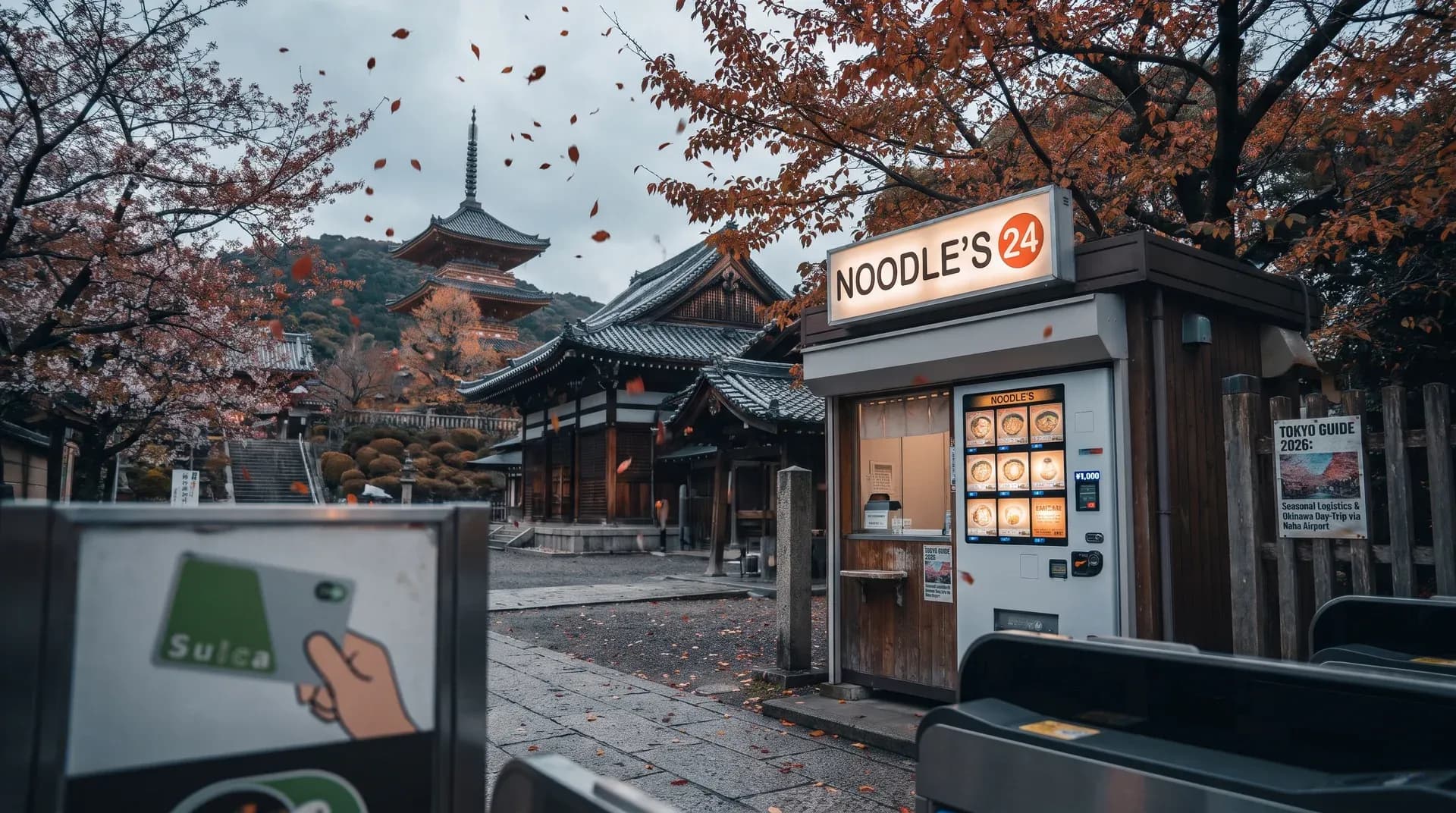
Steam rises from a vending machine in Harajuku's backstreets where Noodle's 24, an unstaffed make-your-own instant ramen stand, opened in late November 2026. You tap a screen, select broth and toppings, and three minutes later eat piping-hot noodles for roughly ¥1,000 (~/$7 USD) without speaking to anyone. This Tokyo travel guide 2026 unlocks that specific experience plus updated Suica IC card logistics, neighborhood-by-neighborhood budgets, and a practical Okinawa day-trip option to the newly reopened Shuri Castle main hall. The guide targets independent travelers who want current prices, rail-pass math, and cultural etiquette without marketing fluff.
Essential Highlights & Local Itinerary
Harajuku & Meiji-Jingumae: Noodle's 24 and Takeshita Street
Exit Meiji-Jingumae Station (Chiyoda Line, Fukutoshin Line) at Exit 5. Walk 3 minutes west on Takeshita-dori to the alley behind the Daiso building where Noodle's 24 operates 24 hours daily. The stand occupies a former cigarette-vending-machine slot — 2 square metres, touchscreen menu in Japanese and English, hot-water dispenser, and a standing counter. You pay via Suica, Pasmo, or credit-card tap. A basic soy-shoyu ramen with corn and nori costs ¥980 (~/$6.50 USD) per the November 2026 SoraNews24 report. Allow 20 minutes for ordering, waiting, and eating. Best visited 6–9 AM or after 10 PM to avoid the 30-minute weekend queue.
If you prefer a slightly quieter entrance, use the Harajuku Station (JR Yamanote Line) South Exit, cross the pedestrian bridge, and descend the stairs to the same alley; the walk is about 4 minutes and the signage is clearer for first-timers. The stand's operating hours are technically 00:00–23:59, but the screen displays a short maintenance window from 2 AM–4 AM during which the machine is offline for cleaning.
From there, walk 8 minutes north to Meiji Shrine's main approach. Entry is free; the inner garden costs ¥500 (~/$3.30 USD). Weekday mornings before 9 AM offer empty gravel paths and a chance to see the traditional shimenawa rope still being repaired by shrine volunteers. Exit onto Omotesando for architecture-spotting — Tadao Ando's Omotesando Hills, Kengo Kuma's Nezu Museum cafe — then take the Ginza Line one stop to Shibuya. The Ginza Line platform at Meiji-Jingumae is marked "G-09" and the train runs every 3-4 minutes during peak hours.
Shibuya: Scramble, Sky, and Station Lockers
Shibuya Station's Fukutoshin Line platforms connect directly to Shibuya Sky observation deck on the 46th floor (¥2,000/~/$13 USD advance, ¥2,300/~/$15 USD same-day). Book the 5 PM slot for golden-hour Mount Fuji views; the deck also offers a night-time laser show on Saturdays. The ticket office on the 5th floor accepts cash, Suica, and credit cards; online reservations are recommended via the official website, where you can select a specific time slot to avoid the typical 30-minute wait.
The station's coin lockers (¥400–¥800/~/$2.60–$5.30 USD per day) accept Suica; use them to store bags while you explore Center-gai and Nonbei Yokocho's 30-odd standing bars. Lockers are located near the East Exit, on the B1 level, and are open from 6 AM to midnight. A highball and yakitori skewer runs ¥500–¥800 (~/$3.30–$5.30 USD). For a quick sushi bite, head to Uobei Shibuya Dogenzaka (conveyor-belt sushi) where you order via tablet; a set of 6 nigiri costs ¥1,200 (~/$8 USD) and the restaurant closes at 10 PM on weekdays, 11 PM on weekends.
Shinjuku: Omoide Yokocho and Golden Gai
JR Yamanote Line 3 minutes to Shinjuku. West Exit leads to Omoide Yokocho (Memory Lane) — a narrow, lantern-lit alley of about 60 tiny stalls serving grilled offal, ramen, and beer. Cash only; most stalls display a small sign with the price in yen. Budget ¥2,000–¥3,000 (~/$13–$20 USD) for two drinks and a bowl. Golden Gai's 200 micro-bars cluster northeast; cover charges ¥500–¥1,000 (~/$3.30–$6.60 USD) plus drinks. Visit Monday–Wednesday for quieter entry; many bars have a "no-tourist" policy on weekends, so a polite inquiry in Japanese increases your chances of being let in.
For a slightly more upscale night, walk 7 minutes to Kabukicho and enjoy the area's vibrant entertainment scene. The district features a mix of theaters, restaurants, and unique venues that showcase Tokyo's eclectic nightlife.
Asakusa: Senso-ji Before Dawn
Ginza Line 16 minutes to Asakusa. Arrive 5:30 AM for Senso-ji's main hall lit by lanterns, zero tourists, and a serene atmosphere. The outer gate (Kaminarimon) opens at 6 AM, but the inner hall is accessible a bit earlier for early-bird photographers. Nakamise-dori opens 9 AM; try fresh ningyo-yaki (¥150/~/$1 USD each) and kaminari-okoshi (¥500/~/$3.30 USD per pack). Sumida River water bus to Hamarikyu Gardens (¥1,200/~/$8 USD one-way) runs every 30 minutes from the Asakusa-Bashi stop; the garden's tidal pond and matcha house (¥300/~/$2 USD) fill a half-day. The garden closes at 5 PM (last entry 4:30 PM), so plan to return before sunset for the best lighting on the traditional tea house.
If you have extra time, hop on the Tobu Skytree Line from Asakusa Station (Platform 2) to Tokyo Skytree (≈15 minutes). The observation deck tickets are ¥2,100 (~/$14 USD) for the Tembo Deck and ¥3,100 (~/$21 USD) for the Tembo Galleria; both can be purchased via Suica at the ticket machines.
Day Trip: Okinawa Shuri Castle via Naha
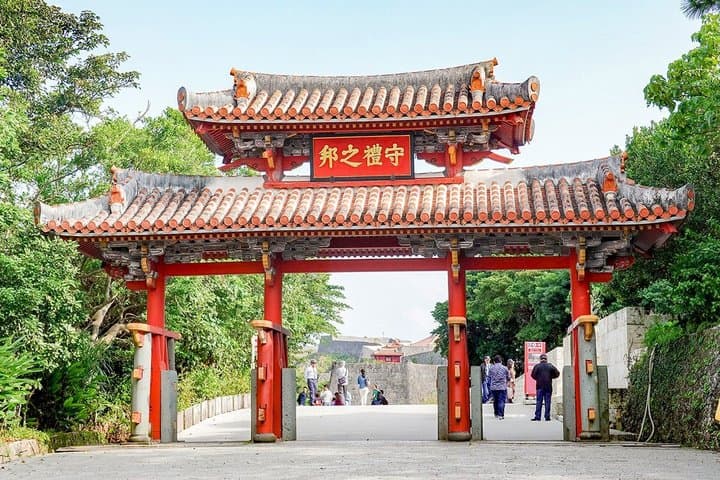
Haneda to Naha flights (JAL, ANA, Peach) take 2 h 40 m; book 3 weeks ahead for ¥18,000–¥35,000 (~/$120–$235 USD) round-trip. Naha Airport monorail (Yui Rail) to Shuri Station: ¥330 (~/$2.20 USD), 27 minutes. Shuri Castle main hall reopened November 2026 after the 2019 fire; park entry free, main hall interior ¥400 (~/$2.60 USD) per Japan Forward. Allow 3 hours to explore the reconstructed vermilion hall, the adjacent gardens, and the Shurei-mon gate. The castle's opening hours are 8:30 AM–5:30 PM (last entry 5:00 PM) and closed on Mondays; the site can be very busy during the Golden Week holiday, so an early start (arrive by 9 AM) is advisable.
Return via Kokusai-dori for taco rice (¥900/~/$6 USD) and awamori tasting (¥500/~/$3.30 USD). The street is lined with souvenir shops that accept Suica at larger retailers, but most small eateries still prefer cash. If you have an extra half-day, consider a quick ferry from Tomari Port to the nearby island of Zamami (¥1,500/~/$11 USD round-trip) for a beach break; the ferry runs twice daily.
Practical Details & Dual-Currency Budget
Best Season & Weather
Late March‑early April: cherry-blossom peak, hotel rates +40%, Yamanote Line 180% capacity 7–9 AM. Golden Week (April 29–May 5): domestic travel surge, Shinkansen sold out weeks ahead. June‑mid-July: tsuyu rainy season, humidity 80%, fewer crowds. Late July–August: typhoon risk, festivals (Sumida Fireworks July 27, Koenji Awa Odori late August). October‑November: crisp 18–22 °C, autumn foliage mid-November, our [Tokyo November Travel Guide: Weather, Costs & Festival Logistics](/blog/tokyo-november-travel-guide-weather-costs-festivals) details daily event calendars. December: illuminations, Christmas markets per our [Tokyo Christmas Shopping: 5 Markets, Malls & Gift Spots](/blog/tokyo-christmas-shopping-guide), temperatures 5‑12 °C.
Budget Breakdown (Per Person, Per Day)
| Tier | Accommodation | Food | Transit | Attractions | Total (JPY) | Total (USD) | |------|---------------|------|---------|-------------|-------------|-------------| | Budget | ¥4,500 capsule/hostel | ¥3,000 konbini/ramen | ¥1,000 Suica pay-as-you-go | ¥1,500 | ¥10,000 | ~$67 | | Mid-range | ¥12,000 business hotel | ¥6,000 izakaya/sushi | ¥1,500 Suica + occasional taxi | ¥3,000 | ¥22,500 | ~$150 | | Comfort | ¥25,000 city hotel | ¥12,000 specialty dining | ¥3,000 taxis/Green Car | ¥5,000 | ¥45,000 | ~$300 |
Figures based on November 2026 rates; USD at ¥150. Cash still king at 40% of restaurants under ¥3,000.
Transit & Access
Suica/Pasmo: Physical cards ¥2,000 deposit (¥500 refundable) at any JR East station. Mobile Suica via Apple Wallet/Google Wallet works on iPhone 8+/Android 10+; no deposit. JR East's November 2026 expansion adds Suica acceptance at 3,200 additional vending machines, coin lockers, and convenience-store self-checkouts per Japan Times. Auto-charge links to Japanese-issued credit cards only; foreign cards top up manually at machines.
Narita Express ¥3,070 (~/$20.50 USD) to Tokyo Station, 60 minutes. Haneda Monorail ¥500 (~/$3.30 USD) to Hamamatsucho, 18 minutes. JR Pass 7-day ordinary ¥50,000 (~/$333 USD) only pays off with round-trip Shinkansen to Kyoto/Osaka. For intra-city travel, a daily Suica top-up of ¥1,200 (~/$8 USD) covers most metro, Toei, and private-rail lines; the balance rolls over to the next day.
Where to Eat & Local Food Secrets
Harajuku Beyond Noodle's 24
Ura-Harajuku's Cat Street holds Afuri Harajuku (yuzu shio ramen ¥1,100/~/$7.30 USD, ticket machine, 10-minute wait). Gyoza no Ohsho Meiji-Jingumae serves 6-piece pan-fried gyoza ¥350 (~/$2.30 USD) and beer ¥400 (~/$2.60 USD) — cash only, standing room. For sit-down, Kyushu Jangara Harajuku (tonkotsu ramen ¥980/~/$6.50 USD) opens 11 AM‑11 PM; the shop is a 2-minute walk from the Takeshita-dori exit, hidden behind a small lantern-decorated façade.
If you have a sweet tooth, drop by Harajuku Gyoza Café (2-minute walk from Noodle's 24) for matcha-flavored mochi ice cream ¥500 (~/$3.30 USD). The café accepts Suica via a QR-code scanner on the counter.
Shibuya Late Night
Nonbei Yokocho's Toriyoshi serves chicken skin skewers ¥180 (~/$1.20 USD) each, highball ¥450 (~/$3 USD). Uogashi Nihon-Ichi Shibuya (standing sushi) offers nigiri ¥120–¥300 (~/$0.80–$2 USD) per piece, 5-minute turnover. Pay cash at register. For a quick ramen after midnight, head to Ichiran Shibuya (Ramen Street, 4th floor of Shibuya Station) where individual booths let you customize broth intensity; a bowl costs ¥890 (~/$5.90 USD) and the shop is open 24 hours.
Shinjuku Omoide Yokocho
Yakitori Torishige: 5-skewer set ¥1,200 (~/$8 USD), beer ¥550 (~/$3.70 USD). Cash. Asakusa's Daikokuya Tempura (10-minute walk from Senso-ji) serves tendon (tempura bowl) ¥1,800 (~/$12 USD) — line forms 11 AM, 40-minute wait.
For a vegetarian option, try T's Tantan in the nearby Lumine Est (Shinjuku West Exit) which offers a spicy sesame ramen for ¥1,100 (~/$7.30 USD). The restaurant accepts Suica and credit cards and is open 11 AM‑10 PM.
Convenience Store Hacks
7-Eleven, FamilyMart, Lawson stock onigiri ¥130‑¥180 (~/$0.87–$1.20 USD), salad chicken ¥250 (~/$1.67 USD), hot coffee ¥120 (~/$0.80 USD). Microwave available. Eat at store's standing counter; no trash bins on streets.
A lesser-known spot is the Lawson "Fresh" line, which rotates seasonal bento boxes (e.g., sakura-cherry blossom rice bowl in March) that cost ¥500–¥700 (~/$3.30–$4.70 USD). These boxes are labeled with a small Suica icon, indicating you can tap to pay.
Essential Traveler Checklist
- IC Card: Add Mobile Suica to Apple Wallet/Google Wallet before arrival; load ¥5,000 initial balance at airport machine.
- Cash: Carry ¥30,000–¥50,000 in ¥1,000 notes; 7-Eleven ATMs accept foreign cards 24/7 (¥110 fee per withdrawal).
- Connectivity: Rent pocket Wi-Fi at Haneda/Narita (¥800–¥1,200/~/$5.30–$8 USD/day) or buy eSIM (Airalo 10 GB 30 days $26 USD).
- Temple Etiquette: Bow at torii, purify hands at chozuya (left, right, mouth), no photos inside main halls, shoulders/knees covered.
- Key Phrases: "Sumimasen" (excuse me), "Onegaishimasu" (please), "Okanjo onegaishimasu" (check please), "Suica de onegaishimasu" (pay with Suica).
Tokyo rewards preparation. Book Shibuya Sky and Narita Express seats early, load Suica before your first train, and carry cash for the best meals. The city runs on precision — match it and you'll eat better, move faster, and spend less.
Frequently Asked Questions
How much does Noodle's 24 ramen cost in Harajuku?
A basic soy-shoyu ramen with corn and nori at Noodle's 24 costs ¥980 (approximately $6.50 USD) per the November 2026 SoraNews24 report. Payment accepts Suica, Pasmo, or credit-card tap.
Is the JR Pass worth it for Tokyo-only travel in 2026?
No. The 7-day ordinary JR Pass costs ¥50,000 (~$333 USD) and only covers JR lines. Tokyo metro, Toei Subway, and private railways (Keio, Odakyu, Tokyu) require separate payment. Pay-as-you-go Suica costs ¥1,000–¥1,500 daily for city travel.
When did Shuri Castle's main hall reopen in Okinawa?
Shuri Castle's reconstructed vermilion main hall reopened to the public in November 2026, seven years after the 2019 fire, according to Japan Forward. Interior entry costs ¥400 (~$2.60 USD); park grounds remain free.
What is the cheapest way from Haneda Airport to central Tokyo?
The Tokyo Monorail to Hamamatsucho (¥500/~/$3.30 USD) is the most direct route, taking 18 minutes. Alternatively, the Keikyu Line to Shinagawa (¥410/~/$2.70 USD) connects to the JR Yamanote Line for ¥200 more to Tokyo Station. Both accept Suica and are cheaper than the Narita Express.
How do I navigate Tokyo's station locker system?
Coin lockers are available at major stations like Shibuya, Shinjuku, and Tokyo Station. Sizes range from small (¥400/~/$2.60 USD) for a backpack to large (¥800/~/$5.30 USD) for a suitcase. They accept Suica, Pasmo, or cash, and are typically open from 6 AM to midnight. Always bring your locker receipt for retrieval.
Related reading
- [Tokyo Forest Escape: From Imperial Palace Cafe to Ogasawara ](/blog/tokyo-forest-escape-imperial-palace-cafe-ogasawara)
- [Tokyo Autumn Festivals Itinerary: Halloween, Food, Godzilla ](/blog/tokyo-autumn-festivals-itinerary)
- [Asuka Fujiwara UNESCO Itinerary: Heritage, Pop Culture, and ](/blog/asuka-fujiwara-unesco-itinerary)
Sources
Ready to explore Japan?
Browse tours and activities, or tell us what you're looking for and we'll suggest the best options.
Stay Connected in Japan
Airalo eSIMs work on arrival — no physical SIM needed. Data plans from $5 for 7 days.
Travel Insurance for Japan
Medical, trip cancellation, and adventure sports covered. Plans from $1.5/day.