Okinawa in Winter: Mild Weather and Fewer Crowds
Okinawa's subtropical winter is mild, not tropical-hot, with lower rainfall and fewer visitors. Explore castles, beaches, island culture and local food.
Affiliate link — we may earn a commission at no extra cost to you. Affiliate disclosure
Okinawa is Japan's southernmost prefecture, a chain of islands with a subtropical climate and its own history as the independent Ryukyu Kingdom. Winter here is mild rather than tropical-hot, and it is a good time to explore beaches, castles and island culture without summer crowds. JNTO notes that winter in Okinawa is a comfortable 15°C, that it does not snow, and that you avoid the July–October typhoon season; a separate JNTO guide adds that winter can be cheaper for flights and hotels (Travel Japan – Okinawa, JNTO winter story).
Winter Weather and Climate
Winter in Naha is mild. The Japan National Tourism Organization's Naha climate table lists average December highs of 21°C and lows of 16°C, and January–February highs of 20°C with lows of 15°C. A JNTO winter guide describes Okinawa's average winter temperature as around 17°C, sometimes climbing into the 20s, while Tokyo is around 5°C in January and February. Rainfall is lower than in the summer peak: Naha's monthly precipitation is 103 mm in December, 107 mm in January and 120 mm in February, compared with 247 mm in June and 261 mm in September. Bring layers for cooler evenings and windy days, and check the forecast before you travel (Naha weather, JNTO winter story).
Main Island Attractions
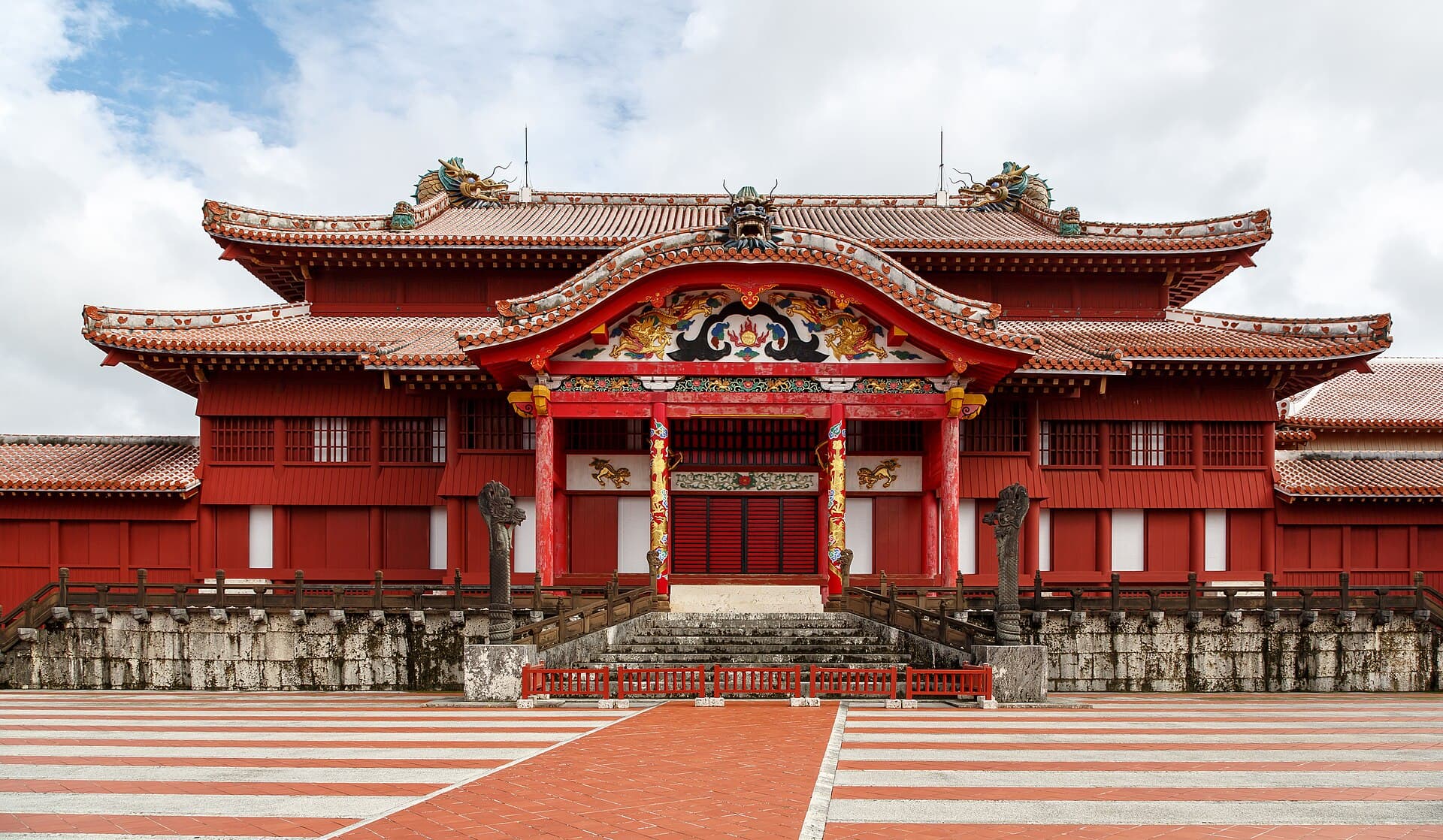
Shuri Castle in Naha is a UNESCO World Heritage site and the centre of the former Ryukyu Kingdom. The main castle structures were destroyed by fire on 31 October 2019, and reconstruction is scheduled to be completed in 2026. The restored Seiden main hall opens to the public on 23 November 2026, and you need an advance reservation with a designated date and time to view the interior. Until 21 November 2026, admission to the paid area is ¥400 for adults, ¥300 for high school students and ¥160 for elementary and junior high school students; from 23 November 2026, the adult fee rises to ¥1,000, with high school students at ¥760 and elementary/junior high students at ¥370. Shuri Castle is a five-minute bus ride or a 15–20-minute walk from Shuri Station on the Okinawa Monorail; bus number one from central Naha stops at Shurijo Koen Iriguchi. Check the official site before you book (Shuri Castle, Shuri Castle Park fees, Seiden reservation guide).
Okinawa Churaumi Aquarium, in Ocean Expo Park on the Motobu Peninsula, is one of the world's largest aquariums and was rebuilt in 2002. It exhibits about 780 species, and its Kuroshio Sea tank holds whale sharks, which can measure up to 8.8 metres. Feeding times in the Kuroshio Sea tank are 9:30, 15:00 and 17:00. Admission is ¥2,180 for adults, ¥1,440 for high school students and ¥710 for elementary and junior high school students; preschool children are free. Opening hours are 8:30–18:30 in the off season, with last admission at 17:30, and the aquarium lists no scheduled closing days until 31 March 2027, except for temporary closures such as typhoons. Check the official site for peak-season hours and current prices (Churaumi Aquarium, fees, hours).
Elsewhere on the main island, Cape Zanpa is known for its lighthouse, and the northern Yanbaru region is a World Natural Heritage site. The Blue Cave dive site is around Cape Maeda, about an hour from Naha by car. You can also visit Cape Manza, Cape Maeda and Cape Hedo for coastal views and sunsets (Okinawa sightseeing, Okinawa destination guide, JNTO winter story).
Island Hopping in Winter
You can catch connecting flights from Naha Airport to Miyako, Ishigaki, Yonaguni and Kume, and there are direct flights to Ishigaki and seasonal direct flights to Miyako from some mainland cities. Ferries also run between nearby islands. Ishigaki and Miyako are quieter, less developed islands with beaches and restaurants, and you can explore them by rental bicycle. Iriomote Island is a World Natural Heritage site. Winter is a good time to escape the crowds, but check schedules and sea conditions before you travel (Okinawa destination guide, Okinawa airport access).
Okinawan Food and Culture
Okinawan cuisine has its own local specialities. These include goya chanpuru, a stir-fry of bitter melon with egg, tofu and Spam; soki soba, a noodle soup topped with pork spare ribs simmered in awamori, soy sauce and sugar; shiquasa citrus; and Okinawan raw sugar. Awamori is a local liquor made from Indica long-grain rice and aged in clay pots; aged awamori over three years is called kusu. You can also see traditional crafts such as Ryukyu glass, bingata textiles and the sanshin, a three-stringed instrument. In Naha, Kokusai-dori is a shopping street about 2 km long with souvenir shops and restaurants, and Yatai-Mura has over 20 outdoor food stalls just off Kokusai-dori. The Naha Traditional Craft Centre offers pottery and glass-blowing experiences (Okinawa destination guide, Okinawa sightseeing).
Winter Events and Activities
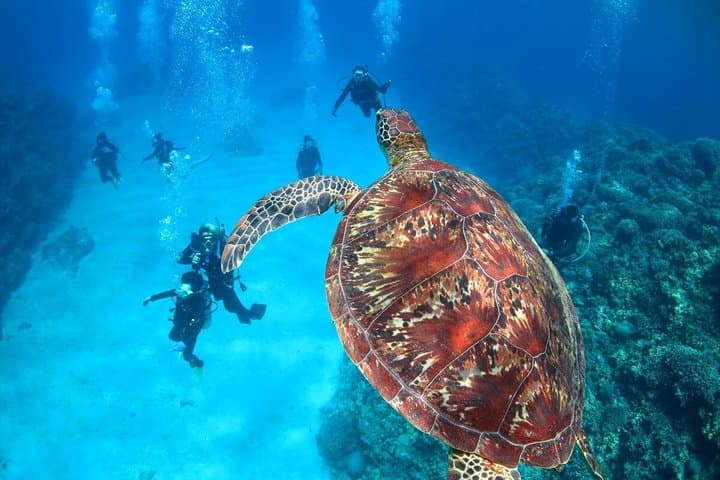
Whale watching is a highlight of winter in Okinawa. Humpback whales return to Okinawan waters from late December to early April, and tours run from Naha and Zamami Island. The Zamami Whale Watching Association, founded in 1991, follows voluntary rules such as not approaching whales within 100 metres and not swimming with them. The encounter rate around Zamami is said to be over 90%. If you join a tour, bring warm, waterproof clothing, non-slip shoes and binoculars, and check the operator's current schedule and price. Diving and snorkelling are also possible in winter, including Blue Cave tours and mermaid swimming. Winter can be cheaper than summer: a 2019 JNTO story reported winter flights from Haneda to Naha at ¥7,000–15,000 and winter hotel rooms around ¥10,000 per night, but check live prices before booking (Whale watching in Okinawa, JNTO winter story).
Ready to explore Japan?
Browse tours and activities, or tell us what you're looking for and we'll suggest the best options.
Stay Connected in Japan
Airalo eSIMs work on arrival — no physical SIM needed. Data plans from $5 for 7 days.
Travel Insurance for Japan
Medical, trip cancellation, and adventure sports covered. Plans from $1.5/day.