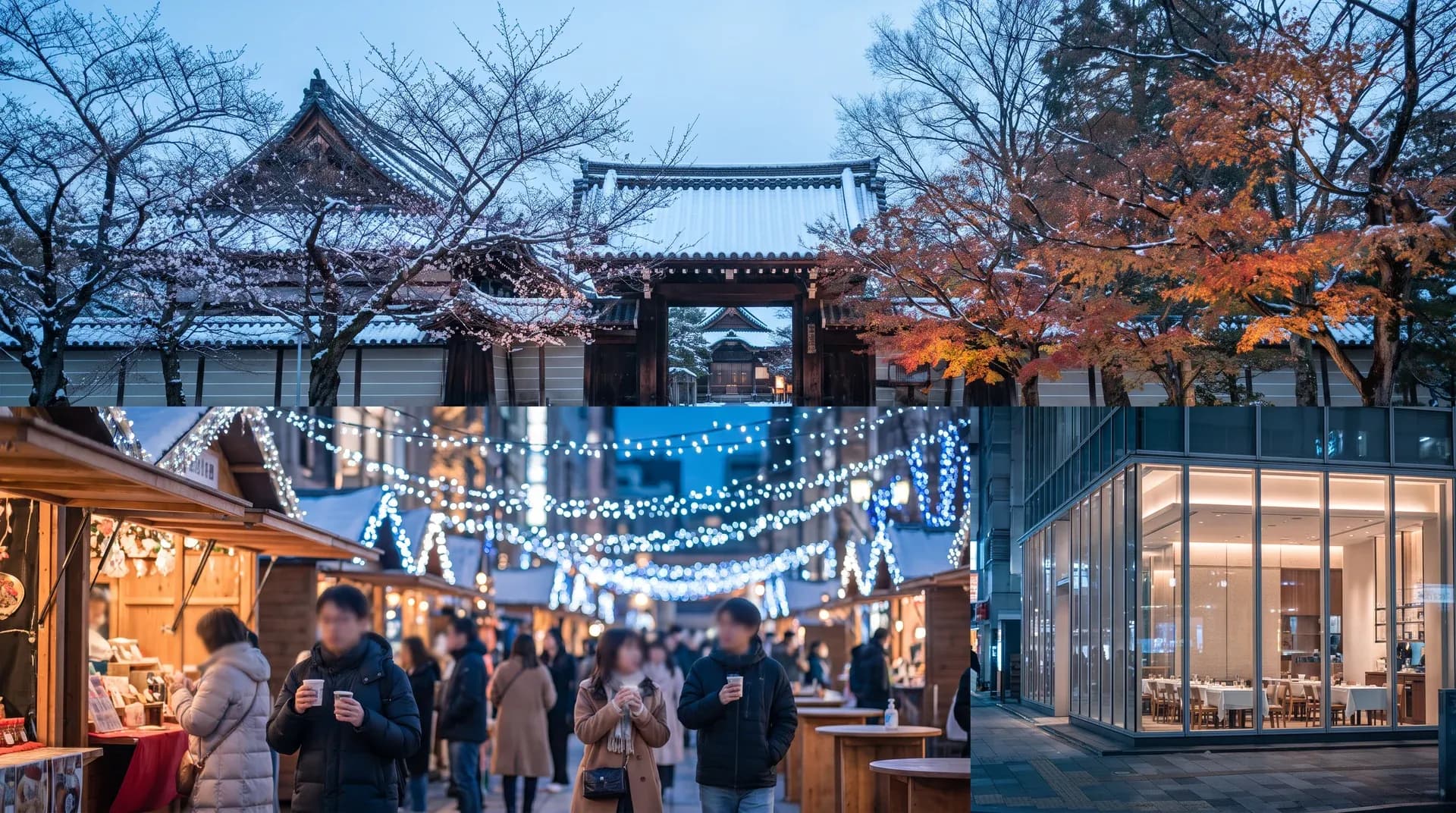
Tokyo Winter Lights & Christmas Dining Guide 2026
Tokyo's winter season combines the 25th anniversary of Ashikaga Flower Park's winter illumination with high-end Christmas dining in Omotesando. Expect to spend roughly ¥5,000 ($35 USD) on a budget-friendly entry to luxury Christmas markets, while premium multi-course dinners in central Tokyo range
Affiliate link — we may earn a commission at no extra cost to you. Affiliate disclosure
The air in Tokyo in December is crisp, carrying the faint scent of roasted chestnuts from street vendors near Shibuya Scramble. For the traveler, this is the season of dual contrasts: the quiet, glowing stillness of illuminated parks versus the bustling, candlelit intimacy of Omotesando dining. This guide focuses on two specific experiences: the 25th anniversary of the Ashikaga Flower Park Winter Illumination and the high-end Christmas dining scene in central Tokyo. It is for independent travelers who want to balance a day trip outside the city with a memorable evening in the capital, without falling into the trap of generic tourist traps. You will find exact costs, rail logistics, and reservation strategies for the 2026 season.
Ashikaga Flower Park, located in Ashikaga City, Tochigi Prefecture, is best known for its wisteria in spring, but its winter lights have become a major draw. In 2026, the park marks its 25th anniversary of this event, according to Japan Forward. The installation features more than five million lights, creating a canopy of color that contrasts with the dark winter sky. Meanwhile, in Tokyo, the Christmas season is defined by specific culinary events. One notable example is the Christmas course at IL LUPINO PRIME in Omotesando, which features caviar, black truffle ravioli, and a USDA Prime T-bone. This is not a casual dinner; it is a structured, high-cost experience that requires advance planning. We will break down how to access these experiences, what they cost, and how to manage your time and budget effectively.
Essential Highlights & Local Itinerary
Ashikaga Flower Park Winter Illumination
Ashikaga Flower Park is located in Ashikaga City, Tochigi Prefecture, roughly 100 kilometers north of Tokyo. The park is famous for its wisteria tunnel, but in winter, the focus shifts to the illumination. The 2026 season marks the 25th anniversary of this event, according to Japan Forward. The installation uses over five million lights, creating a dense, colorful environment that is particularly striking against the bare branches of the trees.
Getting There: From Tokyo Station, take the Tohoku Shinkansen to Utsunomiya Station. The ride takes approximately 40 minutes. The Shinkansen fare is around ¥8,500 one-way for a non-reserved seat (2026 estimate). From Utsunomiya, you can take a bus or taxi to the park. Alternatively, there may be special chartered buses from Tokyo during peak weekends, but you must check for these closer to your travel date. The total travel time from central Tokyo is approximately 1.5 to 2 hours one-way.
Timing and Costs: The lights are typically on from dusk until around 10:00 PM or 11:00 PM, depending on the specific date. Entry fees for the winter illumination usually range from ¥1,500 to ¥2,000 for adults (2026 estimate). This is a day trip, so you should plan to depart Tokyo in the morning to avoid crowds and return in the evening. The park is large, so allow at least 2-3 hours to walk the main paths and view the key installations.
IL LUPINO PRIME Christmas Course
Located in Omotesando, a district known for its high-end fashion and architecture, IL LUPINO PRIME offers a specific Christmas course in 2026. According to Metropolis Japan, the menu includes caviar on blini, ravioli with black truffle, and a USDA Prime T-bone. This is a fine-dining experience, not a casual meal.
Getting There: Omotesando is easily accessible via the JR Yamanote Line to Harajuku Station or the Tokyo Metro Chiyoda Line to Omotesando Station. From Harajuku Station, it is a 5-minute walk to the district. The area is pedestrian-friendly, with wide sidewalks and minimal traffic in the core zone.
Timing and Costs: Dinner service typically begins at 5:30 PM or 6:00 PM. The Christmas course is a multi-course meal. While exact pricing for the 2026 course is not fully detailed in the source, fine-dining Christmas courses in Omotesando generally range from ¥15,000 to ¥30,000 per person, excluding tax and service charge. You should budget for at least ¥20,000 ($140 USD) per person for this type of experience. Reservations are essential, and popular dates will fill up quickly. Do not assume you can walk in.
Tokyo Christmas Markets
In addition to dining, Tokyo hosts several Christmas markets in late November and December. One specific example is the luxury Christmas market where a budget of ¥5,000 can be tested for spending. According to SoraNews24, this market offers a range of goods from food to crafts. The cost of a single hot chocolate or small pastry can be ¥500 to ¥1,000, while more substantial food items or gifts will consume the budget quickly. This is a good place to experience the festive atmosphere without committing to a full dinner.
Practical Details & Dual-Currency Budget
Best Season & Weather
December in Tokyo is cold, with average high temperatures around 10°C (50°F) and lows around 4°C (39°F). It is dry, with low humidity, which makes the cold feel sharper. Snow is rare but possible. The peak season for winter lights and Christmas events is mid-December through early January. This is also the busiest time for dining reservations. If you can travel in late November, you will find slightly fewer crowds and potentially better availability for restaurants, though the full winter light installations may not be up yet.
Budget Breakdown
For a mid-range traveler spending one day in Ashikaga and one evening in Tokyo:
- Shinkansen Round Trip: ¥17,000 (~$120 USD)
- Ashikaga Entry: ¥2,000 (~$14 USD)
- Local Transport in Tokyo: ¥1,000 (~$7 USD) for a day of metro/JR travel
- Dinner at IL LUPINO PRIME: ¥20,000 (~$140 USD) per person
- Snacks/Coffee in Tokyo: ¥1,500 (~$10 USD)
Total Estimated Cost: Approximately ¥41,500 (~$300 USD) per person for this specific combination of activities. This does not include accommodation or other meals. If you choose a more budget-friendly dinner, you can reduce the total by ¥10,000 to ¥15,000. For a luxury experience, the cost can easily exceed ¥50,000 (~$360 USD) if you add drinks and additional courses.
Transit & Access
Use a Suica or Pasmo IC card for all local travel in Tokyo. These cards are loaded with credit and work on the Tokyo Metro, JR Yamanote Line, and most buses. For the Shinkansen, you will need to buy a separate ticket, as IC cards do not cover Shinkansen fares. You can buy Shinkansen tickets at the green window at Tokyo Station or online. For the Ashikaga trip, consider buying a regional pass if available, though the Shinkansen fare is often the most direct option. In Tokyo, ride-hailing apps are available but often more expensive than the metro for short distances. The metro is faster and cheaper for getting to Omotesando or other central districts.
Where to Eat & Local Food Secrets
Christmas Dining in Omotesando
The Christmas course at IL LUPINO PRIME is a specific example of the high-end dining scene. The menu features caviar, black truffle, and USDA Prime beef. This is a Western-style fine dining experience. If you prefer Japanese cuisine, look for omakase sushi or kaiseki restaurants in the Ginza or Roppongi districts, which also offer special Christmas menus. Prices for these are similar, ranging from ¥15,000 to ¥30,000 per person.
Street Food and Markets
For a more casual experience, visit the Christmas markets. In 2026, a budget of ¥5,000 can buy you a few hot drinks, a small pastry, and perhaps a small gift. Prices for hot chocolate are typically ¥500 to ¥800 ($3.50 to $5.50 USD). Sausages or pretzels are around ¥800 to ¥1,200 ($5.50 to $8.50 USD). This is a good way to experience the festive atmosphere without a large financial commitment. Be aware that these markets are often crowded, and lines can be long. Go early in the evening to avoid the worst of the crowds.
Dining Etiquette
When dining at high-end restaurants in Tokyo, punctuality is essential. Arrive on time or a few minutes early. Tipping is not customary and can be seen as offensive. The service charge is usually included in the bill. If you have dietary restrictions, inform the restaurant when making your reservation. Many high-end restaurants can accommodate vegetarian or gluten-free requests, but you must specify this in advance. For the Christmas course, you may be asked to pre-select certain courses or allergens. Do not assume that the kitchen can accommodate last-minute changes.
Essential Traveler Checklist
- Book Dining Reservations Early: For December dates, book at least 2-4 weeks in advance. Popular restaurants like IL LUPINO PRIME will fill up quickly. Use the restaurant's official website or a reservation platform like TableCheck or OZmall.
- Buy Shinkansen Tickets in Advance: If you are traveling to Ashikaga, buy your Shinkansen tickets before your trip or at the station early in the morning. This ensures you get a seat and avoids long lines at the ticket counter.
- Pack Warm Layers: December in Tokyo is cold. Bring a warm coat, scarf, and gloves. The weather can be unpredictable, so layering is key. You will be walking a lot, so comfortable shoes are essential.
- Bring Cash for Small Expenses: While many restaurants and shops accept credit cards, small vendors at markets or for local transport may only accept cash. Carry at least ¥10,000 ($70 USD) in cash for daily expenses.
- Check for Special Events: Before your trip, check the official websites of Ashikaga Flower Park and the specific restaurants for any changes to hours, menus, or entry fees. Events can be affected by weather or other factors, so staying updated is crucial.
The winter season in Tokyo offers a unique blend of natural beauty and culinary excellence. By planning your trip carefully, you can experience the 25th anniversary of the Ashikaga Winter Lights and enjoy a memorable Christmas dinner in Omotesando. Focus on the logistics, book in advance, and budget realistically. This will ensure a smooth and enjoyable trip. For more details on dining options, see our [Tokyo Christmas Food Guide 2026: Stollen, Afternoon Tea & Ho](/blog/tokyo-christmas-food-guide-2026). For general travel tips, refer to the [Tokyo Autumn Guide: Foliage, Ghibli Events and Local Eats](/blog/tokyo-autumn-itinerary-foliage-ghibli) for context on seasonal transitions. Plan your itinerary now to secure the best spots and prices.
Frequently Asked Questions
How much does the Ashikaga Flower Park Winter Illumination cost?
Entry fees for the Ashikaga Flower Park Winter Illumination typically range from ¥1,500 to ¥2,000 for adults (2026 estimate). This does not include the cost of transport to the park, which can be around ¥8,500 one-way by Shinkansen from Tokyo. You should budget for a total of ¥10,000 to ¥12,000 per person for the day trip, including transport and entry.
Is IL LUPINO PRIME worth it for first-time visitors to Tokyo?
Yes, if you are looking for a high-end Western dining experience. The Christmas course features premium ingredients like caviar and black truffle, and the location in Omotesando is convenient for other sightseeing. However, it is expensive, with prices ranging from ¥15,000 to ¥30,000 per person. If you are on a tight budget, consider a more casual restaurant in the area.
What is the best time to visit Tokyo for winter lights?
The best time to visit Tokyo for winter lights is mid-December through early January. This is when the major installations are up and the festive atmosphere is at its peak. However, this is also the busiest time, so you should book accommodations and dining reservations well in advance. If you prefer fewer crowds, late November is a good alternative, though some events may not have started yet.
Do I need a JR Pass for a trip to Ashikaga?
No, a JR Pass is not necessary for a trip to Ashikaga if you are only making a day trip. The Shinkansen fare is covered by a regular ticket, and the JR Pass is more cost-effective for longer trips involving multiple Shinkansen rides. For a single day trip, buying a regular ticket is usually cheaper and simpler.
How far does ¥5,000 go at a Tokyo Christmas market?
According to SoraNews24, ¥5,000 can buy you a few hot drinks, a small pastry, and perhaps a small gift at a luxury Tokyo Christmas market. Prices for hot chocolate are typically ¥500 to ¥800, and sausages or pretzels are around ¥800 to ¥1,200. This budget is sufficient for a casual browsing experience but not for substantial shopping or dining.
Related reading
- [Tokyo October Travel Guide: Logistics, Costs, and Events](/blog/tokyo-october-travel-logistics)
- [Tokyo Dining on a Budget: Sushiro, Ramen, and Cash-Only Eats](/blog/tokyo-dining-budget-guide-sushiro-ramen-cash)
- [Tokyo Forest Escape: From Imperial Palace Cafe to Ogasawara ](/blog/tokyo-forest-escape-imperial-palace-cafe-ogasawara)
Sources
- Hidden Wonders | Ashikaga Flower Park Marks 25 Years of Winter Lights
- Over 400 Dinosaurs Take Over Tokyo Park
- IL LUPINO PRIME Christmas Course in Tokyo 2026
- Japanese bookstore chain Maruzen Junkudo lets lucky bookworms camp overnight in their aisles
- Tokyo and Kyoto residents take governments to court as digitalization concerns mount
Ready to explore Japan?
Browse tours and activities, or tell us what you're looking for and we'll suggest the best options.
Stay Connected in Japan
Airalo eSIMs work on arrival — no physical SIM needed. Data plans from $5 for 7 days.
Travel Insurance for Japan
Medical, trip cancellation, and adventure sports covered. Plans from $1.5/day.