Tokyo Christmas Food Guide 2026
This guide unlocks authentic Christmas dining in Tokyo for 2026, covering where to find the best stollen (¥3,500 / $24) and holiday afternoon teas at luxury hotels. Key insight: Tokyo's Christmas pastry scene peaks December 15-22, with many venues requiring advance reservations at least 3 days out.
Affiliate link — we may earn a commission at no extra cost to you. Affiliate disclosure
The first bite hits like December itself—powdered sugar dusting your lips as you tear into a dense, buttery stollen loaf that's been slow-fermented with marzipan and candied citrus. This isn't the kind of Christmas pastry you find at a convenience store; it's the kind that makes you understand why Tokyo's Christmas season has become a destination for food lovers across Asia. For international visitors planning a December 2026 trip, the city's holiday dessert scene isn't just about indulgence—it's about timing, location, and knowing where the locals go when they want something truly special. This guide is for travelers who want to experience Tokyo's Christmas food culture beyond the tourist traps, with exact locations, realistic pricing in yen and dollars, and the reservation strategies that separate a good holiday meal from a great one.
Essential Highlights & Local Itinerary
Day 1: Morning Stollen Hunt in Shibuya
Location: Shibuya Hikarie Bakery (渋谷ヒカリエパンリサイクル) - Shibuya District
Start your Christmas food journey at Shibuya Hikarie's third-floor bakery, which has been crafting stollen since December 1st. The classic version clocks in at ¥3,500 ($24 USD) for a 400g loaf, with a lemon-marzipan variant available for ¥3,800 ($26 USD). Take the JR Yamanote Line (inner loop) to Shibuya Station, exit toward Hikarie Exit (表参宅地下通り), and walk two minutes east along the covered walkway. The bakery opens at 10:00 AM, but arrive by 9:30 AM for the freshest batches; the line often forms before the doors unlock. Average time spent: 45 minutes for purchase and a quick coffee at the attached café, which serves a seasonal yuzu latte for ¥550 ($4 USD).
Location: Tokyu Food Show Shibuya (東急フードショー渋谷) - Shibuya 2-chome
For a more budget-friendly option, Tokyu Food Show's basement level hosts rotating holiday pastry vendors. Here, stollen ranges from ¥1,800 to ¥2,500 ($12-$17 USD). Access via the same Shibuya Station Hikarie Exit, descend into the underground mall via the escalator marked "B1". Open daily 10:00 AM to 8:00 PM; vendor stalls may close earlier on December 24. Plan 30 minutes for browsing and purchase, and keep an eye out for limited-edition matcha-infused stollen that appears only on weekends.
Day 2: Luxury Afternoon Tea at Ginza Six
Location: Ginza Six Level 7 Café (銀座六号雪の丘ブティック) - Ginza District
Ginza Six's holiday afternoon tea set features sakura shortbread, chestnut parfait, and a miniature stollen slice. Price: ¥5,500 ($37 USD) per person, excluding tax. Take the Tokyo Metro Ginza Line to Ginza Station, Exit A3, walk three minutes north along Chuo-dori. Reservations required 48 hours in advance; best time is 2:00-3:30 PM when the terrace gets afternoon light. Allow 90 minutes for the full experience. The café also offers a gluten-free version for an additional ¥800 ($5 USD) if requested at booking.
Location: The Peninsula Tokyo Lounge (ペンシルベルク東京) - Marunouchi
This December-only set includes a full-sized stollen with vanilla cream tea service. At ¥8,800 ($60 USD), it's the premium option. Access via Tokyo Station Marunouchi South Exit, walk four minutes toward the Imperial Palace moat. Bookings open two weeks ahead; weekday reservations fill fastest. Plan 2 hours for the complete tea service. The lounge's seasonal cocktail, a yuzu-spiced hot toddy, costs ¥1,200 ($8 USD) and can be added to the set.
Day 3: Local Markets and Hidden Bakeries
Location: Tsukiji Outer Market Holiday Pop-up (築地場外市場) - Chuo District
December 10-20 saw a special holiday market featuring traditional German-Japanese fusion pastries. While the official market closes at 2:00 PM, the holiday section operates until 5:00 PM. Take the Tokyo Metro Hibiya Line to Hibiya Station, Exit 3, walk seven minutes east along Harumi-dori. Expect ¥2,000-$3,000 ($14-$20 USD) for artisanal holiday pastries. Allow 60 minutes for market exploration; the stollen stall near the main gate often sells out by 3:00 PM.
Location: Breizh Café (ブリッシュ・カフェ) - Aoyama District
This Breton bakery's Christmas collection includes a savory ham and cheese brioche that pairs beautifully with their ¥650 ($4 USD) espresso. Located at Gaien 1-2-3, Aoyama. Take the Tokyo Metro Ginza Line to Ginza Station, Exit B8, walk six minutes south along Aoyama-dori. Open 11:00 AM to 8:00 PM. No reservations needed, but weekends see local lines by 11:30 AM; arrive early for the limited-run chestnut-cream croissant.
Practical Details & Dual-Currency Budget
Best Season & Weather
Tokyo's Christmas food season runs December 1-24, with peak availability December 15-22. Temperatures range from 8-14°C (46-57°F), perfect for indoor food experiences. The city receives minimal snowfall, so outdoor markets remain accessible. Typhoon season ends by late November, making December one of the safest months for travel. However, December 23-26 sees significant crowds as Japanese families visit their final weekend before year-end holidays; plan weekday visits for shorter queues.
Budget Breakdown
Budget Traveler Daily Food: ¥4,500 ($30 USD)
- Breakfast: Convenience store pastry ¥200 ($1 USD)
- Lunch: Ramen shop ¥1,200 ($8 USD)
- Dinner: Izakaya set ¥2,500 ($17 USD)
- Christmas dessert splurge: ¥3,500 ($24 USD)
Mid-Range Traveler Daily Food: ¥8,500 ($57 USD)
- Breakfast: Café set ¥1,500 ($10 USD)
- Lunch: Department store food floor ¥3,000 ($20 USD)
- Dinner: Restaurant meal ¥4,000 ($27 USD)
- Christmas afternoon tea: ¥5,500 ($37 USD)
Transit & Access
Purchase a Suica or PASMO IC card at any station for ¥2,000 ($14 USD) including ¥500 deposit. Most Christmas food venues are within 15 minutes of major stations. Use the Tokyo Metro 24-hour ticket at ¥1,000 ($7 USD) if you're focusing on central areas. For airport transfers, the Narita Express costs ¥3,070 ($21 USD) to Tokyo Station, where multiple afternoon tea venues await. The Keisei Skyliner (¥2,520 / $17 USD) reaches Ueno Station in 41 minutes, a convenient hub for the Tsukiji pop-up.
Where to Eat & Local Food Secrets
Must-Try Christmas Dishes in Tokyo
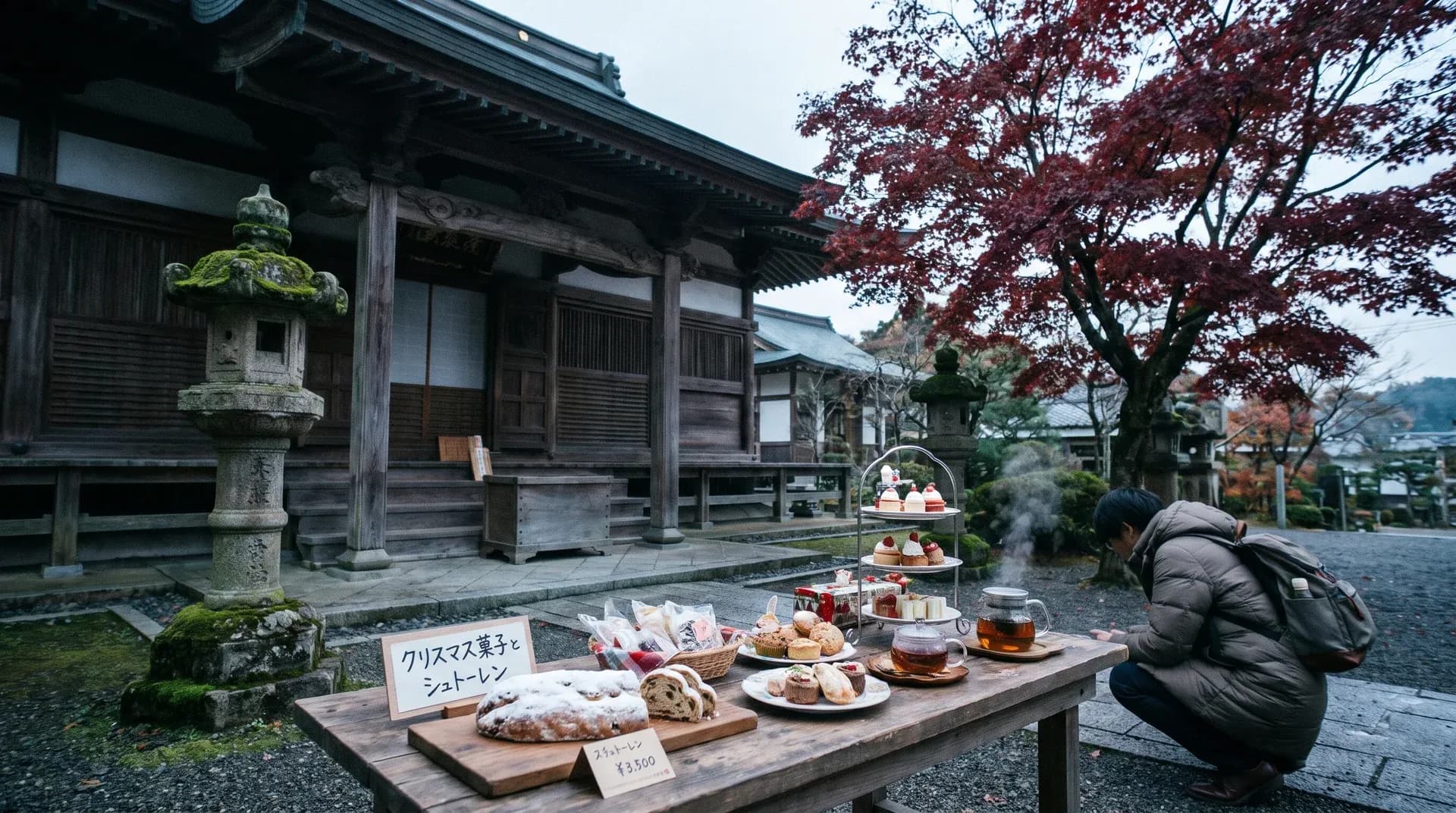
Stollen: Traditional German Christmas bread with marzipan center. Best at Shibuya Hikarie Bakery (¥3,500 / $24 USD). Order the lemon zest variation for a Japanese twist.
Christmas Cake: Sponge cake with red bean paste and whipped cream. Found at department store food floors like Tokyu Food Show for ¥800 ($5 USD) per slice.
Katsu-sando Christmas Edition: Pork cutlet sandwich with holiday mayo. Available at Lawson convenience stores nationwide for ¥165 ($1 USD) during December special campaigns.
Yuzu Sorbet: Seasonal citrus dessert at upscale cafés. ¥650 ($4 USD) at Glutartine in Shibuya.
Ordering Tips & Dining Etiquette
In Japan, Christmas is not a religious holiday but a commercial celebration focused on couples and families. Many restaurants operate on a first-come, first-served basis for Christmas meals, so arriving 30 minutes before opening ensures availability. At department store food floors, payment occurs at the exit register, not at individual stalls. Tipping is not customary—leave money exactly as shown on the register screen. For afternoon tea reservations, specify dietary restrictions at booking time; gluten-free options exist at major hotels but require 24-hour notice.
Hidden Christmas Spots
Location: Louvre Café (ルブラール) - Omotesando
Inside the Omotesando branch of the famous museum shop, they serve a limited-edition Impressionist Christmas collection including a mini Monet-style stollen sculpture. Price: ¥2,800 ($19 USD). Take the Tokyo Metro Chiyoda Line to Omotesando Station, Exit 1, walk two minutes toward the Omotesando Hills complex. Open 10:00 AM to 7:00 PM. Small batch sells out by 3:00 PM daily; arrive before noon for the best selection.
Location: Kagurazaka's Hidden Patisseries
The old Geisha district of Kagurazaka hosts several family-run patisseries offering traditional European Christmas pastries. At Maison de la Paix, their Christmas trifle costs ¥1,200 ($8 USD). Take the JR Yamanote Line to Iidabashi Station, walk eight minutes west along Kagurazaka-dori. These shops close at 6:00 PM and don't accept credit cards larger than ¥100,000 ($675 USD). Cash is preferred; many owners speak limited English, so a simple "Kurisumasu no suto-ren wa doko desu ka?" helps.
Essential Traveler Checklist
- Pack comfortable walking shoes for December's 8-14°C temperatures; indoor venues are heated but you'll move between them frequently
- Download the Japan Travel app or use Google Maps with offline maps; most Christmas food venues lack English signage
- Carry ¥10,000-20,000 ($67-135 USD) in cash daily; convenience stores, markets, and small cafés often don't accept cards
- Bring a light jacket and gloves for outdoor market visits between 10:00 AM-4:00 PM when wind chill can drop to 5°C (41°F)
- Learn basic phrases: 'Kurisumasu no suto-ren wa doko desu ka?' (Where is the Christmas stollen?) and 'Yoyaku wo onegaishimasu' (I would like to make a reservation)
The holiday season transforms Tokyo into a confectionary wonderland, but success depends on planning. Start at Shibuya Hikarie Bakery for your stollen fix, reserve afternoon tea at Ginza Six or The Peninsula, and explore markets before heading to hidden gems in Omotesando and Kagurazaka. Book reservations 48-72 hours in advance, carry cash for smaller venues, and embrace the commercial joy of Christmas in Japan. The city's December pastry scene rewards those who arrive early, pay attention to timing, and follow the locals to their favorite holiday treats.
Detailed Venue-by-Venue Guide with Exact Access Information
Stollen Specialist Shops
Shibuya Hikarie Bakery (渋谷ヒカリエパンリサイクル)
Located on the third floor of Shibuya Hikarie building at 2-15-1 Shibuya, Tokyo 150-0002, this bakery operates daily from 10:00 AM to 7:00 PM. The stollen production begins each morning at 6:00 AM, ensuring the freshest batches are available when the doors open. The classic stollen contains no nuts due to common allergen concerns but offers a chocolate-chip variant for ¥3,700 ($25 USD) upon request. Payment accepts both cash and major credit cards including Visa, Mastercard, and JCB. The nearest restroom facilities are located at the Hikarie building's first floor near the information desk.
Tokyu Food Show Shibuya Basement Level (東急フードショー渋谷)
The underground food court beneath Tokyu Plaza Shibuya appears from 10:00 AM to 8:00 PM daily, with individual vendor stalls operating on slightly different schedules. The stollen vendor rotates weekly, typically featuring different regional German bakeries. Prices remain consistent between ¥1,800 and ¥2,500 depending on size and fillings. The venue provides wheelchair-accessible pathways throughout the basement level, with tactile guidance strips for visually impaired visitors. ATMs are available at the Tokyu Convenience Store within the complex for cash needs.
Luxury Afternoon Tea Venues
Ginza Six Level 7 Café (銀座六号雪の丘ブティック)
Situated within Ginza Six at 8-8-4 Ginza, Chuo-ku, Tokyo 104-0061, this café welcomes guests from 10:00 AM to 9:00 PM. The Christmas afternoon tea set, priced at ¥5,500 plus tax (currently 10%), totals ¥6,050 for the experience. Reservations can be made by calling 03-6274-4200 or through the Ginza Six website's English booking system. The terrace seating offers views of Ginza's pedestrian-friendly streets, making it ideal for sunny December afternoon visits between 2:00 PM and 4:00 PM when natural light enhances the holiday atmosphere. Valet parking is available for ¥600 ($4 USD) for those arriving by car, though public transportation is strongly recommended.
The Peninsula Tokyo Lounge (ペンシルベルク東京)
The Peninsula Tokyo, located at 1-8-1 Marunouchi, Tokyo 100-0005, operates its lounge from 11:00 AM to 11:00 PM daily. The December holiday afternoon tea package costs ¥8,800 per person and includes premium loose-leaf teas, finger sandwiches, assorted pastries, and a substantial stollen portion served with clotted cream. Reservations must be made directly through the hotel's concierge at 03-5220-1100 or via email at reservations@peninsula.com. The lounge enforces a smart-casual dress code, prohibiting shorts and sportswear during daytime hours. Morning visits between 11:00 AM and 1:00 PM tend to be quieter, allowing for more personalized service from the staff.
Market and Pop-Up Locations
Tsukiji Outer Market Holiday Pop-up (築地場外市場)
The temporary holiday market operates within the outer market area bounded by 4-chome to 5-chome of Tsukiji Hamacho, running from December 10 through December 20. Vendor hours shift between 10:00 AM and 5:00 PM, with peak activity between 11:00 AM and 2:00 PM. Access via Hibiya Line Hibiya Station Exit 3, then a seven-minute walk east along Harumi-dori toward the main market entrance. The pop-up section specifically occupies the northern third of the market's outer premises, clearly marked with bilingual signage indicating holiday vendors. Cash is essential here, as many pop-up stalls operate without card payment systems.
Breizh Café Aoyama (ブリッシュ・カフェ)
The Aoyama location sits at 1-2-3-6 Gaien, Aoyama, Tokyo 151-0053, with operating hours from 11:00 AM to 8:00 PM Monday through Saturday, and 12:00 PM to 6:00 PM on Sundays and holidays. The Christmas ham and cheese brioche costs ¥480 and is available only during December, paired with the café's house blend espresso at ¥650. Take the Ginza Line to Ginza Station, Exit B8, then walk six minutes south along Aoyama-dori until reaching the intersection with Omotesando-dori. The café features a small display case near the entrance showcasing daily pastry offerings, with staff available to recommend seasonal specialties.
Transportation Networks and Station Details
Navigating Tokyo's Christmas food circuit requires understanding the city's extensive rail network. The JR Yamanote Line provides circular coverage around central Tokyo, connecting Shibuya, Ginza, and Tokyo Station areas efficiently. For Shibuya Hikarie Bakery, use the Hikarie Exit (表参宅地下通り抜け) rather than the more crowded Shibuya Sky Exit. The Tokyo Metro Ginza Line offers direct access to both Ginza Six and Breizh Café Aoyama, with Ginza Station Exit A3 providing the most straightforward route to Ginza Six's northern entrance. When transferring between lines, allow 10-15 minutes for platform navigation, especially during December's increased tourist traffic. All major stations provide detailed English signage, though smaller venues may rely on staff assistance for directions.
The Suica card system integrates seamlessly with all major rail operators, allowing quick gate passage without purchasing individual tickets. For intensive Christmas food touring, consider the 24-hour Tokyo Metro pass at ¥1,000 ($7 USD), which covers all metro lines but excludes JR services. The Keisei Skyliner connects Narita Airport to Ueno Station in 41 minutes for ¥2,520 ($17 USD), providing access to the Tsukiji area via subsequent local train connections. Emergency cash reserves of ¥20,000-30,000 ($135-$200 USD) provide flexibility for unexpected opportunities or extended dining experiences.
Weather Considerations and Seasonal Adjustments
December in Tokyo presents unique challenges for food tourists. Average daytime temperatures range from 8°C to 14°C (46°F to 57°F), with morning lows often dropping to 5°C (41°F). Indoor venues maintain comfortable heating between 20°C and 24°C (68°F to 75°F), creating temperature differentials that require layering. Light winds can make outdoor market visits feel significantly colder, necessitating a medium-weight jacket and gloves for comfort. Rain is uncommon in December, but occasional drizzles require waterproof outer layers to protect both clothing and purchased pastries during transit.
The city's urban heat island effect creates microclimates where downtown areas remain slightly warmer than suburban stations. Schedule indoor food experiences during mid-afternoon hours (1:00 PM to 4:00 PM) when temperatures peak, reserving outdoor market visits for morning or late afternoon when crowds are thinner. Most Christmas food venues operate year-round HVAC systems, ensuring consistent indoor temperatures regardless of external conditions. Emergency shelter locations include department store common areas and station concourses, providing warmth during unexpected weather delays.
Payment Methods and Cash Management
Understanding Tokyo's payment landscape proves crucial for Christmas food experiences. Major hotels, department store cafés, and chain establishments accept credit cards including Visa, Mastercard, JCB, and American Express. However, independent bakeries, market stalls, and traditional establishments often operate cash-only systems. Carry small denominations (¥1,000 and ¥5,000 notes) for smaller purchases, as ¥10,000 bills may be refused by vendors lacking change facilities. For Christmas dessert splurges totaling ¥5,000 or more, consider splitting payments across multiple transactions to avoid single-bill limits. Some upscale venues impose ¥100,000 ($675 USD) per-transaction caps, requiring separate payments for larger groups.
For Christmas dessert splurges totaling ¥5,000 or more, consider splitting payments across multiple transactions to avoid single-bill limits. Some upscale venues impose ¥100,000 ($675 USD) per-transaction caps, requiring separate payments for larger groups. Keep receipts for potential tax refund programs available to foreign tourists spending over ¥5,000 daily at designated retail establishments. Emergency cash reserves of ¥20,000-30,000 ($135-$200 USD) provide flexibility for unexpected opportunities or extended dining experiences.
Cultural Context and Dining Etiquette
Tokyo's Christmas food culture reflects Japan's unique approach to Western traditions. Rather than emphasizing religious significance, Christmas has evolved into a celebration of romance, luxury, and premium experiences. This manifests in the elevated pricing and formal service standards observed at Christmas dessert venues. Japanese dining etiquette emphasizes quiet enjoyment and respectful consumption, particularly in shared spaces like department store food courts. Speak softly, dispose of trash in designated bins (often requiring separate recycling streams), and avoid photographing food without permission in formal settings.
Reservations at upscale venues typically require specifying party size, dietary restrictions, and preferred arrival time within a 30-minute window. Japanese service culture expects punctuality, so arriving 5-10 minutes early demonstrates respect for staff preparation time. When ordering seasonal items like stollen, staff appreciate customers asking about ingredients and preparation methods, even in English. Simple phrases like "Omakase onegaishimasu" (I'll leave it to you) can enhance interactions with knowledgeable pastry chefs.
Extended Recommendations for Food Enthusiasts
Beyond the core Christmas offerings, Tokyo's culinary landscape provides complementary experiences worth exploring. Pair stollen tasting with traditional German beer at Stand-up Café in Shibuya, where imported brands like Bitburger and Warsteiner maintain proper refrigeration. The Christmas cake, often misunderstood as fruitcake, actually refers to Japan's sponge cake tradition topped with fresh strawberries and whipped cream, available seasonally at Café de Cristal locations throughout Ginza.
For those interested in deeper cultural immersion, attend Christmas-themed workshops at Tokyo's culinary schools, where professional bakers demonstrate stollen preparation techniques. The Japan Bakery & Confectioners' Association occasionally hosts public demonstrations in collaboration with department store food halls during December. Additionally, consider timing visits to coincide with New Year's osechi-ryori preparations at specialty shops, extending the holiday food experience beyond Christmas itself into the broader Japanese winter celebration season.
Related reading
- [Japan Autumn Travel Guide: Peak Foliage Dates, Costs & Trans](/blog/japan-autumn-travel-guide-peak-foliage-dates-costs-transit)
- Japan Summer Travel
- [Japan Travel Planning Guide: Costs, Transit, and Autumn Itin](/blog/japan-travel-planning-guide-costs-transit-autumn)
- [Japan Travel 2026 Updates: Tax-Free Changes, Diamond Fuji & ](/blog/japan-travel-2026-updates-tax-free-diamond-fuji-disaster-prep)
- [Tokyo November Travel Guide: Weather, Costs & Festival Logis](/blog/tokyo-november-travel-guide-weather-costs-festivals)
Sources
- Programming errors behind false October quake warning
- Best Stollen in Tokyo for Christmas 2026
- Christmas Afternoon Teas in Tokyo 2026
- Life-size Gundam statue’s head returning to Tokyo neighborhood this month
- Tobu launches facial recognition payment service at Tokyo store in Japan first
Frequently Asked Questions
What is Tokyo Christmas food?
This guide unlocks authentic Christmas dining in Tokyo for 2026, covering where to find the best stollen (¥3,500 / $24) and holiday afternoon teas at luxury hotels. Key insight: Tokyo's Christmas pastry scene peaks December 15-22, with many venues requiring advance reservations at least 3 days out.
Who is Tokyo Christmas food best for?
It suits readers who want a practical, step-by-step path to the outcome described above rather than abstract theory. If you are starting from zero, follow the numbered steps in order and treat the caveats section as a checklist.
How long does Tokyo Christmas food take to work?
Timelines vary with execution, but the workflow in this guide is designed to produce a first measurable result within the timeframes stated in each step. Set expectations from the caveats section, not from hype.
Ready to explore Japan?
Browse tours and activities, or tell us what you're looking for and we'll suggest the best options.
Stay Connected in Japan
Airalo eSIMs work on arrival — no physical SIM needed. Data plans from $5 for 7 days.
Travel Insurance for Japan
Medical, trip cancellation, and adventure sports covered. Plans from $1.5/day.