
Okinawa Food Guide: Champuru, Sea Grapes, and Awamori
By Tour in Japan editors · Updated
Okinawa's food is unlike anything else in Japan — a unique blend of Chinese, Japanese, and indigenous Ryukyuan influences with ingredients found nowhere else.
Okinawan food is the most distinct regional cuisine in Japan, shaped by centuries of independence as the Ryukyu Kingdom and by the subtropical climate of Japan's southernmost islands. The Okinawa food scene uses ingredients — bitter gourd, purple yam, sea grapes, pork trotters, awamori spirits — that barely appear elsewhere in the country. The island's cuisine is also linked to its remarkable longevity statistics; Okinawa has one of the highest concentrations of centenarians in the world, and local foods like goya (bitter melon), tofu, and pork are credited as contributing factors.
Goya Champuru and the Champuru Tradition
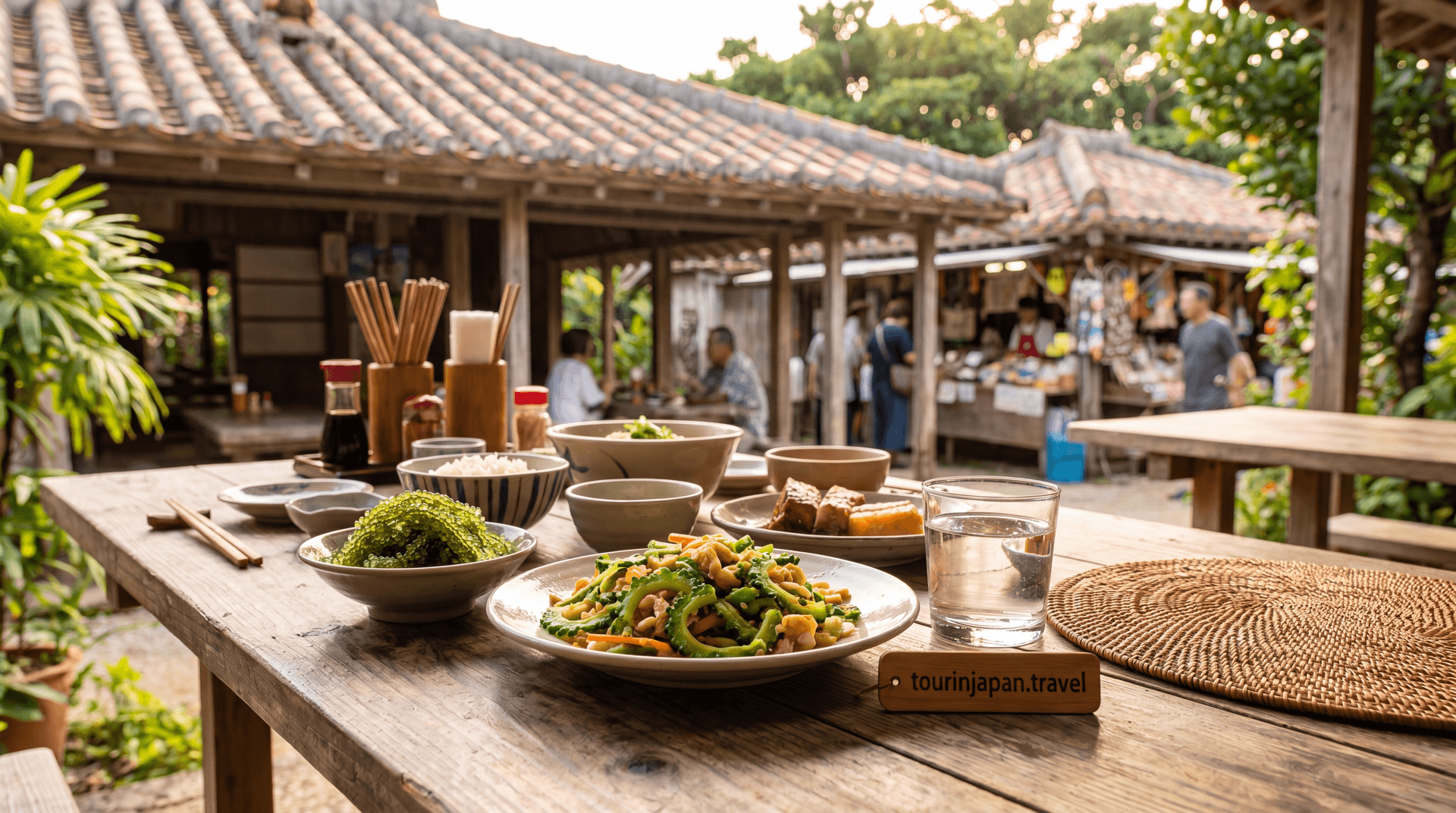
Champuru means mixed or blended in the local dialect, and it describes Okinawa's most characteristic cooking technique: stir-frying vegetables, tofu, and pork together in a single pan. Goya champuru — bitter melon champuru — is the most famous version. Sliced bitter melon is stir-fried with egg, tofu, and Spam or pork, the whole dish seasoned with dashi and soy sauce. The bitterness of goya is real and pronounced; first-time diners sometimes need two tastings to come around to it, but it is one of the most addictive dishes in Okinawan cuisine once you do.
Other champuru variations include tofu champuru (the base version without goya), soumen champuru (noodle stir-fry), and fu champuru (wheat gluten mixed with vegetables). All are cheap, filling, and available at the many casual shokudo (cafeteria-style restaurants) in Naha for 800-1,200 yen per dish.
Okinawa Soba, Sea Grapes, and Awamori
Okinawa soba is not made with buckwheat (unlike mainland soba) but rather with wheat flour noodles in a pork and bonito broth, topped with braised pork ribs (soki) or thinly sliced pork belly (sanmai niku), green onions, and pickled red ginger. It is the Okinawan national dish and available everywhere from upscale restaurants to roadside stalls. Umi-budo (sea grapes) are a type of seaweed with small grape-like clusters that pop in your mouth with a burst of seawater — served simply with ponzu dressing as a side dish or a drinking snack.
Essential Okinawa food and drink experiences
- Awamori: Okinawa's distilled spirit made from Thai indica rice, aged in clay pots; stronger than sake (30-43% alcohol), served on the rocks
- Rafute: braised pork belly in sweet soy and awamori sauce — meltingly tender, served as a main or bento component
- Taco rice: Okinawan fusion dish of taco-seasoned ground beef over rice, invented near US military bases in the 1980s
- Sata andagi: deep-fried doughnut balls sold at markets and festivals, crispy outside, cakey inside, around 100 yen each
- Umibudo (sea grapes): best bought fresh at Makishi Public Market in Naha or at roadside stands in the central islands
- Makishi Public Market: the covered market in Naha's Kokusai-dori where you can buy fresh fish upstairs and have it cooked at a restaurant downstairs
- Beni-imo: purple Okinawan sweet potato used in tarts, ice cream, and chips — the most popular food souvenir
The Kokusai-dori shopping street in Naha runs for about 1.6 kilometers through the city center and is lined with restaurants, souvenir shops, and food stalls. While it is touristy, the covered market arcade branching off it — Heiwa Dori and Mutsumi-bashi Dori — are more local and home to excellent old-school shokudo serving home-style Okinawan food. A three-day food plan in Okinawa should include at least one meal at a traditional Okinawan shokudo, a sit-down awamori session at a bar, and a visit to Makishi Market for fresh seafood.
Stay Connected in Japan
Yesim eSIMs work on arrival — no physical SIM needed. Japan data plans from $5.