Japan October 2026 Events, Food, and Safety Guide
This guide covers Tokyo Bay Fireworks on October 24, Osaka's Glico sign replacement before removal, peak-season shiitake mushrooms at ¥800–¥1,200 per pack, and bear deterrent gear for rural hikes. Budget ¥15,000–¥25,000 daily for mid-range travel including IC card transit.
Tokyo Bay Fireworks returns on 24 October 2026 at Harumi Futo Park with paid viewing only: gates at 16:00, show 19:00–20:30, reserved seats ¥6,000–12,000 (~$38–76) via official lottery.
Key facts
- Cost: ¥6,000–12,000 for a reserved fireworks seat; ¥4,000 for day-of standing, if released.
- Time needed: The Kōenji festival runs 19–25 October; the fireworks are one evening.
- Best season: Late October, for shiitake season and the festival calendar.
- Book ahead: Fireworks seating, by lottery. Applications for 2026 closed on 15 September.
- Watch out for: No free riverside spots this year. Paid viewing only.
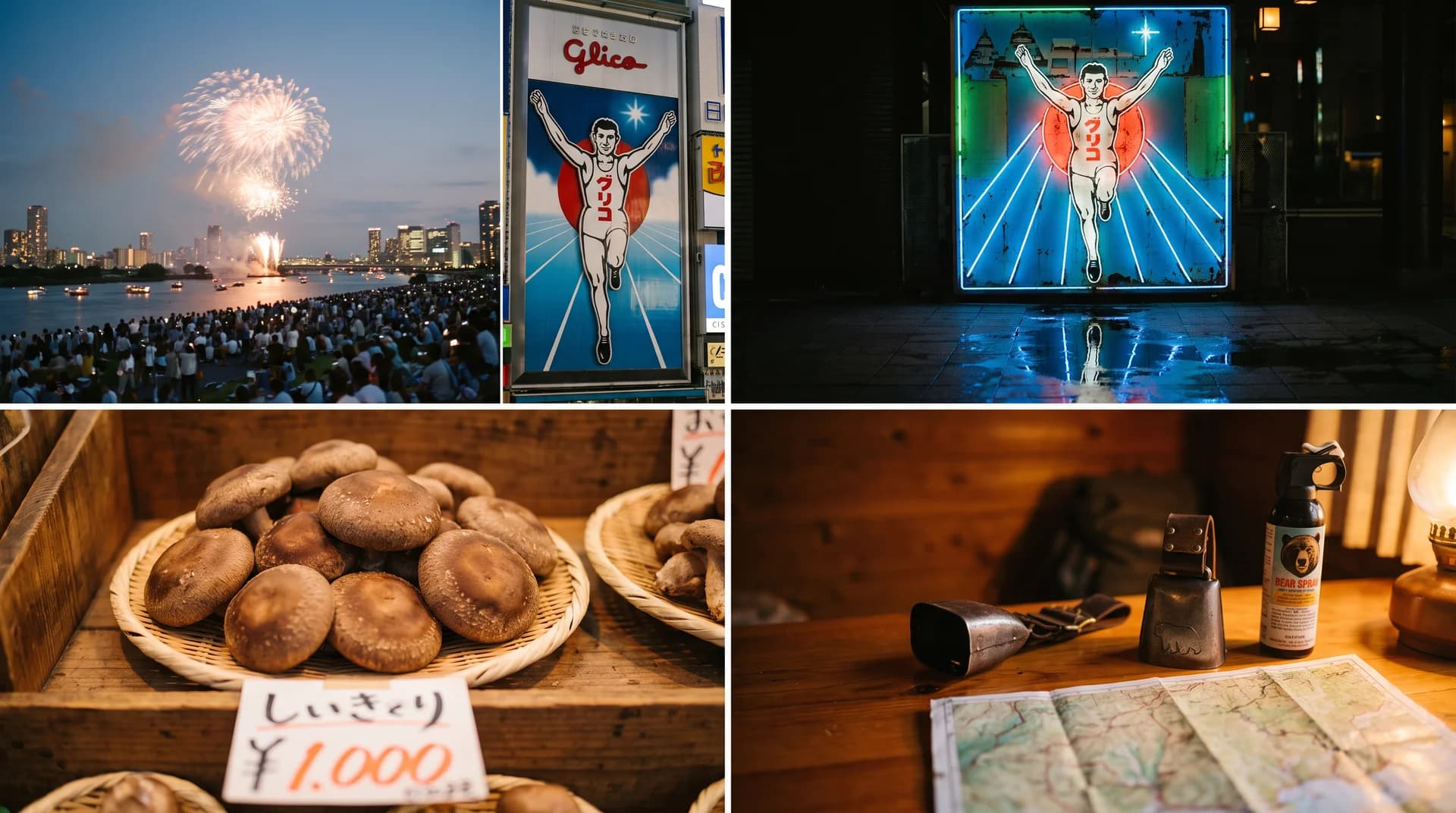
The smell of grilled shiitake hits you before you see the stall — thick caps charred over charcoal, brushed with soy and mirin, served on a paper plate for ¥300 at a Kōenji backstreet yakitori counter. This is peak shiitake season in Japan, the second of two annual flavor windows, and it coincides with the Tokyo Bay Fireworks Festival returning October 24 after a multi-year hiatus, the final weeks of Osaka's sixth Glico Running Man sign before its replacement, and a surge in bear encounters across Hokkaido and northern Honshu that has outdoor shops selling out of ¥4,500 bell-and-spray kits. This guide is for independent travelers hitting Japan in late October 2026 who want to catch time-sensitive events, eat seasonally, and stay safe on rural trails without blowing a ¥20,000 daily budget.
Essential Highlights & Local Itinerary
Tokyo Bay Fireworks Festival — October 24, 2026
The Tokyo Bay Fireworks Festival relaunches at Harumi Futo Park (Harumi 5-chome, Chuo-ku) with paid viewing zones only — no free riverside spots this year. Gates open 16:00; show runs 19:00–20:30. Reserved seats cost ¥6,000–¥12,000 ($40–$80) via official lottery (applications closed September 15). Day-of standing tickets, if released, sell at ¥4,000 ($27) from 10:00 at the venue box office located near the park's main north entrance. To get there, take the Yurikamome Line to Shijomae Station (¥220 from Shimbashi on Suica) and walk 12 minutes south through the Harumi waterfront district. Arrive by 15:00 for decent standing room and to navigate the security checkpoints. Toilets and konbini (convenience stores) are located within 300 meters of the main viewing area; bring a heavy-duty picnic sheet as the concrete waterfront gets cold fast once the sun sets around 17:10. Source: Tokyo Bay Fireworks Festival 2026 official site (updated July 2026) and Chuo City tourism bulletin (September 2026).
Kōenji Festival — October 19–25, 2026
Kōenji's annual Awa Odori dance festival spills across the shopping arcades north of Kōenji Station (JR Chuo Line, ¥220 from Shinjuku). The main parade runs 17:00–21:00 daily October 22–25; practice sessions and street food stalls (yakisoba ¥500, kakigori ¥400) start October 19. The heart of the action is in the Palmer Street area and the north exit shopping street. Stay near the station — capsule hotels in the Suginami district run ¥4,500–¥6,000 ($30–$40) — and walk the shotengai for shiitake donburi (¥950) at Maruichi Shokudo, a 40-year-old diner two minutes from the north exit. The festival draws 100,000+ over the weekend; weekday evenings are manageable for those wanting photos without the crush. Visit between 16:00 and 17:00 to see the dancers warming up in the side alleys before the formal parade begins.
Halloween Parades — Shibuya and Ikebukuro, October 25–26
Shibuya's unofficial Halloween gathering remains banned from public drinking October 25–27 per ward ordinance; police enforce this strictly from 18:00. Costumed crowds shift to Center-gai and Cat Street for photos — there is no official parade, just extreme density. To avoid the most congested areas, stick to the outskirts of the Shibuya Crossing district. Ikebukuro's official Ikebukuro Halloween Cosplay Festival runs October 25–26 at Sunshine City (JR Yamanote to Ikebukuro, ¥170 from Shinjuku). Registration ¥2,500 ($17) includes changing rooms and stage access; day-of walk-ins ¥3,500 if capacity allows. The event typically runs from 10:00 to 18:00. Trains on the Yamanote and Fukutoshin lines run extended schedules until 01:00 to accommodate the crowds. For those seeking a more curated experience, the Sunshine City plaza offers designated photo zones and professional lighting from 13:00 to 16:00.
Osaka Glico Running Man — Final Weeks at Dotonbori
The sixth-generation Glico sign at Ebisu-bashi Bridge (Dotonbori 1-chome, Chuo-ku) will be dismantled in November 2026 for a seventh-generation LED replacement. Current sign illuminates daily 18:00–23:00. Best photo angle: north bank of Dotonbori Canal, 20 meters west of the bridge, where tripod use is allowed before 20:00. Access is via the Subway Midosuji Line to Namba Station (Exit 14, 3-minute walk). There is no entry fee to view the sign from the street. Combine this with a visit to the kuidaore alley — takoyaki ¥600 for 8 pieces at Wanaka and kushikatsu ¥1,200 set at Daruma. The area is most vibrant between 19:00 and 21:00, though it remains crowded throughout the evening. Note that the bridge itself can become a bottleneck, so move quickly to keep traffic flowing. Source: Ezaki Glico Co., Ltd. press release (June 2026) confirming November 2026 replacement schedule; Osaka City tourism office verification (August 2026).
Seasonal Shiitake — Where to Eat and Buy
Log-grown shiitake (genboku) peak now through November. Tokyo's Tsukiji Outer Market (Tsukiji 4-chome, Chuo-ku; Hibiya Line to Tsukiji Station) sells 200g packs ¥800–¥1,200 ($5.30–$8) at Marutake Suisan (stall 7, 05:00–14:00). In Kyoto, Nishiki Market (Nakagyo-ku; Karasuma Line to Shijo) has dried donko ¥1,500/100g at Shiitake Honpo, located in the central aisle of the covered market. For a cooked meal, try Shiitakeya in Shimokitazawa (Odakyu Line, ¥210 from Shinjuku) — grilled set ¥1,300 with rice, miso soup, and pickles. Prices reflect October 2026 market rates and vary slightly based on the size of the caps. The best time to shop for fresh mushrooms is between 07:00 and 09:00 before the midday tourist rush.
Practical Details & Dual-Currency Budget
Best Season & Weather
Late October sits in autumn shoulder season — daytime highs 19–22°C in Tokyo, 15–18°C in Kyoto, 10–14°C in Sapporo. Rain probability 30%; typhoon risk drops sharply after October 15. Foliage starts in Hokkaido and Tohoku; central Japan peaks mid-November. Crowds moderate — foreign visitor numbers 15% below August peak per JNTO October 2025 data. Pack layers: a light jacket for Tokyo and a medium-weight coat for Sapporo or the Japanese Alps. Humidity levels drop significantly compared to September, making it the ideal time for walking tours in Kyoto's Higashiyama district.
Budget Breakdown (Per Person, Per Day)
Tier | Accommodation | Food | Transit | Attractions | Total (JPY) | Total (USD) |
|---|---|---|---|---|---|---|
Budget | ¥4,500 (capsule/hostel) | ¥3,000 (konbini/ramen) | ¥1,000 (Suica pay-as-you-go) | ¥1,500 | ¥10,000 | $67 |
Mid-range | ¥12,000 (business hotel) | ¥5,000 (izakaya + market) | ¥1,500 (IC card + occasional taxi) | ¥3,000 | ¥21,500 | $144 |
Comfort | ¥25,000 (ryokan/4-star) | ¥10,000 (kaiseki + drinks) | ¥3,000 (Green Car + taxi) | ¥5,000 | ¥43,000 | $288 |
Figures based on October 2026 rack rates; book business hotels 3 weeks out for ¥9,000–¥11,000 via Jalan or Rakuten Travel. For those staying in Kyoto, budget an extra ¥1,000 per day for local bus fares if not using a day pass.
Transit & Access
Suica/Pasmo IC cards work nationwide on subways, JR East lines, buses, and konbini. Purchase ¥2,000 (¥500 deposit + ¥1,500 credit) at any JR East station machine. JR Pass (7-day ¥50,000 / $335) only pays off with round-trip Tokyo–Kyoto–Tokyo plus one long ride (e.g., to Hiroshima). For Tokyo-only, skip the pass — daily cap on Suica is ¥1,000 on subways. Narita Express to Tokyo Station ¥3,070 ($20) one-way, 60 minutes; Keisei Skyliner ¥2,570 ($17), 41 minutes to Ueno. Haneda Monorail + Yamanote ¥650 ($4.30), 25 minutes to Hamamatsucho. For regional travel in October, the Highway Bus (Willer Express) is a budget alternative to the Shinkansen, with routes from Tokyo to Osaka starting at ¥5,000 depending on the booking window.
Where to Eat & Local Food Secrets
Tokyo: Kōenji and Shimokitazawa
Beyond festival stalls, Kōenji's Torihei (2-min walk north exit) serves shiitake-yaki ¥350 per skewer, 17:00–23:00, cash only. The shop is located in a narrow alleyway and usually has a line of 5–10 people. Shimokitazawa's Mogmog (3-min walk south exit) does shiitake ramen ¥1,100 — rich dashi, no pork, vegetarian on request. They are open 11:00–21:00. Both take Suica at the register, though small side-stalls in Kōenji often require coins. For a mid-range dinner, try the izakayas along the Kōenji shopping street where a beer and three skewers usually cost under ¥2,000.
Osaka: Dotonbori and Kuromon Market
Kuromon Ichiba (Nippombashi Station, Sennichimae Line) opens 09:00–18:00. Grilled scallop ¥800, wagyu skewer ¥1,200, fresh shiitake ¥500 each. Eat standing at the counter; vendors prefer cash. Daruma main branch (Dotonbori 1-chome) kushikatsu set ¥1,200 — dip once, no double-dipping. Wanaka takoyaki ¥600/8 pieces, line moves fast. For a more quiet experience, head to the Hozenji Yokocho alley, where small restaurants serve traditional Osaka cuisine in a stone-paved setting; expect to pay ¥3,000–¥5,000 for a dinner set.
Kyoto: Nishiki and Pontocho
Nishiki Market's Shiitake Honpo sells fresh log-grown ¥1,200/200g, dried donko ¥1,500/100g. Sample grilled caps free at the counter between 10:00 and 16:00. Pontocho alley (Kawaramachi Station, Hankyu Line) — Gion Karyo lunch kaiseki ¥4,500 includes seasonal shiitake chawanmushi. Dinner kaiseki ¥12,000; reserve 2 weeks ahead via Pocket Concierge. To access Pontocho, enter from the riverside path near the Shijo Bridge. Most establishments here are open from 17:00, though lunch spots in the surrounding Gion area operate from 11:30 to 14:00.
Rural Hiking Fuel
Convenience stores (7-Eleven, FamilyMart, Lawson) stock onigiri ¥150–¥180, boiled eggs ¥120, calorie mate bars ¥200. For mountain huts in the Japan Alps or Hokkaido, bring ¥1,000–¥2,000 cash per meal — no cards accepted above 1,500m. Always carry an extra 500ml bottle of water (¥110 at konbini) as vending machines are rare on the actual trails. In October, the "Autumn Harvest" bento boxes available at JR stations (Ekiben) often feature seasonal mushrooms and chestnuts, priced between ¥1,100 and ¥1,800.
Essential Traveler Checklist
- IC Card & Cash: Load Suica with ¥5,000 on arrival; carry ¥30,000 cash for rural areas, temples, and market stalls — 40% of vendors still cash-only. Use 7-Eleven ATMs for the best exchange rates.
- Bear Deterrent Kit: For hikes in Hokkaido, Tohoku, or Nagano Alps, buy ¥4,500 bell-and-spray set at Montbell (Shinjuku, Osaka, Sapporo) or Yamatoya — spray effective range 4m, 1.5-second burst. The bells are essential for alerting bears of your presence in dense October foliage. Source: Japan Bear Network 2026 encounter reports (data through September 2026) and Montbell product specs (2026 catalog); Hokkaido Prefectural Police advisory (October 2026) confirming increased foraging activity.
- eSIM: Install Ubigi or Airalo Japan plan (10GB/30 days ¥3,200 / $21) before departure; activates on landing. Pocket Wi-Fi rental ¥900/day at airport counters (Ninja WiFi or Global WiFi) is better for groups of 3+.
- Temple Dress Code: Shoulders and knees covered at active temples (Kiyomizu-dera, Senso-ji inner hall). Remove hats; no tripods inside halls. Shoes off at ryokan and home-stays. Carry a pair of clean socks as you will be walking on wooden floors frequently.
- Key Phrases: "Sumimasen" (excuse me), "Onegaishimasu" (please), "Okanjo onegaishimasu" (check please), "Kore wa nani desu ka?" (what is this?). For food allergies, carry a printed card stating "Shiitake arerugii ga arimasu" (I have a shiitake allergy) if applicable.
How much does the Tokyo Bay Fireworks Festival cost in October 2026?
Reserved seats cost ¥6,000–¥12,000 ($40–$80) via lottery; day-of standing tickets, if available, are ¥4,000 ($27). No free viewing areas exist for the 2026 event at Harumi Futo Park. Gates open at 16:00, and the show begins at 19:00.
Is the Osaka Glico Running Man sign still up in late October 2026?
Yes. The sixth-generation sign at Ebisu-bashi Bridge remains illuminated daily 18:00–23:00 through October 2026. Dismantling for the seventh-generation replacement begins in November 2026, making October the final month for photos of the current version.
What bear safety gear should I carry for hiking in rural Japan?
A ¥4,500 bell-and-spray deterrent kit from Montbell or Yamatoya is standard. The spray has a 4-meter effective range and 1.5-second burst. Bear encounters have risen sharply in Hokkaido, Tohoku, and the Nagano Alps through 2026, especially as bears forage for winter food in October.
When is shiitake mushroom peak season in Japan?
Log-grown shiitake (genboku) peaks twice yearly — spring and autumn. The autumn window runs October through November 2026. Fresh 200g packs sell for ¥800–¥1,200 ($5.30–$8) at Tsukiji and Nishiki markets, with quality peaking in the last two weeks of October.
Do I need a JR Pass for a Tokyo–Kyoto–Osaka trip in October 2026?
Only if you add a long-distance leg like Hiroshima or Kanazawa. A 7-day JR Pass costs ¥50,000 ($335); Tokyo–Kyoto round-trip Shinkansen is ¥27,000 ($181). For the golden route alone, pay-as-you-go on Suica or buy point-to-point tickets at the station kiosks.
Want weekly Japan travel updates — event dates, fare changes, and seasonal food windows — delivered to your inbox? Subscribe at /newsletter.
Related reading
- Tokyo Autumn Guide: Foliage, Ghibli Events and Local Eats
- Tokyo Anime and City Guide: Logistics, Costs, and Events
- Japan Autumn Travel Guide: Foliage Forecasts and Snacks
- Tokyo Travel Guide: August 2026 Logistics and Updates
- Tokyo October Travel Guide: Logistics, Costs, and Events
Sources
Verified 2026-10-26.
Ready to explore Japan?
Browse tours and activities, or tell us what you're looking for and we'll suggest the best options.
Stay Connected in Japan
Airalo eSIMs work on arrival — no physical SIM needed. Data plans from $5 for 7 days.
Travel Insurance for Japan
Medical, trip cancellation, and adventure sports covered. Plans from $1.5/day.