Fuji Five Lakes: views, activities and access
A guide to the Fuji Five Lakes, covering Kawaguchiko and the other lakes, seasonal activities, cave and hiking options, and transport from Tokyo.
Affiliate link — we may earn a commission at no extra cost to you. Affiliate disclosure
Fuji Five Lakes Guide: Views, Activities, and How to Get There
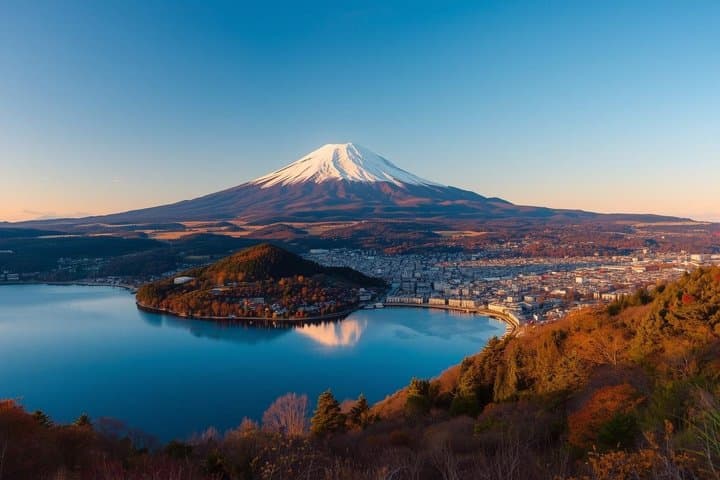
The Fuji Five Lakes—known locally as Fujigoko—are Yamanakako, Kawaguchiko, Saiko, Shojiko and Motosuko. They lie in southeastern Yamanashi Prefecture near the border with Shizuoka, at the northern base of Mount Fuji. The crater lakes offer hot springs, outdoor recreation and mountain views, with reflections that are especially striking in spring and autumn. Explore the Fuji Five Lakes
The Five Lakes
Lake Kawaguchiko (河口湖)
Kawaguchiko is the most developed of the lakes and a convenient base for museums, Fuji-Q Highland and hot springs. A lakeside bus connects visitors with museums such as the Itchiku Kubota Art Museum, theme parks including Fuji-Q Highland and Thomas Land, and onsen such as Kawaguchiko Kaiun no Yu. Fuji-Hakone-Izu National Park access
The Mt. Fuji Panoramic Ropeway is a 15-minute walk from Kawaguchiko Station and climbs 1,000 metres to Mount Tenjo for panoramic views; the trailhead for hiking the mountain starts near the ropeway station. From Kawaguchiko you can also take a bus to Oshino Hakkai, a collection of ponds surrounded by well-preserved traditional dwellings. Fuji Five Lakes itinerary
Lake Yamanakako (山中湖)
Yamanakako is the largest of the five lakes and a good option for overnight accommodation, with hotels and inns in the area. You will also find hot springs on the western side of the lake, with views of Mount Fuji in the distance. Fuji Five Lakes itinerary
Lake Saiko (西湖)
Saiko borders Aokigahara Forest and is a base for hiking, camping, fishing and boating. Three caves are open to visitors: Saiko Bat Cave, Narusawa Ice Cave and Fugaku Wind Cave. Saiko Bat Cave is the largest, with chambers and tunnels; Narusawa Ice Cave has large ice pillars from early winter to mid-spring; and Fugaku Wind Cave was once used to store ice. Fuji Five Lakes itinerary
Buses from Kawaguchiko Station take about 30 minutes to the Wind Cave or Ice Cave bus stop, and the retro bus also serves the area. Wind Cave and Ice Cave access
Lake Shojiko (精進湖)
Shojiko is the smallest of the five lakes. The Eboshi-dake Panorama Platform on the southwest side gives a view of the reflected image of Mount Fuji known as the Upside-down Fuji. Hiking, camping and fishing are options on land, and you can also fish and go boating on the water. Fuji Five Lakes Area
Lake Motosuko (本栖湖)
Motosuko is the deepest of the Fuji Five Lakes. The view from the north shore is the one depicted on the ¥1,000 bill. You can camp, hike and ride horses in warmer months, and the glass-bottom boat Moguran gives underwater views. Fuji Five Lakes Area
The lake is also good for kayaking and swimming, and tulips bloom from April to May. Fuji Five Lakes itinerary
Activities by Season
Spring
The Fuji Shibazakura Festival is scheduled for 11 April–24 May 2026. Adult admission is ¥1,000–¥1,300 on the day (2026), with advance tickets slightly cheaper; check blooming conditions and current prices before you go. Fuji Shibazakura Festival tickets
Hydrangeas bloom around Mount Tenjo in June and July. Fuji Five Lakes itinerary
Summer
The official Mount Fuji climbing season runs from 1 July to 10 September. Buses run from Fujisan Station and Kawaguchiko Station to the 5th Station; the 2026 timetable lists ¥1,950 one-way and ¥3,000 return. Check the day's service before travelling. Mount Fuji and around 2026 bus timetable
Lake Kawaguchiko's fireworks festival is scheduled for 5 August 2026, 19:45–20:40. Lake Kawaguchiko Fireworks Festival
Water sports are popular at Yamanakako, including boating, fishing, water skiing and windsurfing. Fuji Five Lakes Area
Autumn
The northern shore of Lake Kawaguchiko is known for autumn leaves in early November. The clear water reflects Mount Fuji particularly well in spring and autumn. Fuji Five Lakes Area
Winter
Kawaguchiko Winter Fireworks are scheduled for 11 displays on weekends between 24 January and 23 February 2026, from 20:00 to 20:20. The crisp winter air can make the display and its reflection especially vivid. Kawaguchiko Winter Fireworks
How to Get There
From Tokyo, highway buses run from Shinjuku Expressway Bus Terminal to Kawaguchiko Station. The JNTO bus timetable for 2026 lists ¥2,200 one-way from Shinjuku to Kawaguchiko and ¥2,300 one-way from Tokyo Station to Kawaguchiko; check the live timetable and fare before booking. 2026 bus timetable
By train, take a JR Chuo Line limited express to Otsuki Station, then change to the Fuji Kyuko Line for Kawaguchiko. The journey takes about 2 hours 5 minutes. The JR Rail Pass is not accepted on the Fuji Kyuko Line. Fuji Five Lakes itinerary Mount Fuji and around
From Mishima Station on the Tokaido Shinkansen, a Fujikyu bus takes about 1 hour 30 minutes to Kawaguchiko Station. Fuji-Hakone-Izu National Park access
Getting Around
Buses connect Kawaguchiko Station and Fujisan Station with the lakes. Omni Bus services run to Saiko, Shojiko and Motosuko; Fujikko Bus services run to Lake Yamanakako; and the Mount Fuji World Heritage Loop Bus covers the Kawaguchiko area. Check current routes, passes and fares locally. Fuji-Hakone-Izu National Park access
For the caves, buses from Kawaguchiko Station take about 30 minutes to the Wind Cave or Ice Cave bus stop; the retro bus also serves the area. Wind Cave and Ice Cave access
For Mount Fuji 5th Station, buses run from Fujisan Station and Kawaguchiko Station. The 2026 timetable lists ¥1,950 one-way and ¥3,000 return; check the day's service before travelling. 2026 bus timetable
Fuji Hakone Pass
The Odakyu Fuji Hakone Pass is listed at ¥11,100 for three days (2025). Check the current price and coverage before buying. Odakyu Fuji Hakone Pass price revision
Where to Stay
Kawaguchiko is the most developed lake and a convenient base for museums, Fuji-Q Highland and hot springs. Fuji-Hakone-Izu National Park access
Lake Yamanakako has hotels and inns, with hot springs on the western side and views of Mount Fuji. Fuji Five Lakes itinerary
For a quieter stay, look at Saiko and Shojiko, but check transport and availability before booking.
Food Near the Lakes
Local dishes include houtou (flat noodles cooked in miso-based soup with seasonal vegetables), Yoshida-no udon, venison dishes and wakasagi (lake smelt). The Fujikawaguchiko Gourmet Guide lists restaurants, opening hours and prices; menus and hours can change, so check with the shop. Fujikawaguchiko Gourmet Guide
Photography Tips
For the classic pagoda-and-Fuji composition, go to Chureito Pagoda in Arakurayama Sengen Park. The north shore of Lake Motosuko gives the view depicted on the ¥1,000 bill, and Saiko Iyashi no Sato Nenba offers thatched houses with Mount Fuji behind. Fuji Five Lakes Area
The Mt. Fuji Panoramic Ropeway gives an aerial perspective from Mount Tenjo. Fuji Panorama Ropeway
Early morning is often best: the itinerary notes that haze and clouds tend to obstruct the mountain later in the day, and recommends the north side of Lake Kawaguchiko at dawn. Fuji Five Lakes itinerary
A polarising filter can help reduce haze, and a tripod is useful for low-light shots.
Budgeting
There is no single daily budget that fits every trip. Check current prices for transport, cave admission, the ropeway and any pass before you travel. The 2026 bus timetable lists Shinjuku–Kawaguchiko at ¥2,200 one-way; the Fuji Hakone Pass is ¥11,100 for three days (2025); and the cave operator publishes admission fees on its site. 2026 bus timetable Odakyu Fuji Hakone Pass price revision Wind Cave and Ice Cave
Tips for First-Timers
- Check the weather. Mount Fuji is often hidden by clouds, and mornings are usually clearer. Fuji Five Lakes itinerary
- Start with Kawaguchiko, the most developed lake and the easiest base for sightseeing. Fuji-Hakone-Izu National Park access
- Visit Oshino Hakkai for its springs and traditional buildings. Fuji Five Lakes Area
- Try houtou and Yoshida-no udon. Fujikawaguchiko Gourmet Guide
- Bring layers and check bus times before travelling.
Related Articles
Ready to explore Japan?
Browse tours and activities, or tell us what you're looking for and we'll suggest the best options.
Stay Connected in Japan
Airalo eSIMs work on arrival — no physical SIM needed. Data plans from $5 for 7 days.
Travel Insurance for Japan
Medical, trip cancellation, and adventure sports covered. Plans from $1.5/day.