
Wakayama Coast Guide: Hashigui-iwa and Regional Logistics
By Tour in Japan editors · Updated
Visit Wakayama's coast to explore Hashigui-iwa, an 850-meter line of sea-carved stone pillars. This itinerary unlocks remote nature via JR lines and local buses. Costs for basic transit and snacks average ¥5,000 to ¥10,000 per day. Always carry a physical map for disaster-prone regions.
The salt spray hits your face as you walk along an 850-meter stretch of jagged, vertical rocks that look like the ruined pillars of a prehistoric bridge. This is Hashigui-iwa, a dramatic geological formation in Wakayama Prefecture where the Pacific Ocean crashes against weathered stone. For most travelers, this area is a stark contrast to the neon density of the city, offering a raw, windswept landscape that feels ancient and isolated.
This Wakayama coast travel guide is for independent travelers who have already seen the Golden Pavilion or the Shibuya Crossing and now want to venture into the Kii Peninsula. It is designed for those who prefer rugged coastlines over curated gardens and are comfortable navigating regional train lines and local bus schedules. Whether you are planning a side trip from Osaka or a longer exploration of the south, this guide provides the logistics needed to reach these remote pillars and handle the unpredictable nature of regional travel.
Essential Highlights & Local Itinerary
Hashigui-iwa (柱石岩): The Stone Pillars
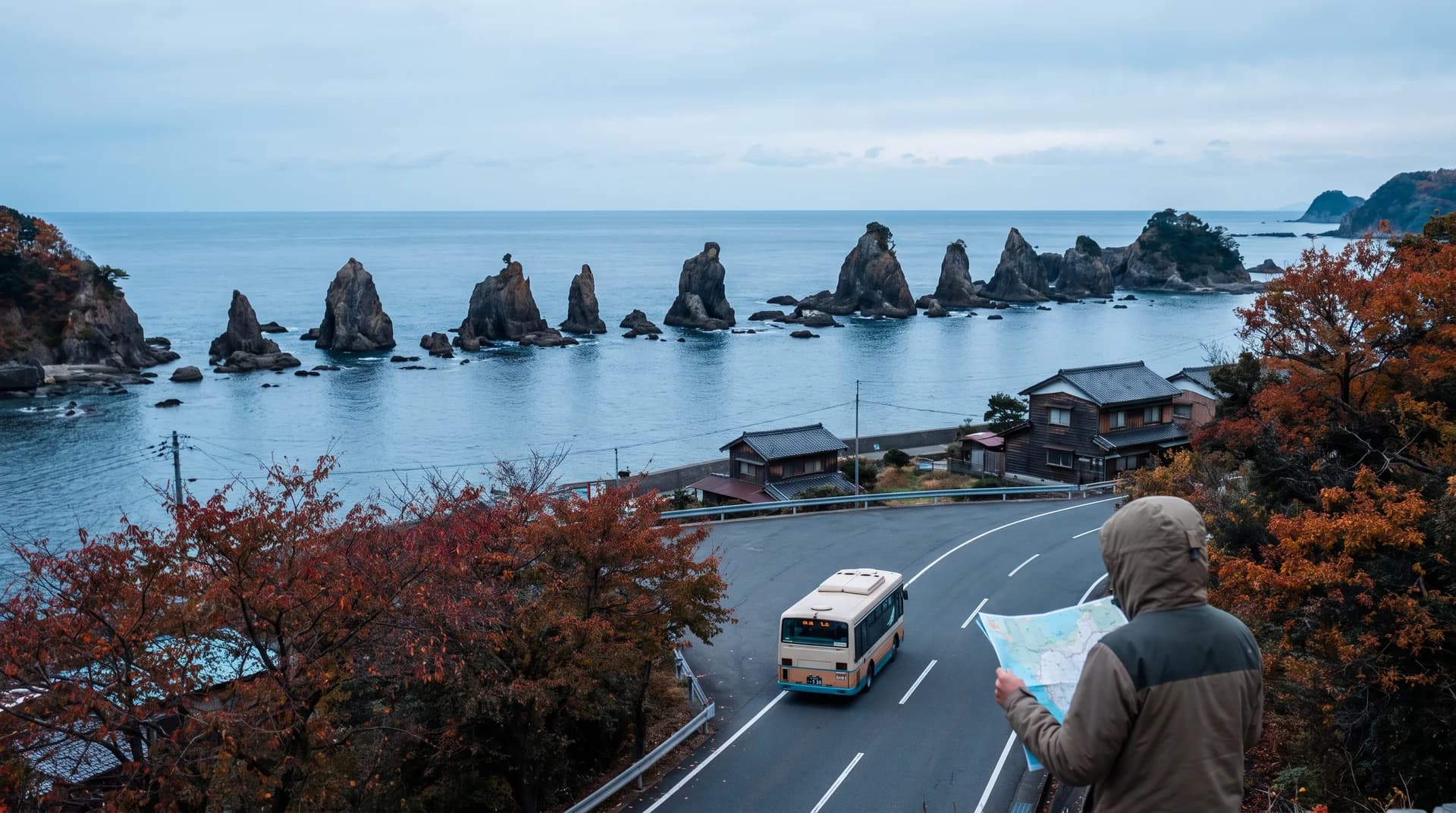
Hashigui-iwa is the primary draw of this coastal stretch. The site consists of a long line of rocks extending into the sea, which local legend claims were the remnants of a bridge built in a single night by a deity to cross the ocean. Geologically, these are the result of tectonic uplift and the relentless erosion of the Pacific, creating a linear formation of sedimentary rock that stretches nearly a kilometer.
Unlike the crowded shrines of Kyoto, the experience here is defined by the sound of the tide and the sheer scale of the rock formations. Depending on the tide, you can either walk along the shoreline or, during low tide, venture further out onto the rocks themselves. Be cautious: the surfaces are often covered in a thin layer of algae or salt crystals, making them incredibly slick.
Logistics for the Pillars: To get here, take the JR Wakayama Line to Kumanoura Station. From the station, the rocks are accessible via a short walk (approximately 15-20 minutes) or a local taxi. I recommend arriving between 7:00 AM and 9:00 AM to avoid the midday heat and the few tour buses that visit. You will spend roughly 2 to 3 hours exploring the shoreline and taking photos of the pillars against the horizon. There is no formal entry fee to walk along the public coastal areas, though parking for rental cars is available for a small fee, typically around ¥500 / ~$3 USD per 24 hours.
Kumanoura Coastal Walk
After visiting the pillars, walk through the small fishing village of Kumanoura. Instead of just wandering, head specifically to the harbor front where the daily catch is landed. You'll see the himono (sun-dried fish) racks lining the alleys—this is the village's signature craft.
Spend about 1 hour here. I suggest looking for the small, unmarked stalls selling dried horse mackerel or sea bream; these typically cost between ¥600 and ¥1,200 per pack. Most small vendors accept cash only, so keep ¥1,000 notes handy. If you have extra time, hike 10 minutes uphill toward the local shoreline shrines. From this elevation, you can see the entire linear formation of Hashigui-iwa stretching into the Pacific, a view you completely miss when standing on the beach.
Regional Transit Connection
If you are coming from a major hub, you will likely start in Wakayama City. From Wakayama Station, the journey to the coast involves a combination of JR trains and potentially a bus depending on your exact destination.
For those starting in Osaka, the most efficient route is taking the JR Hanwa Line or the Special Rapid service to Wakayama Station, then transferring to the JR Wakayama Line heading toward Kumanoura. The transit time from Wakayama City to the Hashigui-iwa area is approximately 1.5 to 2 hours one way. If you are coordinating this with other trips, you might find it useful to compare this to the Fukui Tile Making Tour + Osaka Ramen Day Trip for a sense of how regional day trips from the Kansai area are structured in terms of timing and fatigue.
The Play: Step-by-Step Execution
To successfully navigate this trip without getting stranded or missing connections, follow this precise operational sequence:
Step 1: The Morning Departure (07:30 - 09:30) Start your day at Wakayama Station. Purchase your ticket to Kumanoura Station. If you are using a JR Pass, ensure it is activated. The trains on the Wakayama Line are less frequent than the urban lines; check the timetable via Google Maps or the JR West app. A typical departure might be at 08:12 AM, arriving at Kumanoura around 09:45 AM. Use this time to buy a bottle of water and a light snack from the station kiosk, as options are limited once you reach the coast.
Step 2: The Final Mile (09:45 - 10:15) Upon exiting Kumanoura Station, you have two choices. If you are fit and the weather is mild, follow the signs toward the coast for a 1.5km walk. If you are traveling in a group or have limited time, look for the local taxi stand immediately outside the station. A taxi to the rocks will cost roughly ¥800 to ¥1,200 and takes about 5 minutes. Ensure the driver knows you want to go to "Hashigui-iwa" (pronounced ha-she-guy-ee-wa).
Step 3: The Pillar Exploration (10:15 - 13:00) Begin your walk from the western end of the formation. Move slowly and test each rock with your foot before committing your full weight. Take a 15-minute break at the mid-point to observe the wave patterns. If the tide is receding, move toward the outer pillars for the best photography angles. Use a wide-angle lens to capture the linear perspective of the rocks stretching toward the horizon.
Step 4: Village Integration & Lunch (13:00 - 14:30) Walk back toward the Kumanoura village center. Seek out a local shokudo (small eatery). Look for a sign mentioning "Kaisendon" (seafood bowl). Order the daily special. This is the time to use your cash, as these establishments rarely have credit card terminals. Spend 30 minutes after lunch exploring the small harbor and observing the fishing boats.
Step 5: The Return Leg (14:30 - 17:00) Head back to Kumanoura Station. Because trains are infrequent, missing your scheduled return can mean a 60-to-90-minute wait. Double-check your return time before leaving the village. On the train ride back to Wakayama City, use the time to upload your photos and check for any weather alerts for the following day.
Real-World Example: A Budgetary and Temporal Breakdown
To give you a realistic idea of how this trip looks in practice, let's look at a hypothetical itinerary for a solo traveler starting from Osaka Namba.
The Timeline:
- 07:00 AM: Depart Namba Station via the Nankai Line to Wakayama (approx. 1 hour 15 mins).
- 08:30 AM: Transfer to JR Wakayama Line at Wakayama Station.
- 10:00 AM: Arrive at Kumanoura Station.
- 10:15 AM: Walk to Hashigui-iwa.
- 10:30 AM - 12:30 PM: Explore the rock pillars.
- 12:45 PM: Lunch at a local village eatery (Sashimi set).
- 01:45 PM: Browse local crafts and harbor.
- 02:30 PM: Board return train to Wakayama.
- 04:30 PM: Arrive back in Osaka.
The Financials (Actual Estimated Costs):
- Transport:
- Namba to Wakayama (Round trip): ¥2,400
- Wakayama to Kumanoura (Round trip): ¥1,800
- Local Taxi (Optional): ¥1,000
- Transport Total: ¥5,200 / ~$34 USD
- Food & Drink:
- Morning Coffee/Snack: ¥400
- Seafood Teishoku Lunch: ¥1,800
- Afternoon Beverage (Vending Machine): ¥160
- Food Total: ¥2,360 / ~$15 USD
- Miscellaneous:
- Small souvenir from Kumanoura: ¥800
- Misc Total: ¥800 / ~$5 USD
Grand Total for the Day: ¥8,360 / ~$54 USD
Practical Details & Dual-Currency Budget
Best Season & Weather
The best time to visit the Wakayama coast is during the spring (March to May) or autumn (October to November). Autumn is particularly rewarding for the mild temperatures and clear skies, though you should be aware of the regional weather patterns. As noted in the Japan Autumn Travel Guide: Foliage and Silver Week Logistics, this period is peak for scenery but requires advance booking for hotels.
Avoid the peak of summer (July and August) due to extreme humidity and the heightened risk of typhoons. The autumn front can also bring sudden, aggressive downpours. In the Chubu and Kii regions, sudden rainfall can lead to rapid flooding and the immediate shutdown of rail lines. If trains stop, do not panic. Seek shelter in a designated evacuation center or a sturdy concrete building and monitor the NHK news or the Japan Railway (JR) app for updates.
Budget Breakdown
For an independent traveler, a day trip to the Wakayama coast is relatively affordable.
Budget Traveler (Daily):
- Transit (JR local trains/bus): ¥3,000 / ~$20 USD
- Food (Convenience store/local stalls): ¥2,000 / ~$13 USD
- Activities (Free nature sites): ¥0
- Total: ¥5,000 / ~$33 USD
Mid-Range Traveler (Daily):
- Transit (Taxi from station/Express train): ¥6,000 / ~$40 USD
- Food (Sit-down seafood lunch/cafe): ¥4,000 / ~$27 USD
- Activities (Small museum/parking): ¥1,000 / ~$7 USD
- Total: ¥11,000 / ~$74 USD
Transit & Access
Most travelers use a Suica or Pasmo card for the initial legs of the journey, but for the deep Wakayama coast, ensure you have a JR Pass or enough cash for local buses that may not accept IC cards. For those arriving from Tokyo, the Shinkansen to Shin-Osaka followed by a local JR train is the fastest route. If you are already in the capital, check the Tokyo Travel Guide: August 2026 Logistics and Updates for the latest on long-distance rail connections.
Where to Eat & Local Food Secrets
Coastal Seafood in Kumanoura
When visiting the coast, prioritize fresh sashimi and grilled fish from the local harbor vendors. Look for small shops with handwritten menus written in kanji. A typical set meal (teishoku) featuring the catch of the day usually costs between ¥1,200 and ¥2,000 / ~$8 to ~$13 USD. These meals typically include rice, miso soup, and pickled vegetables. If you see "Kume-dai" (red sea bream) on the menu, it is a regional specialty highly prized for its flavor.
Convenience Store Seasonal Finds
For a quick, cheap snack between train transfers, visit a Family Mart or Lawson. In the autumn, look specifically for sweet potato desserts. Japanese convenience stores release a variety of seasonal sweet potato sweets—from cakes to puddings—that are highly regarded for their quality. These typically cost between ¥150 and ¥300 / ~$1 to ~$2 USD. They are a practical way to keep your energy up while navigating the coastal walks.
Dining Etiquette
In small coastal towns, dining is casual. However, always wait to be seated in small family-run eateries. If there is a ticket machine at the entrance, select your meal, pay, and hand the ticket to the staff. Avoid tipping, as it is not practiced in Japan and can sometimes be seen as confusing or rude. If you cannot read the menu, using a translation app like Google Lens is highly effective for these small-town menus.
Essential Traveler Checklist
- Footwear: Wear sturdy, non-slip walking shoes for the Hashigui-iwa rocks; the stone can be slippery when wet and the terrain is uneven.
- Connectivity: Use an eSIM (like Airalo or Ubigi) for real-time translation and train updates in remote areas. Do not rely solely on hotel Wi-Fi.
- Payment: Carry at least ¥10,000 in cash; small coastal vendors and local buses rarely accept credit cards or IC cards.
- Safety: Download the "Safety tips" app by the Japan Tourism Agency for immediate disaster and weather alerts. This is critical in the Kii Peninsula due to landslide and flood risks.
- Dress: Wear layers for the coast; the wind off the Pacific is significantly colder than in the city centers, even in late spring.
- Navigation: Carry a physical map of the Wakayama region. In the event of a power outage or signal drop during a storm, digital maps become useless.
For more weekly travel updates and hidden gem guides, sign up for our newsletter at /newsletter.
Frequently Asked Questions
How much does it cost to visit Hashigui-iwa?
Visiting the rocks themselves is free as they are a natural coastal feature. Your primary costs will be transportation, such as the JR train fare and potentially a taxi from Kumanoura Station, which usually totals between ¥5,000 and ¥11,000 per day depending on your starting point.
What happens if the trains shut down due to rain?
If trains shut down due to sudden flooding or autumn fronts, stay where you are or move to a designated safe zone. Do not attempt to walk through flooded areas. Use the NHK app for emergency updates and look for local guidance from station staff or residents. Most stations have emergency brochures in English.
Is the Wakayama coast suitable for first-time visitors?
Yes, provided you are comfortable with regional transit. While less curated than Tokyo or Kyoto, it offers a genuine look at Japan's natural geography. It is best paired with a stay in Wakayama City to simplify the logistics and provide a central hub for return trips.
Where can I find seasonal snacks in Wakayama?
Family Mart and other convenience stores are the most reliable sources for seasonal items. During autumn, look for their sweet potato dessert lineup, which typically costs under ¥300 per item. Additionally, look for "Mikan" (Satsuma Mandarin) products, as Wakayama is famous for its citrus production.
Related reading
Stay Connected in Japan
Yesim eSIMs work on arrival — no physical SIM needed. Japan data plans from $5.