
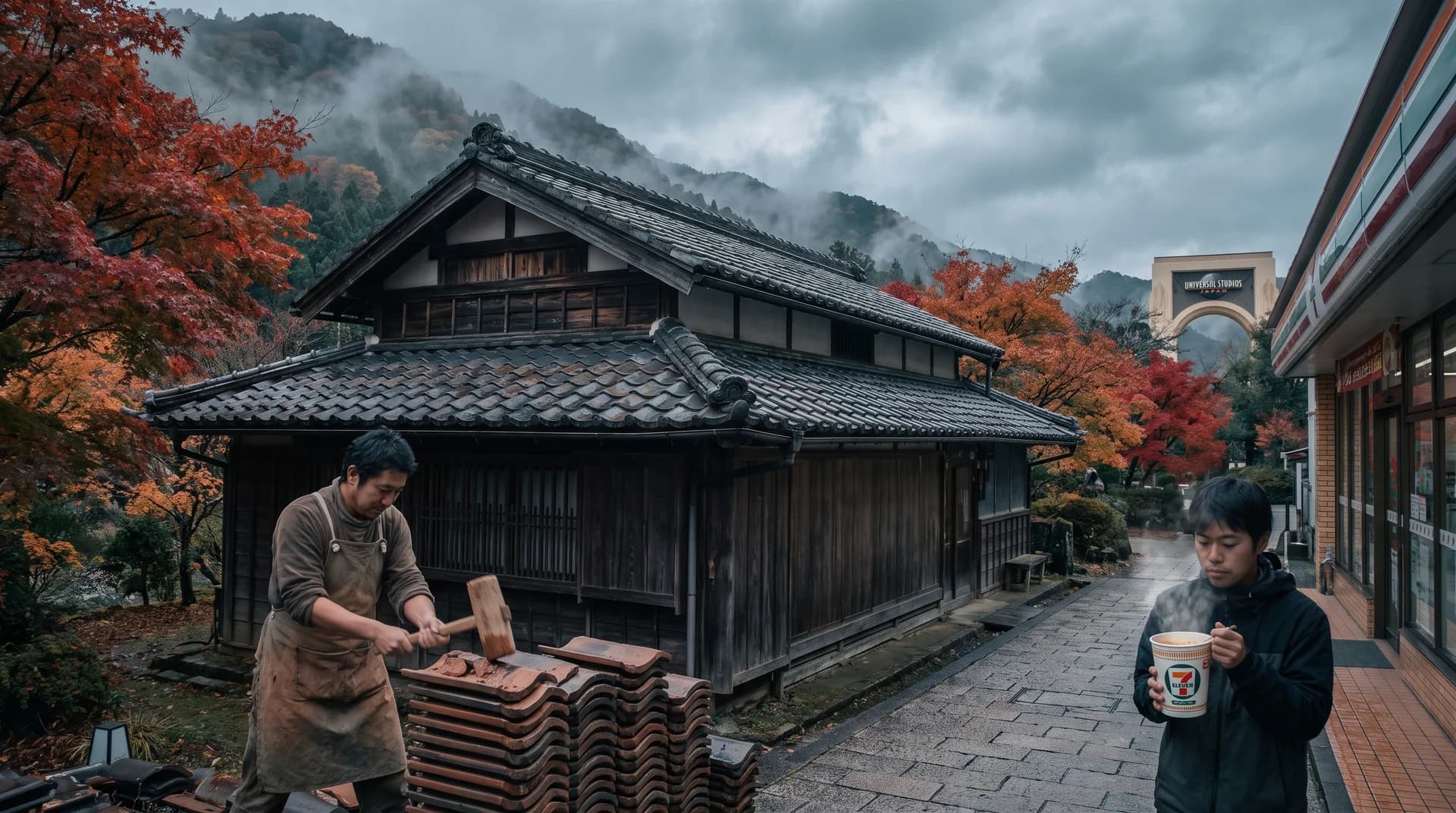
Fukui Tile Making Tour + Osaka Ramen Day Trip
By Tour in Japan editors · Updated
Explore Fukui’s Echizen Seramika tile‑making factory and smash traditional kawara tiles, then hop to Osaka for a 7‑Eleven ramen‑machine lunch and finish with Universal Studios Japan’s adults‑only horror ride (waiver required).
The morning light hits the gray‑shingled roofs of Echizen, Fukui, and the first thing you notice is the rhythmic clink of clay against a wooden mallet. Inside the Echizen Seramika factory, artisans demonstrate how centuries‑old kawara tiles are molded, fired, and, yes, deliberately smashed for a tactile lesson in durability. This guide unlocks a hands‑on day that starts with that factory tour, then skips the bullet train to Osaka for a surprise 7‑Eleven ramen‑machine lunch, and ends with Universal Studios Japan’s new adults‑only horror attraction that requires a waiver. It’s built for independent travelers who want a mix of craft, quirky food, and thrill‑seeker culture without a packed itinerary. You’ll leave with a souvenir tile, a hot bowl of instant ramen, and a memory of a scream‑filled ride that most tourists miss.
Essential Highlights & Local Itinerary
Day 1 – Echizen Seramika Tile Factory (Fukui Prefecture)
- Location: 1‑10‑1 Seramika‑cho, Echizen‑shi, Fukui‑ken (エチゼン市 瀬波町1‑10‑1). The factory is situated in a traditional pottery district where the soil is naturally rich in the minerals required for high-fire ceramics.
- Getting there: From Fukui Station, take the JR Hokuriku Line to Echizen Station (≈ 15 min, ¥320). Upon exiting the ticket gate, head to the east exit bus terminal. Transfer to the local bus bound for Seramika‑cho; the stop is a 3‑minute walk from the factory entrance (¥210). If you miss the bus, a local taxi from the station costs approximately ¥1,200.
- Best time: 9:30 am – 11:30 am. The factory opens at 9:00 am; a morning slot avoids the lunch crowd and lets you see the firing kiln in action before the midday temperature peaks.
- Duration: 2 hours total – 45 min guided tour, 30 min hands‑on tile‑making, 45 min smashing demonstration.
- Cost: ¥1,200 (≈ $9 USD) per person for the full experience; includes safety gear (apron and goggles) and a small souvenir tile.
Day 1 – Travel to Osaka
- Transit: Return to Fukui Station via the local bus (¥210). Board the Thunderbird limited‑express to Shin‑Osaka (≈ 2 h 30 min, ¥5,500). This train is the gold standard for this route, offering comfortable reclining seats and large windows to view the transition from the mountains of Fukui to the urban sprawl of Osaka. If you hold a JR Pass, this leg is covered.
- Arrival: Upon arriving at Shin‑Osaka Station, follow the signs for the Osaka Metro. Transfer to the Midosuji Line (the red line) heading toward Namba (¥230, 5 min). This line is the artery of Osaka, and during rush hour, it can be incredibly crowded—keep your luggage close.
Day 1 – 7‑Eleven Ramen Machine Lunch (Osaka)
- Location: Any 7‑Eleven in Osaka; the most reliable machine as of 2026 is at the Namba branch, 1‑2‑3 Namba‑honmachi, Chuo‑ku (大阪市中央区 難波本町1‑2‑3). This specific store is known for maintaining its machines better than the smaller residential branches.
- How it works: These are not standard vending machines; they are automated kitchenettes. Insert ¥300 (≈ $2 USD) via cash or IC card (Suica/Pasmo), select "Shoyu Ramen" from the digital touch-screen, and wait 3 minutes. The machine flash-boils the water, drops in a fresh noodle cake, and dispenses a soft‑boiled egg and scallions into a biodegradable cup.
- Rarity note: The machine is one of only a handful nationwide, acting as a pilot for "Fresh-Fast" dining. The Namba location is open 24 h and stocked with fresh noodles daily at 4:00 am.
- Cost: ¥300 for the bowl; add ¥100 for optional toppings like corn or extra pork slices, which are dispensed from a separate side-compartment.
Day 1 – Universal Studios Japan (Osaka) – Adults‑Only Horror Ride
- Location: 2‑1‑33 Sakurajima, Konohana‑ku, Osaka (ユニバーサル・スタジオ・ジャパン, 2‑1‑33 桜島).
- Attraction: "Zanzo" – a psychological horror experience rated R‑18. Unlike the standard haunted houses, this ride uses haptic feedback and sensory deprivation, requiring a signed waiver on the day of entry to acknowledge the intensity of the experience.
- Getting there: From Namba, take the Osaka Metro Chuo Line to Universal‑City (¥180, 20 min) then walk 5 minutes through CityWalk to the park entrance.
- Waiver: Available at the ride’s queue entrance. You must fill it out in English or Japanese. Bring a passport or driver’s license for ID verification; without a physical ID, staff may deny entry even if the waiver is signed.
- Cost: ¥2,200 (≈ $16 USD) for the ride ticket, separate from the standard USJ day pass (¥8,400 for adults). Total USJ entry with the horror add‑on = ¥10,600.
- Best time: Late afternoon (3‑5 pm). The lighting in the queue is designed to build tension as the sun sets, and the crowds usually thin out slightly after the lunch-time rush.
Day 2 – Optional Extension: Osaka Night Food Crawl
- Location: Dotonbori (道頓堀) – the neon heart of Osaka. This is where you find the giant moving crab signs and the Glico Running Man.
- Transit: Walk from Namba or take the Osaka Metro Sennichimae Line one stop to Nippombashi.
- Cost: Expect ¥800‑¥1,200 per dish (≈ $6‑$9 USD). Budget around ¥4,000 for a full street-food feast.
The Play: Step-by-Step
To execute this itinerary without stress, follow this precise sequence of events. Timing is critical, especially with the USJ waiver deadline.
Step 1: The Fukui Morning (08:00 – 12:00)
- 08:00 AM: Arrive at Fukui Station. Purchase your Thunderbird ticket to Osaka in advance or use the automated machines.
- 08:30 AM: Board the train to Echizen Station.
- 09:00 AM: Take the local bus to Seramika‑cho. Upon arrival, enter the Echizen Seramika factory.
- 09:30 AM: Begin the guided tour. Pay close attention to the "Kiln Master" who explains the difference between traditional wood-fired kilns and modern electric ones. You will see the raw clay being mixed with water and minerals to create the signature gray hue of Fukui tiles.
- 10:15 AM: The hands-on phase. You will be given a slab of clay and a molding press. You'll learn the "press-and-pivot" technique to ensure the tile is perfectly flat. Once molded, you'll carve your initials into the corner using a bamboo stylus.
- 11:00 AM: The smashing demo. This is the highlight. You'll be given a heavy wooden mallet and a "test tile" that has been fired at a lower temperature. The goal is to find the structural weak point of the tile. The staff will explain that real roof tiles are fired at 1,100°C to prevent this exact type of failure.
Step 2: The Transit Sprint (12:00 – 15:00)
- 12:00 PM: Depart the factory. Head back to Fukui Station.
- 12:30 PM: Board the Thunderbird Express. Use this time to nap or organize your USJ digital tickets.
- 15:00 PM: Arrive at Shin-Osaka. Move quickly to the Midosuji Line. The transition from the quiet countryside of Fukui to the chaos of Osaka is jarring but exciting.
Step 3: The Ramen Hack (15:15 – 16:00)
- 15:15 PM: Locate the 7-Eleven Namba branch. Walk past the standard snack aisles to the back wall where the ramen machines are located.
- 15:20 PM: Insert your ¥300. Select "Shoyu" (Soy Sauce) for the classic experience or "Miso" if available.
- 15:25 PM: Wait for the machine to cycle. You will hear the water boiling and the mechanical arm dropping the toppings.
- 15:30 PM: Grab your hot cup. If you brought a reusable bowl, pour the contents in now to keep the heat trapped for longer. Find a spot in the nearby Namba Parks greenery to eat.
Step 4: The Horror Finale (16:30 – 20:00)
- 16:30 PM: Enter Universal Studios Japan. Head straight to the "Zanzo" attraction area.
- 17:00 PM: Approach the waiver kiosk. This is the most important part: the waiver must be signed before you enter the final queue. If you wait until the very front, you may be sent back to the start of the line to complete the paperwork.
- 17:15 PM: Present your ID (Passport) to the staff. Once verified, you will be given a wristband that grants you access to the R-18 zone.
- 17:30 PM: Enter the ride. Be prepared for sudden drops and psychological triggers. The ride lasts approximately 12 minutes but feels like an hour due to the intensity.
- 18:00 PM: Exit the ride and take a moment to recover. The gift shop at the exit sells "Survivalist" t-shirts that are popular among those who complete the experience.
Real-World Example: A Day in the Life
To give you a better idea of how this works in practice, let's look at "Sarah," a solo traveler from New York who followed this exact plan in September.
Sarah's Morning in Fukui: Sarah arrived at Echizen Seramika at 9:15 am. She spent the first hour learning that Fukui produces nearly 30% of Japan's traditional roof tiles. During her hands-on session, she accidentally pressed too hard on her tile, causing it to crack—the instructor used this as a teaching moment to explain "clay tension." When it came time to smash the tiles, Sarah used a heavy mallet to shatter a test piece into exactly 14 fragments, winning a small sticker from the staff. She spent ¥1,200 and left with a small, hand-pressed coaster tile that she had the factory mail to her home address (shipping cost: ¥500).
Sarah's Midday Transition: She boarded the Thunderbird at 12:35 pm. She noticed that the train was surprisingly quiet, allowing her to read up on the USJ waiver requirements. By the time she hit Shin-Osaka at 3:05 pm, she was hungry. She navigated to the 7-Eleven in Namba and spent exactly ¥400 (¥300 for the ramen and ¥100 for extra pork). She noted that the broth was surprisingly creamy for a machine-made meal and took a photo of the machine's digital screen for her Instagram, which gained significant traction because of the rarity of the device.
Sarah's Evening Thrill: Sarah entered USJ at 4:15 pm. She went straight to "Zanzo." She had her passport ready, which allowed her to breeze through the waiver process in under three minutes. The ride was intense; she described the sensory deprivation segment as "the most unsettling 60 seconds of her life." She spent a total of ¥10,600 for the park and ride, and ended her day with a ¥450 set of Takoyaki in Dotonbori, reflecting on the contrast between the meditative silence of the tile factory and the screaming chaos of the horror ride.
Practical Details & Dual‑Currency Budget
Best Season & Weather
- Spring (April-June): The ideal window. Fukui is lush and green, and Osaka is mild. The tile factory is breezy, and the USJ queues are manageable. Average temp: 18-22°C.
- Summer (July-August): Intense humidity. The 7-Eleven ramen machine is a great way to get a hot meal without standing in a steaming restaurant. However, the USJ walk from the station can be brutal (32°C+). Wear moisture-wicking clothes.
- Autumn (September-November): The best time for the horror ride, as it aligns with the "Halloween Horror Nights" season at USJ, though crowds will be significantly higher.
- Winter (December-March): Fukui gets heavy snowfall. The tile factory remains open, but transport can be delayed. The hot ramen machine becomes a necessity rather than a novelty.
Budget Breakdown
| Traveler type | Daily cost (¥) | Daily cost (USD) |
|---|---|---|
| Budget (JR Pass Holder) | ¥11,800 | $85 |
| Mid‑range (No Pass) | ¥17,300 | $120 |
| Luxury (Taxi/Express) | ¥25,000 | $175 |
What the numbers include
- Transport: JR Thunderbird (¥5,500) + local buses (¥530) + Osaka Metro (¥410). For budget travelers with a JR Pass, the ¥5,500 is removed.
- Activities: Tile factory (¥1,200), 7‑Eleven ramen (¥300), USJ day pass + horror ride (¥10,600).
- Food & misc: Two meals (¥2,400) + snacks (¥800).
- Total for the 2‑day itinerary: ≈ ¥27,330 (≈ $200 USD).
Transit & Access
- JR Pass: If you already have a 7‑day Japan Rail Pass, the Thunderbird ride is covered, saving you ¥5,500. This is the single biggest cost-saver for this trip.
- Regional passes: The Kansai Thru Pass (¥4,300 for 2 days) covers Osaka Metro and local buses, which is useful if you plan to visit Kyoto or Nara on Day 2.
- Ride‑hailing: Uber works in Osaka but is pricier than the metro; a typical 5‑km ride costs ¥1,200‑¥1,500. In Fukui, taxis are the only reliable way to get to the factory if you miss the bus.
- Airport connection: From Kansai International Airport (KIX), take the Nankai Airport Express to Namba (¥920, 45 min) or the JR Haruka to Shin‑Osaka (¥2,850, 30 min). For those starting in Fukui, the fastest route is KIX → Shin‑Osaka → Thunderbird.
Where to Eat & Local Food Secrets
7‑Eleven Ramen Machine (Osaka)
- Dish: Shoyu Ramen with pork‑bone broth, curly noodles, and a soft‑boiled egg.
- Price: ¥300 (≈ $2 USD). Add ¥100 for extra toppings.
- Pro Tip: The machine dispenses a hot broth in a paper cup. Because the cup is narrow, the noodles can clump. Use a pair of disposable chopsticks to stir the noodles vigorously for 10 seconds immediately after dispensing to ensure a consistent texture.
Echizen Ceramics Café (Fukui)
- Dish: Matcha‑flavored dorayaki (sweet bean pancake) served on a hand‑painted plate made in the factory.
- Price: ¥600 (≈ $4 USD).
- Etiquette: This café is a quiet zone. It is used by artisans to relax between firing cycles. Keep your voice low and avoid using flash photography of the artists.
Dotonbori Street Food (Osaka)
- Must‑try: Takoyaki (octopus balls) from "Takoyaki Wanaka" – ¥450 per 6‑piece set. Their batter is known for being creamier than the tourist-heavy stalls.
- Must‑try: Kushikatsu (deep‑fried skewers) from "Kushikatsu Daruma" – ¥300 per skewer. Try the lotus root or quail egg.
- The Golden Rule: In Kushikatsu restaurants, there is a shared sauce container. Never double-dip. This is a serious social faux pas in Osaka and may result in a reprimand from the staff.
Local Dining Etiquette
- Cash vs Card: While Osaka is modern, the 7-Eleven ramen machines and Dotonbori stalls are heavily cash-reliant. Keep a stash of ¥100 and ¥500 coins. ATMs that dispense ¥10,000 notes are common at 7-Eleven, but you'll need to break them at a convenience store for small purchases.
- Ordering: Use "kudasai" (please) after the dish name. For example, "Takoyaki kudasai."
- Seating: In crowded izakayas, wait for the staff to assign a seat; never sit before being shown where. This is especially important in small, traditional shops in Fukui.
Essential Traveler Checklist
- Pack:
- Light rain jacket (June‑July is rainy season).
- Comfortable walking shoes (you'll walk approximately 12,000 steps on this itinerary).
- A small reusable bowl or heat-resistant container for the ramen machine.
- A portable power bank (USJ's app drains battery quickly due to GPS map usage).
- SIM/eSIM: Purchase a prepaid data SIM at Kansai Airport (¥3,000 for 5 GB) or activate an eSIM through Japan Travel SIM. You will need data to navigate the bus schedules in Fukui.
- Cash: Keep ¥10,000 in small bills. The ramen machine and tile factory do not always accept credit cards.
- Dress code:
- Fukui: Wear closed‑toe shoes for the tile‑smashing demo to protect your feet from shards.
- USJ: No loose scarves or long jewelry on the horror ride; the waiver staff will check for safety reasons.
- Key phrases:
- "Kawara o tatakimasu" (I will smash the tile) – Use this during the demo.
- "Ramen o kudasai" (Ramen please).
- "Waiver o onegaishimasu" (Please give me the waiver) – Essential for the USJ ride.
If you liked this itinerary, sign up for our weekly newsletter for more hidden‑gem guides and last‑minute updates at /newsletter.
Frequently Asked Questions
How much does the tile‑making and smashing experience cost?
The full Echizen Seramika workshop, including materials, safety gear, and a souvenir tile, is ¥1,200 per person (about $9 USD). If you wish to have your tile shipped home, expect to pay an additional ¥500-¥1,000 depending on the destination.
Can I skip the USJ horror ride and still use the same day pass?
Yes. The standard adult day pass (¥8,400) covers entry to the park and most rides. The horror attraction is a premium add‑on for ¥2,200. You can purchase the add‑on at the ride’s queue on the day you visit, provided you have a valid ID for the waiver.
Is the 7‑Eleven ramen machine available all day?
The machine at the Namba store operates 24 hours. However, the "fresh-batch" noodles are stocked twice daily (4:00 am and 4:00 pm). For the best texture, try to visit shortly after these times. Mid-day bowls may be slightly less firm.
Do I need a JR Pass for this itinerary?
A JR Pass isn’t required, but it is highly recommended if you are traveling from other cities. It saves you ¥5,500 on the Thunderbird ride from Fukui to Osaka. If you are only visiting these two cities, a one-way ticket is more economical than a full 7-day pass.
What’s the best season to combine Fukui tile work with Osaka attractions?
Late April to early May (Golden Week) is beautiful, but very crowded. For the best balance of weather and crowd size, aim for mid-September. The weather is cooling down, the tile factory is comfortable, and you are perfectly timed for the USJ horror season.
Related reading
Stay Connected in Japan
Yesim eSIMs work on arrival — no physical SIM needed. Japan data plans from $5.