
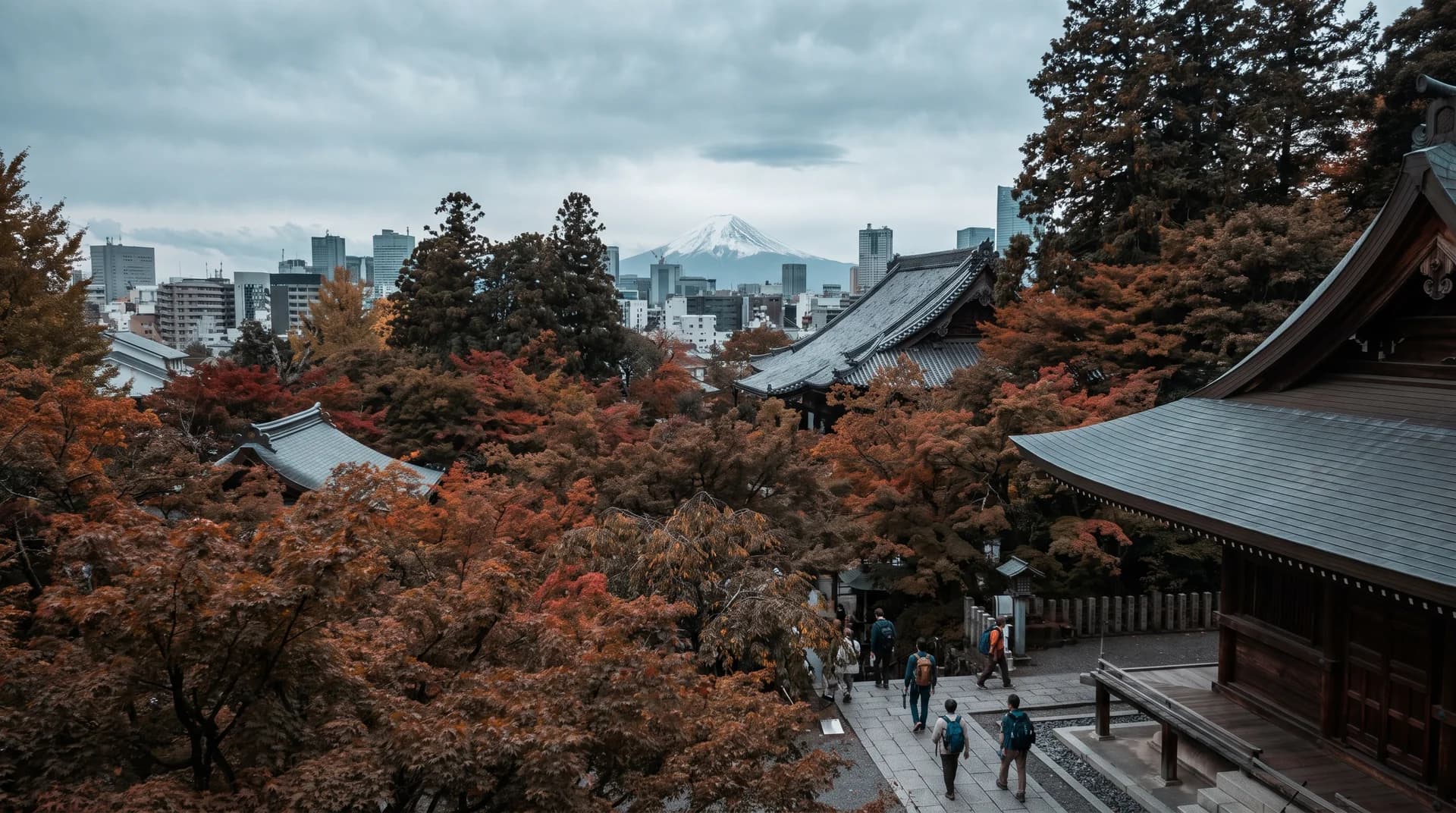
Shibuya and Mt. Fuji Guide: Logistics and New Rules
By Tour in Japan editors · Updated
This guide unlocks a Tokyo-to-Fuji itinerary focusing on Shibuya's urban hubs and Mt. Fuji's hiking trails. Costs range from ¥5,000 to ¥15,000 per day. Travelers must now follow strict recycling rules in Shibuya and register for off-season Fuji climbs to avoid rescue fees.
The smell of toasted sesame and the roar of thousands of footsteps define the Shibuya Crossing. It is the sensory overload every first-time visitor expects, but the reality on the ground has changed. You will now see bright, multilingual posters near the station urging you to use recycle boxes properly. This is not just a suggestion; it is part of a neighborhood-wide effort to manage the volume of waste left by millions of visitors.
This guide is for the independent traveler balancing the neon chaos of Tokyo with the silent, imposing presence of Japan's highest peak, while navigating the newest local regulations. Whether you are navigating the narrow alleys of Center-gai or planning a trek up the slopes of Mt. Fuji, the logistics have shifted. From new waste management campaigns in Shibuya to government registration requirements for off-season climbers in Shizuoka, knowing the current rules prevents fines and ensures you aren't stranded.
Essential Highlights & Local Itinerary
Day 1: Shibuya Urban Exploration
Start your morning at the Shibuya Crossing (Shibuya Scramble). Take the JR Yamanote Line or the Ginza Line to Shibuya Station. I recommend visiting between 10:00 AM and 11:00 AM to avoid the peak rush hour while still experiencing the crowd. Entry is free, though visiting the Shibuya Sky observatory costs approximately ¥2,200 to ¥2,500 (~$15 to $17 USD). Spend about 3 hours here.
Pro Tip for Shibuya Sky: Book your tickets exactly four weeks in advance via the official website. The "Golden Hour" slots (4:00 PM to 6:00 PM) sell out within minutes. If you miss the window, try the 10:00 AM slots for clear visibility of the city skyline and, on clear days, a distant view of Mt. Fuji.
Walk through Center-gai, the pedestrian street known for its dense concentration of shops and eateries. Pay close attention to the recycling posters. The local government has implemented a strict campaign asking visitors to separate plastics (PET bottles) and cans into the correct bins. In Japan, the "bring your trash home" culture is deeply ingrained; if you cannot find a bin, carry your trash with you. Littering can lead to confrontations with local "neighborhood watch" volunteers.
For those interested in the city's history, a Samurai Tour of Tokyo: Logistics and Planning Guide provides context on how the district evolved from a rural outpost to a global hub. Spend your afternoon exploring the Miyashita Park complex, a rooftop park and shopping mall. Access is free, and it is an ideal spot to rest for 1-2 hours.
Transitioning from City to Mountain
Day 2: Heading to Yamanashi/Shizuoka
To reach Mt. Fuji, most travelers head to the Fuji-Hakone-Izu National Park. From Shibuya, you have two primary options: the Odakyu Line to Hakone-Yumoto or a highway bus from the Shibuya Expressway Bus Terminal toward the Fuji Five Lakes area (Kawaguchiko).
Transit Breakdown:
- Highway Bus: The most direct route. Fare is approximately ¥2,000 to ¥3,000 (~$13 to $20 USD) one way. The journey takes 2 to 2.5 hours. Use the "Highway-bus.com" portal to reserve seats, as these fill up during weekends.
- Train (JR/Fujikyuko): More expensive but more reliable during traffic. Take the JR Chuo Line from Shinjuku to Otsuki, then transfer to the Fujikyuko Line. Total cost is roughly ¥4,000 (~$27 USD).
If you are visiting during the autumn months, check the Japan Autumn Travel Guide: Foliage and Silver Week Logistics to time your arrival with the changing leaves around Lake Kawaguchi. Spend the afternoon at the Chureito Pagoda for the iconic view of the mountain. The walk up the 398 stairs is free, and the experience takes about 2 hours including the walk from the station. To avoid massive crowds, arrive by 7:30 AM.
Mt. Fuji Ascent and New Regulations
Day 3: Climbing Logistics
For those climbing during the official season (typically July to early September), the Yoshida Trail is the most popular. However, if you are planning an off-season hike, be aware of the evolving laws in Shizuoka and Yamanashi prefectures.
The New Registration Rules: Forestry officials in Shizuoka have implemented a registration system for off-season climbers. This is now a safety mandate; if you climb without registering, you may be denied access at the trailheads. Furthermore, the government has introduced a rescue fee system. If you are stranded and require a helicopter or ground rescue due to negligence or lack of gear during the off-season, you may be billed upwards of ¥100,000 to ¥500,000 (~$650 to $3,300 USD).
Climbing Logistics:
- Official Season: You will need a climbing pass and should book a mountain hut (Yama-goya) months in advance. Hut costs range from ¥8,000 to ¥13,000 per night, including basic meals.
- Off-Season: This requires professional crampons, ice axes, and alpine training. You must register via the local prefecture's online portal or at the local police box (Koban) before starting.
- The 5th Station Experience: For those not climbing to the summit, a day-trip to the 5th Station via bus costs around ¥1,500 to ¥2,500 (~$10 to $17 USD) each way. Spend 5-6 hours exploring the base, visiting the Komitake Shrine, and shopping for souvenirs.
Step-by-Step Execution Plan
To execute this trip without logistical friction, follow this precise sequence:
Step 1: Digital Setup (T-minus 14 Days)
- Payment: Add a Suica or Pasmo card to your Apple Wallet or Google Pay. Load at least ¥5,000 for initial city travel.
- Tickets: Book your Shibuya Sky time slot and your highway bus from Shibuya to Kawaguchiko.
- Connectivity: Install an eSIM [PRODUCT:ubigi] or [PRODUCT:airalo] to ensure you have Google Maps active for the maze-like exits of Shibuya Station.
Step 2: The Shibuya Loop (Day 1)
- 09:00 AM: Arrive at Shibuya Station. Exit via the "Hachiko Exit."
- 10:00 AM: Visit the Scramble and Hachiko Statue.
- 11:30 AM: Walk through Center-gai. Locate the recycling bins; ensure plastic bottles go in the "PET" bin.
- 01:00 PM: Lunch at a hidden alleyway spot.
- 03:00 PM: Explore Miyashita Park.
- 05:00 PM: Shibuya Sky sunset slot.
Step 3: The Mountain Transition (Day 2)
- 08:00 AM: Head to Shibuya Expressway Bus Terminal.
- 10:30 AM: Arrive at Kawaguchiko. Rent a bicycle (approx. ¥1,500/day) to navigate the lake perimeter.
- 01:00 PM: Take the local bus to Chureito Pagoda.
- 04:00 PM: Check into a Ryokan or guesthouse. Budget ¥8,000 to ¥15,000 for a mid-range stay.
Step 4: The Fuji Engagement (Day 3)
- 07:00 AM: Take the shuttle bus to the Fuji Subaru Line 5th Station.
- 09:00 AM: Verify registration at the trailhead (if climbing) or visit the shrines and market.
- 03:00 PM: Descend and head back to Kawaguchiko station for your return bus to Tokyo.
Budget Comparison: Backpacker vs. Mid-Range
To illustrate the cost variance, consider these two traveler profiles:
Profile A: The Budget Backpacker (Hiro)
- Stay: 3 nights in a Shibuya capsule hotel (¥4,000/night = ¥12,000).
- Food: Breakfast from Lawson (¥500), Lunch from conveyor belt sushi (¥1,200), Dinner from 7-Eleven (¥800). Total: ¥2,500/day.
- Transit: Highway bus to Fuji (¥2,000 each way), Suica for city travel (¥1,000/day).
- Total 3-Day Spend: Approximately ¥22,000 (~$145 USD).
Profile B: The Mid-Range Explorer (Sarah)
- Stay: 3 nights in a business hotel like the Shibuya Stream Excel Hotel (¥25,000/night = ¥75,000).
- Food: Sit-down Ramen (¥1,500), High-end Teppanyaki dinner (¥8,000), Cafe visits (¥1,000). Total: ¥10,500/day.
- Transit: Private shuttle to Mt. Fuji or JR Express trains (¥8,000 round trip), Taxis for short city hops (¥3,000 total).
- Total 3-Day Spend: Approximately ¥125,000 (~$830 USD).
Practical Details & Dual-Currency Budget
Best Season & Weather
For Shibuya, any season works, but the Tokyo Travel Guide: August 2026 Logistics and Updates warns about extreme humidity in late summer. Temperatures can hit 35°C (95°F) with 80% humidity. For Mt. Fuji, the official climbing window is July through early September. Outside this window, the mountain is covered in snow and requires professional mountaineering equipment. Shoulder seasons (October and November) are best for viewing the mountain from the lakes.
Budget Breakdown
Budget Traveler (Hostels, Convenience Store Meals, Public Transit):
- Daily Cost: ¥6,000 to ¥9,000 (~$40 to $60 USD)
- Includes: Dorm bed, 7-Eleven meals, and IC card transit.
Mid-Range Traveler (Business Hotels, Sit-down Restaurants, Guided Tours):
- Daily Cost: ¥15,000 to ¥25,000 (~$100 to $165 USD)
- Includes: 3-star hotel, one nice dinner per day, and bus/train fares to Fuji.
Transit & Access
Use a Suica or Pasmo card for all Tokyo transit. These prepaid IC cards work on JR lines, subways, and buses. You can add these to your Apple Wallet or Google Pay. For Mt. Fuji, the highway bus is the most cost-effective method. If you prefer more control, consider Driving in Japan: Safety, Logistics, and Rail Travel Tips to understand the requirements for renting a car. Note that you will need an International Driving Permit (IDP).
Where to Eat & Local Food Secrets
Shibuya Street Eats
In Shibuya, skip the overpriced chains on the main drag and duck into Nonbei Yokocho (Drunkard's Alley). These are tiny, charcoal-scented stalls where you'll likely rub elbows with the local salaryman. A skewer of grilled chicken (yakitori) typically costs ¥150 to ¥300 (~$1 to $2 USD). Pair it with a highball or a cold Asahi for about ¥500 (~$3.30 USD). Be ready with cash; these stalls rarely take cards.
For a high-quality, fast meal, head to the basement food halls (depachika) of Tokyu or Seibu. Look for the seasonal bento boxes—they range from ¥1,000 to ¥2,000 (~$6.50 to $13 USD) and are far superior to convenience store options. Grab your box and head to the designated seating areas or back to your hotel to avoid blocking the aisles.
Fuji-Area Specialties
Near the Five Lakes, you have to try Houtou noodles. This is a thick, flat wheat noodle stew simmered with pumpkin and root vegetables in a miso-based broth. It's the ultimate comfort food for the mountain chill. A bowl at a local specialty shop costs between ¥1,200 and ¥1,800 (~$8 to $12 USD).
At the 5th Station, look for "Fujisan-shaped" manju (steamed buns) or cakes. They usually cost around ¥300 to ¥600 per piece. Pro tip: don't tip your server here; it's not the custom. A polite "Gochisousama deshita" (Thank you for the meal) as you leave is the gold standard for etiquette.
Essential Traveler Checklist
- Waste Management: Carry a small plastic bag for your trash in Shibuya. If you see a bin with a blue lid, it is generally for PET bottles.
- Fuji Registration: If hiking off-season, check the latest Shizuoka government mandates regarding climber registration and rescue fees. Do not attempt the summit without a registered guide in winter.
- Payment: Carry at least ¥10,000 in cash for small shrines and mountain huts. Many rural bus drivers in the Fuji area also prefer cash over IC cards.
- Connectivity: Purchase an eSIM [PRODUCT:ubigi] or [PRODUCT:airalo] before landing. The station is currently undergoing massive redevelopment, and physical maps are often outdated.
- Dress Code: Wear sturdy, waterproof hiking boots for Fuji and comfortable walking shoes for Tokyo. Layering is key for Fuji, as the summit can be 20°C colder than the 5th Station.
Sign up for our newsletter at /newsletter for weekly travel updates and hidden gem guides.
Frequently Asked Questions
How much does it cost to visit Shibuya Sky?
Tickets typically range from ¥2,200 to ¥2,500 (~$15 to $17 USD). Book online in advance as time slots sell out quickly, especially for sunset views.
Is it legal to climb Mt. Fuji in the off-season?
The legality varies by prefecture. In Shizuoka, off-season climbers must register with the government or be held financially responsible for their own rescue costs. Some trails are closed entirely during winter; always check the official Yamanashi/Shizuoka prefecture websites.
Where should I throw away trash in Shibuya?
Look for designated recycle boxes as indicated by the new neighborhood posters. If no bin is available, you are expected to carry your trash with you until you return to your accommodation.
How do I get from Shibuya to Mt. Fuji?
The most practical method is the highway bus from the Shibuya Expressway Bus Terminal to Kawaguchiko, costing approximately ¥2,000 to ¥3,000 (~$13 to $20 USD) one way. Private car hire can cost between ¥30,000 and ¥50,000 for a day trip.
Related reading
Stay Connected in Japan
Yesim eSIMs work on arrival — no physical SIM needed. Japan data plans from $5.