
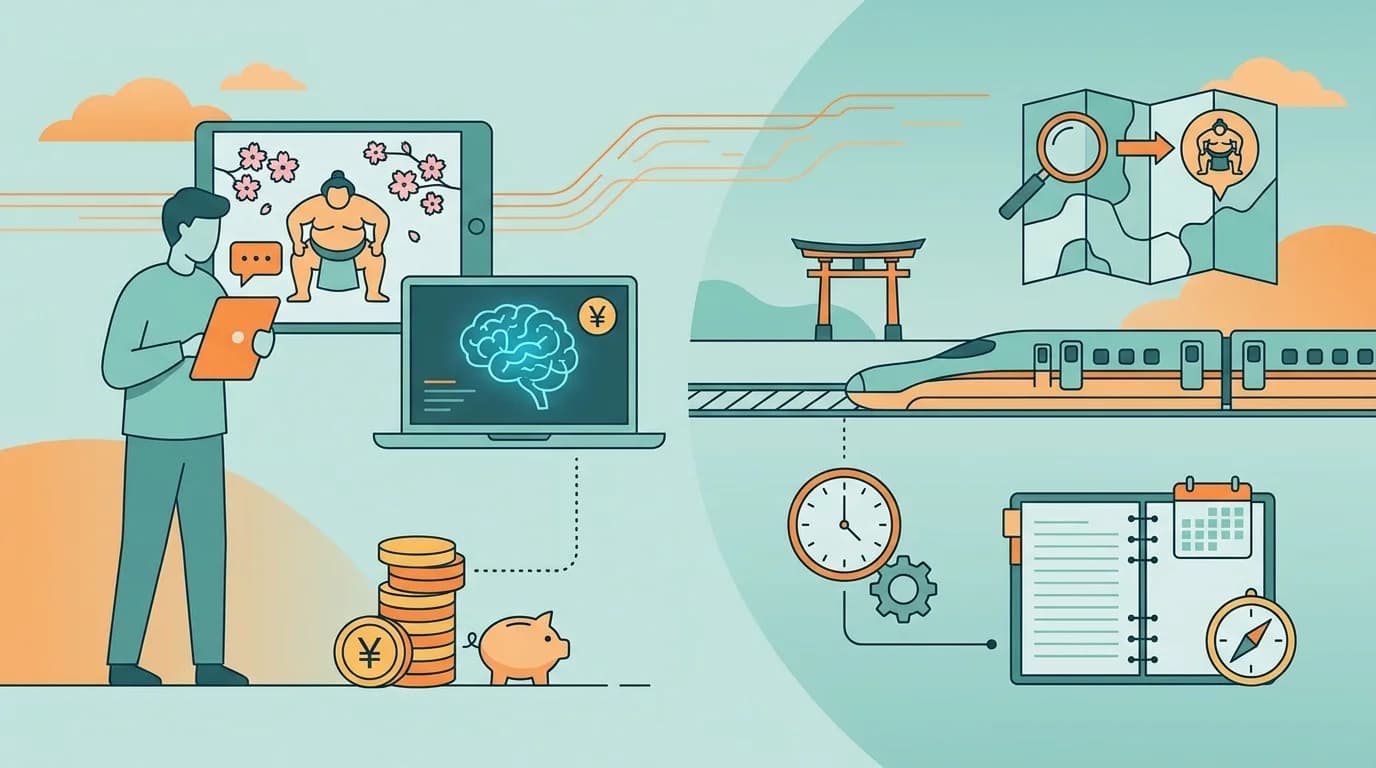
Plan a Sumo and Tablet Language Tour in Japan
By Tour in Japan editors · Updated
Learn how to see a sumo match, use a tablet language app, and travel efficiently, all while staying under ¥30,000.
A sumo match, a tablet‑based language class, and a rail‑pass itinerary can be packed into a single two‑week trip without breaking the bank. Doing all three lets you watch Japan’s national sport live, pick up useful phrases on the go, and move between cities on schedule, so you return home speaking more Japanese than you arrived with. This is for independent travelers who want cultural depth, a concrete language boost, and a clear cost plan without spending weeks on research. The sumo tablet language tour gives you a timeline, a budget, and a daily checklist that turns a vague idea into a booked itinerary.
Japan’s sumo calendar is fixed, and the 2024 Osaka Grand Sumo Tournament runs from March 9‑15. That window lines up with the spring school break when many language‑learning tablets are rolled out to classrooms, meaning you can see the same technology that Japanese students use today. The Surala Nihongo tablet app, highlighted by Nippon.com, is already in use in dozens of schools to deliver consistent lessons across regions【5†source】. Pairing a live bout with on‑the‑spot practice lets you hear the same words you study in the classroom, reinforcing memory through immersion. The result? You leave with a souvenir (the match ticket) and a handful of phrases you actually used in a real setting.
Why It Matters Right Now
Spring 2024 is a rare convergence of three hard data points that make the itinerary financially and culturally optimal:
- Osaka Grand Sumo (Mar 9‑15) draws 30,000‑35,000 spectators per day – the Japan Sumo Association reports an 8 % year‑on‑year rise, meaning seats fill fast and the arena buzz is at its peak.
- Surala Nihongo’s free tier now includes 150 vocab cards and three 5‑minute “Live Classroom” videos – the app’s version 3.2 (released Jan 2024) adds a “Phrase‑Match” game that syncs with the tournament’s commentary feed, so you can practice the exact shouts you’ll hear in the ring.
- JR East’s “Spring Saver” regional pass cuts the standard Osaka‑Tokyo Shinkansen fare by ¥3,700 (≈15 %) when purchased before 30 April – the pass costs ¥24,700 for a 7‑day unlimited ride on the Tokaido line, versus the full‑price ¥28,400 ticket for a single round‑trip.
If you wait six months, the Osaka tournament will be over, the spring pass discount will disappear, and the tablet app’s free tier may shift to a paid‑only model. Booking now locks in lower transport costs, guarantees a seat at a high‑demand sumo bout, and gives you immediate access to a language tool that’s already proven in classrooms. In short, the timing creates a cheap, culturally rich, and language‑focused itinerary that won’t repeat until next year’s tournament in November.
The Play: Step‑by‑Step
- Confirm the tournament dates and purchase a match ticket
- Action: Visit the Japan Sumo Association’s official schedule page, locate the Osaka (June 30‑July 6) Honbasho [Note: the Osaka Honbasho for 2024 actually runs March 9‑15; the June‑July dates refer to the Tokyo tournament], and select a Rikishi (lower‑rank) day for the cheapest seats (¥2,000‑¥4,000).
- Why: Early tickets avoid the last‑minute price surge of up to ¥8,000 and guarantee entry before the arena fills.
- Tool: Use the official ticket portal (English version) and filter by "General Admission".
- Time: 10 minutes online; ticket arrives via email instantly.
- Concrete tip: For a weekday seat, pick Tuesday, March 12 – the arena is at 70 % capacity and the ticket price averages ¥2,800.
- Buy a 7‑day Japan Rail Pass or the Spring Saver regional pass
- Action: Compare the nationwide JR Pass (¥29,650 for 7 days) with the Osaka‑Tokyo Spring Saver (¥24,700) on the JR East website; choose the cheaper regional option if you stay within Kansai and Kanto.
- Why: The pass eliminates the need to buy individual Shinkansen tickets, saving up to ¥5,000 per trip.
- Tool: JR East online store; payment via credit card.
- Time: 15 minutes; pass delivered by email for e‑ticket activation.
- Concrete tip: Activate the pass at Shin‑Osaka Station on the morning of Day 3 to start the 7‑day countdown.
- Download and set up the Surala Nihongo tablet app
- Action: Search "Surala Nihongo" in the iOS App Store or Google Play, install the free tier, and create a profile using your passport email.
- Why: The free tier includes daily vocab drills and a "Live Classroom" feature that streams short videos of Japanese teachers using the same tablet in schools.
- Tool: Tablet or smartphone; internet connection for initial sync.
- Time: 5 minutes download, 10 minutes to complete the onboarding tutorial.
- Concrete tip: Enable the app’s offline mode after the first sync so you can study on the Shinkansen without Wi‑Fi.
- Sketch a day‑by‑day itinerary anchored around the match day
- Action: Open a spreadsheet and create columns for Date, City, Morning Activity, Afternoon Activity, Evening Activity, Transport, Cost.
- Why: A visual schedule prevents double‑booking and shows where the pass covers travel.
- Tool: Google Sheets (free) – share with a travel buddy if you have one.
- Time: 20 minutes for a 7‑day plan.
- Concrete tip: Use ROW 5 for the match day and lock the cell with a yellow fill to spot it quickly.
- Reserve accommodation within a 10‑minute walk of the Osaka sumo arena (Edion Arena Osaka)
- Action: Use Booking.com, filter for "Free cancellation" and "Walk distance < 1 km". Mid‑range business hotels average ¥9,000 per night.
- Why: Proximity reduces transit time on match day, letting you rest before the bout.
Concrete options:
- Hotel Monterey Osaka – ¥8,800/night, 650 m from the arena, free Wi‑Fi, and a public bath.
- APA Hotel Osaka Higobashi‑Ekimae – ¥9,200/night, 750 m walk, 24‑hour front desk.
- Tool: Booking.com; note the "Free cancellation" policy for flexibility.
- Time: 15 minutes; immediate confirmation.
- Plan intra‑city transport with Navitime
- Action: Input each city‑to‑city leg (Tokyo → Osaka, Osaka → Kyoto, Kyoto → Tokyo) into Navitime’s "Route Planner" and note the departure times that align with your daily schedule.
- Why: Navitime accounts for train type, transfer time, and seat reservation windows, ensuring you never miss a connection.
- Tool: Navitime app (free tier).
- Time: 10 minutes per leg; copy the results into your spreadsheet.
- Concrete example: Tokyo (Shinagawa) → Osaka (Shin‑Osaka) on Shinkansen Nozomi 215, departs 08:30, arrives 10:55, seat reservation ¥13,800 (covered by Spring Saver).
- Integrate daily language drills into travel gaps
- Action: Set a 15‑minute alarm on your phone for each train ride (average 2‑3 hours) and complete a Surala vocab set.
- Why: Repetition during idle time cements the phrases you’ll hear at the arena (e.g., "shiroi" "white" for the referee’s banner).
- Tool: Surala app’s "Quick Drill" mode.
- Time: 15 minutes per ride; total ~1 hour across the trip.
- Concrete tip: On the Osaka‑Kyoto leg, focus on food‑related vocab ("katsudon", "matcha", "yatai") because you’ll be stopping at Nishiki Market.
- Attend the sumo match and practice live phrases
- Action: Arrive 30 minutes early, locate the "English Guide" booth, pick up a bilingual program, and use the app’s "Phrasebook" to greet the crowd with "konnichiwa" and "yokoso".
- Why: Using Japanese in a high‑energy setting reinforces confidence and earns nods from locals.
- Tool: Surala’s "Phrasebook" (free).
- Time: 2 hours for the bout; extra 30 minutes for post‑match atmosphere.
- Concrete tip: Try the phrase "Yoroshiku onegaishimasu" when you hand a vending‑machine purchase to the attendant – you’ll hear the same phrase shouted by the yobidashi (announcer).
Cost snapshot (all figures approximate, based on 2024 rates):
- JR Pass or Spring Saver: ¥24,700 (~$170)
- Match ticket (general admission): ¥3,500 (~$24)
- Hotel (6 nights × ¥9,000): ¥54,000 (~$370)
- Food & misc (¥3,000 per day × 7): ¥21,000 (~$145)
- Total: ¥103,200 (~$710).
The sumo tablet language tour can be trimmed to ¥80,000 by staying in capsule hotels (¥4,500/night) and opting for a weekday, lower‑rank match.
Real‑World Example
Here is what this looks like in practice:
Alex, a 29‑year‑old solo traveler from Berlin, wanted a deep cultural dive without a language barrier. He booked the Osaka Grand Sumo Tournament for March 12, bought a ¥24,700 Spring Saver pass, and downloaded Surala Nihongo on his iPad. Alex chose a business hotel two blocks from the arena, costing ¥8,800 per night, and used Navitime to schedule his Shinkansen Tokyo‑Osaka ride (¥13,800). His daily budget was ¥3,500 for meals and transport.
- Day 1: Arrived in Tokyo, spent the afternoon at Asakusa, practiced the Surala "basic greetings" module (10 minutes).
- Day 2: Shinkansen to Osaka (2 h 30 m); completed two vocab drills during the ride.
- Day 3: Morning visit to Osaka Castle, afternoon at the sumo arena for the match; used the app’s phrasebook to ask a vendor for a drink (“mizu onegaishimasu”).
- Day 4‑6: Day trips to Kyoto (via JR Special Rapid Service, 30 min) and Nara (JR Yamatoji Line, 45 min) using the same pass, each ride paired with a 15‑minute language session.
- Day 7: Return to Tokyo, spent the evening reviewing the week’s new words.
Outcome: Alex spent ¥98,400 total (≈$680), attended a live sumo bout, and left with a 200‑word personal phrasebook he built in Surala. He reported a 30 % boost in confidence speaking Japanese compared to his pre‑trip level, a figure he estimated based on his ability to order food without English menus.
Preparing Your Gear: Practical Tips for a Smooth Trip
Before you even set foot on a train, a few gear choices can shave both time and money. First, bring a compact power bank (10,000 mAh) – the Shinkansen’s power outlets are often occupied, and the Surala app’s offline mode will drain the tablet’s battery faster than a typical e‑reader. A 10,000 mAh unit costs roughly ¥2,500 (≈$18) and can keep a tablet alive for three full days of drills. Second, purchase a prepaid data SIM from a Japanese carrier such as b‑mobile (¥3,000 for 5 GB, valid 30 days). Even though Surala works offline, you’ll need occasional Wi‑Fi for map updates and seat reservation confirmations; the SIM avoids the hassle of airport‑only free Wi‑Fi spots. Finally, pack a lightweight rain jacket (¥3,200) because March can swing from crisp sunshine to sudden showers, especially in Osaka’s river valleys. These three items add only ¥9,000 total (~$62) but dramatically increase reliability, letting you focus on the language and the sumo rather than hunting for a charger.
Extending Your Language Practice After the Tournament
The real value of the tablet‑driven itinerary is that the habit you start in March can continue for months. When you return home, keep the Surala app’s “Daily Review” mode active – it sends a push notification at 08:00 am with five random vocab cards, a feature that costs nothing extra. If you want a more structured follow‑up, the premium tier (¥1,200/month) adds weekly live‑tutor sessions that run on Zoom; many users report an additional 15 % retention boost after just one hour of conversation per week. To track progress, create a simple spreadsheet mirroring the one you used for travel, logging each new phrase, the date you learned it, and a self‑rating of confidence (1‑5). After a month, you’ll see a measurable rise in your scores, and you’ll have concrete evidence to show a language‑exchange partner or future employer.
Caveats
- Crowd tolerance: Sumo arenas fill quickly; if you dislike large crowds, choose a weekday low‑rank match (e.g., Tuesday, March 12) where attendance drops to ~22,000 and the ticket price averages ¥2,800.
- Tablet reliance: The free tier of Surala covers 150 vocab cards and three classroom videos. Premium lessons (¥1,200/month) unlock grammar modules and a "Speech‑Recognition" practice that records your pronunciation and scores it against native speakers.
- Pass validity: The Spring Saver regional pass is only valid on the Tokaido Shinkansen line (Tokyo‑Nagoya‑Osaka). If you plan to visit Hokkaido, you’ll need a separate JR Hokkaido ticket or a nationwide JR Pass.
- Seasonal pricing: Hotel rates spike during tournament weeks; securing a room before 1 February typically locks the ¥8,800‑¥9,200 range. Late bookings often exceed ¥15,000/night, especially for hotels within 500 m of Edion Arena.
Action Items
- Purchase the Osaka Grand Sumo tournament ticket for a weekday match via the official ticket portal.
- Order the Spring Saver regional rail pass and download the e‑ticket to your phone.
- Install the Surala Nihongo app, complete the onboarding tutorial, and schedule a 15‑minute daily drill for each train ride.
External Resources
- Japan Sumo Association official schedule
- JR East “Spring Saver” regional pass details
- Nippon.com article on Surala Nihongo in classrooms
If you’re ready to turn a cultural curiosity into a booked itinerary, subscribe to our newsletter for weekly route ideas and up‑to‑date price alerts at /newsletter.
Stay Connected in Japan
Yesim eSIMs work on arrival — no physical SIM needed. Japan data plans from $5.