
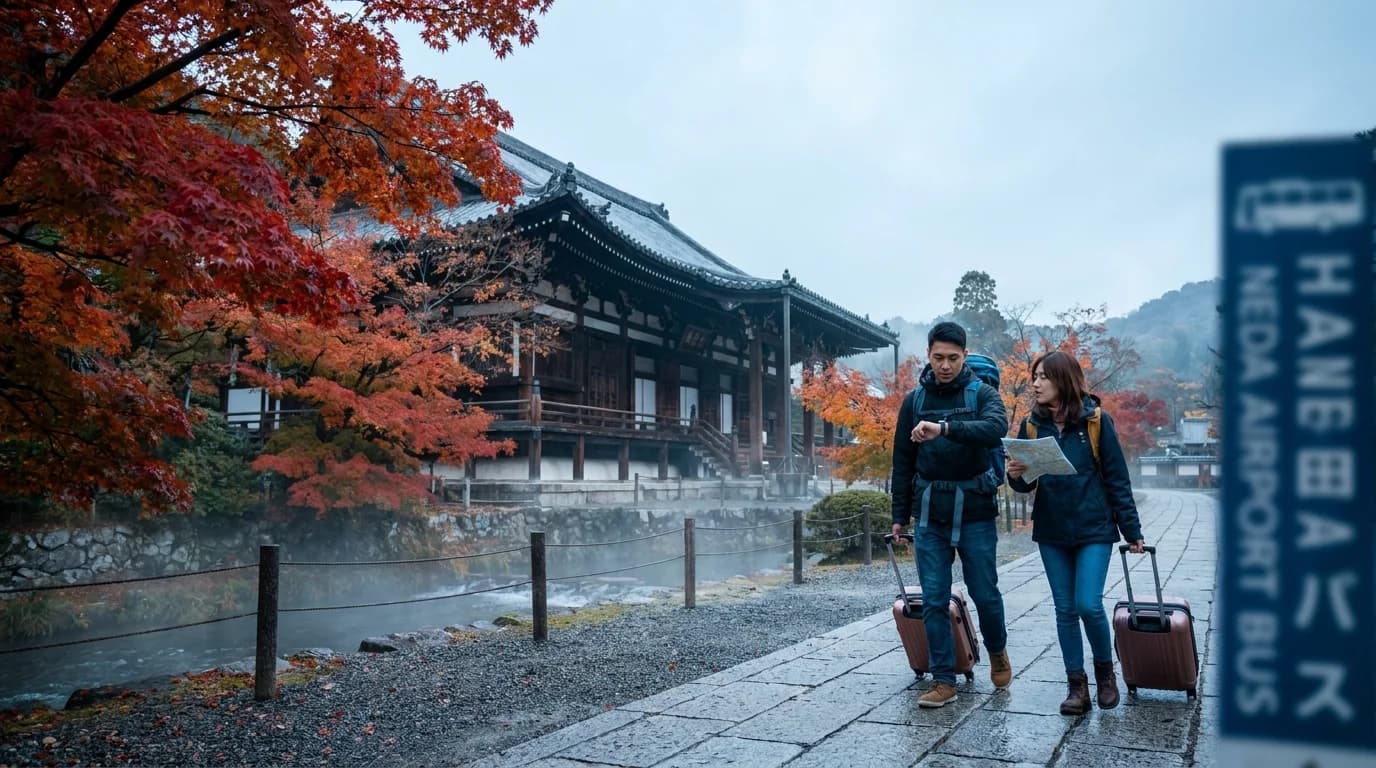
Haneda Airport Luggage Deadline: Avoid Missed Flights and Fines
By Tour in Japan editors · Updated
Learn how to adapt to Haneda's new luggage check‑in rules, stay clear of tourist fines, and still enjoy an all‑you‑can‑eat cheese spot.
Hook
If you booked a domestic flight from Tokyo’s Haneda Airport last month, you probably assumed you had the usual 30‑minute window to drop off a suitcase. The reality changed overnight: airlines now demand an earlier luggage check‑in for domestic routes, and missing it means a missed flight, a hefty re‑booking fee, and a possible fine if you breach any of Japan’s strict tourist rules. This guide shows you how to re‑engineer your airport day so you never scramble again, stay within the law, and still squeeze in a memorable meal at a cheese‑centric restaurant that most travelers never hear about.
Who this is for: independent backpackers, business travelers, and small‑group tourists who rely on tight schedules, want to keep costs low, and prefer practical, step‑by‑step planning over vague advice. By the end of the article you will be able to calculate the exact time you need to reach Haneda’s basement station, pack to meet the new deadline, and know which fines to watch for if you step out of line.
The primary keyword, Haneda airport luggage deadline, appears early because the whole workflow revolves around that change.
Why It Matters Right Now
On August 4, 2026, Sora News reported that JAL and ANA announced a stricter baggage‑check deadline for all domestic flights departing Haneda 【3†https://soranews24.com/2026/08/04/tokyos-haneda-airport-airlines-announce-stricter-luggage-check-in-deadline-for-domestic-flights】. The airlines cited “operational efficiency” and “increased passenger volume” as reasons. In FY 2025, Haneda handled 85 million domestic passengers, a 12 % rise over the previous year, and the new cutoff trims the buffer zone from 30 minutes to roughly 15 minutes for most flights. Missing the new window forces you onto the next flight, which can add ¥10,000–¥15,000 (≈$70–$105) in re‑booking fees and waste a day of sightseeing.
At the same time, Metropolis Japan’s 2026 tourist‑rules roundup warns that fines for minor infractions—such as smoking in non‑designated areas or failing to follow local waste‑separation rules—can range from ¥10,000 to ¥30,000 (≈$70–$210) 【2†https://metropolisjapan.com/japan-tourist-rules-fines-2026】. The stricter airport timeline means you’ll be moving faster, and a rushed mind is more likely to slip up on those rules. Acting now, before the summer travel rush peaks (mid‑July to early August), gives you a chance to embed the new deadline into your routine while the learning curve is still shallow.
In short, the convergence of tighter airport logistics and a crackdown on tourist behaviour makes the next two months the perfect window to lock in a reliable process.
Further reading: For the official announcement from Haneda Airport, see the Haneda Airport news release. The JR East timetable tool, which can verify train arrival times in real time, is available at the JR East official site.
The Play: Step‑by‑Step
- Confirm the exact check‑in cutoff for your airline.
Action: Visit the airline’s domestic‑flight FAQ page (e.g., JAL’s “Baggage Check‑in” section) and note the stated deadline—most now require check‑in 45 minutes before departure. If the page is ambiguous, call the reservation centre and ask for the precise time. Write the cutoff down in both 24‑hour and AM/PM formats to avoid confusion. Why: Knowing the exact minute eliminates guesswork and lets you back‑calculate your station arrival. Tool: Airline website or phone line; keep a note in a travel‑notes app like Evernote or Notion. Time: 5 minutes. Tip: Some airlines publish a PDF timetable that also lists the latest possible bag‑drop time for each flight number. Download it and pin it to your home screen for instant reference.
- Map the train schedule to Haneda’s basement station.
Action: Use Hyperdia, Navitime, or the JR East app to pull the last train that arrives at Haneda Airport Station at least 15 minutes before the airline’s cut‑off. For a 45‑minute check‑in, aim to be at the station 60 minutes before flight departure. Write the train’s departure time, platform number, and expected arrival time in a table: ``
| Train | Departs (Station) | Arrival (Haneda) | Platform |
|---|---|---|---|
| Keikyu Airport Express | 07:20 (Shinagawa) | 07:55 | 2 |
`` Why: Trains run on a tight schedule; a 5‑minute delay can cascade into a missed check‑in. Tool: JR East app (free tier available). Set an alarm for the departure time of the chosen train. Time: 10 minutes. Tip: If you travel during rush hour (07:00‑09:00), add an extra 5‑minute buffer for platform crowding. The app’s “Live Train Status” button shows real‑time delays.
- Pre‑pack with the new deadline in mind.
Action: Two days before travel, weigh your suitcase on a digital luggage scale. If it’s close to the airline’s weight limit, redistribute items into a carry‑on to speed up the drop‑off. Pack only what you need for the first 24 hours; you can buy toiletries at the airport for a modest ¥500–¥1,000. Create a “24‑hour kit” list (toothbrush, travel‑size toothpaste, a change of underwear, a light jacket) and keep it in a separate compartment. Why: A lighter bag slides through the check‑in line faster, and you avoid the extra fee for overweight luggage (typically ¥2,000 per 2 kg over the limit). Tool: Portable luggage scale (≈¥1,200/≈$11). Use a checklist app to verify essentials. Time: 15 minutes. Tip: Roll clothing instead of folding; you save up to 20 % space, which often reduces the need for a second bag.
- Reserve a luggage locker if you have early arrivals.
Action: Purchase a locker at Haneda’s central terminal (¥300 per day) before you land. The locker’s QR code can be scanned from your phone, letting you store a bag while you explore the city. If you arrive after 06:00, you can use the “Early‑Bird” locker option that costs ¥250 for the first 6 hours. Why: If your train arrives earlier than the check‑in window, you won’t have to wait around the bag‑drop counters; you can start sightseeing immediately. Tool: Haneda’s locker kiosk (cash or IC card). Keep the QR code on your phone and also print a small receipt as a backup. Time: 2 minutes. Tip: Lockers are limited near the domestic terminal, so book them online via the airport’s official app if you travel on a weekend.
- Set a “final‑call” alarm 20 minutes before the cut‑off.
Action: On your phone, create a recurring alarm titled “Haneda Luggage Deadline”. When it rings, head straight to the bag drop. Pair the alarm with a vibration pattern you’ve used for other critical travel reminders so you won’t miss it even if your phone is on silent. Why: Human memory is unreliable under travel stress; a hard alarm forces action. Tool: Native phone alarm (free). For iOS users, the “Shortcuts” app can also trigger a spoken reminder. Time: 1 minute to set, then automatic. Tip: If you travel with a companion, synchronize both phones to the same alarm to create a mutual accountability system.
- Know the fine schedule for tourist infractions.
Action: Download the Metropolis Japan 2026 fines PDF (available on the site) and bookmark the sections on smoking, littering, and noise. Keep the PDF on your phone for quick reference; you can also add a one‑page cheat sheet to your home screen. Why: If you’re rushed after a missed check‑in, you might unintentionally break a rule; the PDF reminds you of the penalties (¥10,000–¥30,000) so you can avoid them. Tool: PDF reader (free). Optionally, print a single A5 sheet and tuck it in your travel wallet. Time: 5 minutes. Tip: Some municipalities have “fine‑free zones” near tourist attractions. The PDF highlights these, allowing you to plan restroom breaks or smoking spots accordingly.
- Plan a post‑flight cheese reward.
Action: Reserve a seat at the all‑you‑can‑eat cheese and doria restaurant featured by Sora News 【1†https://soranews24.com/2026/08/04/sweet-dreams-are-made-of-cheese-at-this-all-you-can-eat-cheese-and-doria-restaurant】. The venue is near Shinjuku Station and takes reservations via phone or LINE. Choose a time that gives you at least a 30‑minute buffer after you land, accounting for the monorail or subway ride from Haneda to Shinjuku (≈¥560, 30 minutes). Why: Giving yourself a concrete reward makes the disciplined morning routine easier to stick to. Tool: LINE app; call the restaurant (¥0). Note the reservation time in your itinerary and set a reminder for the day before. Time: 5 minutes. Tip: The restaurant offers a “Cheese Flight” sampler for ¥1,200; ordering it early guarantees you won’t miss the best‑selling varieties.
- Run a dry‑run the night before.
Action: Simulate the whole process on your phone: open the train‑schedule app, check the departure time, glance at the alarm, and view the locker QR code. If any step feels fuzzy, adjust the timing or write a quick note. Why: A mental rehearsal reduces the cognitive load on the day of travel, leaving more brainpower for enjoying the cheese dinner. Tool: Your phone’s notes app. Time: 3 minutes. Tip: If you’re traveling with a group, share the dry‑run checklist in a group chat so everyone is on the same page.
Real‑World Example
Here is what this looks in practice:
Mika, a solo traveler from Canada, booked a domestic flight from Haneda to Sapporo for 09:30 AM on September 12, 2026. She read the Sora News alert about the new luggage deadline and followed the eight‑step play.
- Airline cutoff: She checked JAL’s website and confirmed a 45‑minute check‑in requirement, meaning she needed to be at the bag drop by 08:45.
- Train selection: Using the JR East app, she found the Keikyu Airport Express departing Shinagawa at 07:20, arriving at Haneda Station at 07:55. The app showed a 2‑minute delay on that train, so she added a 5‑minute safety margin, targeting arrival at the station by 08:00.
- Packing: Two days before departure, she weighed her suitcase (22 kg) on a digital scale and moved a pair of boots to her carry‑on, staying under the 23 kg limit. Her 24‑hour kit included a travel‑size face wash (¥450) and a compact umbrella (¥1,200) that she bought at a convenience store the day before.
- Locker reservation: She booked a ¥300 locker for the morning via the Haneda app, receiving a QR code that she saved to her phone’s lock screen. The locker was in Terminal 2, right next to the domestic‑flight check‑in area.
- Alarm setup: She set a “final‑call” alarm for 08:25 titled “Haneda Luggage Deadline”. When the alarm rang, she left the train platform, walked straight to the bag‑drop counter, and handed over her suitcase.
- Fine awareness: She opened the Metropolis fines PDF and bookmarked the section on “public smoking”. The PDF reminded her that smoking in non‑designated areas carries a ¥20,000 fine, so she avoided the airport lounge’s non‑smoking zone.
- Cheese reward: After landing in Sapporo, she took the JR Rapid Airport Line to Tokyo (via a quick return flight on the 15th) and later that evening called the cheese‑doria restaurant. She booked a 19:30 reservation, which gave her 2 hours after her flight to travel back to Shinjuku using the Narita Express (¥560) and the Yamanote Line (¥200).
- Dry‑run: The night before, she opened the train app, confirmed the alarm, and looked at the locker QR code. She noted in her Notion travel page: “Arrive at Haneda by 08:00 → alarm 08:25 → bag drop by 08:45 → flight 09:30”.
Outcome: Mika’s total extra cost for the new deadline was ¥300 for the locker and ¥2,500 for the cheese dinner, a fraction of the ¥10,000–¥15,000 re‑booking fee she would have faced had she missed the check‑in. Her entire process took about 30 minutes from train arrival to bag drop, well within the new window. She also avoided any fines because she deliberately stayed out of the airport’s non‑smoking lounge and disposed of her trash in the clearly marked recycling bins, following the PDF’s guidance.
What would have happened without this plan? If Mika had arrived at the station at 08:15 (the typical 30‑minute buffer many travelers still use), she would have reached the bag‑drop at 08:40, only 5 minutes before the new cutoff. Any slight line‑up delay—common during morning rush hour—could have pushed her past 08:45, resulting in a missed flight, a ¥12,000 re‑booking charge, and likely a forced overnight stay at a hotel near Haneda (average ¥10,000 per night). The cost differential illustrates why the eight‑step play saves both money and stress.
Official reference: JAL’s domestic baggage policy page confirms the 45‑minute cut‑off requirement (JAL Baggage FAQ).
Caveats
- Large‑group travelers with multiple suitcases may find the 45‑minute window too tight, especially if the airport is busy. Consider shipping excess baggage ahead of time via Yamato Transport (¥1,200 per 20 kg) or using a “Baggage Forwarding” service that delivers to your hotel (≈¥2,500 per suitcase). Both options free up space at the check‑in counter and keep you within the deadline.
- Flights with very early departures (before 07:00) may not have a preceding train that arrives 60 minutes early; in those cases, a taxi from central Tokyo (¥5,000–¥7,000) is the only reliable option. Pre‑book the taxi with a company like Nihon Taxi to lock in the fare and request a 24‑hour reservation window.
- The fine schedule listed by Metropolis is subject to change; always verify the latest local ordinances before your trip, especially if you plan to visit nightlife districts where noise fines (¥15,000) are common after 22:00.
- If you rely on free Wi‑Fi at the airport to pull up the locker QR code, be aware that connection can be spotty during peak hours. Have a printed copy as backup, and consider enabling “offline mode” for the JR East app so you can still view the train timetable without data.
- Weather considerations: During the rainy season (June‑July), trains can be delayed by up to 10 minutes due to track maintenance. Add an extra buffer of 10 minutes to your train‑arrival target in those months.
Action Items
- Check your airline’s exact domestic baggage‑check deadline and note it in your travel itinerary (both digital and printed).
- Use the JR East app to book the last train that gets you to Haneda at least 60 minutes before departure, and write down the platform and car number.
- Reserve a locker for the morning and set a “final‑call” alarm 20 minutes before the cut‑off.
- Download the Metropolis fines PDF and add a one‑page cheat sheet to your phone’s home screen.
- Book your cheese‑doria dinner now—slots fill quickly on weekends.
Stay ahead of the new Haneda airport luggage deadline, avoid costly fines, and treat yourself to a cheese‑laden dinner. Subscribe to our newsletter for more up‑to‑date Japan travel tactics at /newsletter.
Stay Connected in Japan
Yesim eSIMs work on arrival — no physical SIM needed. Japan data plans from $5.