
8 photos — swipe or tap to expand
Kobe to Kyoto Shore Excursion: Custom Car Tour, Licensed Guide
This private day tour is designed for travelers arriving at Kobe Port by cruise ship who want to make the most of their day in the timeless city of Kyoto. Your government-licensed, English-speaking guide and private vehicle meet you right at Kobe Port (Naka Pier Cruise Terminal) or your nearby hotel, so there is no stress about trains, tickets, or navigation. From the port you are driven comfortably to Kyoto, Japan's ancient capital, about an hour away. With your guide you can choose from iconi
Operated and fulfilled by partner operators via Viator.
From
¥88,725
Booking opens on our partner's site, which handles payment, confirmation and support. We may earn a commission at no extra cost to you. Affiliate disclosure
Overview
- ✓This private day tour is designed for travelers arriving at Kobe Port by cruise ship who want to make the most of their day in the timeless city of Kyoto.
- ✓Your government-licensed, English-speaking guide and private vehicle meet you right at Kobe Port (Naka Pier Cruise Terminal) or your nearby hotel, so there is no stress about trains, tickets, or navigation.
- ✓From the port you are driven comfortably to Kyoto, Japan's ancient capital, about an hour away.
- ✓Because this tour is fully private and customizable, the itinerary is tailored to your interests and pace.
- ✓Your guide brings each site to life and drives you back to Kobe Port in good time for your ship's departure.
This private day tour is designed for travelers arriving at Kobe Port by cruise ship who want to make the most of their day in the timeless city of Kyoto. Your government-licensed, English-speaking guide and private vehicle meet you right at Kobe Port (Naka Pier Cruise Terminal) or your nearby hotel, so there is no stress about trains, tickets, or navigation. From the port you are driven comfortably to Kyoto, Japan's ancient capital, about an hour away. With your guide you can choose from iconic highlights such as the golden Kinkaku-ji, the torii gates of Fushimi Inari, the Arashiyama Bamboo Grove, the hilltop Kiyomizu-dera, the geisha district of Gion, and the stalls of Nishiki Market. Because this tour is fully private and customizable, the itinerary is tailored to your interests and pace. Your guide brings each site to life and drives you back to Kobe Port in good time for your ship's departure.
This private day tour is designed for travelers arriving at Kobe Port by cruise ship who want to make the most of their day in the timeless city of Kyoto. Your government-licensed, English-speaking guide and private vehicle meet you right at Kobe Port (Naka Pier Cruise Terminal) or your nearby hotel, so there is no stress about trains, tickets, or navigation. From the port you are driven comfortably to Kyoto, Japan's ancient capital, about an hour away. With your guide you can choose from iconic highlights such as the golden Kinkaku-ji, the torii gates of Fushimi Inari, the Arashiyama Bamboo Grove, the hilltop Kiyomizu-dera, the geisha district of Gion, and the stalls of Nishiki Market. Because this tour is fully private and customizable, the itinerary is tailored to your interests and pace. Your guide brings each site to life and drives you back to Kobe Port in good time for your ship's departure.
Travel Insurance for Japan
SafetyWing covers medical expenses, trip cancellation, and adventure activities. Plans from $1.5/day.
Stay Connected in Japan
Airalo eSIMs activate on arrival, no SIM swap needed. Data plans from $5.
Questions about this tour?
Have a question, want different dates, or need a private group? Send us an enquiry and we'll reply by email within 24 hours.
Prefer to book instantly? Use the Book This Experience button above — it opens our partner's checkout directly.
What’s Included
- ✓Private vehicle
- ✓Customizable Tour of your choice of 3-4 sites from 'Itinerary' list
- ✓Licensed Local English Speaking Guide
What’s NOT Included
- ✗You cannot combine multiple tour groups.
- ✗Entrance fees, Lunch, and Other personal expenses
- ✗Guide Entry fees are only covered for sights listed under Itinerary
What to Bring
- •Specialized infant seats are available
- •Service animals allowed
- •Suitable for all physical fitness levels
- •Public transportation options are available nearby
- •Infants and small children can ride in a pram or stroller
- •All areas and surfaces are wheelchair accessible
- •Transportation options are wheelchair accessible
- •Wheelchair accessible
- •There are only a limited number of car seats and booster seats. Rear-facing car seats are not available. You must contact us directly if you need them.
Meeting and Pickup
🚐Meet at start point
Good to know
- Guide languages
- Japanese, English
- Book at least
- 2 day(s) before
- Children
- Must travel with an adult
- Ages
- Infant 0–5 · Child 6–11 · Adult 12–99
- Cancellation
- For a full refund, cancel at least 24 hours before the scheduled departure time.
Tour options
- Regular Car (Up to 2 pax): Regular Car (Up to 2 pax)
- Van (Up to 7 pax): Van (Up to 7 pax)
- Minivan (Up to 4 pax): Minivan (Up to 4 pax)
Itinerary
40 min
Fushimi Inari Taisha is the head shrine of Inari, famous worldwide for its thousands of vermilion torii gates winding up the sacred Mount Inari. Walk beneath the iconic tunnels of gates with your guide and discover fox statues and atmospheric sub-shrines along the way.
30 min
Gion is Kyoto's most famous geisha district, lined with traditional wooden machiya townhouses, teahouses, and lantern-lit lanes. Stroll the atmospheric streets with your guide, soak up the old-Kyoto ambience, and perhaps glimpse a geiko or maiko on her way to an appointment.
40 min
Kiyomizu-dera is a UNESCO World Heritage temple famous for its vast wooden stage that juts out over the hillside, offering sweeping views over Kyoto's greenery and skyline. Your guide walks you up the historic approach lined with shops and shares the legends of this beloved temple.
40 min
Nijo Castle is a UNESCO World Heritage site built by the Tokugawa shoguns, famous for its ornate Ninomaru Palace with 'nightingale' floors that chirp to warn of intruders, lavish painted screens, and elegant Japanese gardens. Your guide brings its samurai-era history to life.
30 min
Known as 'Kyoto's Kitchen,' Nishiki Market is a lively covered arcade packed with over a hundred stalls selling fresh seafood, pickles, sweets, tea, and local specialties. Browse and sample street snacks with your guide, who can explain the unfamiliar delicacies along the way.
15 min
The Kyoto Imperial Palace (京都御所, Kyōto Gosho) used to be the residence of Japan's Imperial Family until 1868, when the emperor and capital were moved from Kyoto to Tokyo. It is located in the spacious Kyoto Imperial Park (京都御苑, Kyōto Gyoen), an attractive park in the center of the city that also encompasses the Sento Imperial Palace and a few other attractions.
20 min
The Higashiyama District (東山) along the lower slopes of Kyoto's eastern mountains is one of the city's best preserved historic districts. It is a great place to experience traditional old Kyoto, especially between Kiyomizudera and Yasaka Shrine, where the narrow lanes, wooden buildings and traditional merchant shops invoke a feeling of the old capital city. Recent renovations to remove telephone poles and repave the streets have further improved the traditional feel of the district.
20 min
Yasaka Shrine, also known as Gion Shrine, is a vibrant vermilion shrine at the eastern end of the Gion district. Famous for its main gate, lantern-lined halls, and lively festival atmosphere, it is a perfect spot to pause and soak up Kyoto's spiritual side with your guide.
15 min
Ginkakuji (銀閣寺, Silver Pavilion) is a Zen temple along Kyoto's eastern mountains (Higashiyama). In 1482, shogun Ashikaga Yoshimasa built his retirement villa on the grounds of today's temple, modeling it after Kinkakuji (Golden Pavilion), his grandfather's retirement villa at the base of Kyoto's northern mountains (Kitayama). The villa was converted into a Zen temple after Yoshimasa's death in 1490. As the retirement villa of an art obsessed shogun, Ginkakuji became a center of contemporary culture, known as the Higashiyama Culture in contrast to the Kitayama Culture of his grandfather's times. Unlike the Kitayama Culture, which remained limited to the aristocratic circles of Kyoto, the Higashiyama Culture had a broad impact on the entire country. The arts developed and refined during the time include the tea ceremony, flower arrangement, noh theater, poetry, garden design and architecture.
30 min
Stroll through the magical Arashiyama Bamboo Grove, where towering green stalks sway overhead and filter the sunlight into a serene glow. Your guide leads you along the famous pathway in this scenic district on Kyoto's western edge, a favorite spot for photos and a peaceful nature walk.
30 min
Kinkaku-ji, the Golden Pavilion, is one of Kyoto's most iconic Zen temples and a UNESCO World Heritage site. Its top two floors are completely covered in gold leaf, shimmering above a tranquil reflecting pond and beautifully landscaped strolling garden. Your guide will share its history as you take in this unforgettable view.
10 min
Nanzenji Temple (南禅寺), whose spacious grounds are located at the base of Kyoto's forested Higashiyama mountains, is one of the most important Zen temples in all of Japan. It is the head temple of one of the schools within the Rinzai sect of Japanese Zen Buddhism and includes multiple subtemples, that make the already large complex of temple buildings even larger. The history of Nanzenji dates back to the mid 13th century, when the Emperor Kameyama built his retirement villa at the temple's present location and later converted it into a Zen temple. After its founding, Nanzenji grew steadily, but its buildings were all destroyed during the civil wars of the late Muromachi Period (1333-1573). The oldest of the current buildings was built after that period.
10 min
Toji Temple (東寺, Tōji), literally "East Temple", was founded at the beginning of the Heian Period just after the capital was moved to Kyoto in the late 700s. The large temple, together with its now defunct sister temple Saiji ("West Temple"), flanked the south entrance to the city and served as the capital's guardian temples. Toji Temple is one of Kyoto's many UNESCO world heritage sites. About thirty years after the temple's establishment, Kobo Daishi, the founder of the Shingon sect of Japanese Buddhism, was appointed head priest of Toji, and the temple became one of the most important Shingon temples besides the sect's headquarters on Mount Koya. Kobo Daishi also added many of the large wooden buildings that stand on the grounds today.
10 min
Ninnaji (仁和寺) is one of the many great temples in Kyoto which are listed as World Heritage Sites. It is the head temple of the Omuro School of the Shingon sect of Buddhism and was founded in 888 by the reigning emperor. Over many centuries, a member of the Imperial Family used to serve as Ninnaji's head priest, and the temple was also known as Omuro Imperial Palace. Due to the many wars and fires that ravaged Kyoto throughout its history, none of the buildings from the temple's foundation in the 9th century still survive. The oldest buildings date back to the beginning of the Edo Period in the early 1600s, including the main hall (Kondo), the Kannon Hall, the Niomon front gate, the Chumon inner gate and the five storied pagoda.
10 min
Ryoanji Temple (龍安寺, Ryōanji) is the site of Japan's most famous rock garden, which attracts hundreds of visitors every day. Originally an aristocrat's villa during the Heian Period, the site was converted into a Zen temple in 1450 and belongs to the Myoshinji school of the Rinzai sect of Zen Buddhism, whose head temple stands just a kilometer to the south. As for the history of Ryoanji's famous rock garden, the facts are less certain. The garden's date of construction is unknown and there are a number of speculations regarding its designer. The garden consists of a rectangular plot of pebbles surrounded by low earthen walls, with 15 rocks laid out in small groups on patches of moss. An interesting feature of the garden's design is that from any vantage point at least one of the rocks is always hidden from the viewer.
15 min
Tenryuji (天龍寺, Tenryūji) is the most important temple in Kyoto's Arashiyama district. It was ranked first among the city's five great Zen temples, and is now registered as a world heritage site. Tenryuji is the head temple of its own school within the Rinzai Zen sect of Japanese Buddhism. Tenryuji was built in 1339 by the ruling shogun Ashikaga Takauji. Takauji dedicated the temple to Emperor Go-Daigo, who had just passed away. The two important historic figures used to be allies until Takauji turned against the emperor in a struggle for supremacy over Japan. By building the temple, Takauji intended to appease the former emperor's spirits.
15 min
Kenninji Temple (建仁寺) locates very close to the bustle of Hanamikoji and Shijo streets, the grounds of Kenninji Temple are expansive and pleasant to walk, and the two karesansui (dry landscape gardens) here offer the visitor an oasis of tranquility. It is thought to be the oldest Zen temple in Kyoto.
15 min
Adashino Nenbutsuji is located at the end of the Saga-Toriimoto Preserved Street. The temple was founded in the early 9th century when the famous monk Kobo Daishi placed stone statues for the souls of the dead here. Today, the temple grounds are covered by hundreds of such stone statues. In the back of the temple, a short path leads through a bamboo forest.
15 min
Another ten minute walk north of the similarly named Adashino Nenbutsuji, the Otagi Nenbutsuji Temple is famous for its 1200 stone statues of rakan, devoted followers of Buddhism, each with a different facial expression. Created relatively recently in the 1980s and early 1990s, the many statues stand across the temple grounds which cover part of a forested mountain slope.
15 min
Gioji is even more nestled into the forest than Jojakkoji and Nisonin. It is known for its moss garden that is punctuated with tall maple trees. The temple's entrance gate and small main hall have thatched roofs. The latter has an attractive round window looking into the gardens.
15 min
This is the former villa of the popular actor Okochi Denjiro (1896-1962), located in the back of Arashiyama's bamboo groves. Okochi Sanso consists of several different gardens and buildings, including living quarters, tea houses and gates. The buildings can only be viewed from the outside. Admission includes matcha green tea with a snack.
pass by
The walking paths that cut through the bamboo groves make for a nice walk or bicycle ride. The groves are particularly attractive when there is a light wind and the tall bamboo stalks sway gently back and forth. The bamboo has been used to manufacture various products, such as baskets, cups, boxes and mats at local workshops for centuries.
pass by
The Togetsukyo Bridge (lit. "Moon Crossing Bridge") is Arashiyama's most iconic landmark. It was originally built during the Heian Period (794-1185) and most recently reconstructed in the 1930s. The bridge looks particularly attractive in combination with the forested mountainside in the background. A riverside park with dozens of cherry trees is located just adjacent to the bridge.
Send a Booking Enquiry
Tell us about your preferred dates and group size and we'll confirm availability and answer any questions — usually within 24 hours.
Before you book
Kobe beef is a certified brand from Tajima cattle in Hyogo, not a breed. Learn its standards, how to identify genuine cuts, and where to eat it.
A guide to seeing wagyu cattle and tasting regional beef at source, with farm and farmhouse experiences in Mie and Hyogo and notes on top brands.
More Experiences in Hyogo
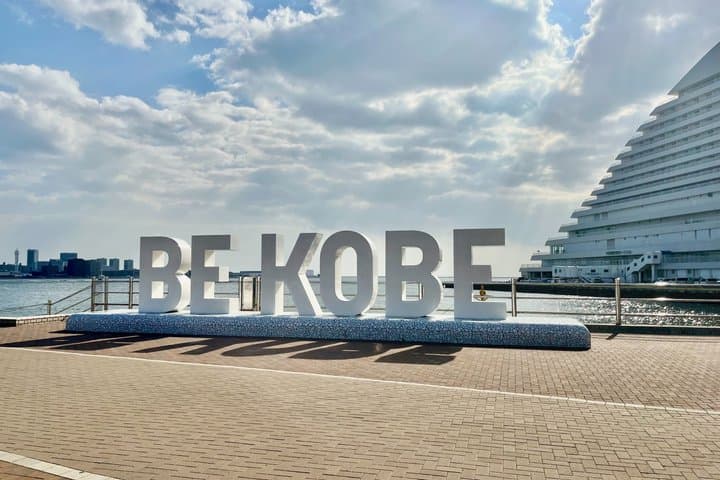
Private half-day guided tour of the city of Kobe
Explore Kobe on a 4-hour walking tour. Start in the vibrant heart of Sannomiya before discovering Kitanocho, a European district with a rich history and panoramic views of the city. Continue your adventure in the Chinese district of Nankinmachi, where Chinese culture flourishes in Japan. The visit ends at the Port of Kobe and Harborland, a lively area that shows the city's rebirth after the 1995 earthquake. An unforgettable experience awaits you, blending history, culture, and modernity. - Vis
From ¥21,000
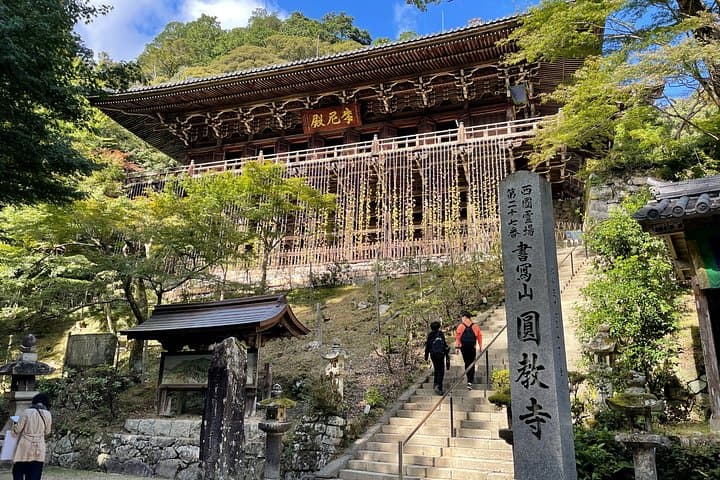
Himeji Wellness Tour Zen Meditation at Engyoji and Radon Bath
Escape the crowds and discover a more peaceful side of Himeji on this unique wellness day tour—combining Zen meditation, Buddhist culture, nature, and a rare radon bath for a day of mindfulness and detox that resets both mind and body. - Mt. Shosha Ropeway & Engyoji Temple: Take a scenic ropeway up Mt. Shosha, then explore the historic Engyoji Temple—over 1,000 years old, known as the "Mount Hiei of the West" and a filming location for The Last Samurai. - Monk-Guided Tour & Zen Meditation: Lea
From ¥16,000
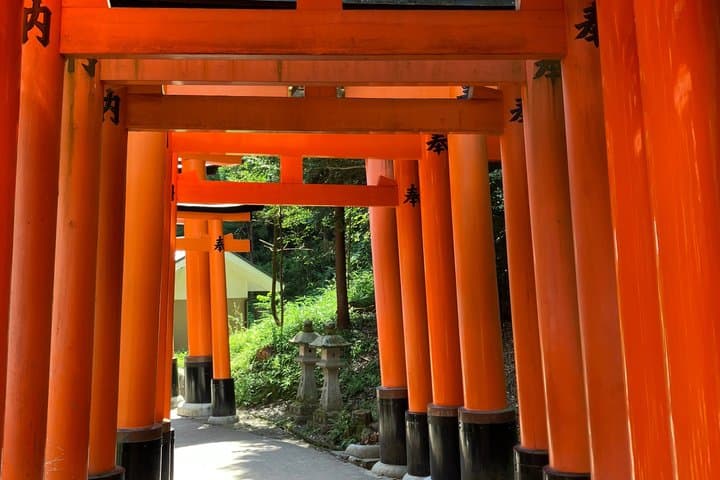
Kyoto Private Tour from Osaka or Kobe with Licensed Guide
Experience the depth of Kyoto’s culture, history, and charm on this private tour. Carefully designed for comfort and flexibility, this tour takes you through iconic landmarks and vibrant local spots that showcase the soul of Kyoto. Begin your journey at Fushimi Inari Shrine, famous for its thousands of red torii gates winding through a sacred mountain trail. This spiritual site dedicated to the Shinto god Inari offers a serene and unforgettable start to your day. Next, dive into local flavors
From ¥27,540
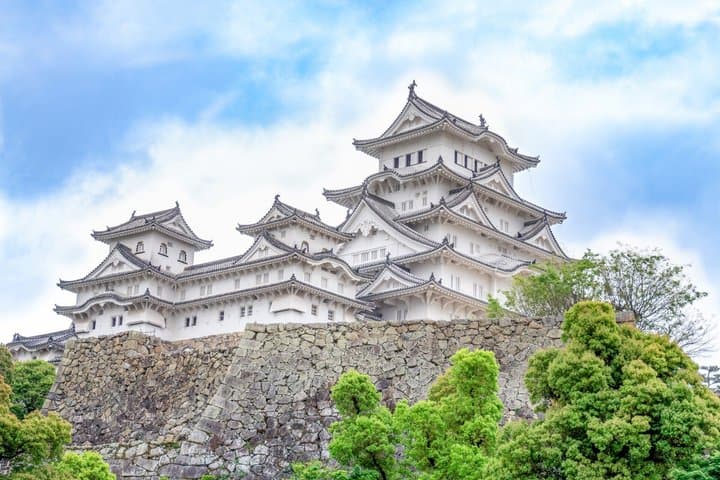
Kobe Harborland Car Tour Experience
Please note that even if you select “Tour Language: English(written),” the driver speaks Japanese only. Communication will be supported using a translation app, and English tour information will be provided in advance. This 6-hour private taxi tour offers a seamless blend of history and modern elegance. You will start from Kobe Port and travel to the magnificent Himeji Castle, a UNESCO World Heritage site. Afterward, enjoy the serene beauty of Koko-en Garden located right next to the castle. On
From ¥79,923
Booking opens on our partner's site · we may earn a commission at no extra cost to you
From
¥88,725