
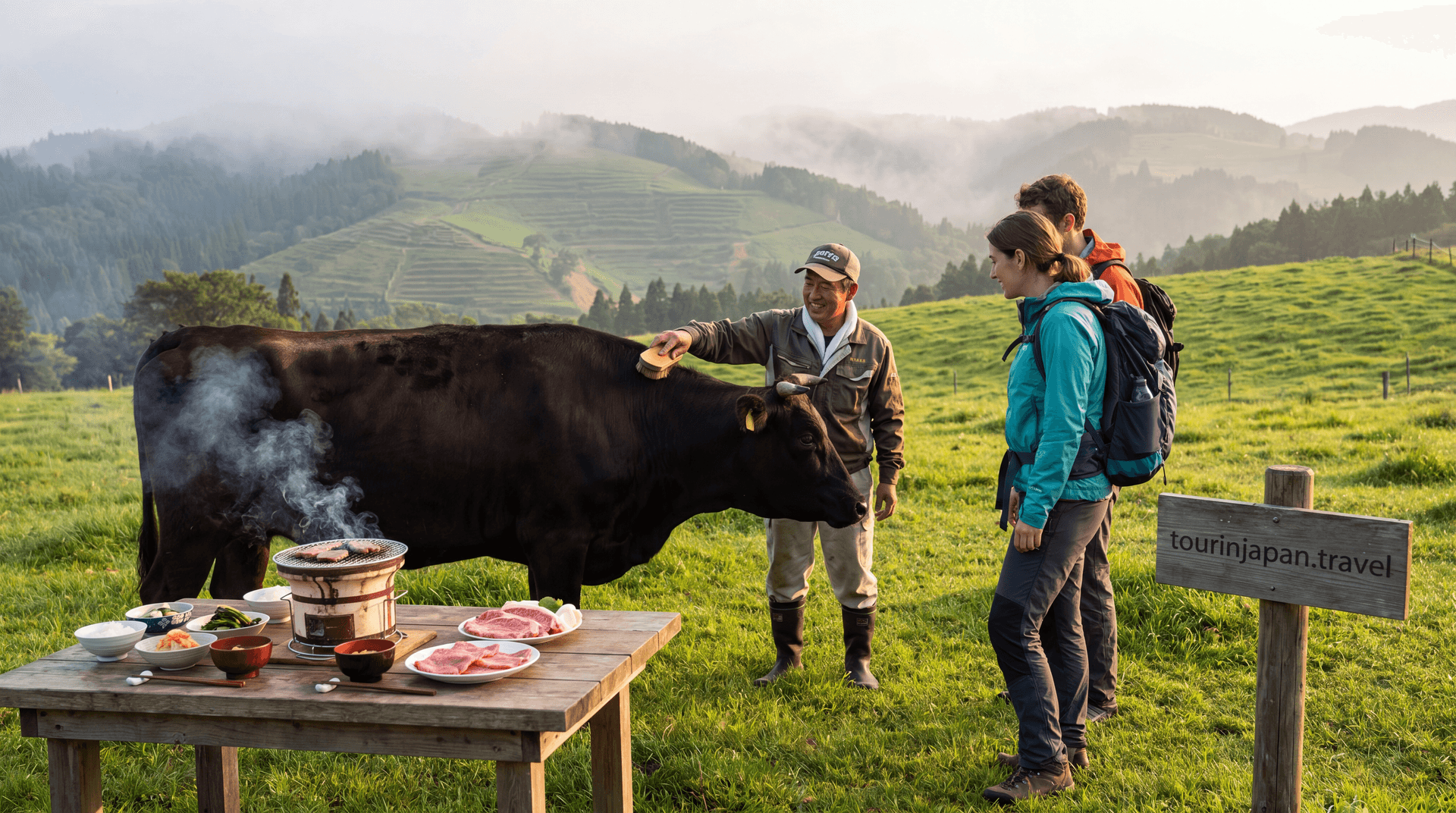
Wagyu Farm Experiences: Meet the Cattle, Taste the Beef
By Tour in Japan editors · Updated
Visit wagyu cattle farms in Kobe, Matsusaka, and Miyazaki to understand why Japanese beef is extraordinary. Farm tours, BBQ experiences, and tasting dinners explained.
Wagyu beef has become one of Japan's most celebrated food exports, but tasting it in Japan — on the farms and in the restaurants of the regions where specific breeds are raised — is a fundamentally different experience from eating wagyu elsewhere in the world. The marbling patterns that make wagyu extraordinary are the result of genetics (specific Japanese cattle breeds developed over centuries of selective breeding), carefully managed feeding programs, and in some cases the specific mineral content of local grass and water. Wagyu farm experiences in Japan allow visitors to see this process firsthand, understand the craftsmanship involved in raising premium beef, and then eat it at its source. Costs range from 3,000 yen for a basic farm visit with BBQ to 80,000 yen for a full-day private program with a master chef dinner.
The Three Great Wagyu Brands
Japan recognizes several regional wagyu designations, but three dominate internationally. Kobe beef comes from Tajima-strain Japanese Black cattle raised in Hyogo Prefecture under extremely strict certification rules — fewer than 3,000 head per year qualify for the Kobe brand. Matsusaka beef (Mie Prefecture) is considered by some connoisseurs to be even more exquisitely marbled than Kobe, with female virgin cattle raised for an extended period to maximize fat development. Miyazaki beef, from Kyushu, has won Japan's Wagyu Olympics several times and offers some of the most accessible farm experience programs.
Farm visits to wagyu operations require advance arrangement and are not always open to individual tourists — most programs cater to groups or require booking through tour operators. However, the experience of walking among the famously calm Tajima cattle, learning about their diet and daily care from the farmers who raise them, and understanding the auction and grading system that assigns value to each animal transforms the subsequent steak dinner into something genuinely meaningful.
Farm Experience Programs by Region
- Hyogo Prefecture (Kobe beef): Several farms near Sanda and Miki cities offer half-day programs including cattle viewings and lunch. Contact Hyogo tourism board for current programs — availability changes seasonally.
- Mie Prefecture (Matsusaka beef): Matsusaka City Tourism Association coordinates farm visits, often combined with a tasting dinner at a certified Matsusaka beef restaurant. Programs start around 12,000 yen.
- Miyazaki Prefecture: The most developed agritourism infrastructure for wagyu. Shintomi Town and Takanabe area run organized farm tours with English support. Airbnb Experiences lists several authentic programs.
- Yamagata (Yonezawa beef): Lesser-known but exceptional. Farm visits combined with hot spring (onsen) stays. Extremely high marbling, relatively affordable.
- Iwate (Maesawa beef): Northern Japanese breed with distinctive flavor. Very few tourists visit — an authentic off-the-beaten-path experience.
How to Eat Wagyu: From Teppanyaki to Sukiyaki
At a certified Kobe beef restaurant, a teppanyaki set starting at around 15,000 yen is the classic introduction: the chef sears slices of A5-graded beef on an iron griddle at your table, seasoning with nothing more than salt, pepper, and the beef's own rendered fat. The correct way to eat wagyu steak in Japan is in small portions — because the intramuscular fat satiety is much higher than lean beef, experienced diners eat 100 to 150 grams rather than the 300-gram cuts common in Western restaurants.
Sukiyaki is another wonderful format for premium wagyu — thinly sliced beef simmered tableside in a sweet soy and mirin broth, dipped in raw egg before eating. This preparation is deeply Japanese and particularly good at expressing the flavor complexity of Matsusaka and Yonezawa beef. Shabu shabu, where paper-thin wagyu slices are swirled in plain dashi broth, is better suited to standard grades. Many upscale Tokyo restaurants offer dedicated wagyu menus covering both preparations for 10,000 to 25,000 yen per person.
Stay Connected in Japan
Yesim eSIMs work on arrival — no physical SIM needed. Japan data plans from $5.