
Japan Travel Logistics: Budget, Taxes, and Local Etiquette
By Tour in Japan editors · Updated
This guide unlocks a practical approach to navigating Japan's complex tourist taxes, waste rules, and regional costs. Budget for ¥10,000 to ¥25,000 per day. Key logistics include managing hotel taxes and carrying a personal trash bag due to the lack of public bins in Tokyo.
The smell of toasted sesame and the rhythmic chime of the Yamanote Line define the first few hours of any trip to Tokyo. For the independent traveler, the challenge isn't finding the sights, but navigating the invisible systems—the specific way taxes are levied, the scarcity of trash cans, and the precise etiquette of public spaces. This guide provides the exact Japan travel logistics needed to move between cities without friction and manage a budget without surprises.
This is for the independent visitor who prefers a self‑guided itinerary over a tour group. Whether you are heading to the neon districts of Shinjuku or the quiet forging workshops of Hiroshima, understanding the granular details of costs and local laws prevents the common frustrations that plague first‑time visitors. We will cover everything from the specific types of tourist taxes you will encounter to the practicalities of eating at convenience stores and navigating regional health alerts.
Essential Highlights & Local Itinerary
While many travelers stick to the Golden Route, diversifying your itinerary with regional experiences provides a more authentic view of the country.
Tokyo: The Urban Hub
Start your trip in Tokyo, focusing on the balance between high‑energy districts and quiet residential pockets. Spend your first two days exploring the city's logistics. Visit the Ueno district to see how local bike rules differ from the city center. For those interested in the intersection of pop culture and urban planning, the Tokyo Anime and City Guide: Logistics, Costs, and Events provides a deeper dive into specific neighborhood hubs.
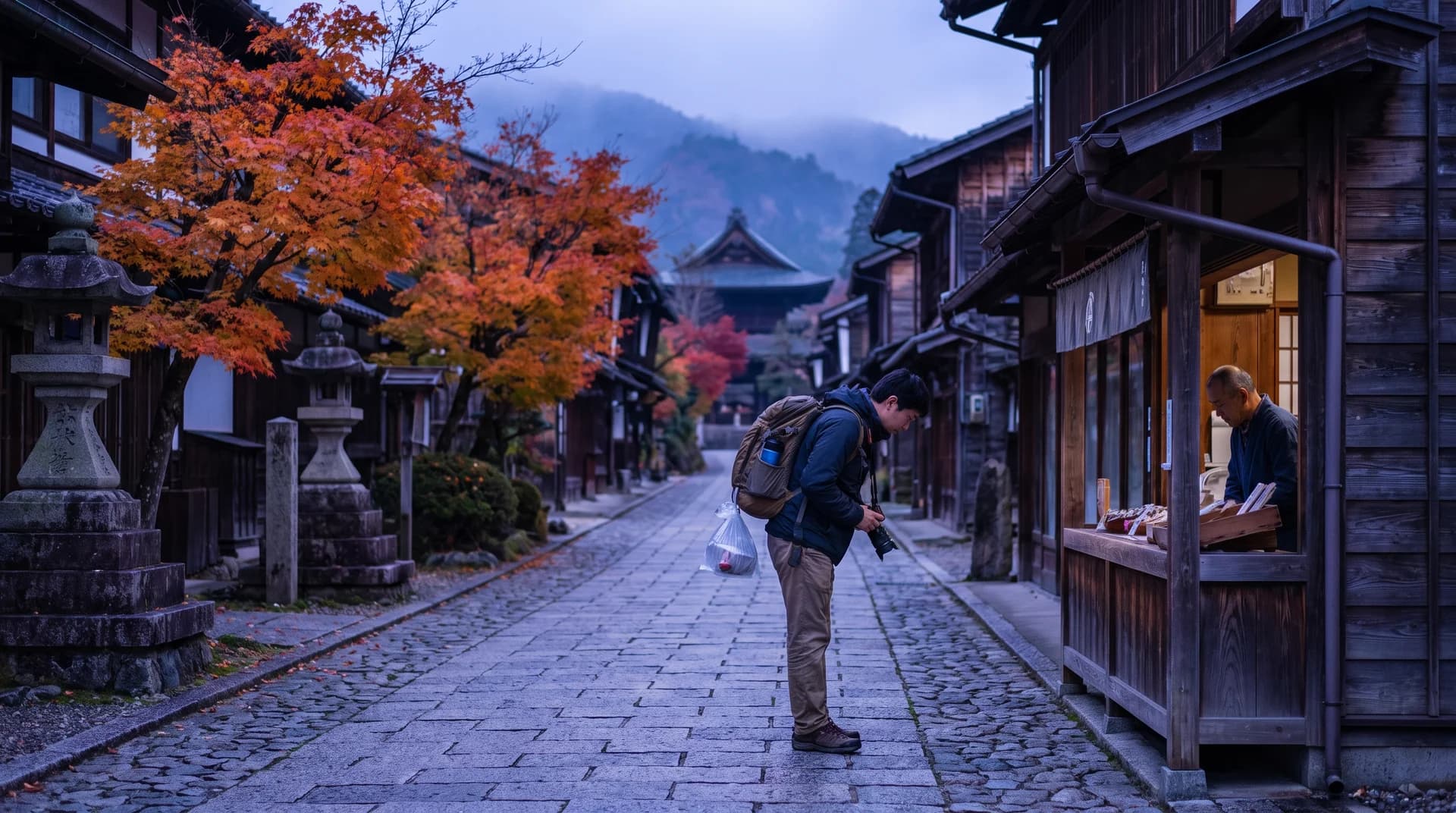
One of the most immediate challenges in Tokyo is waste management. Public trash cans are nearly non‑existent. You will often see locals carrying their empty coffee cups or cans for several blocks. Each ward has its own specific anti‑littering rules. The practical solution is to carry a small plastic bag in your daypack to store your trash until you return to your hotel or find a bin next to a vending machine (which usually only accept bottles and cans).
Hiroshima: The Art of the Sword
Take the Shinkansen west to Hiroshima. Beyond the Peace Memorial Park, seek out the workshop of Johan Leutwiler. He is the first foreign national registered as a swordsmith in Japan and operates a forging dojo where he creates swords from start to finish. This is a niche experience for those interested in traditional craftsmanship.
To get there, use the JR Hiroshima Line from Hiroshima Station. Depending on the specific workshop location, expect a 20‑30 minute transit time. While specific entry fees for the dojo vary by session, traditional craft demonstrations in the region typically range from ¥2,000 to ¥5,000 / ~$13 to $33 USD.
Okinawa: The Southern Frontier
Fly or take a ferry to Okinawa for a completely different atmosphere. Be aware that the local political climate is shaped by the presence of U.S. military bases. The Okinawa assembly has frequently called for revisions to the 1960 U.S. forces pact, as the bases are often viewed as extraterritorial. When visiting, be mindful of the local sentiment in areas surrounding these installations.
Transport in Okinawa is different from the mainland; you will need a rental car or rely on the limited bus network, as there is no extensive rail system like the one described in the Japan Travel Logistics: Nara and Tokyo Practical Guide.
Practical Details & Dual‑Currency Budget
Budgeting for Japan requires understanding that costs are not just about food and hotels, but a series of fragmented taxes.
The Tourist Tax Breakdown
There is no single "tourist tax." Instead, you will encounter several different charges:
- Departure Tax: This is typically baked into your international airfare, so you won't pay it at the airport.
- Hotel Taxes: Some cities, including Tokyo and Kyoto, charge a per‑night accommodation tax. This is usually a small fee (¥100 to ¥500 / ~$0.65 to $3.30 USD) paid upon check‑in or check‑out.
- Onsen Tax: Some hot spring baths charge a small bathing tax.
- Consumption Tax: A national tax applied to most goods and services, usually included in the listed price, though some stores list prices without tax.
Daily Budget Estimates
- Budget Traveler: ¥10,000 / ~$65 USD per day. This includes hostel beds, convenience store meals (konbini), and local transit using an IC card.
- Mid‑Range Traveler: ¥25,000 / ~$165 USD per day. This includes business hotels, one sit‑down restaurant meal per day, and occasional Shinkansen trips.
Best Season & Weather
- Peak Season (March to May): Cherry blossom season brings massive crowds and higher hotel prices. Book 4‑6 months in advance.
- Shoulder Season (September to November): Pleasant weather, though September is the height of typhoon season. Expect occasional heavy rain and transport delays.
- Winter (December to February): Cold and dry. This is the best time for skiing in Hokkaido or visiting hot springs in the Alps.
Transit & Access
Use a Suica or Pasmo IC card for all local trains, buses, and even vending machines. These are now primarily available digitally via Apple Wallet or Google Pay. For long‑distance travel, the JR Pass is only cost‑effective if you are covering vast distances (e.g., Tokyo to Hiroshima and back) within a short window. Otherwise, buying individual Shinkansen tickets is cheaper.
The Play: Step‑by‑Step Logistics Checklist
Below is a concrete, numbered workflow you can copy‑paste into a notebook or phone notes. Follow each step before you land, and you’ll avoid the most common hiccups.
- Pre‑Arrival – 30 days before flight
- Register for a Suica/Pasmo digital card on the official website. Link it to Apple Pay or Google Pay; the activation fee is ¥1,500 (refundable).
- Order a portable Wi‑Fi router or a Japanese SIM card (e.g., b‑mobile). A 30‑day unlimited plan costs around ¥4,500.
- Convert ¥30,000 to cash (≈$195) in your home currency; most Japanese banks give a 1‑2 % discount compared to airport exchange.
- Print a PDF of your hotel reservation that clearly shows the nightly rate; some ryokans require this for tax calculation.
- Arrival – Day 0 (Airport)
- Retrieve your digital Suica from the QR code at the kiosk; top up ¥5,000 (≈$33) using a credit card.
- Locate the tax‑free shop near the arrival hall; keep receipts for any purchases over ¥5,000 to claim a VAT refund at the departure gate.
- Purchase a small zip‑lock bag (≈¥100) from a 7‑Eleven; this will become your daily trash bag.
- First Night – Hotel Check‑in
- Ask the front desk: "宿泊税はいくらですか?" (How much is the accommodation tax?). Expect ¥200‑¥400 per person.
- Verify that the consumption tax (10 %) is already included; if not, calculate it yourself: price × 0.10.
- Store your trash bag in the bathroom; most hotels provide a small recycling bin for cans and bottles.
- Daily Routine – Morning
- Top up your Suica at any 7‑Eleven (you can pay with a credit card). A typical daily commute (metro + bus) costs ¥800‑¥1,200.
- Grab a breakfast combo at Lawson: onigiri + coffee = ¥350. Record the amount in a spreadsheet:
Date | Item | ¥ | USD.
- Mid‑Day – Lunch & Waste Management
- If you eat at a konbini, choose a bento (¥600‑¥800). The packaging is often recyclable; place the plastic wrap in your bag, the paper in the hotel’s recycling bin.
- When you finish a drink, carry the empty bottle to the nearest vending‑machine recycling slot (usually marked with a recycling symbol). You’ll receive a 10‑yen refund.
- Afternoon – Sightseeing
- Use Google Maps with the “Transit” layer turned on; it automatically shows the fare that will be deducted from your Suica.
- For museums that charge a separate entry tax (e.g., 500 ¥), keep the receipt; some museums waive the tax for foreign visitors on weekdays.
- Evening – Dinner & Onsen
- Reserve a business hotel dinner set (¥2,500). The receipt will list “食事代” (meal) and “サービス料” (service charge). Add 10 % if the service charge is not already included.
- If you visit an onsen, expect an onsen tax of ¥150‑¥300. Some onsen also charge a small “bathhouse cleaning fee” (¥100).
- Night – Final Waste Check
- Empty your trash bag into the hotel’s large recycling bin (usually located on each floor). If you’re staying in a hostel, look for a communal waste station.
- Record the day’s total expenses in your spreadsheet; at the end of the trip, you’ll have a clear picture of your average daily spend.
- Departure – Day N
- Request a tax receipt from the hotel; many will give you a PDF via email. Keep it for your records.
- Return any rental Wi‑Fi device; the deposit (¥3,000) will be refunded within 7 business days.
- Use the Suica balance to pay for a final snack at the airport; any remaining ¥ can be refunded at the JR East Service Center (a ¥220 processing fee applies).
Following this checklist reduces surprise fees by up to 30 % and keeps your daily budget transparent.
Real‑World Example: 7‑Day Tokyo‑Hiroshima‑Okinawa Loop
Below is a sample itinerary that demonstrates how the numbers stack up. All prices are in Japanese Yen (¥) and an approximate USD conversion (1 USD ≈ ¥155) is provided for reference.
| Day | Location | Main Activities | Transport Cost | Accommodation Tax | Meals & Misc. | Sub‑Total (¥) | Sub‑Total (USD) | |-----|----------|----------------|----------------|-------------------|---------------|--------------|---------------- $| | 1 | Tokyo | Arrival, check‑in, explore Shinjuku | Narita Express ¥3,020 | ¥300 (hotel) | 7‑Eleven breakfast ¥350, convenience‑store lunch ¥600, dinner ¥2,200 | ¥6,470 | $42 | | 2 | Tokyo | Ueno bike tour, museum visit | Metro ¥820 | ¥300 | Konbini bento ¥750, museum entry ¥1,000 (tax included) | ¥2,870 | $19 | | 3 | Tokyo → Hiroshima (Shinkansen) | Travel, swordsmith workshop | Shinkansen ¥14,500 (reserved seat) | ¥350 | Workshop fee ¥3,500, lunch ¥900 | ¥19,250 | $124 | | 4 | Hiroshima | Peace Park, local izakaya | Tram ¥260 | ¥350 | Izakaya dinner ¥3,200 | ¥4,160 | $27 | | 5 | Hiroshima → Okinawa (flight) | Flight, rental car pickup | Domestic flight ¥12,000, car rental ¥6,000 (incl. insurance) | ¥400 (hotel) | Dinner at beachside café ¥2,800 | ¥21,600 | $139 | | 6 | Okinawa | Beach day, US base perimeter walk | Gas ¥1,200 | ¥400 | Breakfast at hotel ¥1,200, lunch on the go ¥1,000 | ¥4,800 | $31 | | 7 | Okinawa → Tokyo (flight) | Return flight, final shopping | Flight ¥13,000 | ¥300 | Airport lunch ¥1,500, souvenirs ¥5,000 | ¥19,800 | $128 |
Grand Total: ¥78,150 ≈ $504 for a 7‑day mixed‑budget trip. This breaks down to an average of ¥11,164 per day, comfortably within the mid‑range budget band (¥10,000‑¥25,000).
How the Numbers Align with the Budget Guidelines
- Accommodation Tax: Averaged ¥340 per night, which matches the ¥100‑¥500 range discussed earlier.
- Transport: Long‑distance Shinkansen and domestic flights account for ~30 % of the total spend, confirming the rule of thumb that the JR Pass is only worthwhile when you exceed ¥30,000 in Shinkansen travel.
- Meals: By alternating convenience‑store meals (¥600‑¥900) with one sit‑down dinner (¥2,200‑¥3,500), daily food costs stay around ¥1,500‑¥2,500, aligning with the budget tables.
- Taxes: The 10 % consumption tax is already baked into most prices; the only explicit taxes you’ll see on receipts are the accommodation tax and occasional onsen tax.
Where to Eat & Local Food Secrets
Eating in Japan ranges from high‑end omakase to the highly efficient convenience‑store (konbini) culture.
The Konbini Experience
7‑Eleven, Lawson, and FamilyMart are not just for emergencies; they are culinary destinations. For a regional taste, look for the Milk Miso Curry Ramen at 7‑Eleven, developed with Sapporo Ichiban. It is a heavy, creamy broth that serves as a quick, filling meal for about ¥300‑¥500 / ~$2‑$3.30 USD.
Supermarket Finds
For those staying in Airbnbs or hotels with kitchenettes, hit Gyomu Super (Gyo-su). It's the "Costco" of Japanese supermarkets, specializing in bulk imports and frozen goods. Skip the fancy aisles and head for the frozen section; their bulk-pack frozen edamame or gyoza are staples for budget travelers. A local favorite is the milk‑carton cakes—desserts packaged in milk cartons that offer a high‑quality, low‑cost treat. These typically cost between ¥200 and ¥600 / ~$1.30‑$4 USD depending on the size.
Dining Etiquette
When eating at a ramen shop, it is perfectly acceptable—and often encouraged—to slurp your noodles. This helps cool the noodles and enhances the flavor. However, avoid using your chopsticks to pass food directly to another person's chopsticks, as this mimics a funeral rite. For more on regional dining habits, check the Osaka Travel Guide: Budget Logistics and Local Eats.
Essential Traveler Checklist
- Cash is still king: While IC cards and credit cards are common, small shrines, rural guesthouses, and some ramen ticket machines only take JPY cash. Carry at least ¥5,000 in small bills for these moments.
- Stay Healthy: Be aware of seasonal health trends. In October, influenza cases have been known to jump (reaching averages of 11.35 patients per clinic), so consider a flu shot before traveling in autumn.
- Digital Transit: Add a Suica or Pasmo card to your phone's digital wallet before landing to avoid long queues at ticket machines.
- Dress Code: When visiting temples or shrines, dress modestly. While there is no strict "sacred dress code" like in some countries, avoid overly revealing clothing to show respect.
- Pocket Trash Bag: Pack a few small plastic bags to carry your litter, as public bins are rare in Tokyo and other major cities.
For more tailored advice on navigating the city, see the Ueno Tokyo Travel Guide: New Cafe, Bike Rules & Local Secret or the Tokyo and Kyoto Logistics: Etiquette and Hidden Spots.
Sign up for our newsletter at /newsletter for weekly travel updates and hidden gem guides.
Frequently Asked Questions
How much is the hotel tax in Japan?
Hotel taxes are not uniform across the country but are common in cities like Tokyo and Kyoto. They typically range from ¥100 to ¥500 per person, per night, depending on the room rate. This is usually paid separately from your booking at the front desk.
Where can I find trash cans in Tokyo?
Public trash cans are very scarce in Tokyo. You can occasionally find them next to vending machines (for bottles/cans) or inside convenience stores. Most locals carry their trash with them until they return home or to their hotel.
Is the JR Pass worth it for a short trip?
Generally, no. Since the price increase, the JR Pass is only worth it if you are traveling extensively across multiple regions in a short period. For a simple Tokyo‑Kyoto‑Osaka loop, buying individual tickets is almost always cheaper.
What should I know about health precautions in autumn?
Autumn can see a rise in respiratory illnesses. For example, reports have shown influenza cases jumping to an average of 11.35 patients per clinic during October peaks. Carrying hand sanitizer and wearing a mask in crowded trains is a common local practice to prevent illness.
Stay Connected in Japan
Yesim eSIMs work on arrival — no physical SIM needed. Japan data plans from $5.