
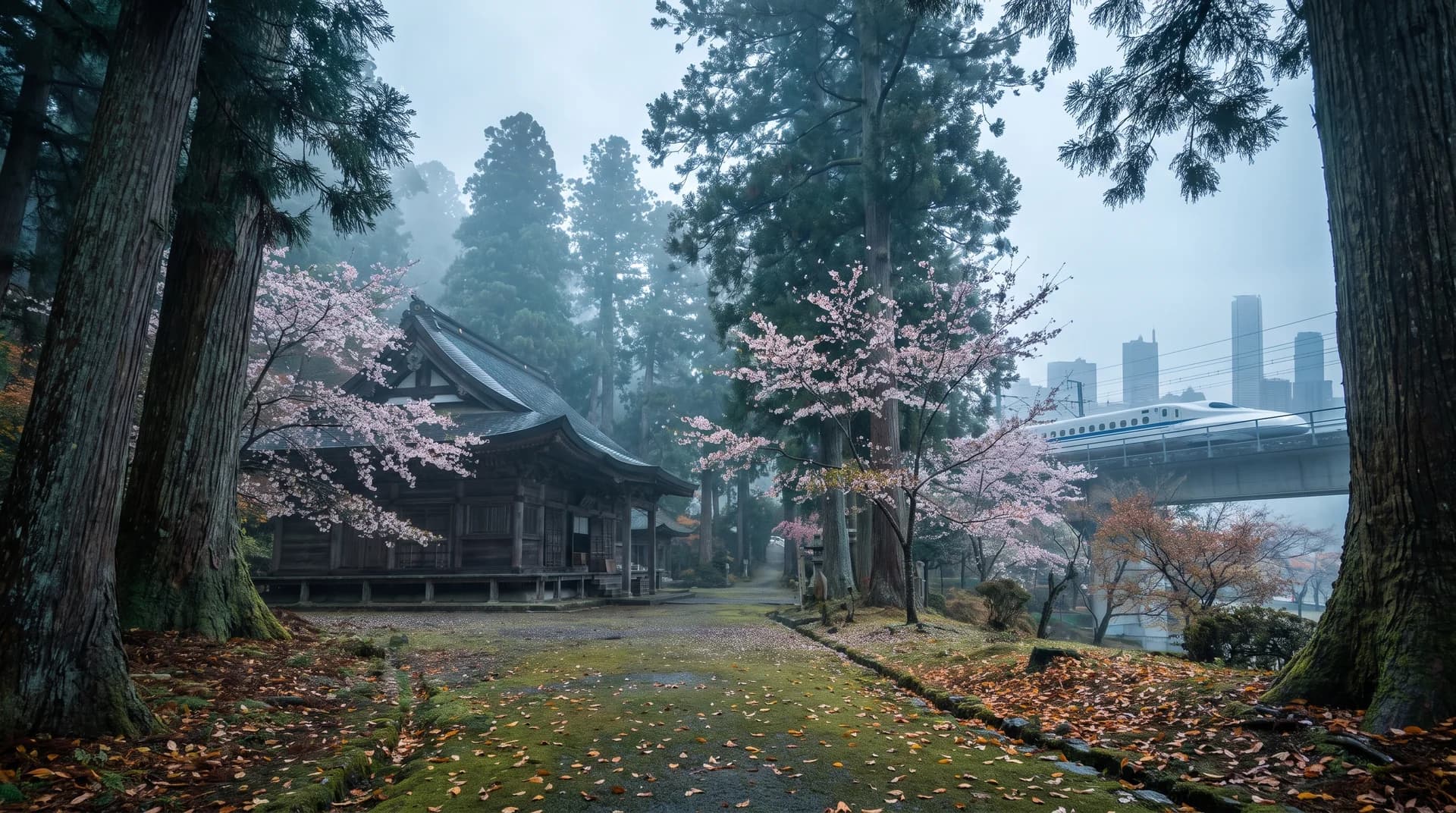
Japan Travel Logistics: Nara and Tokyo Practical Guide
By Tour in Japan editors · Updated
This guide unlocks a balanced itinerary between Tokyo's urban hubs and Nara's rural landscapes. Expect daily costs around ¥12,000 / ~$80 USD. A critical must-know is avoiding Soni Village during peak silver grass season to bypass two-hour traffic delays for local residents.
The smell of toasted sesame and the rhythmic chime of the Yamanote Line define the first few hours of any trip to the capital. For the independent traveler, navigating Japan is less about finding the right sights and more about mastering the timing and the tools. This guide unlocks a practical loop between the high-density districts of Tokyo and the rural outskirts of Nara, designed to avoid suffocating tourist bottlenecks while hitting the essential landmarks. This is for the traveler who prefers a Suica card over a rigid tour group and wants to know exactly which convenience store sells the best egg sandwich before they leave their hotel.
Navigating these regions requires a shift in mindset. In Tokyo, the challenge is the scale of the stations; in Nara, it is the seasonal surge of visitors to specific natural landmarks. By focusing on specific districts and timing your movements around local traffic patterns, you can experience the city's efficiency and the countryside's stillness without the stress of unplanned logistics. Whether you are tracking the Japan Autumn Travel Guide: Foliage Forecasts and Snacks or planning a winter escape, the core logistics of transport and budgeting remain the same.
Tokyo: Shinjuku and Shibuya Logistics
Start your trip in Shinjuku (新宿). From Narita Airport, take the Narita Express (N'EX) for approximately ¥3,250 / ~$22 USD. Shinjuku Station is the busiest in the world, handling over 3.5 million passengers daily; always follow the yellow signs for the "East Exit" or "West Exit" to avoid walking in circles. If you are heading to the skyscrapers on the west side, use the "South Exit" to bypass the East side's congestion.
Spend 4 to 6 hours exploring the Shinjuku Gyoen National Garden (Entry: ¥500 / ~$3.50 USD). Visit between 9:00 AM and 11:00 AM to avoid midday heat and crowds. The French Formal and traditional Japanese gardens offer a stark contrast to the surrounding skyline. In November, maple trees near the pond typically peak around the 20th.
From Shinjuku, take the JR Yamanote Line to Shibuya (渋谷)—a 7-minute ride costing ¥150 / ~$1 USD. While the Shibuya Crossing and Hachiko Statue are free, the area is retail-dense. For a free view of the crossing, head to the second floor of the "Shibuya Sky" entrance or the Mag's Park rooftop. For more detail, see the Tokyo Shinjuku Travel Guide: Logistics, Costs, and Dining. Spend 3 hours here before escaping to Setagaya to visit Gotokuji Temple—the birthplace of the "beckoning cat" (Maneki-neko)—where thousands of cat figurines are on display for free.
Nara: The Deer Park and Soni Village
To reach Nara from Tokyo, take the Shinkansen to Kyoto, then transfer to the JR Nara Line. A one-way ticket typically costs around ¥14,000 / ~$95 USD. I highly recommend booking a "Reserved Seat" (Shiteiseki) for roughly ¥500 more than a "Non-Reserved Seat" (Jiyuseki) during holiday weekends to avoid standing for two hours.
In Nara city, Nara Park (奈良公園) is the primary draw. Entry is free, but deer crackers (shika-senbei) cost ¥200 / ~$1.40 USD per pack. Be cautious: the deer are opportunistic and may nudge or nip if you hold crackers too long. Spend 4 hours walking to Todai-ji Temple; entry to the Great Buddha Hall is ¥600 / ~$4 USD. To avoid the longest queues for the 15-meter tall Daibutsu, arrive by 8:30 AM.
For rural scenery, Soni Village (曽根村) is famous for its Japanese silver grass (Susuki). However, this area suffers from severe overtourism during the autumn peak (late October to mid-November). Local residents have reported taking up to two hours just to leave their homes due to traffic congestion from tourist buses and rental cars.
Soni Village: A Strategic Approach
To visit Soni Village without the stress, follow this plan:
- Timing: Visit on a Tuesday or Wednesday. Avoid weekends. Arrive by 7:30 AM to secure parking and beat the 10:00 AM tour buses.
- Transport: Rent a compact K-car [PRODUCT:rental-car-japan] from Nara Station; large SUVs are difficult on single-lane roads. Ensure you have an International Driving Permit (IDP) and passport. A one-day rental costs ¥6,000 to ¥9,000 / ~$40 to $60 USD.
- Navigation: Use Google Maps, but avoid "shortcuts" that lead to private farm roads. Stick to the main arteries leading to the Soni Highlands.
- Exit Strategy: Leave by 2:00 PM. Traffic spikes between 3:00 PM and 6:00 PM, often turning a 45-minute drive into a 3-hour ordeal.
The Tokyo Convenience Store Circuit
While most travelers stick to 7-Eleven, Family Mart, or Lawson, the insider move is Daily Yamazaki. They focus more on bakery-style quality, and their egg sandwiches—often using a softer milk-bread base—are frequently cited as superior. A typical sandwich costs ¥250 to ¥400 / ~$1.70 to $2.70 USD.
To optimize your mornings, use this "Konbini Strategy":
- 7-Eleven: Best for 7-Café coffee and onigiri (tuna-mayo is about ¥130 / ~$0.90 USD).
- Lawson: Go here for "Karaage-kun" fried chicken (¥220 / ~$1.50 USD).
- Family Mart: The "Famichiki" is the gold standard of konbini poultry (¥220 / ~$1.50 USD).
- Daily Yamazaki: Your destination for fresh pastries and egg sandwiches.
Integrate this into your Navigating Tokyo Transit and Convenience Store Finds strategy by grabbing breakfast at a Yamazaki near your hotel before hitting the subway.
Seasonal Weather and Budgeting
Spring (late March to April) is peak cherry blossom season; expect massive crowds and hotel prices to double. Autumn (October to November) is ideal for foliage. Summer (June to August) brings monsoon rains and extreme humidity, often exceeding 30°C (86°F) and 80% humidity. I recommend carrying a handheld fan [PRODUCT:handheld-fan], available at Don Quijote for ¥1,000 / ~$6.70 USD.
Avoid "Golden Week" (late April to early May). If you must travel then, book Shinkansen tickets exactly 30 days in advance via the Smart-EX app.
Daily Budget Breakdown:
- Budget Traveler: ¥8,000 to ¥10,000 / ~$55 to $68 USD (hostels, konbini meals, public transit).
- Mid-Range Traveler: ¥15,000 to ¥22,000 / ~$100 to $150 USD (business hotels, one sit-down meal, some taxis).
Cost Details:
- Accommodation: Capsule hotels (¥3,000–¥5,000 / ~$20–$34 USD); Business hotels like APA or Toyoko Inn (¥8,000–¥15,000 / ~$54 to $102 USD); Luxury Shinjuku hotels (¥40,000+ / ~$270+ USD).
- Food: Konbini meal (¥600–¥1,200 / ~$4–$8 USD); Mid-range dinner (¥2,000–¥4,000 / ~$13–$27 USD); High-end Kaiseki in Nara (¥15,000+ / ~$100+ USD).
- Attractions: Budget ¥2,000 / ~$13.50 USD per day for entrance fees.
Transit and Access Tips
Forget the physical JR Pass unless you are traversing the entire country in a week; the late 2023 price hikes (nearly 70%) make it less viable for a Tokyo-Nara loop. Instead, use a Suica or Pasmo IC card. You can add these to your Apple Wallet or Google Pay for seamless tapping. Top up via station ticket machines or 7-Eleven ATMs.
For airport transfers, the Keisei Skyliner (Narita to Ueno) costs ¥2,570 / ~$17 USD and is faster than the N'EX, taking about 40 minutes. In Nara, the city is walkable, but Soni Village requires a rental car for flexibility. Nara Kotsu buses run, but schedules are infrequent—sometimes only 3 or 4 per day—and they fill quickly during peak season.
Local Food Secrets and Etiquette
Avoid "English-only" tourist traps in central Shinjuku. Instead, visit "Depachika" (department store basements) in Isetan or Mitsukoshi for high-end bento boxes and wagashi (¥1,000 to ¥3,000 / ~$6.70 to $20 USD). For a cheaper experience, visit Omoide Yokocho (Memory Lane) in Shinjuku for yakitori (¥150 to ¥300 / ~$1 to $2 USD per skewer) and highballs (¥400 / ~$2.70 USD). Note that these stalls are often cash-only with very limited seating.
In Nara, try Kaki-no-ha Zushi (persimmon leaf-wrapped sushi), which costs ¥1,200 to ¥2,000 / ~$8 to $13.50 USD. Also, visit Nakatanidou for high-speed mochi pounding; a piece of warm yomogi mochi costs about ¥180 / ~$1.20 USD.
Dining Etiquette:
- Tipping: Never tip; it can be seen as confusing or insulting.
- Ramen: Slurping is acceptable and helps cool the noodles.
- Oshibori: Use the wet towel for your hands, not your face or the table.
- Chopsticks: Never pass food directly between chopsticks or stick them vertically into rice, as these mimic funeral rites.
Real-World Example: A 4-Day Logistics Loop
Day 1: Tokyo Arrival & Shinjuku
- 09:00: Land at Narita, purchase eSIM [PRODUCT:esim-japan], take Keisei Skyliner to Ueno (¥2,570), then Yamanote Line to Shinjuku (¥200).
- 12:00: Lunch at a Depachika (¥1,500) and walk through Shinjuku Gyoen (¥500).
- 18:00: Dinner at Omoide Yokocho (¥2,500).
- Total Spend: ~¥7,270 / ~$48 USD (excluding hotel).
Day 2: Shibuya & Setagaya
- 09:00: Breakfast at Daily Yamazaki (¥400 egg sandwich, ¥200 coffee).
- 11:00: Shibuya Crossing and Hachiko. Coffee at a local cafe (¥600).
- 14:00: Transit to Gotokuji Temple via Odakyu Line (¥200).
- 19:00: Dinner at a local Ramen shop (¥1,100).
- Total Spend: ~¥2,500 / ~$17 USD (excluding hotel).
Day 3: The Nara Sprint
- 07:00: Shinkansen from Tokyo to Kyoto, then JR Nara Line (¥14,000).
- 11:00: Nara Park, deer crackers (¥200), and Todai-ji Temple (¥600).
- 15:00: Kaki-no-ha Zushi for lunch (¥1,500).
- 19:00: Dinner near Nara Station (¥2,000).
- Total Spend: ~¥18,300 / ~$122 USD (excluding hotel).
Day 4: Rural Soni Village Escape
- 07:00: Rent a K-car at Nara Station (¥7,000 including fuel).
- 08:00: Explore Soni Highlands silver grass fields (Free).
- 13:00: Local village lunch (¥1,200).
- 14:00: Depart Soni Village to avoid the 3 PM traffic.
- 16:00: Return car and take Shinkansen back to Tokyo (¥14,000).
- Total Spend: ~¥22,200 / ~$148 USD (excluding hotel).
Essential Traveler Checklist
- Connectivity: Purchase an eSIM (like Airalo or Ubigi) before landing to avoid 30-minute passport registration queues at Narita.
- Currency: Carry at least ¥10,000 in cash. Rural shops in Soni Village and small shrines in Nara are strictly cash-only. Use 7-Eleven ATMs for the best rates.
- Packing: Bring a portable power bank [PRODUCT:power-bank] (10,000mAh minimum) and comfortable walking shoes for 15,000+ steps per day.
- Dress Code: Modest dress (covered shoulders and knees) is preferred for temples like Todai-ji.
- Phrases: "Sumimasen" (Excuse me/Sorry) and "Arigato gozaimasu" (Thank you very much).
For weekly travel updates and hidden gem guides, sign up for our updates at /newsletter.
Frequently Asked Questions
How much does a daily budget for Tokyo and Nara cost?
For a mid-range traveler, budget ¥15,000 to ¥22,000 (~$100 to $150 USD) per day. This covers a business hotel (¥10,000), one restaurant meal (¥3,000), local transit (¥1,000), and admission fees (¥1,000).
Is the JR Pass worth it for a Tokyo-Nara trip?
Generally, no. A round-trip Shinkansen ticket is significantly cheaper than a 7-day JR Pass. Use a Suica card for local travel and the Smart-EX app for Shinkansen tickets.
Why is Soni Village difficult to visit in autumn?
Extreme overtourism during silver grass season. Limited mountainous road access causes massive traffic jams; some residents report 2-hour delays just leaving their homes on peak weekends.
Which convenience store has the best bakery items?
Daily Yamazaki is highly recommended for its bakery-style egg sandwiches and higher quality of bread compared to 7-Eleven or Lawson.
Related reading
Stay Connected in Japan
Yesim eSIMs work on arrival — no physical SIM needed. Japan data plans from $5.