
Tokyo in 1 Day from Yokohama: Private Tour, Licensed Guide
Meet your guide in Yokohama and enjoy an efficient, one-day tour of Tokyo accompanied by a government-licensed and experienced English-speaking guide! Your guide will introduce both modern and traditional aspects of this dynamic Japanese capital. Tokyo is where you can experience both modern and t
What To Expect
Stop 1
⏱ 30 minMeet your guide in Yokohama and head to the world most exciting city Tokyo by train. You can meet your guide at the port in Yokohama as well!
Stop 2
⏱ 30 min**This tour does not include access to the inside of the Imperial Palace** The Imperial Palace is a popular destination for tours. The large garden area and outer walls of the old palace are open to the public. However, the inner area where the Royal family resides is private.
Stop 3
⏱ 1hThis beautiful and large garden in the center of Tokyo is famous for cherry blossoms. Adults \500 (Group discount \400) Seniors (65 and over) \250 ※Valid ID required. Please purchase a ticket at a staffed counter. Students \250 ※Valid Student ID required. Please purchase a ticket at a staffed counter. Children (junior high school students /15 and under) FREE
Stop 4
Pass byVisit one of the busiest crossings in the world and see the hustle and bustle of real Tokyo.
Stop 5
⏱ 1hOne of the most famous areas of Tokyo. The temple and shopping street have the feel of old Tokyo
Stop 6
⏱ 15 minMeiji Shrine (明治神宮, Meiji Jingū) is a shrine dedicated to the deified spirits of Emperor Meiji and his consort, Empress Shoken. Located just beside the JR Yamanote Line's busy Harajuku Station, Meiji Shrine and the adjacent Yoyogi Park make up a large forested area within the densely built-up city. The spacious shrine grounds offer walking paths that are great for a relaxing stroll. The shrine was completed and dedicated to the Emperor Meiji and the Empress Shoken in 1920, eight years after the passing of the emperor and six years after the passing of the empress. The shrine was destroyed during the Second World War but was rebuilt shortly thereafter.
Stop 7
⏱ 15 minAkihabara (秋葉原), also called Akiba after a former local shrine, is a district in central Tokyo that is famous for its many electronics shops. In more recent years, Akihabara has gained recognition as the center of Japan's otaku (diehard fan) culture, and many shops and establishments devoted to anime and manga are now dispersed among the electronic stores in the district. On Sundays, Chuo Dori, the main street through the district, is closed to car traffic from 13:00 to 18:00 (until 17:00 from October through March).
Stop 8
⏱ 15 minKoishikawa Korakuen (小石川後楽園, Koishikawa Kōrakuen) is one of Tokyo's oldest and best Japanese gardens. It was built in the early Edo Period (1600-1867) at the Tokyo residence of the Mito branch of the ruling Tokugawa family. Like its namesake in Okayama, the garden was named Korakuen after a poem encouraging a ruler to enjoy pleasure only after achieving happiness for his people. Koishikawa is the district in which the garden is located in.
Stop 9
⏱ 15 minHama Rikyu (浜離宮, Hama Rikyū), is a large, attractive landscape garden in central Tokyo. Located alongside Tokyo Bay, Hama Rikyu features seawater ponds which change level with the tides, and a teahouse on an island where visitors can rest and enjoy the scenery. The traditionally styled garden stands in stark contrast to the skyscrapers of the adjacent Shiodome district.
Stop 10
⏱ 30 minExplore the old fish market in Tokyo!
Stop 11
⏱ 30 minHarajuku (原宿) refers to the area around Tokyo's Harajuku Station, which is between Shinjuku and Shibuya on the Yamanote Line. It is the center of Japan's most extreme teenage cultures and fashion styles, but also offers shopping for adults and some historic sights. The focal point of Harajuku's teenage culture is Takeshita Dori (Takeshita Street) and its side streets, which are lined by many trendy shops, fashion boutiques, used clothes stores, crepe stands and fast food outlets geared towards the fashion and trend conscious teens.
Stop 12
⏱ 30 minRikugien (六義園) is often considered Tokyo's most beautiful Japanese landscape garden alongside Koishikawa Korakuen. Built around 1700 for the 5th Tokugawa Shogun, Rikugien literally means "six poems garden" and reproduces in miniature 88 scenes from famous poems. The garden is a good example of an Edo Period strolling garden and features a large central pond surrounded by manmade hills and forested areas, all connected by a network of trails.
Stop 13
⏱ 30 minYoyogi Park (代々木公園, Yoyogi Kōen) is one of Tokyo's largest city parks, featuring wide lawns, ponds and forested areas. It is a great place for jogging, picnicking and other outdoor activities. Although Yoyogi Park has relatively few cherry trees compared to other sites in Tokyo, it makes for a nice cherry blossom viewing spot in spring. Furthermore, it is known for its ginko tree forest, which turns intensely golden in autumn.
Stop 14
⏱ 15 minSensoji (浅草寺, Sensōji, also known as Asakusa Kannon Temple) is a Buddhist temple located in Asakusa. It is one of Tokyo's most colorful and popular temples. The legend says that in the year 628, two brothers fished a statue of Kannon, the goddess of mercy, out of the Sumida River, and even though they put the statue back into the river, it always returned to them. Consequently, Sensoji was built nearby for the goddess of Kannon. The temple was completed in 645, making it Tokyo's oldest temple.
Stop 15
⏱ 15 minRoppongi Hills is one of the best examples of a city within the city. Opened in 2003 in the heart of Tokyo's Roppongi district, the building complex features offices, apartments, shops, restaurants, a hotel, art museum, observation deck and more. The office floors are home to leading companies from the IT and financial sectors, and Roppongi Hills has become a symbol of the Japanese IT industry. At the center of Roppongi Hills stands the 238 meter Mori Tower, one of the tallest buildings in the city. While most of the building is occupied by office space, the first few floors have restaurants and shops and the top few floors house an observation deck and modern art museum that are open to the public.
Stop 16
⏱ 15 minShibamata (柴又) is a neighborhood on the eastern end of Tokyo, not far from the Edogawa River which is the natural border between Tokyo and Chiba Prefecture. The town retains its old-school charm from yesteryear and is a perfect break away from modern Tokyo. One of the main attractions to see is the Shibamata Taishakuten Temple not far from the station.
Stop 17
⏱ 15 minHaving miraculously avoided major damage during world wars and natural disasters, Yanaka and Nezu—two of the neighborhoods that make up shitamachi, Tokyo's old downtown—retain their last-century charm. You'll find historical sites such as Yanaka Cemetery and Nezu Shrine tucked away among shitamachi's narrow back alleys, traditional wooden houses, izakaya pubs, atmospheric coffee shops and retro stores selling old-style sweets and snacks. Here you can slip back in time to a slower-paced, more genteel Tokyo.
Stop 18
⏱ 15 minGolden Gai is said to have started around 1950 when the black market that had arisen in front of Shinjuku Station moved and, in this new area, a number of eating and drinking establishments set up shop. Although Shinjuku has undergone considerable modernization since then, Golden Gai seems to have remained largely unchanged. The alley is narrow and cramped with countless signs advertising the various establishments that line the way. Many of the buildings themselves are made of wood, remnants hanging on from the Showa Era. Most measure only around thirteen square meters (one hundred forty-two square feet). It's a dim, boisterous place filled with the aromatic smoke of grilling meats. Yet despite the nearly endless number of slick new restaurants available in Shinjuku, this little alley continues to draw the attention of foreign tourists. Golden Gai is a popular “un-touristy” tourist spot.
Stop 19
⏱ 15 minOdaiba (お台場) is a popular shopping and entertainment district on a man made island in Tokyo Bay. It originated as a set of small man made fort islands (daiba literally means "fort"), which were built towards the end of the Edo Period (1603-1868) to protect Tokyo against possible attacks from the sea and specifically in response to the gunboat diplomacy of Commodore Perry. More than a century later, the small islands were joined into larger islands by massive landfills, and Tokyo began a spectacular development project aimed to turn the islands into a futuristic residential and business district during the extravagant 1980s. But development was critically slowed after the burst of the "bubble economy" in the early 1990s, leaving Odaiba nearly vacant.
Stop 20
⏱ 30 minHead back to Yokohama with your guide by train.
What to Bring
- •Service animals allowed
- •Public transportation options are available nearby
- •Infants and small children can ride in a pram or stroller
- •Transportation options are wheelchair accessible
- •Wheelchair accessible
- •Suitable for all physical fitness levels
- •This is a walking tour. Meet up and Drop off are on foot and part of the tour time.
- •This is a walking tour. Pick up is on foot.
Compare Similar Experiences
 Tokyo in 1 Day from Yokohama: Private Tour, Licensed Guide (this) |  Kamakura Temples Private Custom Tour from Tokyo |  Exclusive Plans for Cruise Travelers, from Yokohama Port |  【VIP】Geisha Dance & Tea ceremony experence with Yukata | |
|---|---|---|---|---|
| Rating | ⭐ 4.9 (75) | — | — | ⭐ 5.0 (1) |
| Duration | — | 8 hours | — | 24 hours |
| Group size | — | — | — | — |
| Price (from) | US$186.14 | US$587.96 | US$119.53 | US$129.22 |
| Cancellation | Non-refundable | Non-refundable | Non-refundable | Non-refundable |
Customers Who Bought This Tour Also Bought

Yokohama City Highlights Guided Tour By AC Car

Yokohama Private Customizable Half Day Tour

Visiting Historical Sites in Hakone with a View of Mount Fuji

Only 1 Group per Day – Odawara Castle Samurai Experience

Kamakura Spiritual & History Private Tour: Zen Energy & Shrines
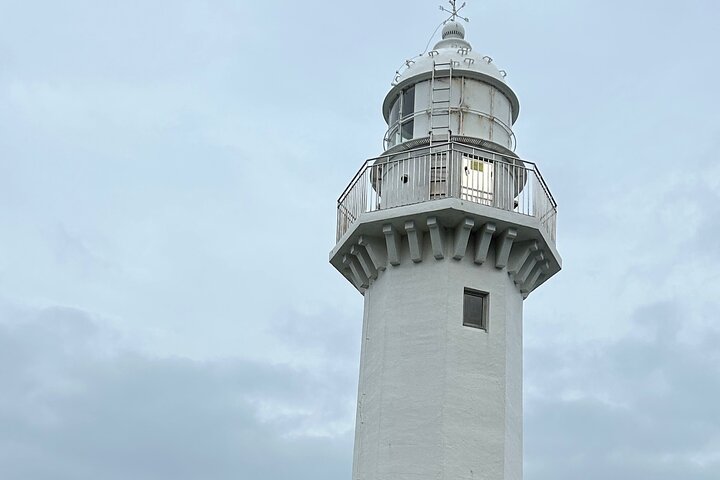
3 Hours Private Historical Walking Tour of Miura Peninsula

Innovation & Culture of Yokohama – 5h Private Shore Tour

Kawasaki Daishi Walking Tour and Kanayama Shrine
More Experiences in Kanagawa
Kamakura Temples Private Custom Tour from Tokyo
Discover the best of Kamakura in summer on this private, fully customizable tour with a dedicated private vehicle. Designed for comfort and flexibility, this experience lets you explore at your own pace while avoiding crowded transport in the heat. In addition to Kamakura’s iconic temples and shrine
From US$587.96
Exclusive Plans for Cruise Travelers, from Yokohama Port
This is our secret item, exclusive for cruise travelers who disembark cruise ships at Yokohama International Cruise Port. There are three ports in Yokohama: Ohsambashi Port, Shiko Port, and Daikoku Port, we apply for all ports. And there are various patterns after disembarkation there. Some clients
From US$119.53
【VIP】Geisha Dance & Tea ceremony experence with Yukata
A valuable experience that can only be had in Japan. It's a waste to end up wearing a yukata! Wearing a yukata and bowing and walking, let's feel Japan in the era when there were samurai. Once you get used to wearing a yukata, use a fan to dance to the representative Japanese song "Sakura Sakura".
From US$129.22

Vacation Photographer in Yokohama
Localgrapher is the largest network of professional photographers and videographers with more than 600 destinations around the globe! Book your private photographer and guide in Yokohama to capture your picture-perfect moments while visiting amazing sites! SOLO TRAVELERS Fancy an insta-perfect pho
From US$285.46
From
US$186.14