
8 photos — swipe or tap to expand
Nagasaki Shore Excursion: Custom Car Tour, Licensed Guide
This private tour is for travelers arriving in Nagasaki by cruise ship. We pick you up at Nagasaki Port or nearby hotels and explore the city with a licensed English-speaking guide and a private vehicle - a relaxed, efficient way to make the most of your time in port. Enjoy a 6-hour customizable tour with your private guide. Nagasaki is one of Japan's most international cities, shaped by centuries of trade with the Dutch, Portuguese, and Chinese. Stroll the hillside mansions of Glover Garden wi
Operated and fulfilled by partner operators via Viator.
From
¥53,250
Booking opens on our partner's site, which handles payment, confirmation and support. We may earn a commission at no extra cost to you. Affiliate disclosure
Overview
- ✓This private tour is for travelers arriving in Nagasaki by cruise ship.
- ✓We pick you up at Nagasaki Port or nearby hotels and explore the city with a licensed English-speaking guide and a private vehicle - a relaxed, efficient way to make the most of your time in port.
- ✓Enjoy a 6-hour customizable tour with your private guide.
- ✓Nagasaki is one of Japan's most international cities, shaped by centuries of trade with the Dutch, Portuguese, and Chinese.
- ✓Stroll the hillside mansions of Glover Garden with harbor views, visit Oura Cathedral - Japan's oldest church - and step into Dejima, Japan's former window to the West.
This private tour is for travelers arriving in Nagasaki by cruise ship. We pick you up at Nagasaki Port or nearby hotels and explore the city with a licensed English-speaking guide and a private vehicle - a relaxed, efficient way to make the most of your time in port. Enjoy a 6-hour customizable tour with your private guide. Nagasaki is one of Japan's most international cities, shaped by centuries of trade with the Dutch, Portuguese, and Chinese. Stroll the hillside mansions of Glover Garden with harbor views, visit Oura Cathedral - Japan's oldest church - and step into Dejima, Japan's former window to the West. Reflect at the Peace Park and Atomic Bomb Museum, see the Spectacles Bridge, enjoy the panorama from Mount Inasa, and wander lantern-lined Shinchi Chinatown. You choose the sights you like most, and your guide tailors the day to your pace and ship schedule so you return on time - no big groups, no rush, just a friendly local guide showing you the best of Nagasaki.
This private tour is for travelers arriving in Nagasaki by cruise ship. We pick you up at Nagasaki Port or nearby hotels and explore the city with a licensed English-speaking guide and a private vehicle - a relaxed, efficient way to make the most of your time in port. Enjoy a 6-hour customizable tour with your private guide. Nagasaki is one of Japan's most international cities, shaped by centuries of trade with the Dutch, Portuguese, and Chinese. Stroll the hillside mansions of Glover Garden with harbor views, visit Oura Cathedral - Japan's oldest church - and step into Dejima, Japan's former window to the West. Reflect at the Peace Park and Atomic Bomb Museum, see the Spectacles Bridge, enjoy the panorama from Mount Inasa, and wander lantern-lined Shinchi Chinatown. You choose the sights you like most, and your guide tailors the day to your pace and ship schedule so you return on time - no big groups, no rush, just a friendly local guide showing you the best of Nagasaki.
Travel Insurance for Japan
SafetyWing covers medical expenses, trip cancellation, and adventure activities. Plans from $1.5/day.
Stay Connected in Japan
Airalo eSIMs activate on arrival, no SIM swap needed. Data plans from $5.
Questions about this tour?
Have a question, want different dates, or need a private group? Send us an enquiry and we'll reply by email within 24 hours.
Prefer to book instantly? Use the Book This Experience button above — it opens our partner's checkout directly.
What’s Included
- ✓Private vehicle
- ✓Customizable Tour of your choice of 3-4 sites from 'Itinerary' list
- ✓Licensed Local English Speaking Guide
What’s NOT Included
- ✗You cannot combine multiple tour groups.
- ✗Entrance fees, Lunch, and Other personal expenses
- ✗Guide Entry fees are only covered for sights listed under Itinerary
What to Bring
- •Specialized infant seats are available
- •Service animals allowed
- •Public transportation options are available nearby
- •Infants and small children can ride in a pram or stroller
- •All areas and surfaces are wheelchair accessible
- •Transportation options are wheelchair accessible
- •Wheelchair accessible
- •Suitable for all physical fitness levels
- •There are only a limited number of car seats and booster seats. Rear-facing car seats are not available. You must contact us directly if you need them.
Meeting and Pickup
🚐Hotel pickup OR meet at start point
14 pickup locations available
Pickup starts 10 min before departure
This private tour is a guided tour with a private vehicle designed for travelers coming to Nagasaki Port (Matsugae international terminal) by cruise ships. Your guide and taxi will pick you up and drop you off at the same point. If there are any changes to your cruise schedule, please notify your guide as soon as possible. Even without prior notice, your guide will wait at the meeting point for up to one hour after the scheduled meeting time. However, if we do not hear from you, the booking will be treated as a no-show one hour after the scheduled meeting time. Please also inform your guide in advance of the time you need to return to your ship so that the itinerary can be arranged accordingly.
Good to know
- Guide languages
- Japanese, English
- Book at least
- 2 day(s) before
- Children
- Must travel with an adult
- Ages
- Infant 0–5 · Child 6–11 · Adult 12–99
- Cancellation
- For a full refund, cancel at least 24 hours before the scheduled departure time.
Tour options
- Van (Up to 7 pax): Van (Up to 7 pax) Pickup included
- Regular Car (Up to 2 pax): Regular Car (Up to 2 pax) Pickup included
- Mini van (UP to 4 PAX): Mini van (UP to 4 PAX) Pickup included
- Microbus (Up to 15 Pax): Microbus (Up to 15 Pax) Pickup included
Itinerary
20 min
Mount Inasa (稲佐山, Inasayama) is a 333 meter high mountain close to Nagasaki's city center. The summit can be reached by ropeway, bus or car and offers great views over the city. In fact, the night views from Mount Inasa are ranked among Japan's three best night views besides the views from Mount Hakodate and Mount Rokko. Several television and radio antennas and an observation deck with restaurant are located at the summit.
1 h
Glover Garden (グラバー園, Glover-en) is an open air museum in Nagasaki that exhibits mansions of several of the city's former foreign residents and related buildings. It is located on the hill where Western merchants settled down after the end of Japan's era of seclusion in the second half of the 19th century. The main attraction of the garden is the Former Glover House, the oldest Western-style wooden building in Japan. Thomas Glover (1838-1911) was a Scottish merchant who moved to Nagasaki after the opening of its port to foreign trade in 1859. He later assisted some of the revolutionaries who would eventually overthrow the Tokugawa Shogunate in the Meiji Restoration. Active in various industries, including shipbuilding and mining, Glover features prominently in the early history of Japan's industrialization.
20 min
Sofukuji Temple (崇福寺, Sōfukuji) is a temple in Nagasaki belonging to the Obaku school of Zen Buddhism. Originally built in 1629 for Nagasaki's Chinese residents, the temple is constructed in a Chinese architectural style and feels somewhat different to other temples in Japan. Sofukuji is built along the slope of a hill. At the bottom stands the temple's two-stories tall entrance gate, Ryugumon (lit. Gate of the Dragon Palace). Like the rest of the temple, it is painted bright red. The gate was originally built in 1673, but was destroyed several times by fire and storms before the most recent reconstruction was completed in 1849.
50 min
Dejima (出島) was a man-made island in the port of Nagasaki, constructed in 1636 to segregate Portuguese residents from the Japanese population and control their missionary activities. A few years later, the Portuguese were expelled from Japan, and the Dutch Trading Station, formerly located in Hirado, was moved to Dejima. The Dutch were restricted to Dejima during Japan's two centuries of isolation as the only remaining Westerners allowed in the country. Today, Dejima is not an island anymore, as the surrounding area has been reclaimed in the 20th century. However, a number of Dejima's historical structures remain or have been reconstructed in the area, including various residences, warehouses, walls and gates. The ultimate goal is to convert Dejima back into an island by digging canals around all its four sides.
30 min
Urakami Cathedral (浦上天主堂, Urakami Tenshudō) is a Catholic church in Nagasaki with a tragic yet interesting history. Today a working church housed in a large, European-style, red brick building, the cathedral is home to various relics that survived the atomic bombing. The atomic bomb was dropped on Nagasaki on August 9, 1945 and almost completely destroyed the church which stood only 500 meters from the hypocenter. A group of charred stone saints were left in place and still stand before a decimated wall in front of the cathedral. There are also other relics inside, including the surviving head of a Saint Mary statue recovered after the blast, and one of the church's original bells. The modern incarnation of the cathedral was completed in 1959.
20 min
Nagasaki Museum of History and Culture (長崎歴史文化博物館, Nagasaki Rekishi Bunka Hakubutsukan) is a well-executed, modern museum dedicated to Nagasaki's history as one of Japan's major international trading ports. The fairly large, permanent exhibition is spread over two floors and is comprised of various sections, each focusing on a different facet of Nagasaki's rich history. During the Edo Period the Japanese government adopted isolationism, effectively cutting the country off from the rest of the world. At this time, Nagasaki became one of the only ports where international trade was permitted, namely with the Chinese and Dutch. This temporarily made the city Japan's main window to the outside world and allowed a rich economy, culture and history to flourish.
20 min
Oura Church (大浦天主堂, Ōura Tenshudō) is a Catholic church in Nagasaki. Built towards the end of the Edo Period in 1864 by a French missionary for the growing community of foreign merchants in the city, it is considered the oldest standing Christian church in Japan. Oura Church is dedicated to the memory of the 26 Christians who were executed in the city in 1597. Today, the working church stands as an attractive example of contemporary European architecture, drawing many visitors. The church was the first Western-style building in Japan to be designated as a national treasure. The steep admission fee includes entrance to a museum about the history of Christianity in Japan.
20 min
Kofukuji Temple (興福寺, Kōfukuji) is the oldest and one of the most important Chinese-founded temples in Nagasaki. Located in the city's Teramachi ("Temple Town") district, it is the birthplace of the Obaku school of Zen Buddhism in Japan and has many interesting features. The temple was established around 1620 by a Chinese monk at a time when large numbers of Chinese merchants were coming to Nagasaki to trade. The complex was originally set up as a place to pray for safe sea travel for the merchants, and the construction is heavily influenced by Chinese architectural styles, making it feel different to other temples in Japan.
15 min
Nagasaki Confucius Shrine (孔子廟, Kōshi-byō) is one of only a handful of shrines dedicated to the revered Chinese philosopher Confucius in Japan. The shrine was built in 1893 by Nagasaki's Chinese community. The colorful, atmospheric shrine also contains a museum at the rear of the grounds. A small garden with a bridge and pond greets visitors at the entrance. The ornate Chinese-style buildings are adorned with yellow roofs. Flanking the shrine's courtyard stand the 72 sages, life-size stone statues that weigh around two tons each and depict Confucius' disciples. The shrine encourages visitors to find among the statues one that resembles a relative.
20 min
The Twenty Six Martyrs Monument and adjacent museum (二十六聖人記念館, Nijūroku Seijin Kinenkan) in Nagasaki are dedicated to the twenty six Christians who were executed here on February 5, 1597. They included both foreign missionaries and Japanese laymen. Missionary activities were prohibited at the time, and Japan's ruler Toyotomi Hideyoshi staged the execution as a warning. The monument is located in a small park on a hill not far from Nagasaki Station and offers nice views over the city. A straight red line runs from the monument across the park's plaza in the direction of the Oura Church on the opposite side of the city. Oura Church is also dedicated to the 26 martyrs.
pass by
The Dutch Slope (オランダ坂, Oranda-zaka) is a stone-paved street leading up a hillside in Nagasaki where many foreign traders resided after the opening of the city's port to foreign trade in 1859. Because the Dutch were the only Westerners allowed in the country for the preceding two centuries, "Dutch" referred to everything Western for a while. A few former residences remain in the area today. Among them, the Higashi Yamate 13 is open to the public. Once home to a well-to-do European family, this old Western-style house has been well preserved, with much of the old furniture and room layouts remaining. There is a balcony upstairs where nice views can be had of the surrounding area. A cafe is located on the ground floor.
15 min
Meganebashi (眼鏡橋, lit. Spectacles Bridge) is the most remarkable of several stone bridges that span the Nakashima River in downtown Nagasaki. The bridge, which gets its name from the resemblance it has to a pair of spectacles when reflected in the river water, is a popular tourist attraction and is designated as an important cultural property. The bridge was originally built in 1634, its construction overseen by the Chinese monk who would go on to become the resident priest of Kofukuji Temple, which is located a short walk away. The bridge, along with many of the others along the river, was badly damaged by floodwaters in 1982, but has since been repaired with recovered stones. There is a stone walkway along the river bank that makes for a pleasant stroll with nice views of the water and bridges. The walkway has a tranquil atmosphere and is accessed by steps from street level positioned at various points along the river
20 min
The Nagasaki Prefectural Art Museum (長崎県美術館, Nagasaki-ken Bijutsukan) is a modern and spacious complex attractively located by the port of Nagasaki. The museum, which was designed by famous architect Kuma Kengo, opened in 2005 and contains permanent collections of art related to Nagasaki as well as a large collection of Spanish art. In addition, it also hosts temporary exhibitions.
15 min
Nagasaki Peace Park(平和記念公園), built near the atomic bomb’s hypocenter, commemorates the victims of the 1945 bombing and promotes global peace. Its central Peace Statue symbolizes hope and remembrance. The park features international peace monuments, the Fountain of Peace, and is located near the Atomic Bomb Museum and Hypocenter Park.
15 min
The Nagasaki Atomic Bomb Museum(長崎原爆資料館), located near the hypocenter of the August 9, 1945 bombing, documents the devastation caused by the atomic bomb and the city’s recovery. The museum features artifacts such as a melted rosary, a clock stopped at 11:02 a.m., and personal belongings of victims. Through photographs, survivor testimonies, and exhibits, it conveys the horrors of nuclear warfare and promotes peace. Facilities include audio guides, a library, a video room, and barrier-free access. The museum serves as a powerful reminder of the consequences of war and the urgent need for nuclear disarmament and lasting global peace.
Send a Booking Enquiry
Tell us about your preferred dates and group size and we'll confirm availability and answer any questions — usually within 24 hours.
Before you book
A guide to Nagasaki's layered history, from the Atomic Bomb Museum and Peace Park to Dejima, Glover Garden, Chinatown and Hidden Christian heritage.
A guide to Usuki Stone Buddhas, Kitsuki Castle, Beppu Ropeway, Hagi Castle Ruins and Nagasaki’s Christian heritage, with opening times, fares and transport.
More Experiences in Nagasaki
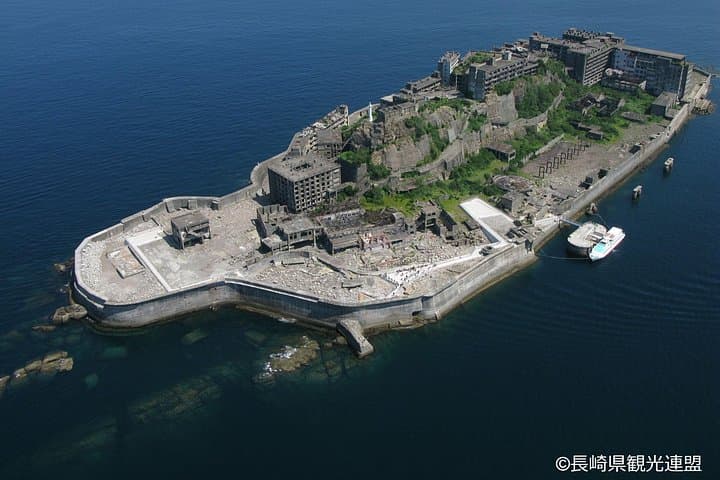
Nagasaki Gunkanjima Battleship Island Private Guide Tour
Embark on a unique and immersive journey to Gunkanjima, or "Battleship Island"—a hauntingly beautiful reminder of Japan’s industrial past. Departing from Nagasaki Station, this tour offers an easy and convenient starting point for an unforgettable historical adventure. Explore a UNESCO World Heritage Site: Discover the abandoned coal mining town of Gunkanjima, once the most densely populated place on Earth. Learn about its rise and fall, and its role in Japan’s Meiji Industrial Revolution, now
From ¥25,000
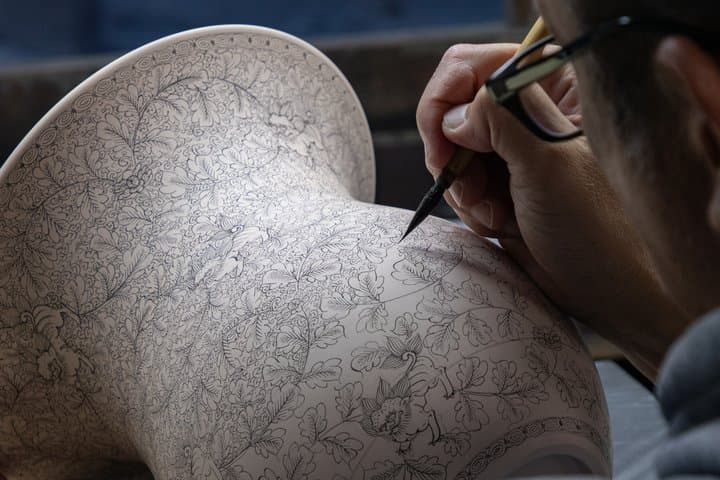
From Sasebo Arita and Hasami Private Pottery Tour
How about exploring Japan's rich porcelain heritage on a private tour from Sasebo? Your National Licensed Guide will meet you at your hotel or cruise port and take you by private vehicle to Arita and Hasami, two famous pottery towns. Visit the historic Izumiyama Quarry, admire traditional craftsmanship at Gen-emon Kiln, and shop for beautiful Arita porcelain. Explore Tozan Shrine and its charming historic streets before heading to Hasami, known for its stylish everyday ceramics. Perfect for a
From ¥171,170
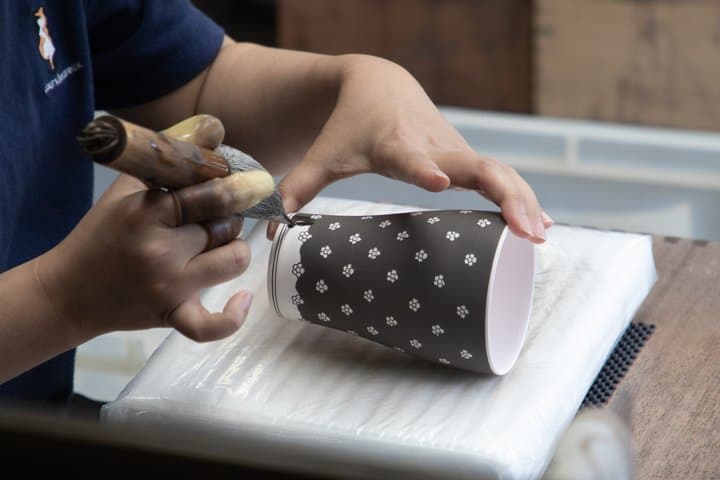
From Nagasaki Arita and Hasami Private Pottery Tour
How about exploring the fascinating world of Japanese porcelain on a private day trip from Nagasaki? Your National Licensed Guide will meet you at your hotel and take you by private vehicle to Arita, the birthplace of Japanese porcelain. Visit the historic Izumiyama Quarry and Gen-emon Kiln, shop for beautiful ceramics at Arita Será, and enjoy a traditional Japanese lunch. Explore Tozan Shrine, Fukagawa Seiji, and the charming Tonbai Walls before continuing to Hasami, known for its stylish eve
From ¥188,287
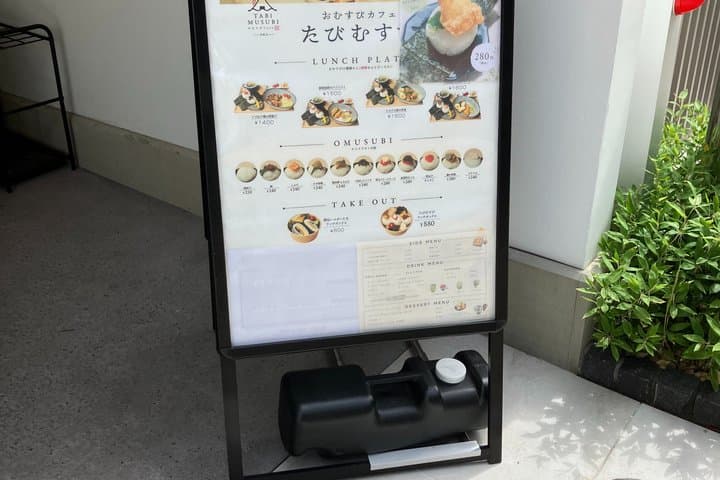
Nagasaki City Food Tour Hidden Gems of Local Shopping Arcades
Discover Nagasaki the way locals do — one bite at a time. On this private walking tour, your guide leads you through the city’s lively shotengai (covered shopping streets), introducing you to beloved snacks, long-standing family-run shops, and hidden local favorites that most visitors walk right past. With a flexible 2-3 hour itinerary tailored to your tastes, it’s the perfect way to experience Nagasaki’s unique food culture, shaped by centuries of trade with China, Portugal, and the Netherlands
From ¥19,800
Booking opens on our partner's site · we may earn a commission at no extra cost to you
From
¥53,250