
Nagasaki Beyond the Bomb: Dutch Islands, Chinatown, and Hidden Churches
By Tour in Japan editors · Updated
Nagasaki is Japan's most international city: Dutch colonial history, a living Chinatown, hidden Christian churches, and one of the world's most moving peace memorials.
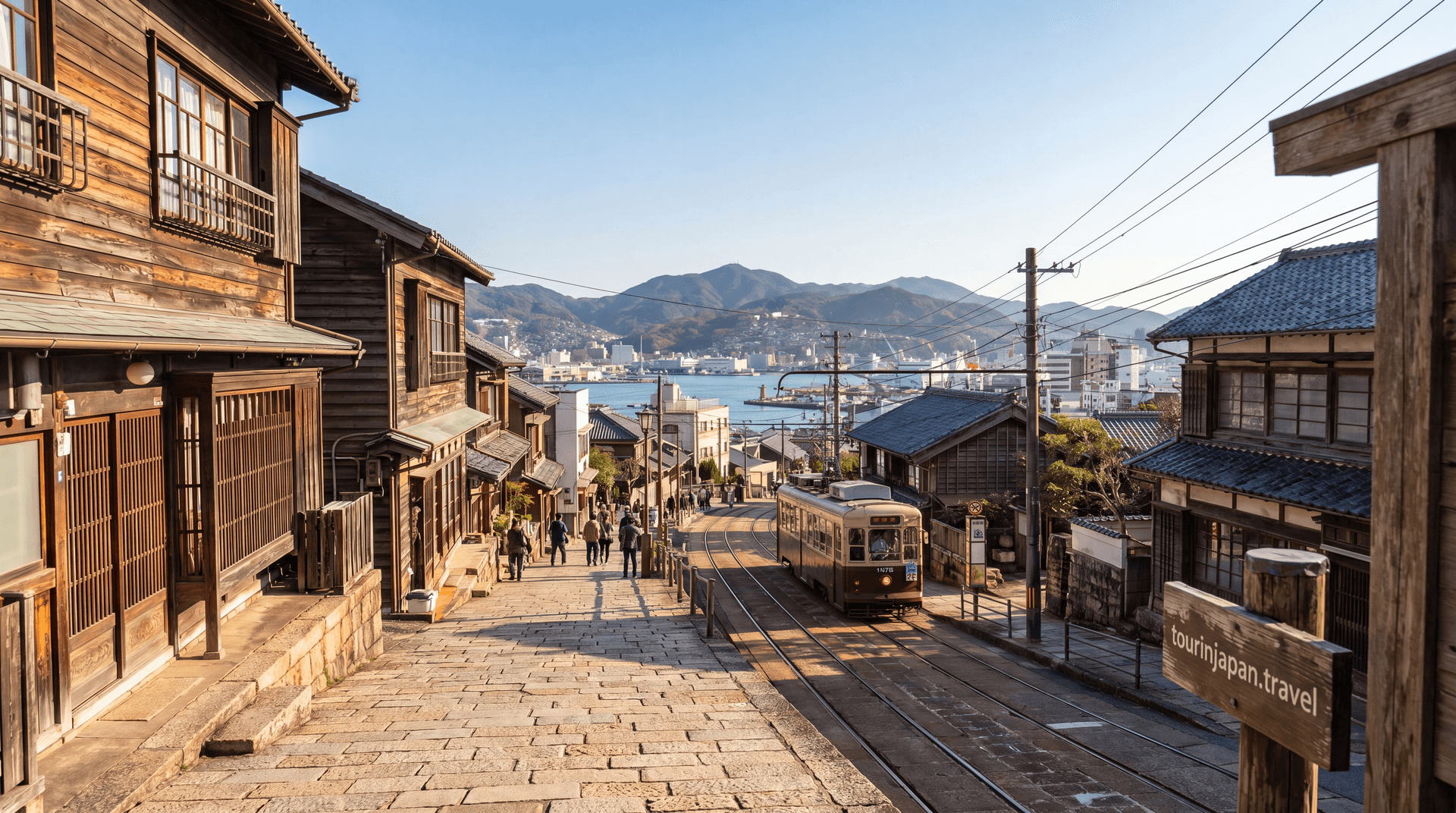
Nagasaki is the most internationally layered city in Japan, a port that remained open to Dutch, Chinese, and Portuguese traders during the centuries when the rest of the country closed its borders. Nagasaki travel extends well beyond its essential and sobering atomic bomb museum. The city has a living Chinatown older than San Francisco's, a Dutch colonial quarter called Dejima that has been reconstructed on its original island footprint, and dozens of hidden Catholic churches built by communities who practiced their faith secretly for 250 years under threat of execution. The hilly topography and water views give it a Mediterranean quality unlike anywhere else in Japan.
The Atomic Bomb Museum and Peace Park
The Nagasaki Atomic Bomb Museum documents the August 9, 1945 bombing with artifacts, survivor testimonies, and photographs in a presentation that is unflinching without being exploitative. Entry costs 200 yen. Allow at least ninety minutes. The adjacent Hypocenter Park marks the exact point above which the bomb detonated, and the Peace Memorial Hall nearby contains portraits of each of the estimated 73,884 people who died. The experience is emotional, essential, and handled with great dignity.
Urakami Cathedral, the largest Catholic cathedral in East Asia, stands 500 meters from the hypocenter. The original 1925 building was destroyed but rebuilt in 1959. Its interior contains bombed stone statues of saints with their faces seared smooth by the blast, kept deliberately unrestored as testimony.
Dejima: Japan's Only Dutch Trading Post
From 1641 to 1853, the artificial fan-shaped island of Dejima in Nagasaki Harbor was the only point of contact between Japan and the Western world. Dutch East India Company traders lived confined to this 120-meter island, connected to the city by a single guarded bridge. The reconstructed Dejima (510 yen entry) has rebuilt the Dutch-style warehouses, merchant residences, and administrative buildings in accurate detail, with costumed guides and period furniture. The surrounding land was reclaimed in the nineteenth century, so Dejima now sits in the middle of the city, its original island shape visible from the map on the ground.
Nearby Glover Garden (620 yen) contains the Western-style mansions of nineteenth-century European merchants who helped modernize Meiji-era Japan. Thomas Glover, a Scottish arms dealer, sold weapons to both sides in the civil wars that preceded the Meiji Restoration. His house is the oldest surviving Western-style building in Japan.
Chinatown and Hidden Christian Heritage
Nagasaki Chinatown is Japan's oldest, established by Chinese merchants in the seventeenth century. It remains a working community rather than a tourist stage set, with restaurants serving champon noodles (Nagasaki's signature dish, a thick noodle soup with seafood and vegetables, about 1,000 yen) and sara udon crispy noodles. The streets are busiest during the Chinese New Year Lantern Festival in late January to February, when thousands of lanterns illuminate the district and dragon dances run for ten days.
- Atomic Bomb Museum: 200 yen, open 8:30 AM to 6:30 PM, essential for understanding modern Japan
- Dejima: 510 yen, fully reconstructed Dutch trading post, excellent English explanations throughout
- Oura Cathedral: Japan's only Gothic church, designated a National Treasure, 1,000 yen including museum
- Champon noodles: Ringer Hut chain serves them affordably, local shops do them better for 1,000 to 1,400 yen
- Castella cake: Portuguese-origin sponge cake, the famous Fukusaya shop near Chinatown is the best source
- Mount Inasa: 333 meters, ropeway 730 yen one way, one of Japan's top three night views over the harbor
- Access from Fukuoka: Shinkansen to Nagasaki in 1 hour 20 minutes, 6,690 yen without pass
Two full days covers Nagasaki's major sights comfortably. Day one: atomic bomb sites and Urakami Cathedral in the morning, Dejima in the afternoon, yatai or Chinatown for dinner. Day two: Glover Garden and Oura Cathedral in the morning, Chinatown lunch, Mount Inasa for the night view. A one-day tram pass (600 yen) connects most sites. Nagasaki deserves more visitors than it currently receives.
Stay Connected in Japan
Yesim eSIMs work on arrival — no physical SIM needed. Japan data plans from $5.