
Kumano Kodo Pilgrimage in 1 Day Hike with Licensed Guide
This value-packed trip with a government-licensed and experienced English-speaking l tour guide is a fantastic and efficient way to explore the Kumano Kodo! The Kumano Kodo is an ancient network of pilgrim trails dating back more than 1000 years connecting historic shrines and temples running throu
What To Expect
Stop 1
⏱ 2hKumano Kodo (熊野古道, Kumano Kodō) refers to a network of pilgrimage trails through the southern Kansai region. The Kodo ("old ways") are a key part of the region's UNESCO designation, and have been in use for over 1000 years. They are the only pilgrimage routes besides the Camino de Santiago to be designated a world heritage site. The pilgrimage routes developed as a way for people to move between the sacred areas on the Kii Peninsula. At the center of this religious area are the three Kumano shrines: Hongu Taisha, Hayatama Taisha and Nachi Taisha, collectively known as Kumano Sanzan. By the 12th century, the Kumano Sanzan were well known shrines in Japan, drawing pilgrims from Kyoto, Osaka and beyond. More than just a means to reach the three shrines, the pilgrimage trails were designed to be a religious experience in themselves and often pass through difficult, even dangerous, mountain terrain.
Stop 2
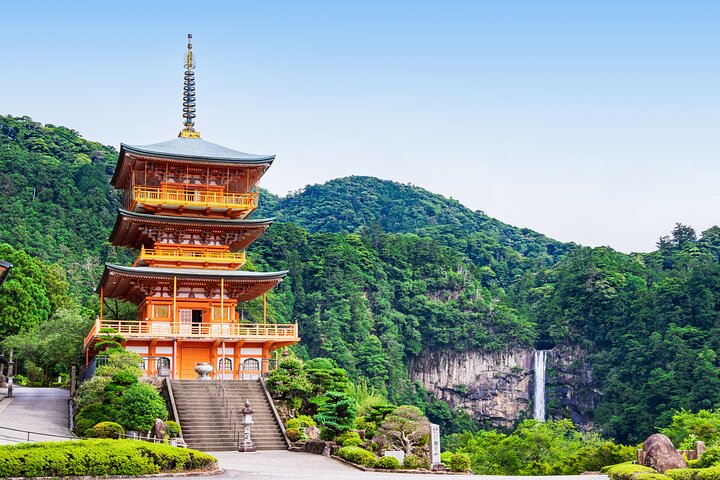
⏱ 30 minKumano Nachi Taisha (熊野那智大社) is one of the three Kumano shrines, situated a few kilometers inland from the coastal hot spring resort of Katsuura. The shrine is part of a large complex of neighboring religious sites that exemplify the fusion of Buddhist and Shinto influences that is particular to the Kumano region. The site also boasts the tallest waterfall in Japan. The veneration of the Kumano shrines as holy sites of Shintoism predates Buddhism's introduction to Japan in the mid 6th century. Once Buddhism arrived in Kumano it took root quickly, and rather than competing with the indigenous religion for religious authority, it began a long process of harmonious mixing. A product of this congenial relationship can be seen at Nachi Taisha. Directly beside the eminent shrine is the Buddhist temple Seigantoji. In fact, for most of their history the buildings were not even under separate control and functioned as one religious institution. The buildings of both the shrine and the temple are impressive, and among the buildings of Seigantoji there is a three-story pagoda.
Stop 3
⏱ 30 minThe Nachi Falls is the tallest waterfall in Japan as single uninterrupted drop of 133 meters, with a depth of 10 meters and one ton of water dropping down the cliff every second. The falls is counted as one of the Three Major Waterfalls in Japan and designated as the place of scenic beauty of Japan. The falls also forms a part of the "Sacred Site and Pilgrimage Routes in the Kii Mountain Range" UNESCO World Heritage Site.
Stop 4
⏱ 30 minKumano Hayatama Taisha (熊野速玉大社) is one of Kumano's three important shrines. It is located in Shingu City on the southeast coast of the Kii Peninsula. Together with the other two shrines, Hongu Taisha and Nachi Taisha, Hayatama Taisha holds an important place in Japanese mythology. While the buildings were rebuilt recently, Hayatama Taisha has occupied the same spot on the Kumano Riverbank since at least the 12th century. In addition, religious artifacts that date back to the 3rd century are evidence that the area has been a site of worship for much longer. In fact, a Shinto creation myth claims that three kami (Shinto deities) descended to earth on a rock not far from the shrine.
Stop 5
⏱ 30 minKumano Hongu Taisha (熊野本宮大社, Kumano Hongū Taisha) is one of the Kumano region's three famous shrines. As well as enshrining its own deity, Hongu Taisha also enshrines the deities of the other two Kumano shrines, Hayatama Taisha and Nachi Taisha, and the sun goddess Amaterasu. It serves as the head shrine of over 3000 Kumano shrines across Japan. Reference to Hongu Taisha was first documented in the 9th century, which the establishment of the shrine must have preceded substantially. Due to floods in 1889, the shrine was moved from its original location at Oyu no Hara to its present site one kilometer away. In front of Oyu no Hara stands the biggest torii gate in the world, which, at 33 meters tall, dwarfs visitors passing under it.
What to Bring
- •Service animals allowed
- •Public transportation options are available nearby
- •Infants and small children can ride in a pram or stroller
- •All areas and surfaces are wheelchair accessible
- •Transportation options are wheelchair accessible
- •Wheelchair accessible
- •Suitable for all physical fitness levels
- •This is a walking tour. Pick up is on foot.
Compare Similar Experiences
 Kumano Kodo Pilgrimage in 1 Day Hike with Licensed Guide (this) |  Koyasan Private Tour: Kongobuji & Danjo Garan with Spanish Guide |  Wakayama: Learn & Taste Japan Tuna Culture in Nachikatsuura |  Wakayama: Private Kumano Coast Izakaya Hopping | |
|---|---|---|---|---|
| Rating | ⭐ 5.0 (3) | — | — | — |
| Duration | — | 3 hours | 1h 30m | 2 hours |
| Group size | — | — | — | — |
| Price (from) | US$197.06 | US$71.07 | US$77.53 | US$106.28 |
| Cancellation | Non-refundable | Non-refundable | Non-refundable | Non-refundable |
Customers Who Bought This Tour Also Bought

Mt. Koya Sacred Sites Half-Day Tour with Licensed Guide
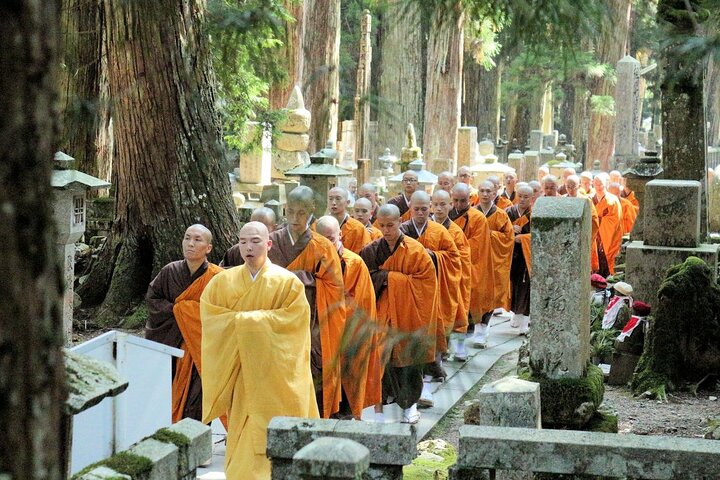
Mt. Koya Sacred Sites in 1 Day Tour with Licensed Guide
Kumano Kodo Pilgrimage in 1 Day by Car with Licensed Guide

Koyasan Full-Day Private Tour

Kumano Kodo Half Day Daimonzaka and Nachi Taisha Tour

Tuna Auction Market Guided Private Tour in Nachi-Katsuura

Wakayama Private Customizable 6-Hour Tour

Koyasan: Sacred Silence of Okunoin at Dawn and After Dark
More Experiences in Wakayama
Koyasan Private Tour: Kongobuji & Danjo Garan with Spanish Guide
Discover the spiritual heart of Koyasan on a 3-hour private tour with local guide in Spanish. An experience designed so that you not only see temples, but also understand their meaning and connect with the essence of Japan. You will visit Kongo buji, the main temple, where you will learn that all o
From US$71.07
Wakayama: Learn & Taste Japan Tuna Culture in Nachikatsuura
Explore the deep connection between the Japanese people and their ocean through the lens of tuna in Nachikatsuura, Japan’s premier tuna port. This tour, guided by a local expert, unveils the evolution of tuna fishing and its cultural significance in Japanese cuisine. Start at the Tuna Museum’s obser
From US$77.53
Wakayama: Private Kumano Coast Izakaya Hopping
This private evening tour lets you experience southern Wakayama beyond its famous shrines, pilgrimage routes, hot springs, and coastal scenery. Choose Shingu, Kii-Katsuura, or Kushimoto depending on where you are staying, then explore two local izakayas or bars selected around your food, drink, and
From US$106.28

Wakayama: Explore Japan’s Seafood Culture at Toretore Market
Toretore Market in Wakayama is a vibrant seafood hub where you can dive into Japan's rich fish culture. Guided by a knowledgeable local expert, explore colorful stalls showcasing an incredible variety of marine life, from tuna to spiny lobster. Learn about traditional harvesting methods and culinary
From US$76.32
From
US$197.06