
Best Night Photography Spots in Tokyo
By Tour in Japan editors · Updated
Tokyo at night transforms into one of the world's greatest photography environments. Here are the best night shooting locations with practical tips on gear and timing.
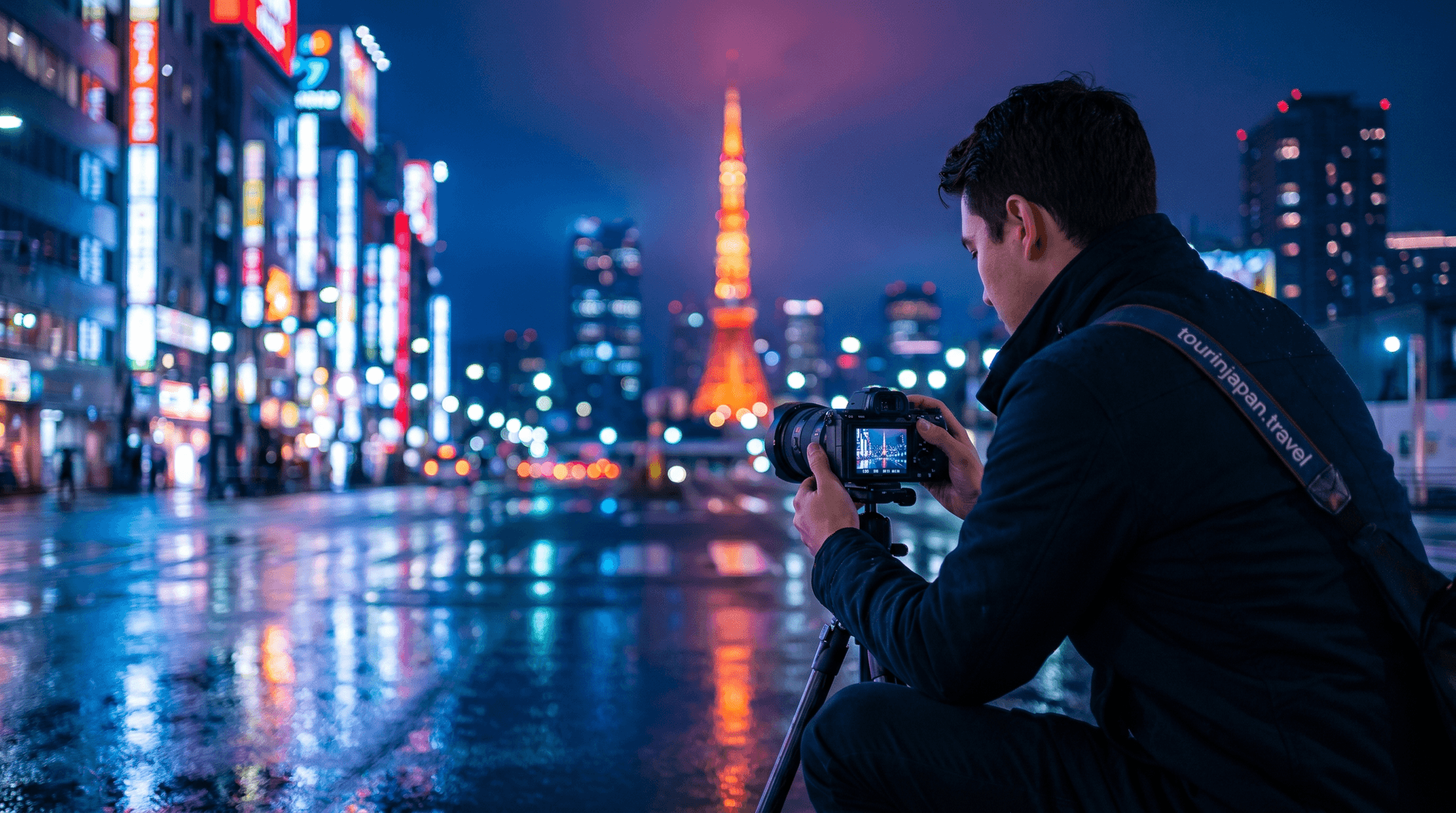
Tokyo night photography spots offer some of the most electrifying urban photography in the world. After dark, Tokyo becomes a different city entirely — the scale of neon, the layered complexity of illuminated signage, the human drama of crowded streets, and the geometry of elevated highways and train lines create visual possibilities that exist nowhere else. The best night photography spots in Tokyo range from the famously neon-saturated Shinjuku to the elegant waterfront views from Odaiba, each offering distinct visual language and mood.
Shinjuku: The Ultimate Neon Environment
Shinjuku at night is the quintessential Tokyo experience. The area around Kabukicho (Tokyo's entertainment district) concentrates more illuminated signage per square meter than almost anywhere on earth. For photography, the alleys south of the main strip offer framing opportunities where distant neon compresses in telephoto perspective behind foreground subjects. Golden Gai, the labyrinth of tiny 6-seat bars north of Shinjuku Station, is extraordinary for intimate nighttime documentary photography — lanterns and warm light spilling from doorways onto narrow lanes.
The elevated walkway between East Shinjuku and Kabukicho, and the overpass on Yasukuni-dori, give vantage points for long-exposure traffic light trail photographs with the neon city as backdrop. Shoot between 8pm and midnight for maximum illumination — some neon signs begin switching off after midnight. Rainy nights are the best of all: wet pavements multiply every light source into reflective abstractions.
Elevated and Rooftop Night Views
Tokyo Skytree's Tembo Deck (450m) and Tembo Galleria (450m) give the most elevated view in the city. On clear winter nights, Mount Fuji is visible as a dark silhouette against the distant sky with the city sprawl stretching to its foot. Admission is 2,100-3,100 yen. The alternative is Tokyo Metropolitan Government Building in Shinjuku, which has free observation decks (north and south towers alternate access) open until 10:30pm on most nights.
Odaiba offers a completely different night view angle: across Tokyo Bay toward the Rainbow Bridge, the Fuji TV building, and the distant skyline. The Venus Fort shopping complex and the TeamLab Borderless/Planets digital art spaces are illuminated landmarks. Arrive 30 minutes before sunset at Odaiba Marine Park to capture the transition from golden hour to blue hour to full darkness — a 60-minute window that produces the richest tonal range of any shooting session.
Top Night Photography Spots in Tokyo
- Shinjuku Kabukicho — neon overload, alleyways, Golden Gai lanterns (best 8-11pm)
- Shibuya Scramble at night — pedestrian crossing with surrounding billboard buildings illuminated
- Odaiba bay view — Rainbow Bridge, city skyline, sunset to blue hour transition
- Tokyo Skytree Tembo Deck — 450m elevation, city grid to the horizon, Fuji visible in winter
- Tokyo Metropolitan Government Building — free observation deck, open to 10:30pm
- Akihabara multi-story neon — electronics store facades, signage, after-dark street life
- Asakusa Senso-ji at night — illuminated pagoda and gate, far fewer crowds than daytime
- Yurikamome monorail — elevated train window shots across illuminated Odaiba waterfront
Camera settings for Tokyo night photography: set ISO 1600-6400 on modern cameras for handheld shooting. Use wide apertures (f/1.4-f/2.8) in darker alleyways. For traffic trails and illuminated landscapes, use a tripod with ISO 100, 8-30 second exposures, and f/8-f/11 for maximum sharpness. A wide lens (16-24mm) captures the scale of Tokyo's neon environment; a telephoto (100-300mm) compresses layers of illuminated buildings for more abstract compositions. Tokyo never fully sleeps — your photography window is limitless.
Stay Connected in Japan
Yesim eSIMs work on arrival — no physical SIM needed. Japan data plans from $5.