Takayama Festival: Spring and Autumn Guide
The Takayama Festival comprises spring and autumn events in Gifu, with ornate yatai floats, marionette shows, processions and an evening festival.
Affiliate link — we may earn a commission at no extra cost to you. Affiliate disclosure
Takayama Festival: Japan's Most Beautiful Festival
The Takayama Festival (高山祭) is one of Japan's most beautiful festivals — ornate floats, traditional performances, and a charming old town. Here's what to know.
Festival Overview
The Takayama Festival is the collective name for two separate festivals in Takayama, Gifu Prefecture: the Spring Takayama Festival (Sanno Matsuri), the annual festival of Hie Shrine, and the Autumn Takayama Festival (Hachiman Matsuri), the annual festival of Sakurayama Hachimangu Shrine. The dates are fixed and do not move with the day of the week (Hida Takayama tourist guide FAQ).
Detail | Info |
|---|---|
When | Spring: April 14–15. Autumn: October 9–10 |
Where | Takayama, Gifu Prefecture. The spring parade is held on the south side of Yasugawa Street, bordering the old town; the autumn parade is held in the Shimomachi area on the north side of Yasugawa Street |
What | Yatai floats, processions, marionette performances and an evening festival |
Duration | Two days each season |
Crowds | Very crowded — city-centre accommodation often sells out more than six months ahead |
The autumn festival is held to celebrate a good harvest (Autumn Takayama Festival); the spring festival celebrates the coming of spring (Spring Takayama Festival).
What to See
Yatai (Floats)
There are 12 yatai in spring and 11 in autumn. In autumn the Gyojintai float is under repair, so 10 are displayed to the public. Each float has its own ornaments, and comparing them when they are all paraded together is one of the pleasures of the festival (Autumn Takayama Festival).
Feature | Details |
|---|---|
Number | 12 in spring, 11 in autumn (10 displayed in autumn while Gyojintai is under repair) |
Decoration | Carpentry, lacquerwork, gilding, woodcarving and metalwork, handed down over generations |
Performance | Marionette shows on three spring floats; in autumn on the Hoteitai float |
Display | Autumn: Sakurayama Hachimangu Shrine precinct and along Omotesando, the shrine's front approach |
The floats are hundreds of years old and are pushed by teams organised by town district (Takayama Matsuri Yatai Kaikan).
Highlights
Event | When | What |
|---|---|---|
Yatai display | Oct 9, 9am–around 5pm; Oct 10, 9am–around 4pm | Hoteitai at Sakurayama Hachimangu Shrine precinct; the other floats along Omotesando |
Yatai parade | Afternoon of Oct 9 only | Four floats are paraded through the city — a feature unique to the autumn festival |
Goshinko procession | Oct 9 from 1:20pm, ending around 3:30pm near Takayama police station; Oct 10 from 8:30am, ending around 4pm at Omotesando | Several hundred people in traditional costume escort the portable shrine, with lion dancers and bell-ringing tokeiraku performers |
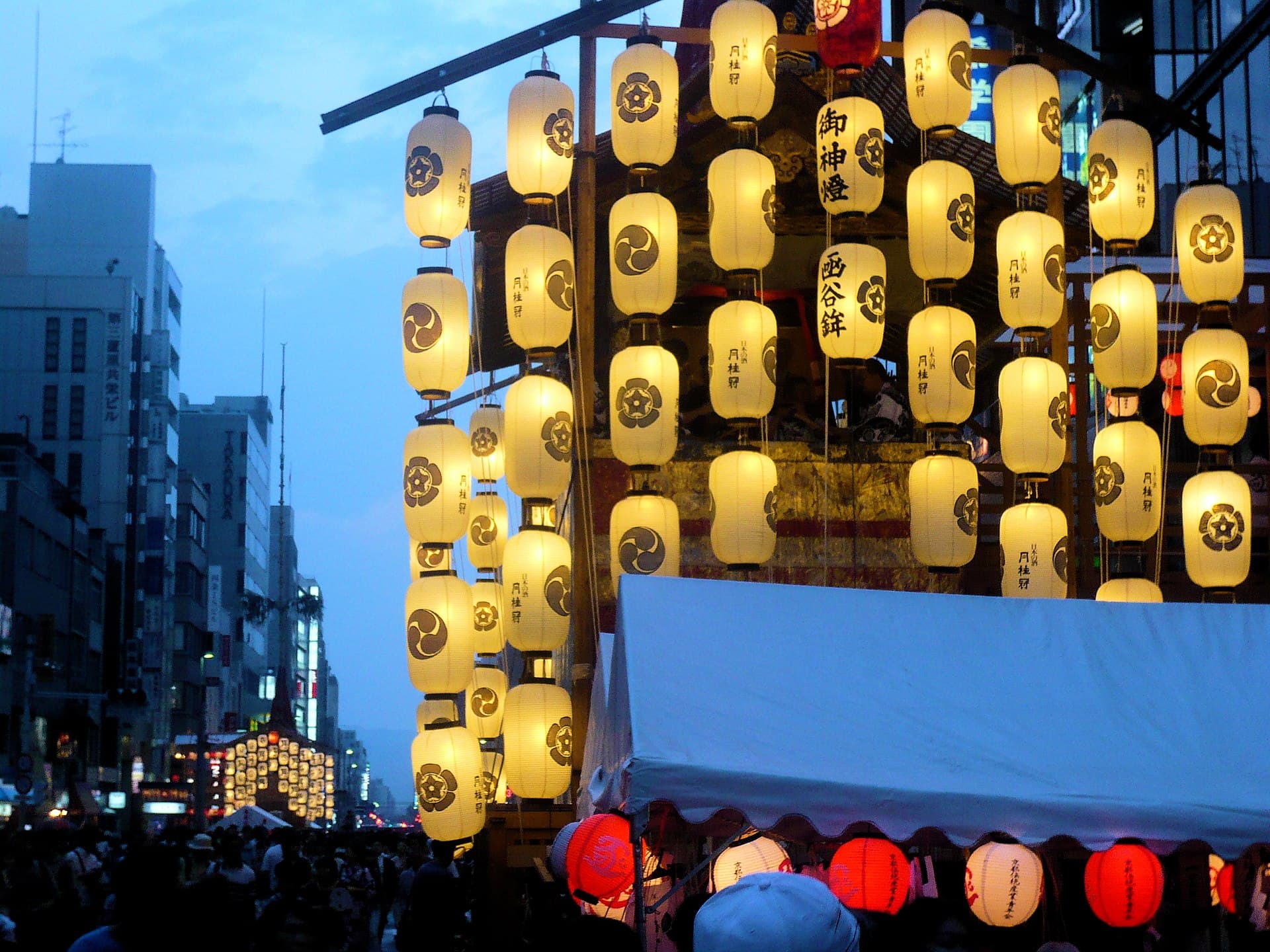
Yoimatsuri (evening festival) | Night of Oct 9, from 6pm, ending around 9:30pm | The floats are paraded slowly through the city, each lit by around 100 lanterns |
Marionette Performances
In autumn, the marionette performance is given on the Hoteitai float in the Sakurayama Hachimangu Shrine precinct, twice a day on both festival days: on October 9 at around 12:00 and 14:00, and on October 10 at around 11:00 and 13:00. Six to eight masters called tsunakata move the strings (Autumn Takayama Festival).
In spring, the performances are held at the Takayama Jinya on the floats Sanbaso, Ryujin-tai and Shakkyo-tai, at 10:00am and 2:00pm on both April 14 and 15, each lasting about 50 minutes (Spring Takayama Festival).
How to Get There
Takayama is reached by limited express train from Nagoya, by Shinkansen and connecting train from Tokyo, and by highway bus from several cities. Fares below are examples from the sources and vary by season and seat type — check the current fare before you book.
From | Transport | Time | Fare |
|---|---|---|---|
Nagoya | Limited express Hida (ordinary reserved seat) | About 2 hours 33 minutes | ¥6,340 (2026) |
Tokyo | Shinkansen to Nagoya, then limited express Hida | About 4 hours 19 minutes | ¥15,290 (2025) |
Tokyo | Highway bus from Shinjuku Expressway Bus Terminal to Takayama Nohi Bus Center | About 5 hours 45 minutes | ¥9,000 (2025) |
Osaka | Train via Nagoya, then limited express Hida | About 3 hours 28 minutes | ¥11,110 (2025) |
The Nagoya fares and times are for one adult with an ordinary reserved seat, searched for travel on 17 July 2026; the Hida normally uses HC85 hybrid trains and is scheduled to depart from Platform 11 at Nagoya, though you should confirm the platform on the departure board. Ordinary-car travel on the Hida is covered by the Japan Rail Pass, and during designated peak periods all services are reserved seating only (The Limited Express Hida).
The Tokyo and Osaka examples are sample journeys from a journey planner (Tokyo to Takayama, Osaka to Takayama). There is also a highway bus from Nagoya to Takayama Nohi Bus Center taking about 2 hours 35 minutes for ¥3,600 (2025).
Accommodation
City-centre accommodation in Takayama often sells out more than six months ahead, so it is worth looking at places in the suburbs or in neighbouring municipalities as well (Hida Takayama tourist guide FAQ). Takayama has ryokan, hotels and guesthouses; check current availability and rates directly with the property.
What to Do in Takayama
Besides the Festival
Activity | Details |
|---|---|
Old town walk | The historic district preserves the old townscape and part of it is designated an Important Preservation District for Groups of Traditional Buildings |
Takayama Jinya | Former government offices from the end of the 17th century, and the only building of its kind in Japan to remain unchanged since its days as a government building |
Morning markets | Two markets open daily — Miyagawa Market along the river and Jinya-mae Market in front of the Takayama Jinya |
Hida Folk Village | An open-air museum of more than 30 traditional buildings from the Hida region |
Takayama Matsuri Yatai Kaikan | A museum beside Hachiman Shrine exhibiting four of the festival floats |
The old town and Takayama Jinya are described in a Japan Travel magazine feature.
The Miyagawa Market runs for about 350 metres from Kajibashi Bridge to Yayoibashi Bridge, with around 60 shops and stalls selling vegetables, fruit, pickles, sweets and crafts. It is open all year round, from 7am to noon between April and November and from 8am to noon between December and March, with free admission (Miyagawa Morning Markets). The Jinya-mae Market started more than 300 years ago and is about a 10-minute walk from JR Takayama Station (Jinya mae Morning Markets).
Hida Folk Village covers an approximately 99,000 square metre site and has over 30 buildings, with demonstrations of crafts such as Hida lacquerwork, weaving and dyeing. It is open all year round from 8:30am to 5pm, and admission is ¥700 for adults and ¥200 for elementary and junior high school students (2026). Take the Sarubobo Bus from Takayama Nohi Bus Center and get off at Hida-no-Sato-Shita; check the current fare and timetable before you go (Hida Folk Village).
The Yatai Kaikan is north of the Sanmachi area, beside Hachiman Shrine, and exhibits four floats along with information on the history of the town and festival (Takayama Matsuri Yatai Kaikan).
Food
Hida beef is a local speciality, with marbled fat running through all the cuts. A Hida beef sushi platter — two pieces of grilled beef nigiri and one gunkan maki with raw egg yolk — was quoted at about ¥1,000 in a 2018 guide, and goheimochi, mashed rice grilled on a skewer and glazed with sesame sauce, at ¥100–200. Prices change, so check at the stall (Takayama Matsuri guide).
Tips
- Book early — city-centre accommodation often sells out months ahead.
- Check the schedule on the day — events may be changed or cancelled in bad weather, and cancelled events are not postponed.
- Don't touch the floats and don't obstruct the parade to take photographs.
- Take your rubbish with you — there are no bins for festival visitors, and smoking is prohibited around the old town.
- Watch your step — some roadside ditches are uncovered, especially during the evening festival.
- There are no reserved viewing seats, so arrive early if you want a good spot.
- Leave the drone at home — drone photography is prohibited, and bicycles and kick scooters cannot be used in the crowded festival area.
- Wear comfortable shoes — you will be walking and standing a lot.
The festival rules and the rain policy are set out by the official festival pages; the practical questions about viewing, access and equipment are answered in the Hida Takayama tourist guide FAQ.
Ready to explore Japan?
Browse tours and activities, or tell us what you're looking for and we'll suggest the best options.
Stay Connected in Japan
Airalo eSIMs work on arrival — no physical SIM needed. Data plans from $5 for 7 days.
Travel Insurance for Japan
Medical, trip cancellation, and adventure sports covered. Plans from $1.5/day.