
Scuba Diving in Okinawa: Best Sites, Seasons, and Dive Operators
By Tour in Japan editors · Updated
Okinawa offers some of Asia's finest scuba diving with WWII wrecks, whale sharks, and pristine coral reefs. Discover the best dive sites and how to plan your diving trip.
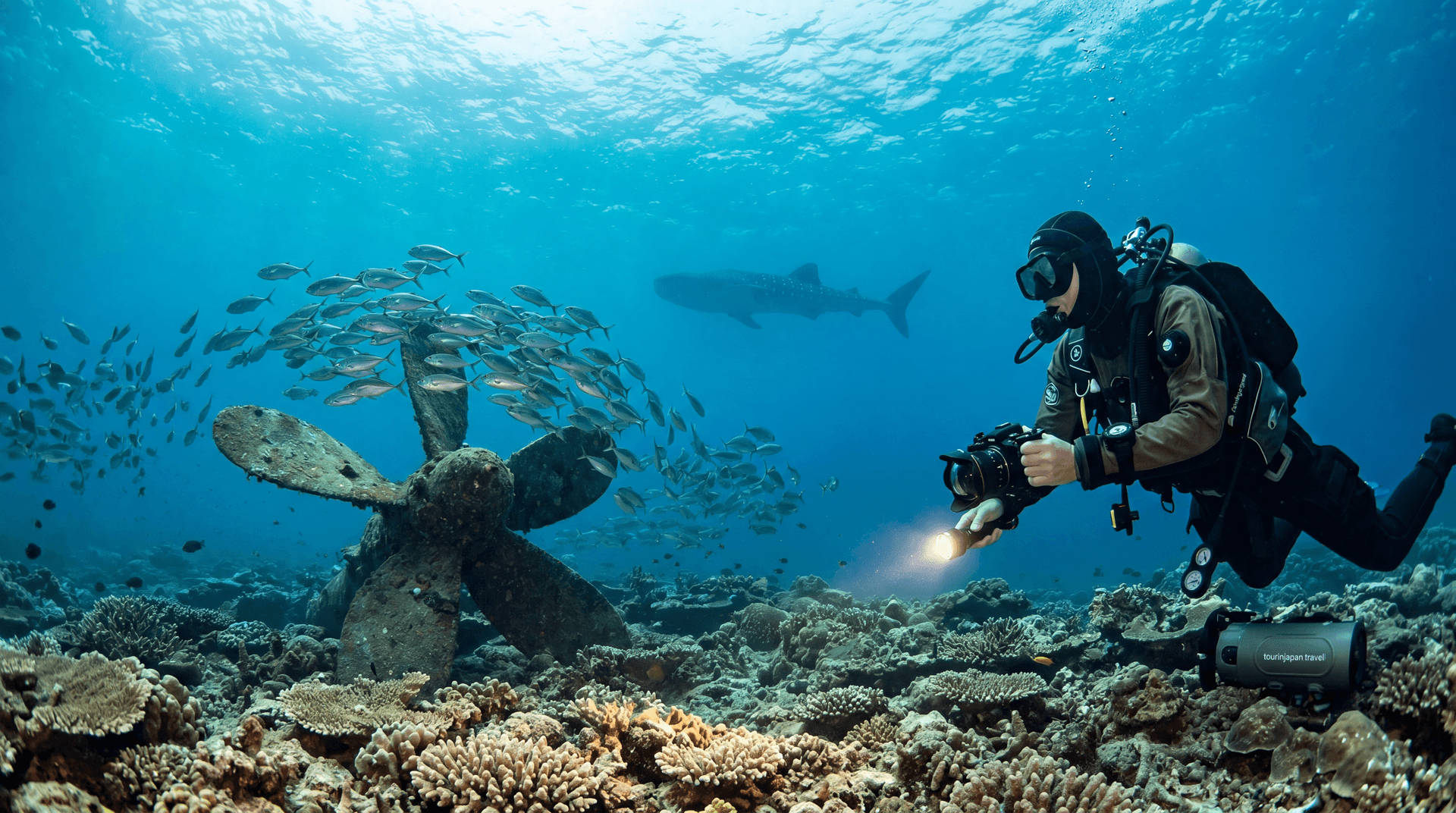
Scuba diving in Okinawa reveals a marine world that is, by any global standard, exceptional — warm, clear waters with visibility regularly exceeding 30 meters, healthy coral reef systems stretching from the main island all the way to the remote Yaeyama Islands near Taiwan, and a population of whale sharks in the waters around Yonaguni-jima that makes it one of the most reliable whale shark diving destinations in the world. Japan's southernmost prefecture offers sites ranging from beginner-friendly shallow reefs to advanced drift dives through channeled currents around isolated atolls.
Top Dive Sites in Main Island Okinawa
The main island's most celebrated site is the USS Emmons, a WWII US destroyer escort sunk by a kamikaze strike in 1945 and now resting at 30-39 meters near the town of Itoman. The wreck is completely intact and accessible to certified divers — anti-aircraft guns, torpedo tubes, and the ship's bridge are all recognizable, and the hull is colonized by corals and circled by large schools of fish. Coral gardens around Cape Maeda (Maeda Misaki) are accessible from shore, making them popular with beginners.
Kerama Islands: Japan's Best Reef Diving
The Kerama Islands, a 40-minute fast ferry from Naha, have the finest coral reef diving in mainland Japan. Visibility regularly reaches 40 meters, and humpback whale encounters are possible from January through March when the whales breed in the surrounding waters. Tokashiki and Zamami Islands are the most visited, with numerous dive shops offering guided dives from around 8,000-12,000 yen per person for two tanks.
Yaeyama Islands: Advanced Diving and Whale Sharks
The Yaeyama group, accessible by flight from Naha, includes Ishigaki-jima, Iriomote-jima, and Yonaguni-jima. Ishigaki's Manta Scramble is one of the world's most reliable manta ray dive sites — groups of 5-20 reef mantas regularly feed in a cleaning station here from March through November. Yonaguni-jima's western tip has the famous Yonaguni Monument, a series of stepped rock formations at 25 meters that some researchers believe to be the remains of an ancient structure.
Best dive sites summary and season guide
- Cape Maeda, main island: shore dive, beginner-friendly, reef fish and turtles, year-round
- USS Emmons wreck: advanced (30-39 m), WWII destroyer, must book through licensed dive shop
- Kerama Islands: best visibility in Japan, humpback whales January-March, 40-minute ferry from Naha
- Manta Scramble, Ishigaki: reliable manta encounters March-November; intermediate level
- Yonaguni Monument: advanced drift dive at 25 m, hammerhead sharks December-April, whale sharks May-October
- Iriomote mangroves: unusual freshwater-influenced diving through jungle rivers; beginner-friendly
- Best overall season: October-December for warmest water (27-28 degrees), best visibility, and typhoon risk gone
Dive Operators and Certification
Reputable English-speaking dive shops on the main island include Reef Encounters, Sea Friends, and Blue Marine. PADI open water courses in Okinawa typically cost 50,000-70,000 yen over 3-4 days including all materials and dives. Certified divers should expect to pay 8,000-15,000 yen for a two-tank boat dive depending on site complexity and distance. Equipment rental is widely available; the main island and Ishigaki have the best equipment selection.
Stay Connected in Japan
Yesim eSIMs work on arrival — no physical SIM needed. Japan data plans from $5.