
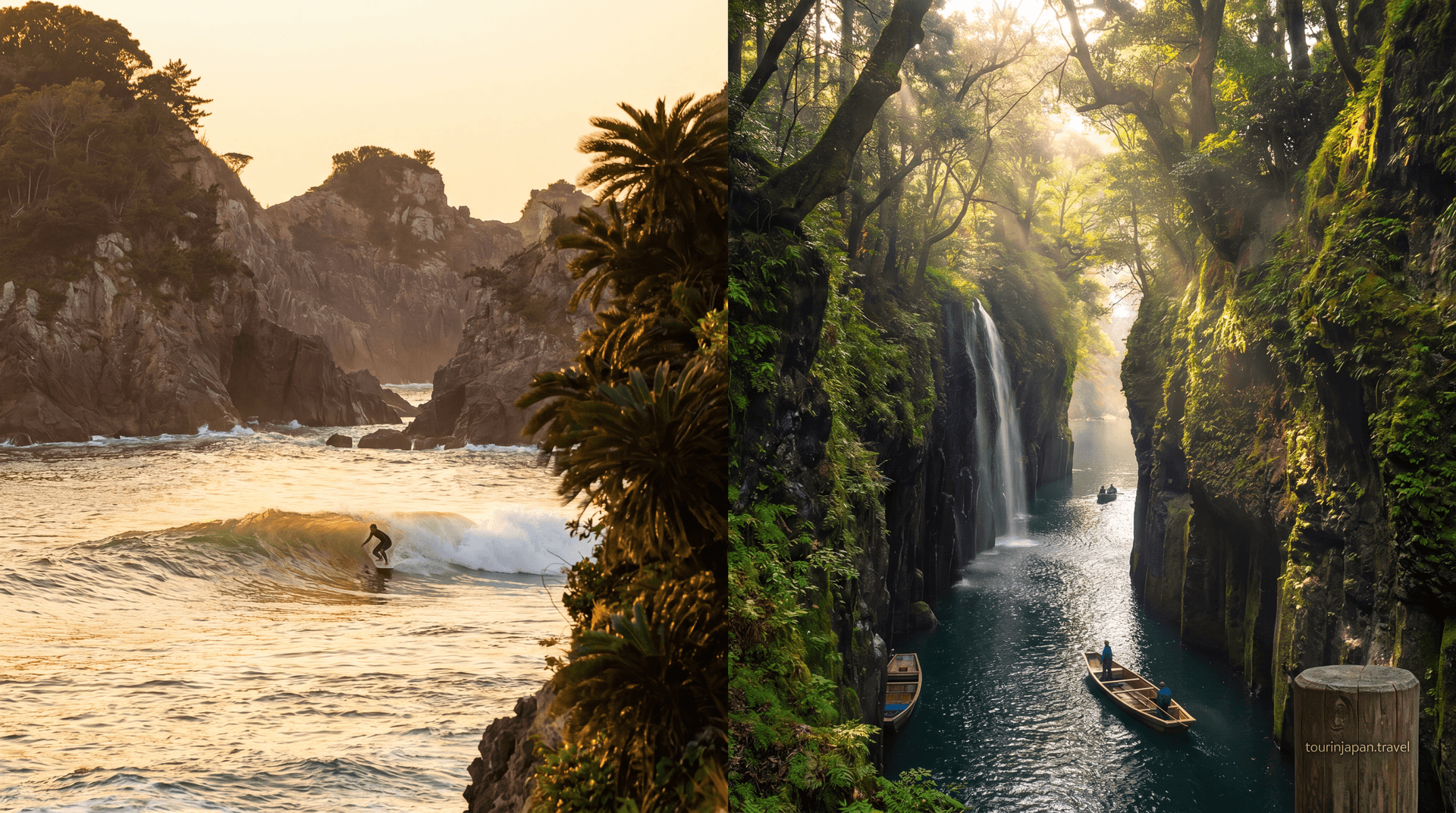
Miyazaki: Surf, Sacred Gorges and Food on Kyushu's Coast
Miyazaki Prefecture offers surf beaches, the mythological Takachiho Gorge, local beef and chicken nanban, with Miyazaki City as a relaxed base.
Affiliate link — we may earn a commission at no extra cost to you. Affiliate disclosure
Miyazaki Prefecture lies on the east coast of Kyushu, and it feels like a different side of Japan from the temple-and-city circuit. The prefecture is one of Japan's most renowned surf destinations, with a coastline of over 300 kilometres and swell arriving from the east, south and north (Miyazaki Surf Spots). Inland, Takachiho is steeped in Shinto mythology, including the story of Amaterasu hiding in a cave and the divine couple said to have created the Japanese archipelago (Takachiho). Miyazaki City makes a compact, relaxed base for the coast, the food and the mountains.
Takachiho Gorge: Where the Gods Descended
Takachiho Gorge was formed by volcanic activity from nearby Mt Aso. It is about 100 metres deep and runs roughly 7 kilometres east to west, with sheer cliffs that rise 80–100 metres above the water. From a rental boat you can get close to the 17-metre Manai waterfall (Takachiho Gorge).
The rental boats run from 8:30 to 17:00, with the last reception at 16:30, and they are closed when the river is high. A boat for 30 minutes costs ¥4,100–¥5,100 (2022 price; check the current price before you go). Each boat takes three people, or four if preschool children are included (Takachiho Town). Tickets are first-come, first-served, and reservations are not accepted by phone (Takachiho Tourist Association).
At Takachiho Shrine, the Kagura Hall hosts nightly performances from 8:00 PM to 9:00 PM, with reception from 7:00 PM to 8:00 PM. The price is ¥1,000 per person, cash only, and free for preschool children; capacity is 120 people, and there are no chairs or cushions, so bring your own if you need them (Miyazaki Prefecture Tourism). The full Yokagura season runs from mid-November to mid-February, with all-night performances in villages. The shrine's nightly show presents four representative dances from the 33-episode repertory, a tradition with roots over 800 years old that was designated a significant intangible folk cultural asset in 1978 (Japan Tourism Agency).
Miyazaki Coast: Surfing and Subtropical Beaches
Miyazaki's surf spots are divided into Hyuga in the north, Miyazaki City in the centre and Nichinan in the south. Okuragahama in Hyuga is a famous sand-bottom beach that hosts international events, including the ISA World Junior Surf Championships in 2017. Kisakihama is Miyazaki's most well-known beach and hosted the 2019 ISA World Surfing Games. Aoshima is popular for all levels, with surf schools, cafes and shops nearby, and is walking distance to Aoshima Shrine. In Nichinan, Ibii is good for beginners. Stand-up paddleboards are not allowed on Nichinan beaches (Miyazaki Surf Spots).
Kisakihama has a 2–3 kilometre beach, and the Sora-Sido Air Surfing Center Kisakihama opened in April 2022 with changing rooms and warm showers. There is parking for about 300 cars (Kisakihama). Aoshima Beach is one of Japan's top 100 swimming beaches and is also used for marine sports such as surfing and SUP. AOSHIMA BEACH PARK is just in front of the swimming beach, and there are toilets, coin lockers, changing rooms and showers (Aoshima Beach).
The Devil's Washboard is the name for the undulating rocks around the Nichinan Coast and Aoshima. They were formed by erosion of hydrothermal rocks created in the ocean roughly seven million years ago, leaving the harder sandstone layers visible today (The Devil's Washboard).
Miyazaki Food Culture
Miyazaki is a top producer of beef, chicken and pork in Japan (MAFF area story). Chicken nanban originated in Nobeoka City in the 1950s as a staff meal at a Western-style restaurant; later, Ogura in Nobeoka was the first to add tartar sauce, creating the standard style you see today (MAFF chicken nanban). Miyazaki beef has won the Prime Minister's Award four times consecutively since 2007 at the National Wagyu Promotion Competition, and the prefecture is also a major shochu producer with 38 breweries. Miyazaki mangoes, including the luxury Taiyo-no-Tamago brand, are famous throughout Japan (Miyazaki cuisine).
Access and Planning
Miyazaki is not accessible by bullet train, so if you are travelling with surfboards, your options are driving or flying (Miyazaki Surf Spots). From Tokyo Haneda Airport, fly to Miyazaki Airport in about 90 minutes. From Miyazaki Airport, you can take the train to Nobeoka Station (about 90 minutes) and a bus to Takachiho Bus Center (about 80 minutes), then walk about 25 minutes or take a taxi about 10 minutes to the gorge (Takachiho Gorge).
Takachiho is about 140 kilometres from Miyazaki City and takes about two-and-a-half hours by car. Public transport is limited, so a car or sightseeing bus is often more practical (Takachiho). If you are coming from Kumamoto, the Takachiho-go highway bus runs directly to Takachiho and requires advance reservation. The Takachiho–Nobeoka–Miyazaki excursion ticket combines JR trains and Miyazaki Kotsu buses and is valid for two days (Miyazaki by Bus & JR).
A three-night stay gives you time for Miyazaki City and the Nichinan Coast, including Aoshima, and a day trip to Takachiho Gorge. Check current timetables, prices and opening hours before you travel, as schedules and conditions can change.
Ready to explore Japan?
Browse tours and activities, or tell us what you're looking for and we'll suggest the best options.
Stay Connected in Japan
Airalo eSIMs work on arrival — no physical SIM needed. Data plans from $5 for 7 days.
Travel Insurance for Japan
Medical, trip cancellation, and adventure sports covered. Plans from $1.5/day.