
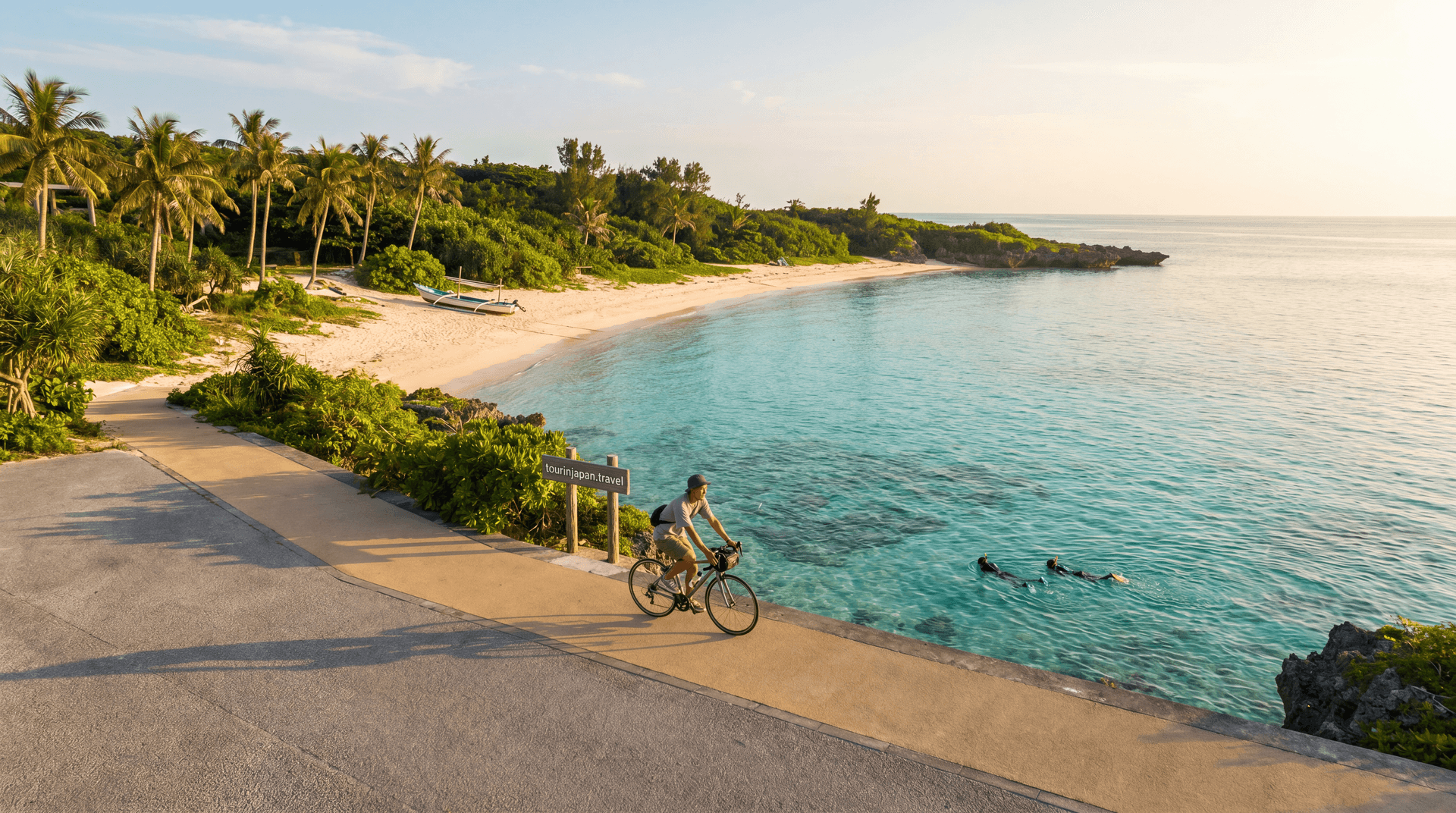
Miyako-jima: Okinawa's Most Beautiful Coral Island
By Tour in Japan editors · Updated
Miyako-jima boasts some of Japan's clearest water and finest beaches, with world-class diving, flat cycling roads, and a relaxed island atmosphere far from mainland crowds.
Miyako-jima is consistently ranked among Japan's most beautiful islands, and the numbers back the reputation: water visibility can exceed 50 meters, beaches rank among the finest in Asia, and the surrounding coral reefs host more than 300 species of marine life. Located 300 kilometers southwest of Okinawa Main Island, Miyako-jima sits in a region where the Kuroshio Current keeps water temperatures above 25 degrees Celsius for most of the year. The island itself is relatively flat—a raised coral plateau—which makes it unusually bikeable for a Japanese island. Three smaller islands connect to Miyako via bridges: Ikema, Irabu, and Shimoji, each adding its own character to a visit. Miyako is quieter and less developed than Ishigaki, and that restraint is exactly what its devotees prize.
Best Beaches: Yonaha Maehama, Sunayama, and Yoshino
Yonaha Maehama on the southwest coast is routinely called the best beach in Japan. Seven kilometers of powdery white sand curve around a shallow lagoon where the water shifts from pale turquoise to deep blue. It faces west, making sunset here genuinely spectacular. The beach has a small resort at one end but most of the sand remains uncrowded even in peak season.
Sunayama Beach requires a short walk over a sand dune, which filters out casual visitors and rewards those who make the effort with a horseshoe cove framed by a natural stone arch. Yoshino Coral Garden on the east coast is not a swimming beach but a snorkeling paradise—wade in from shore and find yourself immediately surrounded by staghorn coral and dozens of tropical fish species. No boat required, just a mask and fins (available to rent nearby for 500 yen).
Diving, Snorkeling, and Water Sports
Miyako's diving reputation is built on the Miyako Blue—a depth and clarity of water achieved through the confluence of warm, nutrient-poor currents. Famous dive sites include the Arch and the Cleavage, underwater rock formations at 20-30 meters that attract schools of jacks and the occasional hammerhead shark. Diving licenses are not required for beginner experience dives, which cost around 10,000-13,000 yen through operators in Hirara port.
Sea kayaking around the Ikema Island mangroves offers a calmer alternative for those who prefer to stay on the surface. Windsurfing and kite-surfing are popular at Maehama when the northeast trade winds blow from October to March. Stand-up paddle boarding on the sheltered lagoon near Tomori Beach is perfect for beginners.
Cycling Miyako-jima: The Irabu and Shimoji Loop
The Irabu Ohashi Bridge, at 3.5 kilometers the longest free-to-cross bridge in Japan, connects Miyako to Irabu Island. Cycling across it on a clear day with turquoise water on both sides is one of the island's most memorable experiences. A full loop of Irabu and Shimoji islands takes three to four hours by bicycle and passes through sugarcane fields, fishing villages, and several lookout points over the East China Sea.
- Getting there: daily flights from Naha (35 min, around 8,000-15,000 yen) or Ishigaki (20 min)
- Getting around: rent a scooter (3,000 yen/day) or bicycle (1,500 yen/day) from Hirara port area
- Best season: March to June and October to December; July-September brings typhoon risk
- Miyako soba: local noodles with thin wheat noodles and clear pork broth, a must-try for 700-900 yen
- Painagama Beach: small beach walking distance from Hirara center, good for an evening swim
- Cape Higashi-Hennazaki: eastern peninsula with a lighthouse and dramatic cliff views over open ocean
- Accommodation: budget guesthouses in Hirara from 4,000 yen/night; beachside villas from 20,000 yen
- Triathlon: Miyako hosts Japan's most famous triathlon event every April, drawing 2,500 competitors
Three days is a good minimum for Miyako-jima if you want to cover the main beaches, do one dive or snorkel excursion, and complete the Irabu cycling loop. The island moves at a gentle pace—accommodation, restaurants, and dive shops rarely feel rushed, and that ease is part of the appeal.
Stay Connected in Japan
Yesim eSIMs work on arrival — no physical SIM needed. Japan data plans from $5.