
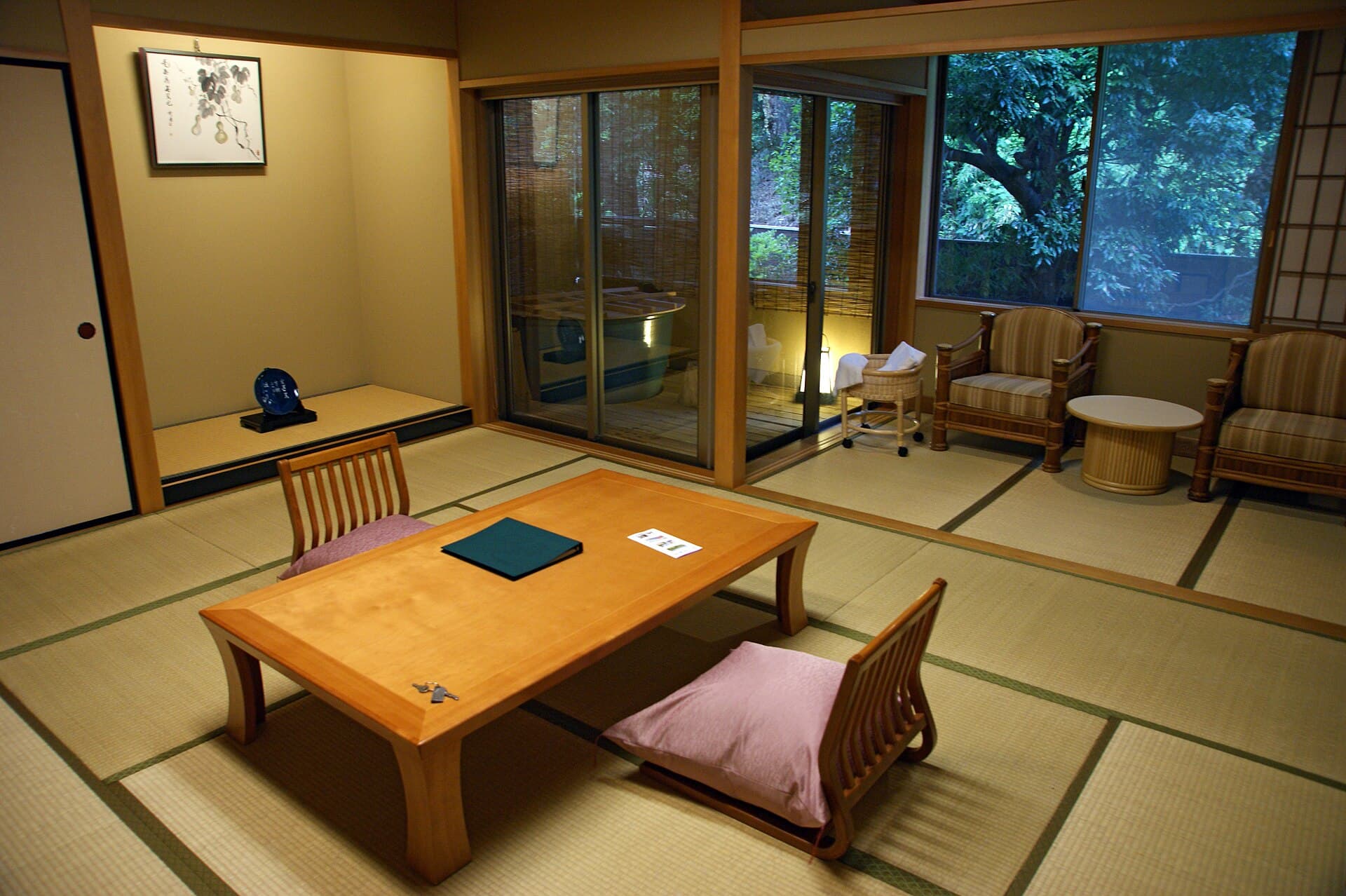
Japanese Ryokan Experience
By Tour in Japan editors · Updated
Experience traditional Japanese hospitality at a ryokan. Learn about tatami rooms, kaiseki meals, onsen, and ryokan etiquette.
The Complete Japanese Ryokan Experience: What to Expect, Etiquette, and Best Picks
Everything you need to know about staying in a traditional Japanese ryokan — from choosing the right one to mastering onsen etiquette and kaiseki dining.
What Is a Ryokan?
A ryokan (旅館) is a traditional Japanese inn that has existed for over 1,000 years. Unlike Western hotels, ryokans offer an immersive cultural experience featuring tatami-matted rooms, futon bedding, communal hot spring baths (onsen), and multi-course haute cuisine (kaiseki). Staying at a ryokan isn't just accommodation — it's a journey into Japanese hospitality (omotenashi).
Ryokan vs Hotel vs Pension
| Feature | Ryokan | Hotel | Pension |
|---|---|---|---|
| Room style | Tatami + futon | Western bed | Mixed |
| Dinner included | Usually yes | Rarely | Sometimes |
| Bath | Shared onsen | Private bathroom | Shared |
| Price range | ¥15,000–80,000+/person | ¥8,000–50,000/room | ¥6,000–15,000/person |
| Cultural immersion | ★★★★★ | ★★☆☆☆ | ★★★☆☆ |
| Best for | Cultural体验 | Convenience | Budget travelers |
Types of Ryokan
1. Traditional Ryokan (純粋旅館)
- Fully traditional: tatami, futon, yukata (cotton robe), onsen
- Kaiseki dinner and Japanese breakfast included
- Price: ¥20,000–80,000+ per person per night
- Examples: Hiiragiya (Kyoto), Tawaraya (Kyoto), Gora Kadan (Hakone)
2. Modern Ryokan (モダン旅館)
- Blend of traditional and Western amenities
- Some rooms may have beds, private bathrooms
- Still offers onsen and kaiseki
- Price: ¥15,000–40,000 per person per night
- Examples: Hoshino Resorts KAI series, Hakone Yutowa
3. Minshuku (民宿)
- Family-run guesthouses, more casual
- Shared bathrooms common
- Home-cooked meals (not formal kaiseki)
- Price: ¥6,000–15,000 per person per night
- Best for: Budget travelers seeking authentic experience
4. Ryokan-Style Hotel
- Hotel with ryokan-inspired rooms
- Western amenities with Japanese touches
- Price: ¥12,000–35,000 per person per night
- Examples: Hotel Granvia Kyoto, Mitsui Garden Hotels
The Ryokan Experience: Hour by Hour
Check-In (3:00 PM)
- Remove shoes at the entrance (genkan)
- Staff greets you with tea and sweets
- shown to your room (washitsu)
- Explanation of facilities, meal times, onsen rules
- Receive your yukata and indoor slippers
Afternoon (3:30–5:30 PM)
- Explore the ryokan grounds
- First onsen bath (often less crowded before dinner)
- Relax in your room or the garden
Dinner (6:00–8:00 PM)
- Served in your room or private dining area
- 8–12 course kaiseki meal
- Seasonal ingredients, artistic presentation
- Sake pairings available at most ryokans
Evening (8:00–10:00 PM)
- Second onsen bath (quieter at night)
- Stargazing from outdoor baths
- Nightcap in the lounge
Night
- Futon laid out by staff while you're at dinner
- Sleep on the floor with quilted mattress
- Yukata doubles as pajamas
Morning (7:00–9:00 AM)
- Optional: early morning onsen
- Japanese breakfast: rice, miso soup, grilled fish, pickles, tamagoyaki
- Check-out by 10:00–11:00 AM
Ryokan Etiquette: Essential Rules
Onsen (Hot Spring) Rules
| Do ✅ | Don't ❌ |
|---|---|
| Wash thoroughly before entering | Wear a swimsuit |
| Enter completely naked | Put your towel in the water |
| Use the small towel on your head | Enter with tattoos (some allow) |
| Be quiet and respectful | Splash or make noise |
| Rinse after if using indoor bath | Shave or wash hair in the bath |
Tattoo Note: Many onsen still prohibit tattoos. Options:
- Use small, private onsen (kashikiri-buro)
- Cover tattoos with bandages or "tattoo cover" stickers
- Book a ryokan known to be tattoo-friendly (e.g., some in Beppu, Kinosaki)
Room Etiquette
- Remove shoes before stepping on tatami
- Don't step on the border (tatami-beri) between rooms
- Don't place luggage on the futon
- Keep the room tidy — staff enters freely
- Don't eat strong-smelling food in the room
Dining Etiquette
- Say "itadakimasu" before eating
- Use provided chopsticks (never pass food chopstick-to-chopstick)
- Try everything — refusing food is impolite
- Sake cups: don't pour for yourself (others pour for you)
What's Included in a Stay
Standard Ryokan Package
| Item | Included? | Notes |
|---|---|---|
| Room | ✅ | Tatami room with futon |
| Dinner | ✅ | Kaiseki multi-course |
| Breakfast | ✅ | Traditional Japanese |
| Onsen access | ✅ | Communal hot spring baths |
| Yukata | ✅ | Cotton robe to wear around property |
| Slippers | ✅ | Indoor use only |
| Parking | Sometimes | ¥500–1,500/day if available |
| Wi-Fi | Usually | Free but slower than hotels |
Optional Add-ons
| Item | Price Range | Notes |
|---|---|---|
| Private onsen | ¥3,000–10,000 | 45-60 minute reservation |
| Kimono rental | ¥3,000–8,000 | For photos/exploring |
| Sake tasting | ¥2,000–5,000 | Local sake flight |
| Massage | ¥5,000–15,000 | 60-90 minutes |
| Tea ceremony | ¥2,000–4,000 | Traditional experience |
Kaiseki Dining Explained
Kaiseki (懐石/会席) is Japan's haute cuisine — a multi-course meal that is both a feast for the eyes and palate.
Typical Kaiseki Course Structure
| Course | Japanese | Description |
|---|---|---|
| 1. Welcome drink | 先付 (Sakizuke) | Amuse-bouche, seasonal appetizer |
| 2. Appetizer | 八寸 (Hassun) | Platter of seasonal delicacies |
| 3. Sashimi | 向付 (Mukōzuke) | Fresh fish, beautifully arranged |
| 4. Simmered dish | 煮物 (Nimono) | Seasonal vegetables in dashi broth |
| 5. Grilled dish | 焼き物 (Yakimono) | Fish or meat, often charcoal-grilled |
| 6. Hot pot | 鍋物 (Nabemono) | Seasonal hot pot |
| 7. Rice | 食事 (Shokuji) | Rice, miso soup, pickles |
| 8. Dessert | 水物 (Mizumono) | Seasonal fruit or wagashi sweets |
Duration: 1.5–2.5 hours Price: Included in room rate (¥5,000–20,000 value)
Best Regions for Ryokan
| Region | Speciality | Best Time | Price Level |
|---|---|---|---|
| Hakone | Onsen + Mt. Fuji views | Year-round | ¥¥¥ |
| Kyoto | Traditional culture | Spring/Autumn | ¥¥¥¥ |
| Kinosaki | 7 public baths | Year-round | ¥¥ |
| Beppu | Hot spring variety | Winter | ¥–¥¥ |
| Noboribetsu | "Hell" hot springs | Year-round | ¥¥ |
| Ginzan | Historic streetscape | Winter | ¥¥¥ |
| Kusatsu | Highest quality onsen | Year-round | ¥¥ |
| Yufuin | Mountain scenery | Year-round | ¥¥ |
Top 10 Ryokans by Budget
Budget (¥8,000–15,000/person)
- K's House (various) — hostel-ryokan hybrid
- Ryokan Sawanoya (Tokyo) — legendary budget ryokan
- Guesthouse Boku (Kyoto) — modern take on tradition
Mid-Range (¥15,000–30,000/person)
- Kinosaki Onsen Koyo — classic onsen town experience
- Yumoto Noboribetsu — hot spring paradise
- Hakone Ginyu — luxury at moderate prices
Luxury (¥30,000–80,000+/person)
- Tawaraya (Kyoto) — 300 years of tradition
- Gora Kadan (Hakone) — imperial villa turned ryokan
- Beniya Mukayu (Ishikawa) — modern meets traditional
- Hiiragiya (Kyoto) — the gold standard
Seasonal Highlights
| Season | What to Expect | Best Regions |
|---|---|---|
| Spring | Cherry blossoms, mild weather | Kyoto, Hakone |
| Summer | Festivals, fireworks, greenery | Hokkaido, Kusatsu |
| Autumn | Fall foliage, harvest cuisine | Nikko, Takayama |
| Winter | Snow onsen, illuminations | Noboribetsu, Ginzan |
How to Book
Online Platforms
| Platform | Pros | Cons |
|---|---|---|
| Booking.com | Easy, English support | Higher commission |
| Rakuten Travel | Best selection in Japan | Japanese interface |
| Japanican | Direct booking, English | Limited selection |
| Jalan | Good deals, loyalty points | Japanese interface |
| Direct website | Best price, exclusive plans | Requires Japanese |
Tips for Booking
- Book direct for best price (many ryokans offer 10-15% off)
- Book 2-3 months ahead for peak seasons (cherry blossom, autumn leaves)
- Request a corner room for best views
- Mention dietary restrictions at least 1 week before arrival
- Ask about "plan" options — dinner+breakfast packages vary
Packing Tips for Ryokan Stays
| Bring | Why | Alternative |
|---|---|---|
| Thin socks | No shoes indoors | Many ryokans provide |
| Small towel | Carry to onsen | Provided at ryokan |
| Toiletries | Basic ones provided | Japanese brands are excellent |
| Camera | Beautiful grounds | Keep respectful in onsen areas |
| Cash | Many are cash-only | ATMs at convenience stores |
Common Ryokan Terms
| Japanese | Reading | Meaning |
|---|---|---|
| 旅館 | Ryokan | Traditional inn |
| 風呂 | Furo | Bath |
| 湯 | Yu | Hot water |
| 素泊まり | Sudoamari | Room only (no meals) |
| 一泊二食 | Ippaku Nishoku | One night, two meals |
| 食事付 | Shokuji-tsuki | With meals |
| 接客 | Sekkyaku | Service |
| お-guided | O-mashi | Welcome |
| お布団 | O-futon | Futon bedding |
| 腰掛け | Koshikake | Bench at entrance |
Frequently Asked Questions
Q: Can I stay if I have tattoos? A: Many ryokans still prohibit tattoos in onsen. Book a kashikiri-buro (private bath) or check tattoo-friendly databases like tattoo-friendly.jp.
Q: Is it safe to sleep on the floor? A: Yes! Futons are very comfortable. The firm surface is actually better for many people's backs than Western beds.
Q: Can I eat Western food? A: Most traditional ryokans only serve Japanese cuisine. If you need Western food, modern ryokan-style hotels may be better.
Q: What if I can't use chopsticks? A: Staff will often provide forks if asked. Don't be embarrassed — just say "forku o kudasai" (fork please).
Q: Is there Wi-Fi? A: Most ryokans now offer free Wi-Fi, though it may be slower than hotels. Some remote ryokans may not have it.
Essential Japanese Phrases for Ryokan Stays
| English | Japanese | Pronunciation |
|---|---|---|
| Thank you for the meal | ごちそうさまでした | Gochisousama deshita |
| Delicious! | おいしいです | Oishii desu |
| The bath is wonderful | お風呂がとても素敵です | Ofuro ga totemo suteki desu |
| Where is the onsen? | 温泉はどこですか? | Onsen wa doko desu ka? |
| Check out, please | チェックアウトお願いします | Chekkuauto onegaishimasu |
| Can I see the view room? | 展望部屋を見せてください | Tenbo heya o misete kudasai |
Staying at a ryokan is one of Japan's most memorable experiences. Whether you choose a 300-year-old inn in Kyoto or a mountain retreat in Hakone, the combination of hot springs, kaiseki cuisine, and traditional hospitality creates lasting memories that no hotel can match.
Stay Connected in Japan
Yesim eSIMs work on arrival — no physical SIM needed. Japan data plans from $5.