Japan Winter Illuminations: What to See and When to Book
A guide to winter illuminations across Japan, with dates, locations and practical tips for Tokyo, Osaka, Kyoto, Sapporo and beyond.
Affiliate link — we may earn a commission at no extra cost to you. Affiliate disclosure
Japan's winter light season runs from late October to mid-December in Kyoto and from November to February in the cities. No 2027 illumination schedule has been published; each temple and city sets its own window, and they differ by weeks.
Key facts
- Cost: Kifune Shrine's maple light-up is free. Temple illuminations run ¥600–2,800 (~$4–18).
- Time needed: One evening per cluster. Lights usually come on at 17:00–17:30 and end by 21:00.
- Best season: Mid to late November for Kyoto's maple lights; December for city displays.
- Book ahead: Kyoto hotels for the third week of November, three months out.
- Watch out for: Cancellations. Several light-ups are suspended in bad weather, and temple autumn events end in early December.
Japan's winter light festivals turn streets, parks and temple grounds into after-dark destinations. Dates vary by venue, so check the official site before you travel. The Ashikaga Flower Fantasy, for example, runs from mid-October to mid-February, with a Christmas show from late November and a New Year illumination from 1 January (Travel Japan).
When to Go
Winter light festivals are mostly evening events. Some Christmas-themed displays finish on 25 December, while others continue into the new year. Lighting times, last entry and closure days can change, so confirm details before setting out.
Top Illuminations
Tokyo
Place / event | What to see | Dates and notes |
|---|---|---|
HIBIYA Magic Time Illumination 2026 | A full-colour tree about 8 m tall in Hibiya Step Plaza, inspired by Avengers: Doomsday, plus lights along Hibiya Nakadori and in the 6F Park View Garden | Avengers-themed tree: 12 November–25 December 2026; wider illumination: 12 November 2026–28 February 2027; lights 16:00–23:00 (Tokyo Midtown Hibiya) |
Marunouchi Illumination 2026 and Marunouchi Bright Holiday | Champagne-gold lights along about 1.2 km of Marunouchi Nakadori; Harry Potter-themed decorations and a HOGWARTS SNOW TREE at the Maru Building | Marunouchi Illumination: 12 November 2026–14 February 2027; Marunouchi Bright Holiday: 12 November–25 December 2026 (Marunouchi.com) |
Tokyo Midtown Christmas 2026 | MIDWINTER LIGHTS in Midtown Garden, with a bubble show and a large real fir tree; outdoor ice rink from 5 December | 26 November–25 December 2026; lights 17:00–23:00; ice rink 5 December 2026–23 February 2027 (Tokyo Midtown) |
Caretta Illumination | A central Tokyo display a short walk from Shimbashi Station | Check the official schedule for dates and times (Travel Japan) |
Osaka
Place / event | What to see | Dates and notes |
|---|---|---|
Midosuji Illumination 2026 | About 4 km of lights along Midosuji, divided into five areas | 3 November–31 December 2026; lights about 17:00–25:00 (Osaka City) |
OSAKA Hikari Renaissance 2026 | Nakanoshima waterfront lights, including the City Hall facade and Nakanoshima Illumination Street | Core programme 11–25 December 2026; City Hall facade and Nakanoshima Illumination Street 3 November–31 December 2026 (Osaka Prefecture) |
Kyoto
Place / event | What to see | Dates and notes |
|---|---|---|
Kiyomizu-dera | Autumn night viewing with a blue beam of light over the city | 21–30 November 2026; open until 21:30, last entry 21:00 (Kiyomizu-dera) |
Kitano Tenmangu | Maple garden light-up on the Odoi earthwork | 7 November–6 December 2026; 9:00–20:00, last entry 19:40; adult ¥1,500 (2026) including a tea sweet, child ¥700; check the current price before you go (Kyoto YOI-YOI) |
Toji | Autumn Leaves Illumination and special night viewing of the Kondo and Kodo | 31 October–13 December 2026 (Toji) |
Other
Place / event | What to see | Dates and notes |
|---|---|---|
Sapporo White Illumination | Lights in Odori Park, Ekimae-dori, Minami 1-jo dori, Akapla and Sapporo Station South Exit Plaza; Ekimae-dori is about 1.5 km with about 220,000 LEDs | Venue dates vary: Odori 20 November–25 December 2026; Ekimae-dori 20 November 2026–11 February 2027; Minami 1-jo dori and Akapla 20 November 2026–14 March 2027 (Hokkaido Tourism Organization) |
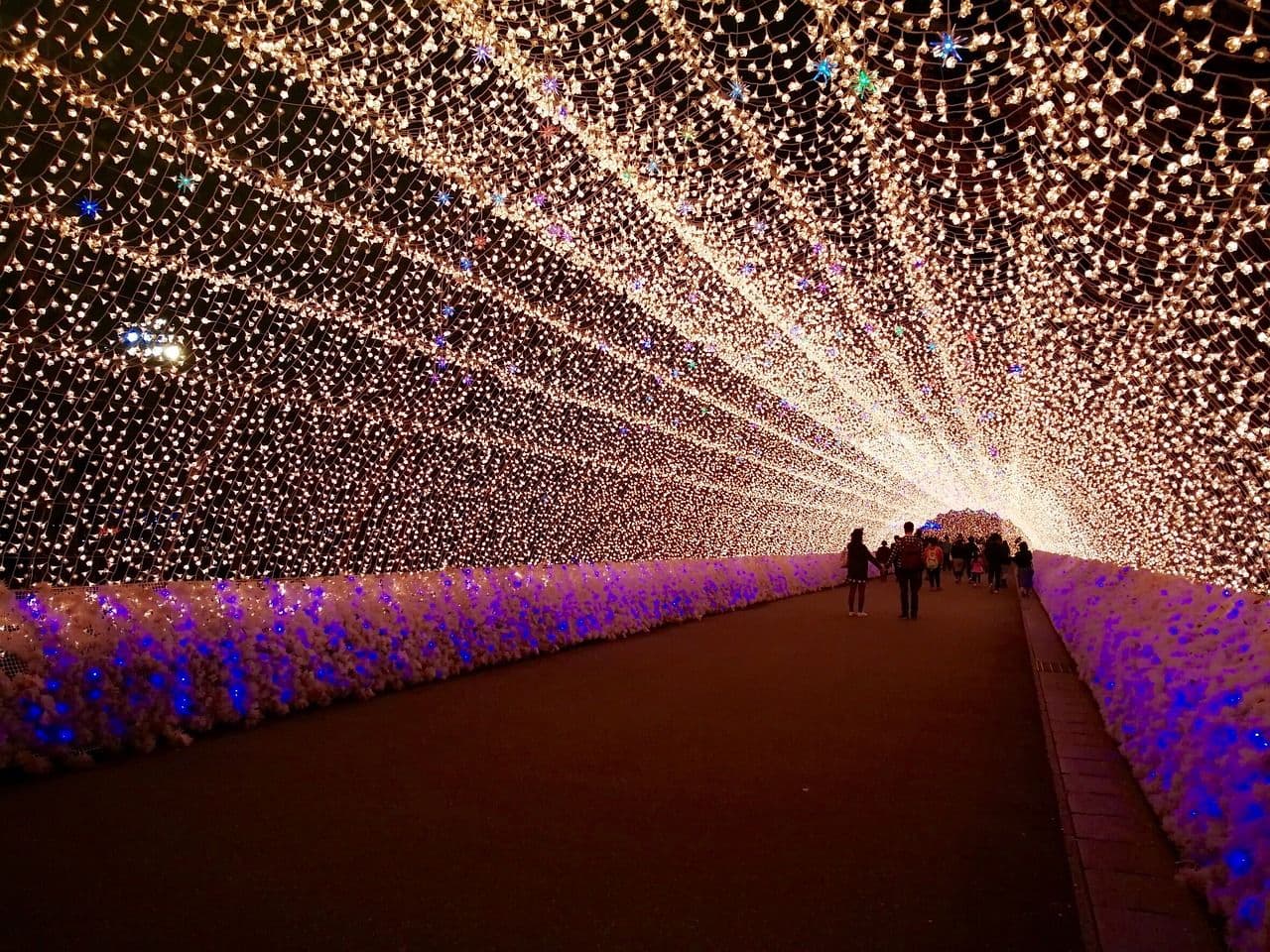
Nabana no Sato | One of Japan's largest winter illuminations, with over 5.8 million LEDs, a Tunnel of Light and flower gardens | 17 October 2026–31 May 2027; closed 6 and 7 January; advance tickets required for visits between 23 and 25 December (Japan Travel) |
Kobe Luminarie | A memorial display commemorating the 1995 Great Hanshin Earthquake | Check the official schedule for dates (Travel Japan) |
Tips
- Go after dark — illuminations are evening events, and lighting times vary by venue.
- Check dates and last entry — some displays close before the end of the season, and last entry is often earlier than closing time.
- Arrive early — popular displays get busy in the evening.
- Bring a camera — low light can be tricky; check whether tripods are allowed before you use one.
- Dress warmly — winter evenings are cold, especially in parks and near water.
- Pair with dinner — many displays are near restaurants and food markets.
- Check for food stalls — some events have markets or seasonal food stands.
- Take your time — some illuminations are spread across several streets or gardens.
The 2027 table
No 2027 schedule has been published. The typical window column gives the 2026 dates, which show the shape of the season.
Site | City | Typical window | 2027 status | Price | Source |
|---|---|---|---|---|---|
Kifune Shrine maple light-up | Kyoto | Sunset to 20:30, 7–24 November in 2026 | Not yet published | Free | Shrine |
Eikando night viewing | Kyoto | 17:30–20:30, 20 November–6 December in 2026 | Not yet published | ¥1,000 (~$6) | Temple |
Kodai-ji illumination | Kyoto | From 17:00, 23 October–13 December in 2026 | Not yet published | ¥800 (~$5) | Temple |
Kiyomizu-dera night viewing | Kyoto | Until 21:30, 21–30 November in 2026 | Not yet published | Temple admission | Temple |
Ninna-ji cloud-sea illumination | Kyoto | Selected weekend evenings, 24 October–13 December in 2026 | Not yet published | ¥2,800 (~$18) | Temple |
Arashiyama Bamboo Light-Up | Kyoto | 18:00–21:00, 30 September–8 November in 2026 | Not yet published | ¥1,500–2,000 (~$10–13) | Organiser |
City winter illuminations | Nationwide | From November, through December and into February | Not yet published | Usually free | City |
Two things in that table are worth reading carefully. The price column varies because the events are different kinds of thing: a shrine light-up, a temple night viewing and a ticketed garden are not comparable. And the dates overlap rather than run in sequence, so a single November evening in Kyoto can catch two or three.
A November evening in Kyoto
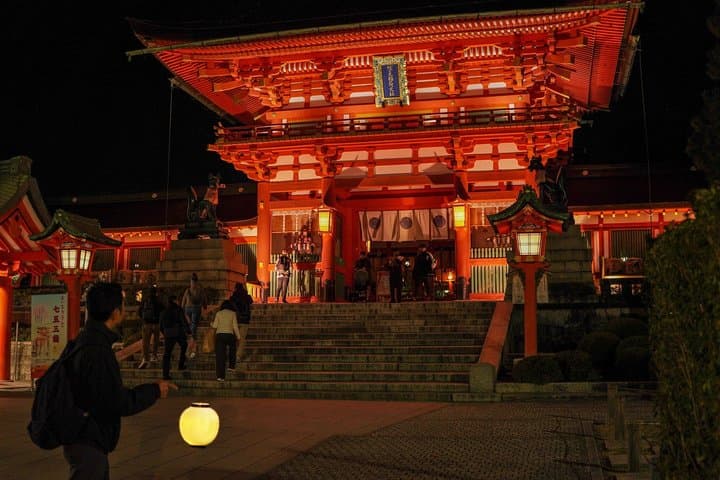
- Start at Kifune Shrine before dark. The maple light-up is free and runs from sunset to 20:30, and the walk from Kifune-guchi takes about 30 minutes uphill or five minutes by bus from Kifune.
- Return to Higashiyama for the paid viewings. Eikando runs 17:30 to 20:30 with entry until 20:30, and Kodai-ji is close enough to pair with it.
- Check Kiyomizu-dera's dates separately. Its night viewing runs in a short window, and the temple states that no reservation is needed.
- Keep a spare evening. Weather cancels light-ups, and a temple can close for maintenance without notice.
- Buy the ticket on the night. Temple viewings do not generally sell out in the way a museum does; the constraint is the closing time.
What changes for 2027
Expect three things: dates that move by a week or two, prices that rise slightly, and at least one venue that stops running its event or changes format. Illuminations are set annually by each site, and several have been suspended or cancelled in recent seasons. Check the site's own page in the month you travel rather than relying on last year's list.
City illuminations are the exception. Most are free, run for two months or more, and are switched on in a public street or park, so the dates are less fragile.
Common mistakes
- Booking a trip for an illumination that has been cancelled. Check the site's own page, not a list.
- Arriving after 20:30. Most temple viewings take last entry an hour or more before the gate closes.
- Paying for everything. Kifune is free, and city illuminations cost nothing.
- Treating the price as uniform. ¥800 for Kodai-ji and ¥2,800 for Ninna-ji are different experiences, not a scale of quality.
- Ignoring the weather. Rain cancels some events and empties the ones that stay open. A wet night is still worth going.
FAQ
When are Japan's winter illuminations? The temple and shrine light-ups in Kyoto run from late October to mid-December, and city illuminations start in November and run through December, with some continuing into February. No 2027 schedule has been published yet. Each venue sets its own dates.
Are Japanese illuminations free? Some are. Kifune Shrine's maple light-up is free, from sunset to 20:30, and most city illuminations are free public displays. Temple night viewings charge: Kodai-ji ¥800 (~$5), Eikando ¥1,000, Ninna-ji ¥2,800, and Arashiyama's bamboo light-up ¥1,500 day or ¥2,000 online.
Which Kyoto illumination is best? Kifune for a free, short and atmospheric walk; Eikando for a classic maple route; Kodai-ji for the longest window, from late October to mid-December; Ninna-ji for the cloud-sea garden on selected weekend evenings. They overlap, so one evening can cover two.
Do I need to book illumination tickets? Usually not. Most temple viewings are bought on the night, and the limit is the closing time rather than availability. Arashiyama's bamboo light-up is the exception, where buying online is cheaper than at the gate. Kiyomizu-dera states that no reservation is needed.
What happens if it rains? Some light-ups are cancelled in bad weather, and the organisers announce it on the day. Others stay open, and a wet night is often quieter and better for reflections. Keep one evening of slack in the plan rather than a single fixed night.
Ready to explore Japan?
Browse tours and activities, or tell us what you're looking for and we'll suggest the best options.
Stay Connected in Japan
Airalo eSIMs work on arrival — no physical SIM needed. Data plans from $5 for 7 days.
Travel Insurance for Japan
Medical, trip cancellation, and adventure sports covered. Plans from $1.5/day.