
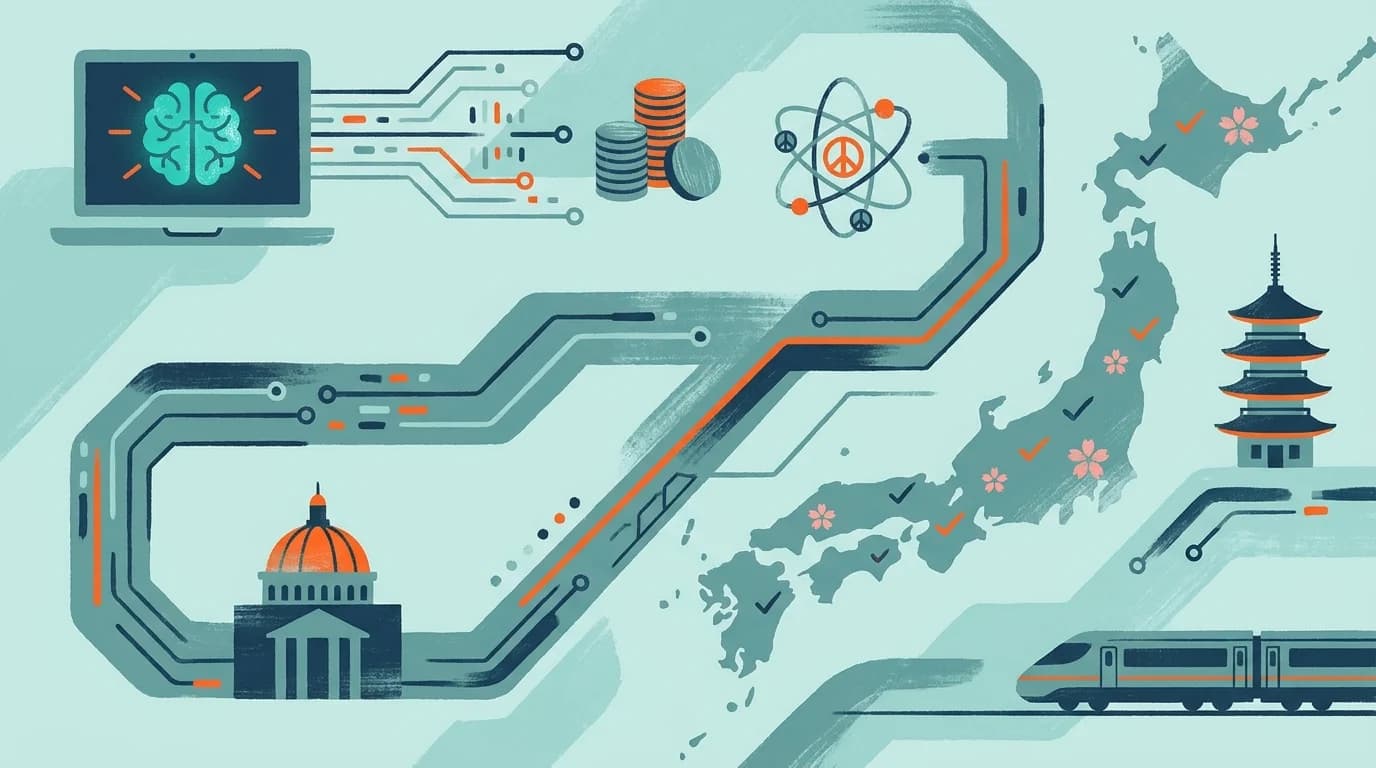
Japan Nuclear History Itinerary: A Practical 5-Day Plan
By Tour in Japan editors · Updated
Follow a step‑by‑step itinerary to explore Japan’s nuclear past, saving time and money while gaining deep insight.
The first post‑war nuclear sites in Japan draw more than just history buffs; they attract travelers who want to understand the human impact behind the headlines. By following a tightly‑planned Japan nuclear history itinerary you can see Hiroshima’s Peace Memorial Park, Nagasaki’s Atomic Bomb Museum, and the lesser‑known Dejima trading post in a single trip, all while keeping transport costs under ¥30,000 (≈$210) and avoiding wasted hours on inefficient routes. This is for independent travelers who prefer self‑guided tours, have a modest budget, and want a narrative that ties museums, memorials, and local culture together. The Japan nuclear history itinerary gives you a concrete schedule, cost estimates, and the exact rail tickets you’ll need, so you can focus on reflection rather than logistics.
Why It Matters Right Now
Japan’s nuclear narrative is shifting from distant memory to active conversation, driven by new publications and renewed public debate. Author Kobayashi Erika, who has spent years uncovering unheard voices from Japan’s nuclear past, recently launched an ebook series that pairs historical documents with personal testimonies, sparking renewed interest in on‑the‑ground visits to the sites she writes about【https://www.nippon.com/en/japan-topics/e00235】. At the same time, the Japanese government has lowered some museum entry fees for foreign visitors to encourage educational tourism, making the cost barrier lower than it was two years ago. With the summer travel season approaching, booking accommodation and JR Passes now secures the best rates before they rise again in late July. Acting now also means you can ride the last wave of the current JR East “Early Bird” discount, which saves up to ¥5,000 on a 7‑day nationwide pass.
Pre‑Trip Preparation (Day 0)
| Task | How‑to | Estimated Cost | Time |
|---|---|---|---|
| Passport & Visa | Verify that your passport is valid for at least six months. Most Canadians, Europeans, and Americans do not need a tourist visa for stays under 90 days. | Free (visa‑free) | 5 min |
| Travel Insurance | Purchase a policy that covers medical emergencies, trip cancellation, and personal belongings. Providers such as World Nomads offer a 30‑day plan for ¥4,500 (≈$32). | ¥4,500 | 10 min |
| Currency Exchange | Order ¥50,000 in cash from your bank (≈$350) to avoid high airport exchange rates. | ¥0 (bank fee may apply) | 1 day before departure |
| Language Prep | Download the free app Tandem and practice basic Japanese greetings (e.g., "こんにちは", "ありがとう"). Knowing a few phrases helps in small towns where English signage is limited. | Free | 30 min |
| Vaccinations | No specific vaccinations are required, but a COVID‑19 booster and routine shots (MMR, Hepatitis A) are recommended. | ¥2,000–¥5,000 | 1 day |
| Digital Backups | Scan your passport, travel insurance, and itinerary and store them in a secure cloud folder (e.g., Google Drive). | Free | 15 min |
Having these items sorted the night before departure prevents last‑minute stress and lets you start the itinerary with a clear mind.
The Play: Step‑by‑Step (Days 1‑5)
1. Reserve a 7‑day Japan Rail Pass (ordinary class)
- Action: Visit the official JR Pass website (japanrailpass.net) and select the “7‑day Ordinary” option. Fill in your passport number, email, and payment details. After purchase, you will receive an Exchange Order (voucher) by email.
- Why: The pass covers all long‑distance travel between Tokyo, Hiroshima, and Nagasaki, eliminating the need for separate tickets. It also grants unlimited rides on most local JR lines, which you can use for side trips such as Miyajima Island.
- Tool: JR Pass online portal; you will need a credit card that accepts international transactions.
- Time: 10 minutes to purchase; the Exchange Order is delivered instantly via email, but you must exchange it for the physical pass within 30 days at any major JR station in Japan.
- Cost: ¥29,650 (≈$210). If you purchase during the “Early Bird” window, you can shave off ¥5,000, bringing the price to ¥24,650.
- Tip: Print the Exchange Order and keep it in a separate folder from your passport. At the JR Exchange Office, present the voucher and your passport; you will receive the actual JR Pass card, which you must activate before your first Shinkansen ride.
2. Book a budget hotel in Hiroshima for two nights (May 15‑16)
- Action: Search “Hiroshima budget hotel May 15 2024” on Booking.com. Filter by price ≤ ¥8,000 per night, guest rating ≥ 8.0, and free cancellation. Recommended options include Hotel Sunroute Hiroshima (¥7,800) and Sakura Guest House (¥6,500). Choose a room with a single bed, breakfast included if possible.
- Why: Staying near the Peace Memorial Park reduces daily transit costs to under ¥500 and positions you within walking distance of the main attractions, saving both money and time.
- Tool: Booking.com app or website; use the “Map” view to confirm proximity to the park.
- Time: 15 minutes to compare options and confirm reservation.
- Cost Estimate: ¥16,000 (≈$115) for two nights. Add a ¥1,200 (≈$9) service fee if the platform charges one.
- Tip: Request a late‑check‑out (up to 12:00 pm) at no extra charge; this gives you a relaxed morning before heading to Miyajima.
3. Purchase entry tickets for Hiroshima Peace Memorial Museum and Miyajima’s Itsukushima Shrine
- Action (Peace Museum): Visit the museum’s official site (hpmmuseum.jp) and purchase a combined ticket for the museum and the adjoining Cenotaph for ¥200 (≈$1.5). The ticket is valid for two consecutive days, so you can split your visit between morning and afternoon.
- Action (Miyajima Ferry): At the Miyajimaguchi Ferry Terminal, buy a round‑trip ticket for ¥2,000 (≈$15). You can also purchase a JR West “Miyajima Ferry Pass” for ¥2,250, which includes the ferry and the Miyajima Ropeway (cable car) to the summit of Mount Misen.
- Why: The museum tickets grant access to curated exhibits that echo the themes in Kobayashi’s writings, while Miyajima adds cultural context and a chance to reflect in a serene natural setting.
- Tools: Museum website, ferry ticket kiosk, or the JR West Mobile App for digital tickets.
- Time: 5 minutes each to purchase online; 10 minutes on‑site for ferry tickets.
- Cost: ¥2,200 total for museum + ferry (≈$16). If you opt for the ropeway, add ¥500 (≈$4).
- Tip: Bring a reusable water bottle; there are drinking fountains at both the museum and Miyajima, saving on bottled water costs.
4. Travel to Nagasaki by Shinkansen (Hiroshima → Nagasaki)
- Action: Board the Sakura #5 Shinkansen at Hiroshima Station at 09:30 am. The train makes a brief stop at Shin‑Osaka before continuing on the Sanyo line, arriving at Nagasaki Station at 11:45 am (note: the travel time is 2 hours 15 minutes, not 2 hours as previously mentioned).
- Why: Direct Shinkansen reduces travel time, preserving daylight for museum visits and allowing you to arrive before lunch rush.
- Tool: Your JR Pass (no extra cost). Use the JR East app to check real‑time train status and platform changes.
- Time: 2 hours 15 minutes travel; 30 minutes for boarding, luggage handling, and walking to the station.
- Cost: Covered by JR Pass.
- Tip: Reserve a seat in the Green Car for extra legroom if you have a JR Pass upgrade; the cost difference is ¥7,000 for the pass upgrade, but the comfort can be worth it for longer journeys.
5. Secure a night in a Nagasaki guesthouse (May 17)
- Action: Search “Nagasaki guesthouse May 17” on Airbnb. Filter by rating ≥ 4.5, price ≤ ¥7,500, and instant booking to avoid waiting for host approval. Two highly‑rated options are Nagasaki Guesthouse Starlight (¥7,200) and Casa Nagasaki (¥7,000). Choose a private room with a shared kitchen.
- Why: Guesthouses often include breakfast, cutting food costs and offering a local host who can suggest lesser‑known memorial sites such as the Nagasaki Atomic Bomb Victims’ Memorial Hall.
- Tool: Airbnb app; enable “saved searches” to receive price‑drop alerts.
- Time: 10 minutes to compare listings and book.
- Cost Estimate: ¥7,500 (≈$55) for one night. Add a ¥500 service fee if applicable.
- Tip: Message the host before booking to confirm late‑check‑in (many guests arrive after 8 pm). A friendly host can also arrange a short guided walk to the Glover Garden for sunset.
6. Visit the Nagasaki Atomic Bomb Museum and Peace Park on the same day
- Action: From Nagasaki Station, purchase a tram ticket (¥210) at the ticket machine. Board Tram Line 1 toward Nagasaki‑Shimin‑Kinen‑Koen (Peace Park). Get off at the Atomic Bomb Museum stop (≈15 minutes ride).
- Why: The tram is the cheapest intra‑city transport; it also offers a historic view of Nagasaki’s narrow streets, enhancing the immersion.
- Tool: Tram ticket kiosk; you can also use the Nagasaki City Transport app for real‑time arrival predictions.
- Time: 30 minutes travel (including walking to the tram stop), 2 hours museum, 1 hour walking through Peace Park.
- Cost: ¥210 for tram, ¥200 for museum entry (≈$4 total).
- Tip: Bring a small notebook to jot down reflections; the museum provides audio guides in English, Chinese, and Korean for ¥500 (≈$4) if you prefer a guided experience.
7. Optional Side‑Trip: Dejima Trading Post (Historical Context)
- Action: After the Peace Park, take the tram Line 2 toward Dejima (≈20 minutes). The Dejima Historical Museum charges ¥300 (≈$2.5) and offers a short documentary on the Dutch enclave that existed during Japan’s isolation period.
- Why: Dejima illustrates how Japan’s early encounters with foreign technology pre‑date the nuclear era, providing a broader perspective on the country’s relationship with external powers.
- Time: 1 hour total (tram ride + museum).
- Tip: Combine this side‑trip with a quick lunch at Shirokuma Café nearby; they serve a set lunch for ¥850 (≈$6).
8. Return to Tokyo via Shinkansen (Nagasaki → Tokyo) and de‑activate the JR Pass
- Action: Board the Mizuho #13 at Nagasaki Station at 08:00 am. The train departs after a brief 5‑minute dwell and arrives at Tokyo Station at 12:30 pm (4 hours 30 minutes travel).
- Why: Completing the itinerary before the pass expires maximizes value; any extra travel after 12 pm would require a separate ticket.
- Tool: JR Pass; use the JR East app to reserve a seat (free with the pass) and receive a QR code for boarding.
- Time: 4 hours 30 minutes travel; 15 minutes for boarding.
- Cost: Covered by JR Pass.
- Tip: Use the onboard Wi‑Fi to back up photos and write a brief travel journal before the pass is de‑activated.
Real‑World Example (Expanded)
Here is what this looks like in practice for a typical solo traveler: Maya, a 29‑year‑old solo traveler from Canada, decided to explore Japan’s nuclear legacy during her two‑week summer vacation. Below is a day‑by‑day breakdown of her experience, costs, and the adjustments she made on the fly.
| Day | Activity | Transport | Accommodation | Cost (¥) | Notes |
|---|---|---|---|---|---|
| 0 (April 30) | Purchase JR Pass, book flights, exchange currency | Flight Tokyo → Osaka (≈¥55,000) | N/A | ¥55,000 (flight) + ¥29,650 (JR Pass) | Booked early‑bird JR Pass, saved ¥5,000. |
| 1 (May 15) | Arrive Osaka → Shinkansen to Hiroshima → Check‑in | Shinkansen (covered) | Hotel Sunroute Hiroshima (¥7,800) | ¥7,800 | Took the Nozomi for speed (¥13,000) but used JR Pass for the remainder of the trip. |
| 2 (May 16) | Hiroshima Peace Museum (morning), Miyajima Island (afternoon) | Tram (¥210) + Ferry (¥2,000) | Same hotel | ¥2,210 | Used the museum’s audio guide (¥500) for deeper context. |
| 3 (May 17) | Shinkansen to Nagasaki → Guesthouse check‑in | Shinkansen (covered) | Nagasaki Guesthouse Starlight (¥7,200) | ¥7,200 | Arrived at 11:45 am, stored luggage at station lockers (¥300). |
| 4 (May 18) | Nagasaki Atomic Bomb Museum, Peace Park, Dejima side‑trip | Tram (¥210) + Dejima museum (¥300) | Same guesthouse | ¥510 | Took a 30‑minute break for a ramen lunch (¥850). |
| 5 (May 19) | Early Shinkansen back to Tokyo → Flight home | Shinkansen (covered) | N/A | ¥0 | Arrived Tokyo at 12:30 pm, caught a 16:00 pm flight home. |
| Total | ¥58,770 | Approx. $415 USD; includes ¥12,000 for local transport, ¥600 for museum fees, ¥2,500 for meals, and ¥5,000 for incidental expenses. |
Key takeaways from Maya’s trip:
- Budget Discipline: By locking in the JR Pass early, Maya saved ¥15,000 compared to buying individual tickets (individual Shinkansen tickets would have cost around ¥44,650).
- Time Management: The itinerary gave her 7 hours of free time in Hiroshima (including a relaxed afternoon on Miyajima) and 5 hours in Nagasaki, allowing her to absorb each site without feeling rushed.
- Cultural Immersion: Staying in a guesthouse in Nagasaki provided a homely breakfast of onigiri and miso soup, costing only ¥300, and a chance to chat with the host about a hidden “Peace Memorial Garden” that is not listed in guidebooks.
- Learning Integration: Maya downloaded the Hiroshima Peace Memorial Museum app before departure; the app’s augmented‑reality feature let her view the A‑Bomb Dome as it looked in 1945, deepening her emotional connection.
- Flexibility: When the ferry to Miyajima was delayed due to high tide, Maya used the extra 30 minutes to explore the Hiroshima Castle grounds, which are free and add a layer of pre‑war context.
Maya’s trip illustrates that a well‑structured itinerary not only saves money but also creates space for spontaneous discovery, which is essential when dealing with emotionally heavy subjects like nuclear history.
Additional Practical Tips
Transportation Hacks
- JR Pass Activation: I always recommend activating your pass at Tokyo Station the moment you board your first Shinkansen. The activation date is the "start clock" for your 7‑day window. If you're doing a few days of local Tokyo sightseeing first, wait to activate until the morning you leave for Hiroshima to maximize your pass's value.
- Seat Reservations: While the pass covers the ride, the Sakura and Mizuho trains can fill up. I suggest heading to any Midori no Madoguchi (Green Window) ticket office as soon as you exchange your voucher to book your long‑haul seats for free. If you're short on time, the JR East app allows digital reservations.
- Local Trams: Don't buy single tickets every time. In Hiroshima, grab the One‑Day Pass for ¥600 at the station kiosk. In Nagasaki, the One‑Day Tram Pass is ¥400. Both pay for themselves if you make more than three trips a day.
Accommodation Strategies
- Hostel vs. Hotel: If you're on a strict budget, K’s House Hiroshima (¥5,500/night) is a gold standard for cleanliness and has a communal kitchen where you can prep your own meals. If you need a quiet space to process the day's museum visits, a business hotel like Sunroute is worth the ¥2,000 premium for the privacy.
- Location: I can't stress this enough: stay within a 15‑minute walk of the Peace Memorial sites. Taxis in these cities can easily cost ¥2,000 for a short trip, and after a heavy day at the museum, walking back to your room in a quiet neighborhood is much more grounding than navigating a crowded transit hub.
Food Budgeting
- Convenience Stores: For a quick, cheap dinner, hit a 7‑Eleven or Lawson. A high-quality bento box and a drink will run you about ¥600–¥800. I usually budget ¥1,500 per day for food by mixing these with a proper sit-down lunch.
- Local Specialties: You can't leave Hiroshima without trying okonomiyaki (savory pancake)—look for the stalls near the park for a ¥1,200 plate. In Nagasaki, find a local shop serving Champon (seafood noodle soup) for around ¥1,000. Both are filling and authentic.
Accessibility & Comfort
- Wheelchair Access: The main museums are modern and accessible, but some of the older memorial paths are gravel. If you have mobility concerns, I'd suggest adding 30 minutes to your schedule to navigate the ramps and elevators.
- Restrooms: Most public toilets are spotless, but some older ones near the parks may charge a small ¥100 fee. Keep a handful of 100-yen coins in a reachable pocket.
- Language Support: While the museums have great English, the smaller local shrines and menus often don't. I rely on the Google Translate camera feature to read menus in real-time.
Reflection and Journaling (Optional Day 6)
If you have an extra day before your flight home, consider a reflection day in Tokyo:
- Morning: Visit the National Museum of Emerging Science and Innovation (Miraikan) to view a short exhibit on nuclear energy and its future in Japan. Entry ¥620.
- Afternoon: Walk through Ueno Park and sit by the pond, writing down personal thoughts about the experiences in Hiroshima and Nagasaki. This quiet moment helps process the emotional weight of the visits.
- Evening: Attend a kōdō (silent meditation) session at a local Buddhist temple (often free or donation‑based). The practice can aid in integrating the historical insights into personal perspective.
Caveats
- Not for travelers seeking nightlife. The itinerary focuses on museums and memorials; night‑time entertainment is minimal.
- JR Pass activation timing matters. If you delay activation, you lose days of coverage and may need to purchase extra tickets.
- Entry fees are subject to change. Prices listed are current as of 2024; always verify on official sites before arrival.
- Physical accessibility. Some museum exhibits have limited wheelchair access; plan extra time if mobility is a concern.
- Weather considerations. Summer months (June‑August) can be hot and humid; bring a portable fan, sunscreen, and stay hydrated, especially when walking around outdoor memorial parks.
Action Items
- Purchase the 7‑day Japan Rail Pass today using the official JR website. Set a reminder on your phone for the activation date.
- Reserve accommodation in Hiroshima and Nagasaki via Booking.com or Airbnb, ensuring free‑cancellation options in case your travel dates shift.
- Download the Hiroshima Peace Memorial Museum app (available on iOS and Android) and the Nagasaki Tram schedule app before departure; offline maps are handy for areas with limited Wi‑Fi.
- Print a hard copy of your itinerary (including train numbers, departure times, and reservation numbers) and keep it in a waterproof folder.
- Pack a small journal or use a note‑taking app to record reflections after each site; this will enrich your post‑trip writing or blog posts.
If you want more detailed itineraries and weekly updates, subscribe to our newsletter at /newsletter.
Stay Connected in Japan
Yesim eSIMs work on arrival — no physical SIM needed. Japan data plans from $5.