Ishigaki Island: Snorkelling, Manta Rays and Remote Beaches
A guide to Ishigaki in Okinawa's Yaeyama Islands, with manta rays, Kabira Bay, day trips to Iriomote and Taketomi, beaches and snorkelling.
Affiliate link — we may earn a commission at no extra cost to you. Affiliate disclosure
Ishigaki is the hub of the Yaeyama Islands, Japan's southernmost inhabited chain, about one hour by air from Naha and the gateway to Taketomi in 15 minutes by boat and Iriomote in 40–50. Mount Omoto, Okinawa's highest peak, and Kabira Bay are the two inland anchors.
Key facts
- Cost: Glass-bottom boat at Kabira Bay was ¥1,200 (~$8) in 2022, so check the current fare. Ferries and rental cars are the main daily costs.
- Time needed: Four nights minimum for Ishigaki plus day trips to Taketomi and Iriomote.
- Best season: March to May and October to November. July to September is hot with jellyfish and typhoon risk.
- Book ahead: Rental cars and ferries in Golden Week and Obon; the island is car-dependent.
- Watch out for: Swimming at Kabira Bay is not permitted. It is a viewing and pearl-cultivation bay, not a beach.
Ishigaki Island is part of the Yaeyama Islands, Japan's southernmost and westernmost inhabited islands, in Okinawa Prefecture, and you can reach neighbouring islands such as Taketomi, Iriomote and Kohama by ferry from Ishigaki Island (Yaeyama Islands). The Iriomote-Ishigaki National Park encompasses several of these islands, with coral reefs, mangrove forests and beaches (Explore Iriomote-Ishigaki National Park). Ishigaki Island is the park's main hub, home to Mount Omoto, Okinawa Prefecture's highest peak, and Kabira Bay on the north coast.
Manta Rays and Marine Life
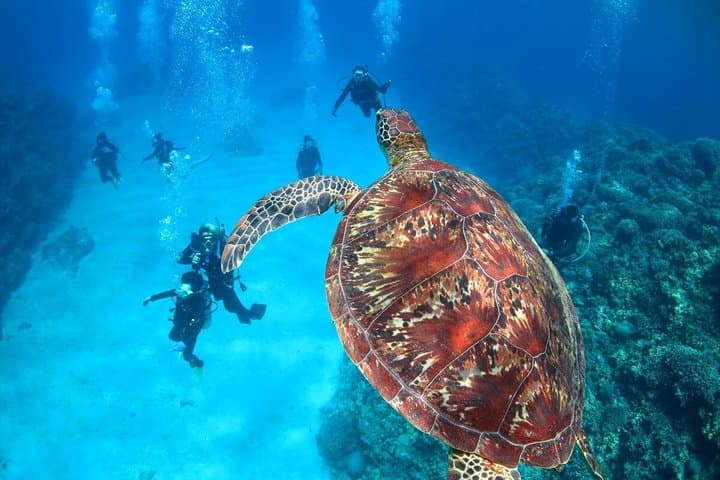
The waters around the Yaeyama Islands are home to diverse marine life. Around Iriomotejima, there is a chance of spotting manta rays and sea turtles while diving or snorkeling (Explore Iriomote-Ishigaki National Park). Haterumajima, Japan's southernmost inhabited island, is another place where you may see a reef manta ray, which can grow up to five metres from wingtip to wingtip. For a closer look at coral reefs and tropical fish without getting wet, take a glass-bottom boat tour at Kabira Bay on Ishigaki Island. Kabira Bay is known for its scenery and black pearl cultivation, and swimming is not permitted in the bay (Kabira Bay). Glass-bottom boat tours are available; for example, Kabira Marine Service lists a 30-minute glass boat ride at ¥1,200 (2022) (Kabira Marine Service). Check current prices before booking.
Day Trips to Iriomote and Taketomi Islands
Iriomote Island is about a 40–50 minute high-speed ferry ride from Ishigaki to Uehara Port (Pinaisara Falls Canoeing). The island is 90 percent jungle and home to about 100 Iriomote wildcats, a rare endemic species (Pinaisara Falls). Guided kayaking and trekking tours to Pinaisara Falls are a popular way to explore; the falls drop around 55 metres, the longest drop of any waterfall in Okinawa. Check with operators for tour prices and availability.
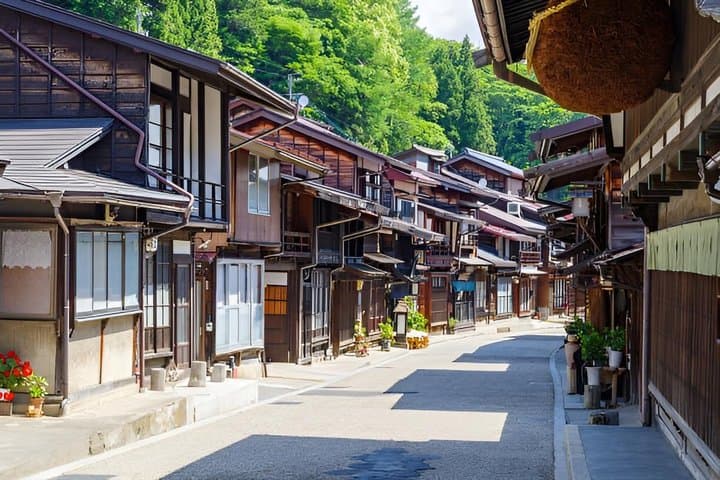
Taketomi Island is just 10–15 minutes by high-speed boat from Ishigaki (Taketomi Island). The island preserves a traditional Okinawan village with red-tiled roofs and stone walls. Renting a bicycle is a good way to get around, or you can take a 30-minute buffalo-cart tour through the village while your guide plays the sanshin.
Beaches and Snorkeling on Ishigaki
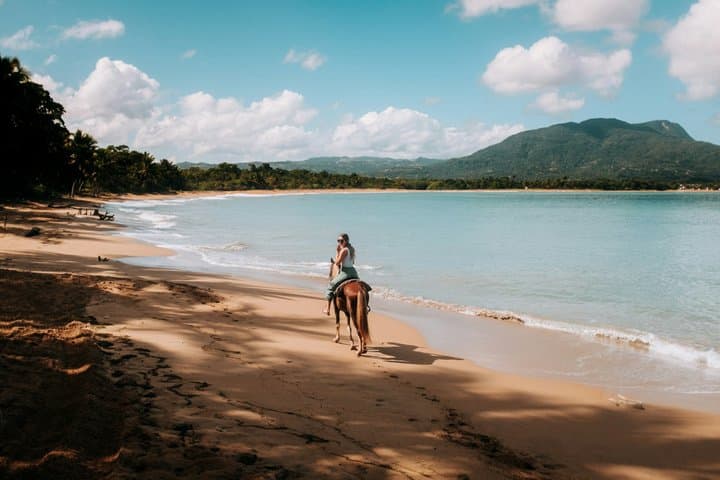
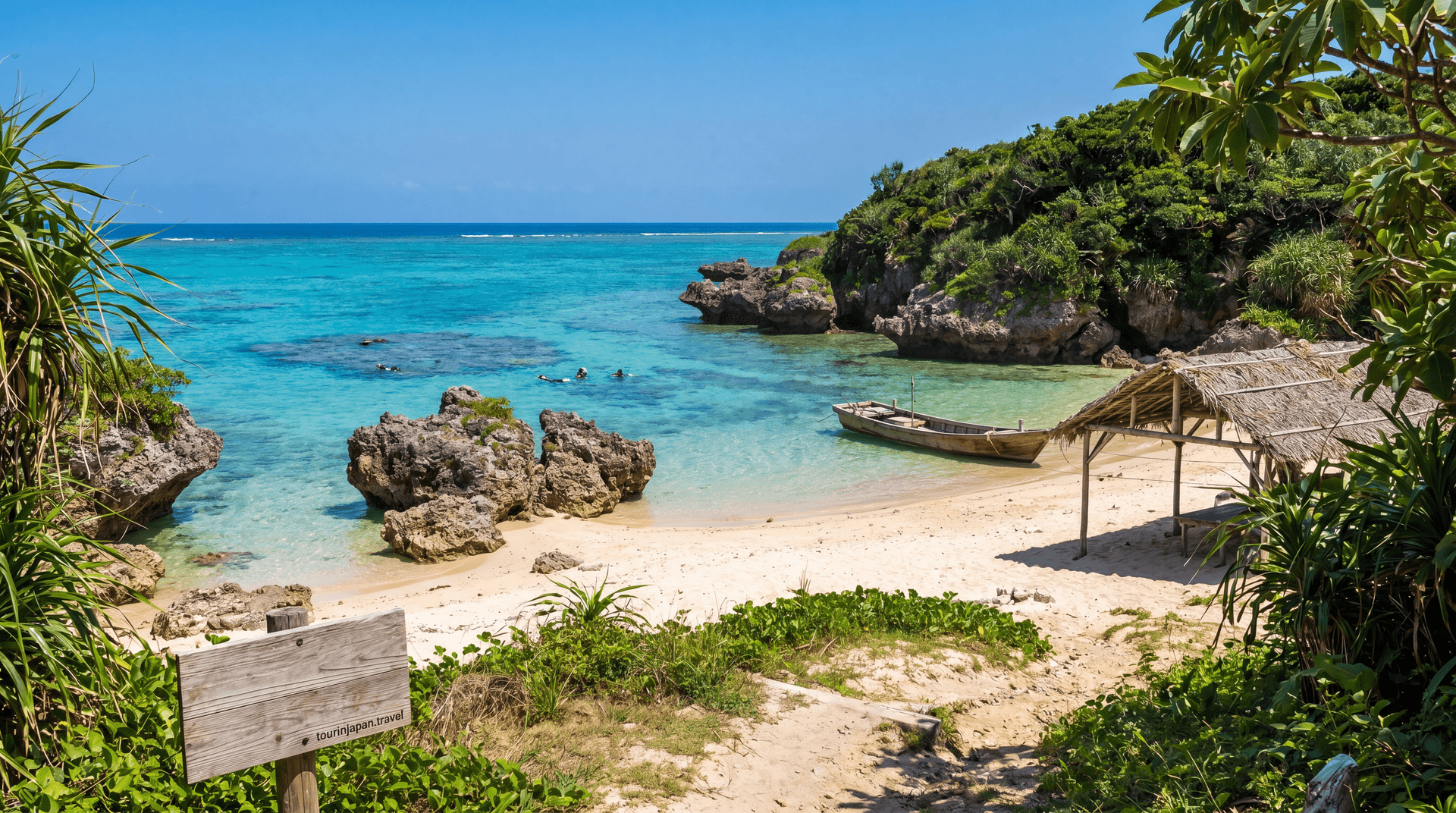
Shiraho, on the southeastern coast of Ishigaki, has a beach with over 70 different kinds of corals, including the oldest blue coral colony in the northern hemisphere. It is a good spot for diving and snorkeling, or you can view the fish and coral on a glass-bottom boat tour (Explore Iriomote-Ishigaki National Park). Yonehara is known for its Yaeyama palm trees, a Designated National Natural Monument, with boardwalks for observation. Be aware that jellyfish can be present in the summer months; beaches on Ishigaki have nets during this season (Yaeyama Islands).
Practical Information
- Flights: Direct flights from Tokyo, Osaka and Naha take 3–4 hours from Tokyo/Osaka and about 1 hour from Naha. New Ishigaki Airport (Painushima Ishigaki Airport) is the main transportation hub. (How to Get There)
- Getting around: Renting a car is recommended for exploring Ishigaki and the national park. Buses are available on Ishigaki Island, and ferries connect Ishigaki Port to other islands.
- Ferries: Anei Kanko operates ferries between Ishigaki and islands including Taketomi, Iriomote, Kohama, Kuro and Hateruma. Check current timetables and fares on their website. (Anei Kanko)
- Jellyfish: In summer months, beware of jellyfish; beaches on Ishigaki have nets during this season. (Yaeyama Islands)
Allow several days to explore Ishigaki and the surrounding islands. You can combine beach time and snorkeling on Ishigaki with day trips to Iriomote and Taketomi. New Ishigaki Airport connects directly to major mainland cities. Check current transport schedules and tour availability before you travel.
Getting there and around
New Ishigaki Airport (Painushima) takes direct flights from Tokyo and Osaka in three to four hours, and about an hour from Naha. From the airport, buses run to the city centre and to Kabira Bay, but they are infrequent and stop early.
Rent a car. Ishigaki's sights are spread around a coastline that takes about an hour to drive end to end, and the national park has no rail. Book ahead in Golden Week, Obon and the New Year period, when the island's fleet is fully allocated. Fuel stations are concentrated in the city, so fill up before heading north to Kabira.
Ferries leave Ishigaki Port for Taketomi in 10–15 minutes, Iriomote in 40–50, Kohama, Kuro and Hateruma. Anei Kanko publishes the timetable and fares. Buy a return and check the last boat back before you leave in the morning: missing it means an unplanned night.
What it costs
Item | Price | In USD | Note |
|---|---|---|---|
Kabira Bay glass-bottom boat | ¥1,200 in 2022 | ~$8 | Check the current fare at the operator's counter |
Kabira Bay swimming | Not permitted | — | Viewing and pearl cultivation only |
Taketomi high-speed boat | Set by operator | — | 10–15 minutes; check Anei Kanko |
Iriomote high-speed ferry | Set by operator | — | 40–50 minutes to Uehara Port |
Pinaisara Falls kayak and trek tour | Set by operator | — | Guided; book before you arrive |
Buffalo-cart tour, Taketomi | Set by operator | — | About 30 minutes with sanshin music |
Rental car, per day | Varies by season | — | Compact class is enough; book in peak weeks |
When to go
Period | Sea and weather | Crowds | Verdict |
|---|---|---|---|
January to February | Cool, windy, good visibility | Low | Cheap, and fine for hiking and driving |
March to May | Warming, calm sea | Moderate | Best all-round window |
June | Rainy season begins | Moderate | Wet but green and quiet |
July to August | Hot, jellyfish, netted beaches | High | Swim inside nets; book everything |
September | Typhoon peak | Low | Cheap and risky |
October to November | Warm, calm, clear | Moderate | Second-best window |
December | Cool, dry | Low | Good value, short days |
Beaches on Ishigaki put up nets in summer because of jellyfish. That is a real constraint on swimming, not a formality, and it applies to the popular beaches as well as the quiet ones.
Where to stay and eat
The city centre around Ishigaki Port is the practical base: ferries, restaurants and rental desks are all within walking distance. Kabira and the north coast have the views and almost no evening food. Shiraho in the southeast suits snorkellers who want to be near the reef.
Eat Ishigaki beef, which is the island's signature, and Yaeyama soba, a thicker, rounder noodle than mainland soba. Seafood is at its best in the port area, where the boats come in.
Common mistakes
- Not renting a car. Buses do not cover the national park well, and the beaches you came for are spread along the coast.
- Planning to swim at Kabira Bay. Swimming is not permitted. The bay is for glass-bottom boats and the view.
- Missing the last ferry. Timetables thin out in the afternoon, and an unplanned night on Iriomote is expensive.
- Ignoring jellyfish season. Nets go up for a reason between roughly June and September. Swim inside them, or snorkel from a boat.
- Day-tripping Iriomote. Forty to fifty minutes each way plus a guided tour is a full day. Give it a night rather than a morning.
Sources
- Explore Iriomote-Ishigaki National Park
- Yaeyama Islands tourism
- Anei Kanko ferries
- Kabira Marine Service
- JNTO: Okinawa
Verified 2026-10-26. Yen converted at ~¥157 = $1 (October 2026) where a figure appears.
Ready to explore Japan?
Browse tours and activities, or tell us what you're looking for and we'll suggest the best options.
Stay Connected in Japan
Airalo eSIMs work on arrival — no physical SIM needed. Data plans from $5 for 7 days.
Travel Insurance for Japan
Medical, trip cancellation, and adventure sports covered. Plans from $1.5/day.