
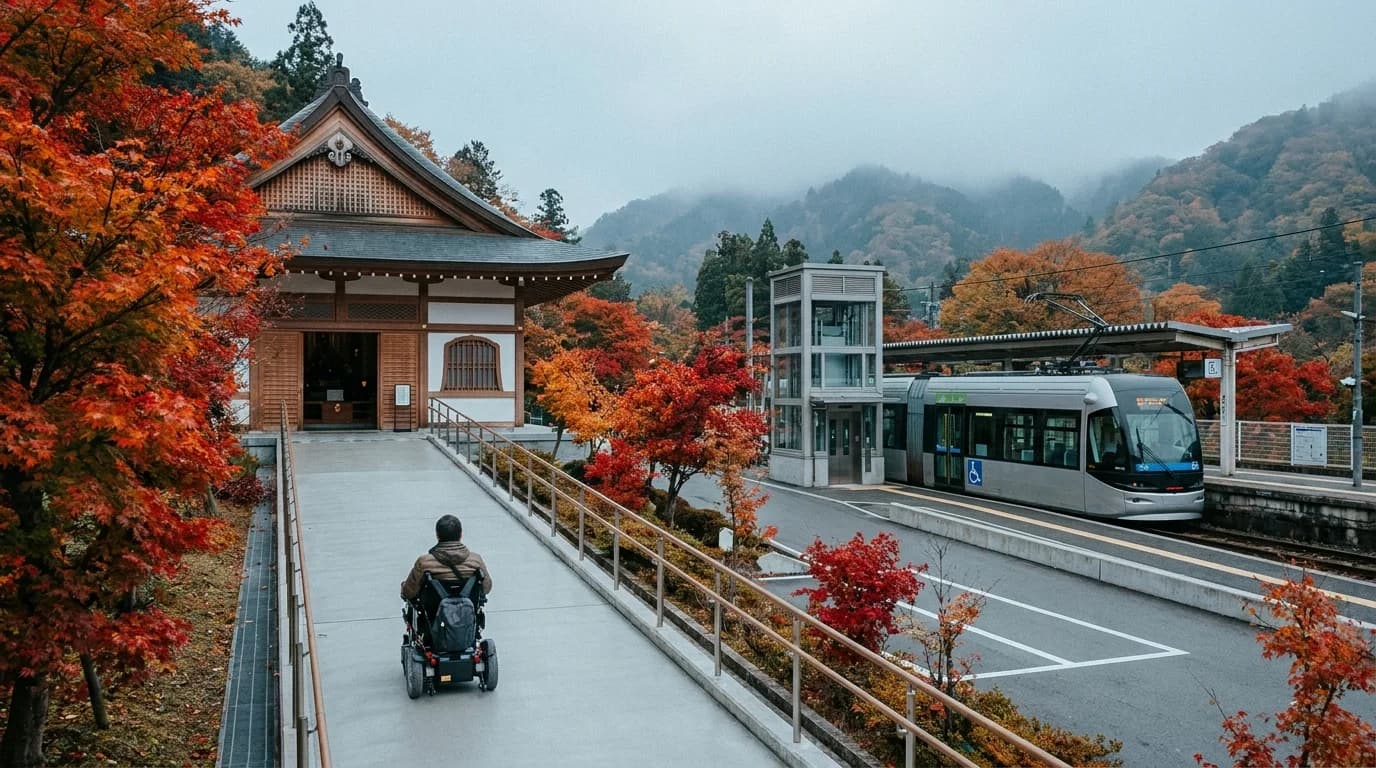
Accessible Travel in Japan: A Guide for Visitors with Disabilities
By Tour in Japan editors · Updated
Plan an accessible trip to Japan with our comprehensive guide. Discover wheelchair-friendly transportation, accessible accommodations, and resources for travelers with disabilities.
Japan has made significant strides in accessibility, particularly in preparation for the 2020 Tokyo Paralympics. While challenges remain, major cities and tourist destinations increasingly offer accessible facilities and services for travelers with disabilities. Understanding what to expect, how to plan, and what resources are available will help ensure a smooth and enjoyable visit. Japan's combination of modern infrastructure and traditional culture creates unique accessibility considerations that require advance preparation.
Accessible Transportation
Japan's public transportation system is increasingly accessible, though quality varies by location and mode. Major train lines in Tokyo, Osaka, and other large cities feature elevators, tactile paving, and priority seating. Many stations have wheelchair-accessible toilets and staff assistance available. Shinkansen (bullet trains) offer accessible seating and boarding assistance with advance notice.
Buses in major cities increasingly include wheelchair lifts and designated spaces. Taxis can be requested with wheelchair accessibility, though advance booking is essential. Rental cars with hand controls are available from major companies. Airports provide excellent accessibility with dedicated services, accessible restrooms, and clear signage throughout.
Accessible Accommodations
Japan offers various accessible accommodation options, though availability varies by location and price range. Major hotel chains typically have accessible rooms with wider doors, roll-in showers, and grab bars. Business hotels may have limited accessibility due to space constraints. Ryokan (traditional inns) present challenges due to tatami floors and futon beds, though some modern ryokan offer Western-style accessible rooms.
When booking, specify your accessibility needs clearly and request confirmation of specific features. Japanese hospitality (omotenashi) means staff will often go to extraordinary lengths to accommodate guests, but communication is key. Consider staying in larger cities where accessible options are more plentiful. Some specialized travel agencies focus on accessible Japan travel and can recommend appropriate accommodations.
Tourist Attractions and Accessibility
Major tourist attractions increasingly offer accessibility features, though traditional sites present inherent challenges. Many temples and shrines have accessible routes, though these may not provide the full experience. Modern museums and galleries typically offer excellent accessibility with elevators, accessible restrooms, and tactile exhibits. Theme parks like Tokyo Disney Resort provide comprehensive accessibility services.
Historic sites like castles and old towns present challenges due to stairs, uneven surfaces, and narrow passages. Some offer partial accessibility or alternative viewing areas. Research specific attractions before visiting and contact venues directly with questions. Many provide detailed accessibility information on their websites.
Resources and Assistance
Several organizations provide resources and assistance for accessible travel in Japan. The Japan Tourism Organization (JTO) offers accessibility information and can help with specific inquiries. Local tourist information offices often have accessibility details and can provide assistance. Some cities offer volunteer guide services for visitors with disabilities.
Apps and websites provide real-time accessibility information for transportation and facilities. Download accessibility apps before your trip and carry offline information. Consider hiring a local guide who understands accessibility needs and can help navigate challenges. Advance planning and flexibility are essential for successful accessible travel in Japan.
Cultural Considerations and Communication
Japanese people are generally helpful and accommodating to visitors with disabilities, though language barriers can complicate communication. Carry cards explaining your needs in Japanese, or use translation apps. Japanese hospitality means people will often try to help, sometimes more than you need—politely declining assistance is acceptable.
Be patient with accessibility challenges that may arise. Japan's approach to accessibility differs from Western countries in some ways, and solutions may not always match your expectations. Focus on what's possible rather than what's ideal, and you'll find Japan increasingly welcoming to travelers with diverse needs.
Stay Connected in Japan
Yesim eSIMs work on arrival — no physical SIM needed. Japan data plans from $5.