Seven days in Japan: Tokyo, Kyoto and Osaka itinerary
A seven-day first-trip route through Tokyo, Kyoto and Osaka, with a Nara day trip, Shinkansen travel, airport transfers, transport passes and key sights.
Affiliate link — we may earn a commission at no extra cost to you. Affiliate disclosure
Seven days in Japan: the short answer
Seven days is enough for a first trip if you keep the route simple: Tokyo, Kyoto, Osaka and a day trip to Nara. Fly into Tokyo (Narita or Haneda) and out of Kansai (KIX) if you can, so you do not backtrack. The plan below uses three days in Tokyo, two in Kyoto and two in Osaka, with one Shinkansen leg between Tokyo and Kyoto — the Tokaido Shinkansen takes about 2 hours 20 minutes from Tokyo to Kyoto Station (JNTO).
Before you go
Get an eSIM before you fly so you have data on arrival. Compare options in the Japan SIM and eSIM guide, or get an Airalo eSIM. Some links on this page are affiliate links: see the affiliate disclosure.
For costs, see the Japan trip budget. For travel insurance, see the Japan travel insurance guide.
Arrival and departure
Fly into Narita or Haneda and out of Kansai if possible. See Narita Airport to Tokyo, Haneda Airport to Tokyo, and Kansai Airport to Osaka.
From Kansai International Airport, trains run to JR Osaka Station (rapid service, about 65 minutes, ¥1,210), Nankai Namba Station (Rapi:t, 34–50 minutes, ¥1,450), Shin-Osaka Station (Haruka, 50 minutes, ¥2,910) and Kyoto Station (Haruka, 75 minutes, ¥3,430) (2026 fares) (JAL airport access). Fares and timetables change, so check the operator's site before you travel.
If you land late or have heavy bags, a private transfer can be simpler than trains: Kiwitaxi private transfer.
Route at a glance
Day | Base | Plan |
|---|---|---|
1 | Tokyo | Arrival, Shinjuku or Shibuya evening |
2 | Tokyo | Asakusa, Ueno, Akihabara |
3 | Tokyo | Tsukiji, Ginza, Roppongi |
4 | Kyoto | Shinkansen to Kyoto, Fushimi Inari, Gion |
5 | Kyoto | Arashiyama, Kinkaku-ji, Nijo-jo Castle |
6 | Osaka | Osaka Castle, Dotonbori, Umeda Sky Building |
7 | Osaka/KIX | Nara day trip or Osaka, then Kansai Airport |
Days 1-3: Tokyo
Day 1: Arrival and west Tokyo
If you land early, start with Shibuya Crossing, Harajuku and Meiji Shrine. If you arrive late, skip the sights and eat near your hotel in Shinjuku or Shibuya. Meiji Shrine, near Harajuku Station, celebrated its 100th anniversary in 2020 (GO TOKYO).
Day 2: Asakusa and Ueno
See Senso-ji in Asakusa — Tokyo's oldest temple, with Kaminarimon Gate and the Nakamise shopping avenue — then Tokyo Skytree, Ueno Park and Akihabara. These are all on the east side, so you can do them in one day without crossing the city.
Tokyo Skytree is 634 m tall, with observation decks at 350 m (Tembo Deck) and 450 m (Tembo Galleria). It is open 10:00–22:00 Monday to Friday and 9:00–22:00 at weekends and on holidays, with last entry 60 minutes before closing; hours change with the season (GO TOKYO).
Ueno Park has no admission fee and is open 5:00–23:00. The museums and other facilities inside generally open at 9:00 or 9:30, close between 16:00 and 17:30, and many are closed on Mondays. Ueno Zoo, Japan's oldest zoo, is home to over 2,500 animals from 300 species. Ueno Station is on the JR Yamanote Line, and the park is about five minutes on foot from the Park Exit (GO TOKYO).
Day 3: Central Tokyo
Go to Tsukiji Outer Market for breakfast — the inner market relocated to Toyosu, but the outer market still has food stalls, dried goods stores and restaurants — then Ginza for shopping, then an evening in Roppongi (GO TOKYO). If you want a timed digital-art museum, teamLab Planets TOKYO in Toyosu is one option; general admission is ¥3,200 (as listed in November 2025) and prices change with the season, so check the official site before booking (GO TOKYO).
Days 4-5: Kyoto
Day 4: Tokyo to Kyoto
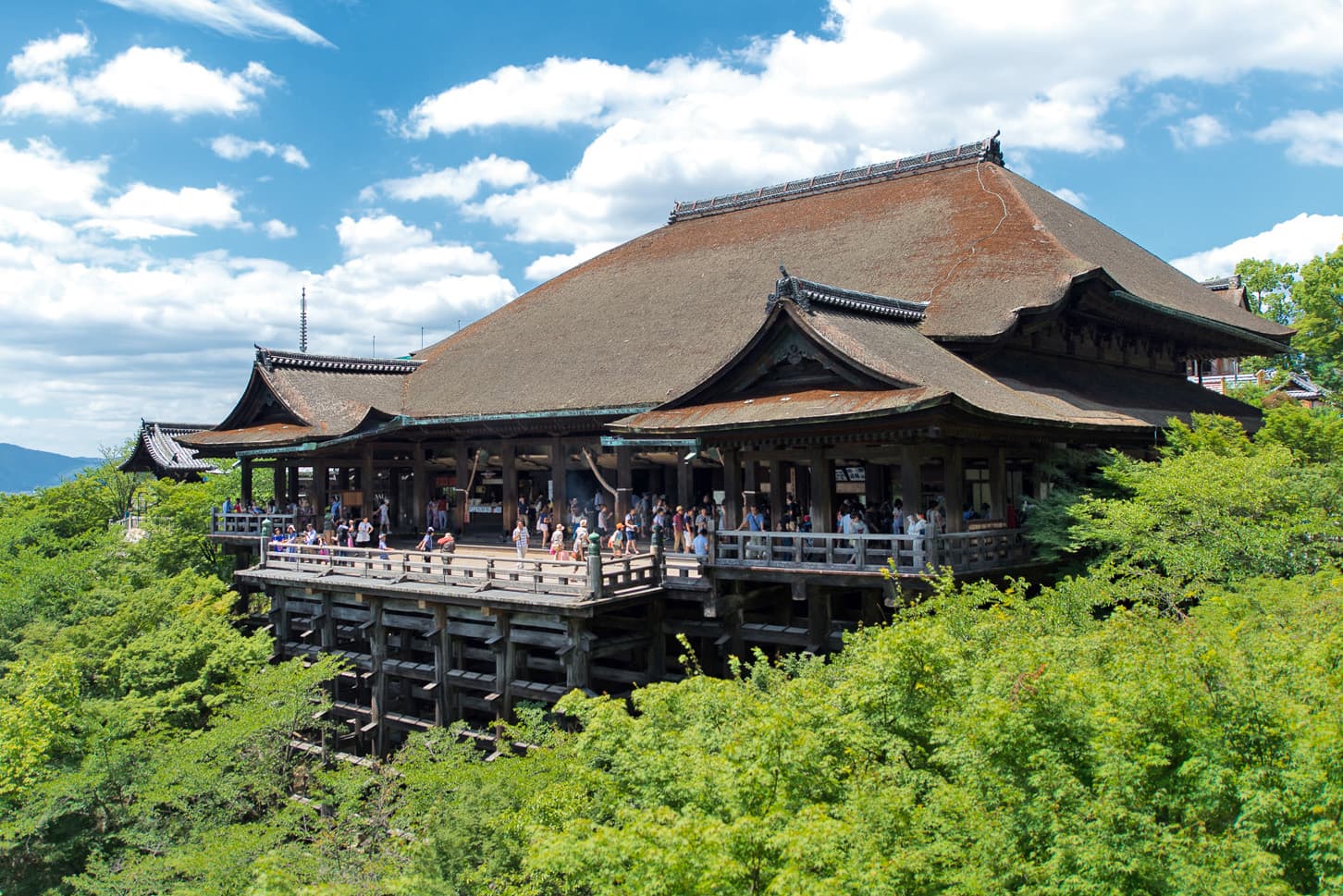
Take the Tokaido Shinkansen from Tokyo Station to Kyoto Station — about 2 hours 20 minutes (JNTO). Drop bags at your hotel or a coin locker. Visit Fushimi Inari early if you can, then Kiyomizu-dera and walk through Gion in the evening. Kiyomizu-dera's main hall sits on a large platform supported by an intricate network of pillars, built without nails, and it is extremely popular, so an early start is recommended (JNTO).
Day 5: Arashiyama and northwest Kyoto
Go to Arashiyama Bamboo Grove early, then Kinkaku-ji and Nijo-jo Castle. These sights are spread out; use buses and the subway with an IC card.
Nijo-jo Castle is open 8:45–16:00 (the castle closes at 17:00). Reception for the Ninomaru-goten Palace is 8:45–16:10, and the Honmaru-goten Palace requires an advance web reservation, with reception from 9:30 to 16:00. The castle is closed 29–31 December; the Ninomaru-goten Palace is also closed every Tuesday in January, July, August and December, plus 26–28 December and 1–3 January. Photography is not allowed inside either palace (Nijo-jo Castle official site).
Kyoto's old ¥700 one-day city bus pass is no longer sold; it was withdrawn to ease bus congestion. The replacement is the Subway & Bus 1-Day Pass at ¥1,100 (2026), which needs about five or more rides a day to pay off. A single city bus ride in the central zone is a flat ¥230 (2026). Otherwise tap an IC card. See how to use IC cards (WaTabi Kyoto transport guide).
Days 6-7: Osaka, Nara and departure
Day 6: Osaka
Visit Osaka Castle in the morning — the castle keep houses a museum, and the eighth-floor observation deck has panoramic views over the city. Then Dotonbori for food: grilled crab, takoyaki and the Glico sign on the bridge (JNTO). In the evening, head to the Umeda Sky Building for night views (JNTO).
For a guided option, see the Osaka food tour.
Day 7: Nara or Osaka, then KIX
Take a day trip to Nara if your flight is late. In Nara Park you can see the wild deer, and Todaiji Temple houses one of Japan's largest bronze Buddha statues, in the world's largest wooden building. Kasuga Taisha Shrine has around 3,000 stone lanterns lining the approach through primeval forest (JNTO).
See the Nara day trip guide or a Nara half-day walking tour. If your flight is earlier, stay in Osaka and go straight to Kansai Airport.
Transport and passes
Shinkansen and the JR Pass
The nationwide Japan Rail Pass is sold to foreign visitors travelling under temporary visitor status. It covers JR trains nationwide, including most Shinkansen services, but not the Nozomi or Mizuho trains on the Tokaido, Sanyo and Kyushu Shinkansen — you need to buy an additional ticket before boarding those (JNTO JR Pass guide).
Prices rise on 1 October 2026: the ordinary pass costs ¥53,000 for 7 days, ¥84,000 for 14 days and ¥105,000 for 21 days, with child fares (ages 6–11) at half. JNTO notes that for a limited time, buyers on the official Japan Rail Pass website can still get the pre-October prices; check the official site before buying (JNTO).
For this Tokyo–Kyoto–Osaka route, add up your point-to-point Shinkansen fares and compare them with the pass price before deciding. Reserved seats can be booked in advance when you buy on the official website (JAPAN RAIL PASS).
Local transport
In Tokyo, the Tokyo Subway Ticket gives 24 hours of unlimited travel on the Tokyo Metro and Toei Subway lines for ¥1,000, with 48-hour and 72-hour versions at ¥1,500 and ¥2,000 (as of March 2026) (JNTO). Elsewhere, use an IC card for subways, buses and convenience stores. See how to use IC cards.
Luggage
On the Tokaido, Sanyo and Kyushu Shinkansen, baggage with total dimensions between 161 cm and 250 cm needs a seat with an oversized baggage area, reserved when you buy your ticket. There is no extra charge for the reservation, but without one you will be charged a baggage fee of ¥1,000 including tax. Baggage over 250 cm cannot be brought on board (JR Central).
You can also forward bags between cities with a luggage delivery service. See luggage forwarding.
Where to stay
Tokyo: Shinjuku or Shibuya for west-side access and nightlife. Booking.com Tokyo hotels.
Kyoto: near Kyoto Station for Shinkansen access, or Gion/Higashiyama for atmosphere. Booking.com Kyoto hotels.
Osaka: Namba for food and nightlife, or Umeda for transport. See the Osaka destination guide.
Book early for cherry blossom and autumn. See the cherry blossom guide and autumn foliage guide.
Sources
- JNTO: The Kansai Trio — Kyoto, Nara and Osaka
- JNTO: Best of Japan's World Heritage
- JNTO: Golden Route
- JNTO: Japan Rail Pass guide
- JNTO: Price increases are coming to the nationwide Japan Rail Pass (2026)
- JAPAN RAIL PASS official site
- JR Central: Luggage information
- GO TOKYO: Tokyo itinerary plan for 5 days
- GO TOKYO: TOKYO SKYTREE
- GO TOKYO: Tokyo Metropolitan Ueno Park
- GO TOKYO: teamLab Planets TOKYO
- Nijo-jo Castle: opening hours and closed days
- WaTabi: How to get around Kyoto 2026
- JAL: Kansai International Airport, airport to city transportation
Ready to explore Japan?
Browse tours and activities, or tell us what you're looking for and we'll suggest the best options.
Stay Connected in Japan
Airalo eSIMs work on arrival — no physical SIM needed. Data plans from $5 for 7 days.
Travel Insurance for Japan
Medical, trip cancellation, and adventure sports covered. Plans from $1.5/day.