
8 photos — swipe or tap to expand
Kamakura Customized Private Tour by Car with Licensed Guide
This is the ideal tour for travelers wanting to discover Kamakura's highlights efficiently in a private vehicle accompanied by a government-licensed and experienced multilingual guide! Take a breath of fresh sea air when you visit Kamakura. Kamakura’s temples and shrines are known for beautiful gardens. View the ocean from the highest points of the temples and write your wish on an oyster shell. The over 11 meters tall Great Buddha is an icon of the area residing in Kotokuin Temple. After the
Operated and fulfilled by partner operators via Viator.
From
¥60,200
Booking opens on our partner's site, which handles payment, confirmation and support. We may earn a commission at no extra cost to you. Affiliate disclosure
Overview
- ✓This is the ideal tour for travelers wanting to discover Kamakura's highlights efficiently in a private vehicle accompanied by a government-licensed and experienced multilingual guide!
- ✓Take a breath of fresh sea air when you visit Kamakura.
- ✓Kamakura’s temples and shrines are known for beautiful gardens.
- ✓View the ocean from the highest points of the temples and write your wish on an oyster shell.
- ✓The over 11 meters tall Great Buddha is an icon of the area residing in Kotokuin Temple.
This is the ideal tour for travelers wanting to discover Kamakura's highlights efficiently in a private vehicle accompanied by a government-licensed and experienced multilingual guide! Take a breath of fresh sea air when you visit Kamakura. Kamakura’s temples and shrines are known for beautiful gardens. View the ocean from the highest points of the temples and write your wish on an oyster shell. The over 11 meters tall Great Buddha is an icon of the area residing in Kotokuin Temple. After the temples and shrines, stop by the old Komachi shopping street. Locals and tourists alike flock here. Try some Hatosabure, dove shaped biscuits, while you are there. Kamakura has much to offer and we hope to guide you soon! *Tour details may change due to traffic conditions. *Specific vehicle types are not available for request.
This is the ideal tour for travelers wanting to discover Kamakura's highlights efficiently in a private vehicle accompanied by a government-licensed and experienced multilingual guide! Take a breath of fresh sea air when you visit Kamakura. Kamakura’s temples and shrines are known for beautiful gardens. View the ocean from the highest points of the temples and write your wish on an oyster shell. The over 11 meters tall Great Buddha is an icon of the area residing in Kotokuin Temple. After the temples and shrines, stop by the old Komachi shopping street. Locals and tourists alike flock here. Try some Hatosabure, dove shaped biscuits, while you are there. Kamakura has much to offer and we hope to guide you soon! *Tour details may change due to traffic conditions. *Specific vehicle types are not available for request.
Travel Insurance for Japan
SafetyWing covers medical expenses, trip cancellation, and adventure activities. Plans from $1.5/day.
Stay Connected in Japan
Airalo eSIMs activate on arrival, no SIM swap needed. Data plans from $5.
Questions about this tour?
Have a question, want different dates, or need a private group? Send us an enquiry and we'll reply by email within 24 hours.
Prefer to book instantly? Use the Book This Experience button above — it opens our partner's checkout directly.
What’s Included
- ✓Private vehicle
- ✓Customizable Tour of your choice of 3-4 sites from 'What to expect' list'
- ✓Licensed Local English Speaking Guide
What’s NOT Included
- ✗Entrance fees, Lunch, and Other personal expenses
- ✗You cannot combine multiple tour groups.
- ✗Guide Entry fees are only covered for sights listed under What to Expect.
What to Bring
- •Wheelchair accessible
- •Infants and small children can ride in a pram or stroller
- •Service animals allowed
- •Public transportation options are available nearby
- •Specialized infant seats are available
- •Transportation options are wheelchair accessible
- •All areas and surfaces are wheelchair accessible
- •Suitable for all physical fitness levels
- •There are only a limited number of car seats and booster seats. Rear-facing car seats are not available. You must contact us directly if you need them.
Meeting and Pickup
🚐Hotel pickup included
27 pickup locations available
Pickup starts 10 min before departure
Your guide and driver will pick you up at your hotel in Kamakura or your preferred place around Kamakura station. Please use email for any communication before the tour. *We can only pick you up in Kamakura. There will be an additional charge if you want us to pick you up in Yokohama area
Good to know
- Guide languages
- English
- Book at least
- 2 day(s) before
- Children
- Must travel with an adult
- Ages
- Infant 0–5 · Child 6–11 · Adult 12–99
- Cancellation
- For a full refund, cancel at least 24 hours before the scheduled departure time.
Tour options
- Van (Up to 7 Pax): Van (Up to 7 Pax) Pickup included
- Regular Car (Up to 2 Pax): Regular Car (Up to 2 Pax) Pickup included
Itinerary
15 min
Hasedera (長谷寺) is a temple of the Jodo sect, famous for its eleven-headed statue of Kannon, the goddess of mercy. The 9.18 meter tall, gilded wooden statue is regarded as one of the largest wooden sculpture in Japan and can be viewed in the temple's main building, the Kannon-do Hall
1 h
The Great Buddha of Kamakura (鎌倉大仏, Kamakura Daibutsu) is a bronze statue of Amida Buddha, which stands on the grounds of Kotokuin Temple. With a height of 11.4 meters, it has long been the second tallest bronze Buddha statue in Japan, surpassed only by the statue in Nara's Todaiji Temple and some recent creations.
30 min
Kenchoji (建長寺, Kenchōji) is the number one of Kamakura's five great Zen temples. The oldest Zen temple in Kamakura, Kenchoji was founded by the ruling regent Hojo Tokiyori in 1253 during the Kencho Era after which it was named. Its first head priest was Rankei Doryu, a Zen priest from China. Although considerably smaller than during its heydays, Kenchoji still consists of a large number of temple buildings and subtemples, and stretches from the entrance gate at the bottom of the valley far into the forested hills behind. After passing through the Sanmon main gate, visitors will see Kenchoji's temple bell (Bonsho), designated a national treasure, on their right.
30 min
Hokokuji Temple is best known for the beautiful, small bamboo grove found behind the temple's main hall, which lies thick with over 2000 dark green bamboo stalks. A few narrow pathways lead through the bamboo to a tea house where, for a small fee, you can sit and enjoy a cup of matcha tea while enjoying views into the bamboo grove. Also located behind the temple are a series of shallow caves carved into the hillsides, which are believed to hold the ashes of some of the later Ashikaga lords.
15 min
The shrine is dedicated to Hachiman, the patron god of the Minamoto family and of the samurai in general. The deified spirits of the ancient Emperor Ojin who has been identified with Hachiman, Hime-gami and Empress Jingu are enshrined at Tsurugaoka Hachimangu Shrine.
45 min
Enoshima is divided into a yacht harbor accessible to motorized traffic and a forested hill which can only be explored on foot (and paid escalators) and contains most of the sights. Several shrine buildings, collectively known as Enoshima Shrine, are found around the island and are dedicated to Benten, a popular goddess of good fortune, wealth, music and knowledge. Benten is believed to have created Enoshima before subduing a five headed dragon that had been terrorizing the area.
15 min
Engakuji is one of the leading Zen temples in Eastern Japan and the number two of Kamakura's five great Zen temples. Engakuji was founded by the ruling regent Hojo Tokimune in the year 1282, one year after the second invasion attempt by the Mongols had been reverted. One purpose of the new temple was to pay respect to the fallen Japanese and Mongolian soldiers. Engakuji is built into the slopes of Kita-Kamakura's forested hills. The first main structure encountered upon entering the temple grounds is the Sanmon main gate, which dates from 1783. Behind it stands the temple's main hall, the Butsuden, which displays a wooden statue of the Shaka Buddha. The Butsuden was rebuilt relatively recently in 1964 after the former building was lost in an earthquake.
15 min
Meigetsuin Temple is a temple of the Rinzai Zen Sect founded in 1160 in Kamakura. It is also known as Ajisaidera ("Hydrangea Temple") because hydrangea bloom in abundance on the temple grounds during the rainy season around June. 95% of the hydrangea here are of the Hime Ajisai ("Princess Hydrangea") variety; they are thus named because of their pretty blue colors. The temple was originally a repose built by a son in memory of his father who had died in the struggle for power between the Taira and Minamoto clans in the late Heian Period. It later became part of a larger temple complex called Zenkoji, which was abolished during anti-Buddhist movements soon after the Meiji Restoration, leaving only Meigetsuin to remain as an individual temple today.
15 min
Ankokuronji(安国論寺) is one of several temples of the Nichiren sect of Japanese Buddhism along the hills in the southeast of Kamakura. Nichiren himself founded Ankokuronji around 1253 when he first came to Kamakura, and he is said to have lived at the temple for several years. Visitors can walk along a short hiking trail through the wooded hills around the temple buildings. A nice view of the city of Kamakura can be enjoyed underway. Some of the trail's passages are quite steep and should only be explored with good walking shoes and during dry weather.
15 min
Zeniarai Benten Shrine(銭洗弁天) is a popular shrine in western Kamakura, which people visit to wash their money (zeniarai means "coin washing"). It is said that money washed in the shrine's spring, will double. Minamoto Yoritomo, the founder of the Kamakura government, ordered the shrine's construction after a god appeared in his dream and recommended him to build the shrine in order to bring peace to the country. Because the dream occurred on the day of the snake, in the month of the snake of the year of the snake, the shrine was later also dedicated to Benten, a Buddhist goddess associated with snakes.
15 min
Jomyoji Temple (浄妙寺, Jōmyōji) is a Zen temple in the hills of eastern Kamakura. Ranked fifth among the five great Zen temples of Kamakura, Jomyoji was founded by the influential Ashikaga family and at its peak was made up of seven buildings and several pagodas. Over the centuries, however, many of the structures were destroyed by fire, and only its historic main hall, reception hall, main gate and warehouse remain today. The main hall sits at the end of a garden and houses a statue of Shaka Nyorai, the historical Buddha. Jomyoji Temple also has a restored teahouse where visitors can sit and enjoy a cup of tea for a small fee while enjoying the view of a nice dry garden. On the hillside behind the main hall is the temple's spacious cemetery, while a path leads up the hill to a small western-style restaurant. The restaurant is operated by the temple and offers good views out over Kamakura from its patio.
15 min
Zuisenji (瑞泉寺) is a beautiful Zen temple in the far east of Kamakura, in the back of a narrow valley and surrounded by wooded hills. It is a branch temple of the Engakuji Temple. Zuisenji was founded by Muso Kokushi, a leading Zen master of his time and one of Japan's most famous garden designers. The temple is known for its pure Zen rock garden behind the temple's main hall, designed by Muso himself. The temple furthermore attracts with its many flowers and blooming trees in the other parts of the temple grounds, including a large number of plum trees.
15 min
Myohonji (妙本寺, Myōhonji) is one of several temples of the Nichiren sect of Japanese Buddhism along the southeastern hills of Kamakura. The temple was founded by Hiki Yoshimoto in 1260, and features a statue of Nichiren to the left of the main hall. The temple is connected via the Gionyama hiking trail with some other nearby temples and a shrine. It leads through the wooded hills of Kamakura, and should be explored only with good walking shoes and during dry weather, because there are a few steep and rough passages.
15 min
Jochiji (浄智寺, Jōchiji) is the number four of Kamakura's five great Zen temples. It is a branch temple of the Engakuji school of the Rinzai sect of Zen Buddhism. Its head temple, the Engakuji Temple, stands just a few hundred meters away on the opposite side of the railway tracks. Jochiji was founded in 1283 by members of the ruling Hojo family on the occasion of the premature death of a son. Once a large temple complex with many buildings and subtemples, Jochiji is now small and calm. In its main hall, the Dongeden, the temple's main object of worship, a Buddhist trinity of the Amida Buddha, Shaka Buddha and Miroku Buddha, is displayed.
15 min
Tokeiji (東慶寺, Tōkeiji) is a small branch temple of the Engakuji school within the Rinzai sect of Zen Buddhism. Its head temple, the Engakuji Temple, stands just a few hundred meters away on the opposite side of the railway tracks. Tokeiji was founded by the wife of the regent Hojo Tokimune in 1285 after Tokimune had died at a young age. Until the end of the Edo Period, the temple served as a shelter for women who suffered abuse by their husbands and sought a divorce. An official divorce could be attained by staying at the temple for three years.
15 min
Jufukuji Temple (寿福寺) is the number three of Kamakura's five great Zen temples. It is a branch temple of the Rinzai sect's Kenchoji school. Jufukuji was established by the order of Minamoto Yoritomo's wife Masako after her husband had passed away. Its founding priest was none other than Eisai, the man responsible for introducing Zen Buddhism into Japan. Besides the often photographed pathway that leads towards the temple, Jufukuji is not open to the public.
15 min
Eisho-ji Temple (英勝寺) is the only surviving nunnery in Kamakura, located near Tsurugaoka Hachimangu. Founded in the early Edo period by a woman connected to the Tokugawa family, it’s known as a “flower temple” for its seasonal blooms. Visitors can enjoy a peaceful bamboo grove and a graceful Amida Buddha statue said to be by the famous sculptor Unkei. The quiet atmosphere makes it a hidden gem worth visiting.
Send a Booking Enquiry
Tell us about your preferred dates and group size and we'll confirm availability and answer any questions — usually within 24 hours.
Before you book
More Experiences in Kanagawa
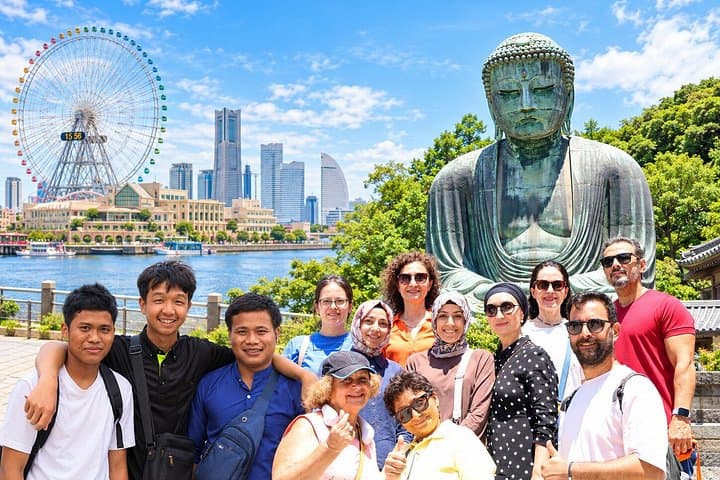
Kamakura & Yokohama Private Tour: Boat, Air Cabin & Local Guide
Discover two sides of Kanagawa in one day on a private, customizable tour combining historic Kamakura with modern Yokohama. Start at Kamakura Station and visit 2 to 3 attractions based on your interests, such as Tsurugaoka Hachimangu, the Great Buddha, Hasedera, Hokokuji, or Kenchoji. Your English-speaking Japanese local guide will share history, culture, local customs, and everyday perspectives to help you understand each place more deeply. Then travel by train to Yokohama and explore the wa
From ¥22,630
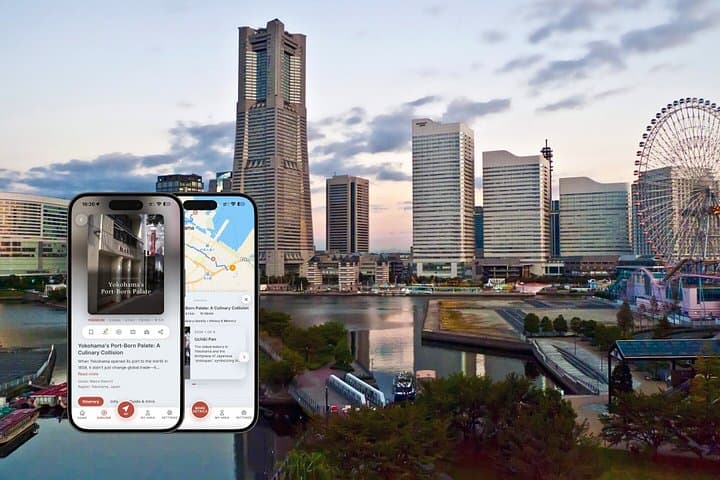
Podcast Tour Yokohamas Port Born Palate a Culinary Collision
When Yokohama opened its port to the world in 1859, it didn't just change global trade—it fundamentally rewired the Japanese palate. Join a former chef and a culinary historian on a sensory journey through the streets of Yokohama. Trace the evolution of Japanese food from the first bites of Western bread, through the Chinese origins of ramen, to post-war survival dishes and the global triumph of instant noodles. This is a story of cultural collision, resilience, and the people who cooked their w
From ¥1,070
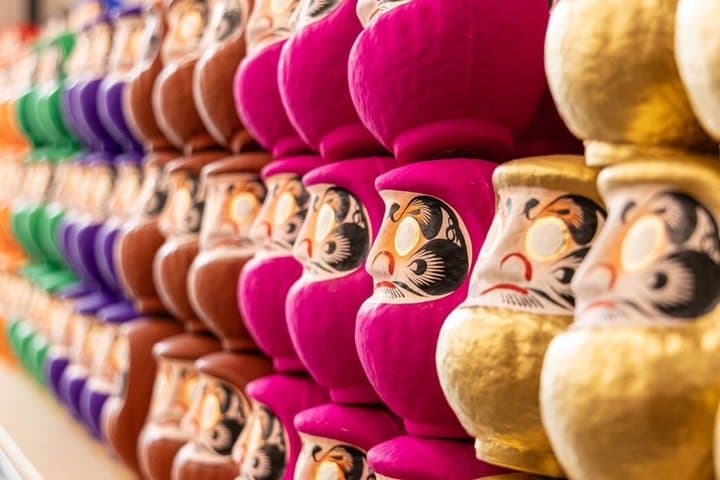
Kamakura Daruma Doll Painting Workshop
Create a personal souvenir of Kamakura by painting your own daruma doll at DARUMA LAB.KAMAKURA, near Tsurugaoka Hachimangu Shrine. Choose your favorite colors and patterns to make a design that is uniquely yours. All paints and tools are provided, so you can arrive empty-handed and enjoy 60–90 minutes of creativity. Take your finished daruma home the same day. Staff assist in Japanese and use translation tools for English communication.
From ¥6,000
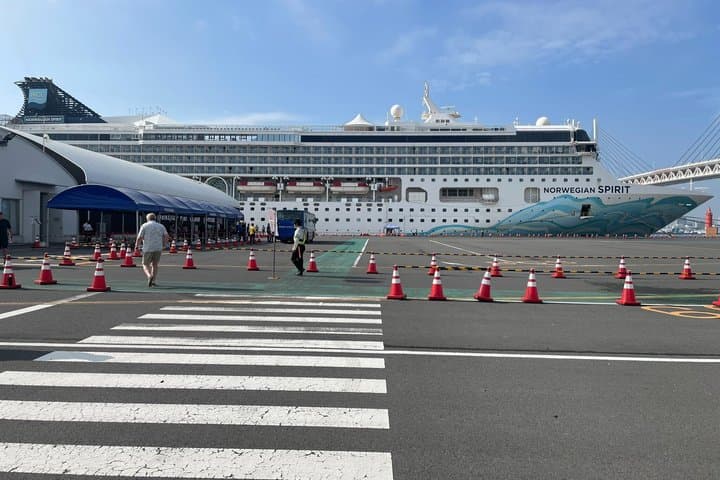
Family Friendly Tokyo Tour from Yokohama
Experience the vibrant culture and iconic attractions of Tokyo on this family-friendly private tour. Over eight hours, explore highlights like Asakusa's Senso-ji Temple, the Imperial Palace, and Shibuya's bustling streets. Cruise passengers will enjoy the convenience of leaving their luggage at their Yokohama hotel or ship, making for a hassle-free day of sightseeing. With a licensed guide, learn about Tokyo's history while capturing memorable photos, and customize your itinerary to suit your fa
From ¥40,000
Booking opens on our partner's site · we may earn a commission at no extra cost to you
From
¥60,200