
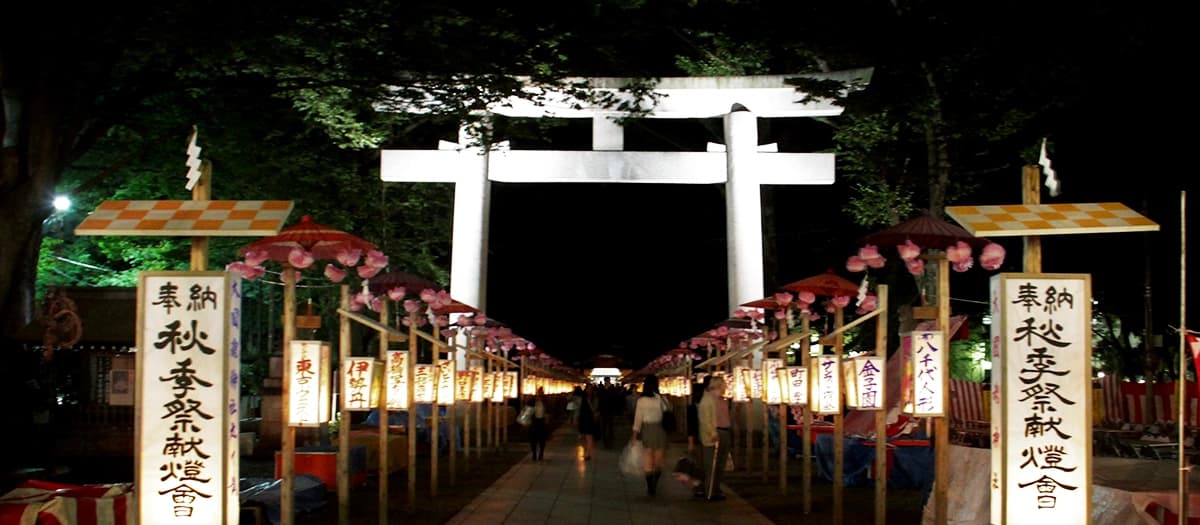
Okunitama-jinja Shrine Chestnut Festival (Autumn Festival)
About the Event
As autumn settles over Tokyo, the grounds of Okunitama‑jinja Shrine glow with the soft amber of 260 hand‑drawn paper lanterns, each a quiet prayer flickering against the night sky. Originating in 1737, the festival blends the solemn rhythm of sacred kagura dances with the sweet scent of roasted chestnuts, a tribute to the Musashino region’s prized harvest that once graced the tables of the Tokugawa shogunate.
Highlights
- Traditional kagura performances that echo the shrine’s Edo‑era heritage, featuring masks, drums, and chants that have been passed down for centuries.
- Over two hundred lanterns illuminated after dusk, each a canvas for visitors to sketch wishes or seasonal motifs.
- Freshly roasted chestnuts sold from stalls, offering a taste of the historic delicacy once presented as tribute to the shogun.
- Historical reenactments that trace the festival’s evolution from a 1737 shrine celebration to its modern Chestnut Festival identity.
- Opportunity to purchase handcrafted amulets and paper lanterns, supporting local artisans who keep the tradition alive.
Practical Information
Dates: Sunday 27 September 2026 – Monday 28 September 2026 (both days, evening program)
Venue: Okunitama‑jinja Shrine, Musashino area, Tokyo
Price: Admission is free; food, souvenirs, and special performances may have separate fees—check the official page for the latest details.
Location: Accessible via Musashino‑Koshi Station (JR Chuo Line) or a short bus ride from Kichijōji. The shrine’s main entrance opens onto a spacious courtyard where the lanterns are displayed.
Official page: Okunitama‑jinja Chestnut Festival
Good to Know
Arrive early in the evening to secure a good viewing spot for the lantern illumination; the pathways can become crowded after dark. Dress warmly—September evenings in Tokyo are crisp, and the shrine’s open-air setting means temperatures can drop quickly once the lanterns are lit.
While the festival is free, many of the food stalls accept cash only, so bring a modest amount of yen for chestnuts and snacks. For those interested in the cultural background, a short pamphlet is available at the shrine’s information desk, offering deeper insight into the kagura dance’s symbolism and the historic chestnut trade.