
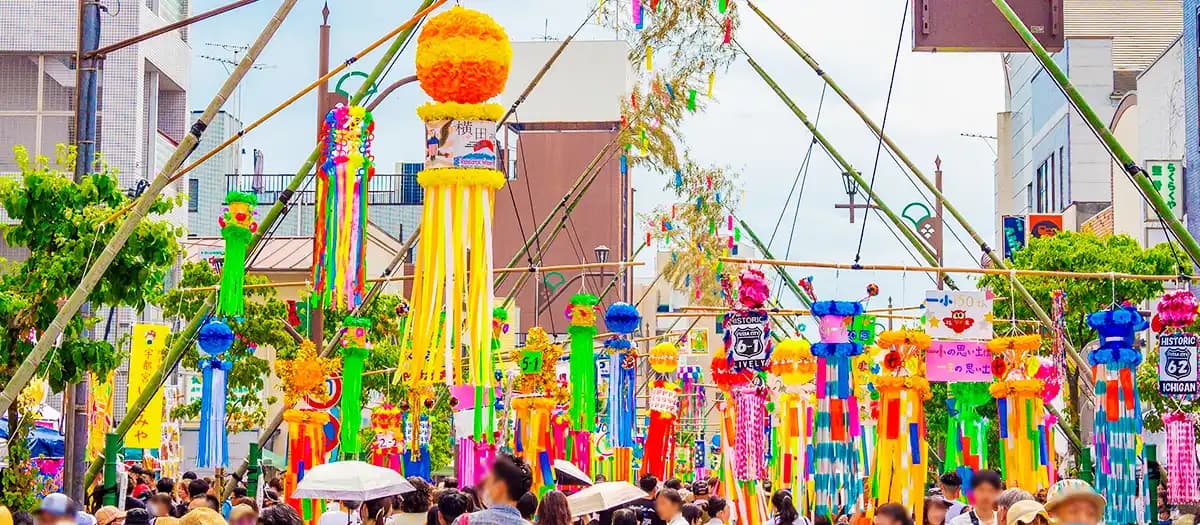
76th Fussa Tanabata Matsuri (Star Festival)
About the Event
The 76th Fussa Tanabata Matsuri lights up the summer nights of western Tokyo with a dazzling parade of colorful streamers, traditional music, and lantern‑lit streets. Since its humble beginnings in 1951, the festival has grown into a beloved neighborhood institution that draws more than 400,000 visitors each year. Experience the ancient star‑wishing tradition while strolling through lively stalls and community performances that showcase the spirit of Fussa.
Highlights
- Massive tanzaku decorations stretched across main avenues, each bearing handwritten wishes for love, health, and success.
- Nighttime lantern procession that transforms the city center into a river of soft, glowing light.
- Traditional dance and taiko drumming stages hosted by local cultural groups, offering a rhythmic glimpse into Japanese heritage.
- Food stalls serving seasonal treats such as yakisoba, takoyaki, and shaved ice flavored with summer fruits.
- Family‑friendly games and craft corners where children can create their own paper ornaments to hang on the streamers.
Practical Information
Dates: Friday 7 August 2026 – Sunday 9 August 2026 (all days open from early afternoon until late night)
Venue: Main streets and public squares of Fussa City, Tokyo (exact locations announced on the official page)
Price: Free admission; some specialty food and souvenir stalls charge individually. Check the official page for any special event fees.
Location: Fussa, a suburban city in western Tokyo, easily reachable by JR Itsukaichi Line (Fussa Station) or by bus from central Tokyo.
Official page: Tokyo Travel Guide – Fussa Tanabata Matsuri
Good to Know
Arrive early on the first day to secure a good viewing spot along the main parade route, especially if you plan to watch the lantern procession after sunset. Public transport runs extra services during the festival, but stations can become crowded, so allow extra travel time.
Most food stalls accept cash only, and some popular items sell out quickly, so bring enough yen and be prepared to explore multiple vendors. For a deeper cultural experience, try writing your wish on a tanzaku at one of the community booths—many locals are happy to help with translations.