
Zazen Meditation Classes in Japan: Where to Sit With Monks
By Tour in Japan editors · Updated
Zazen Zen meditation is practiced at temples across Japan and open to visitors. Find out where to join a morning sitting session, what to expect, and how to prepare.
Sitting zazen — the foundational meditation practice of Zen Buddhism — in a Japanese temple is one of the most direct ways to encounter the living tradition that shaped so much of Japanese art, architecture, garden design, and daily practice. Zazen is not mindfulness in the contemporary sense; it is a specific posture and method of mind cultivation developed by Dogen Zenji in the 13th century and practiced in essentially unchanged form in Soto Zen temples throughout Japan today. Many temples welcome non-Buddhist visitors to join their regular zazen sessions, which typically take place in the early morning and last 30 minutes to one hour. No prior experience, religious affiliation, or equipment is required. The experience is austere, occasionally physically challenging, and genuinely affecting.
What to Expect in a Zazen Session
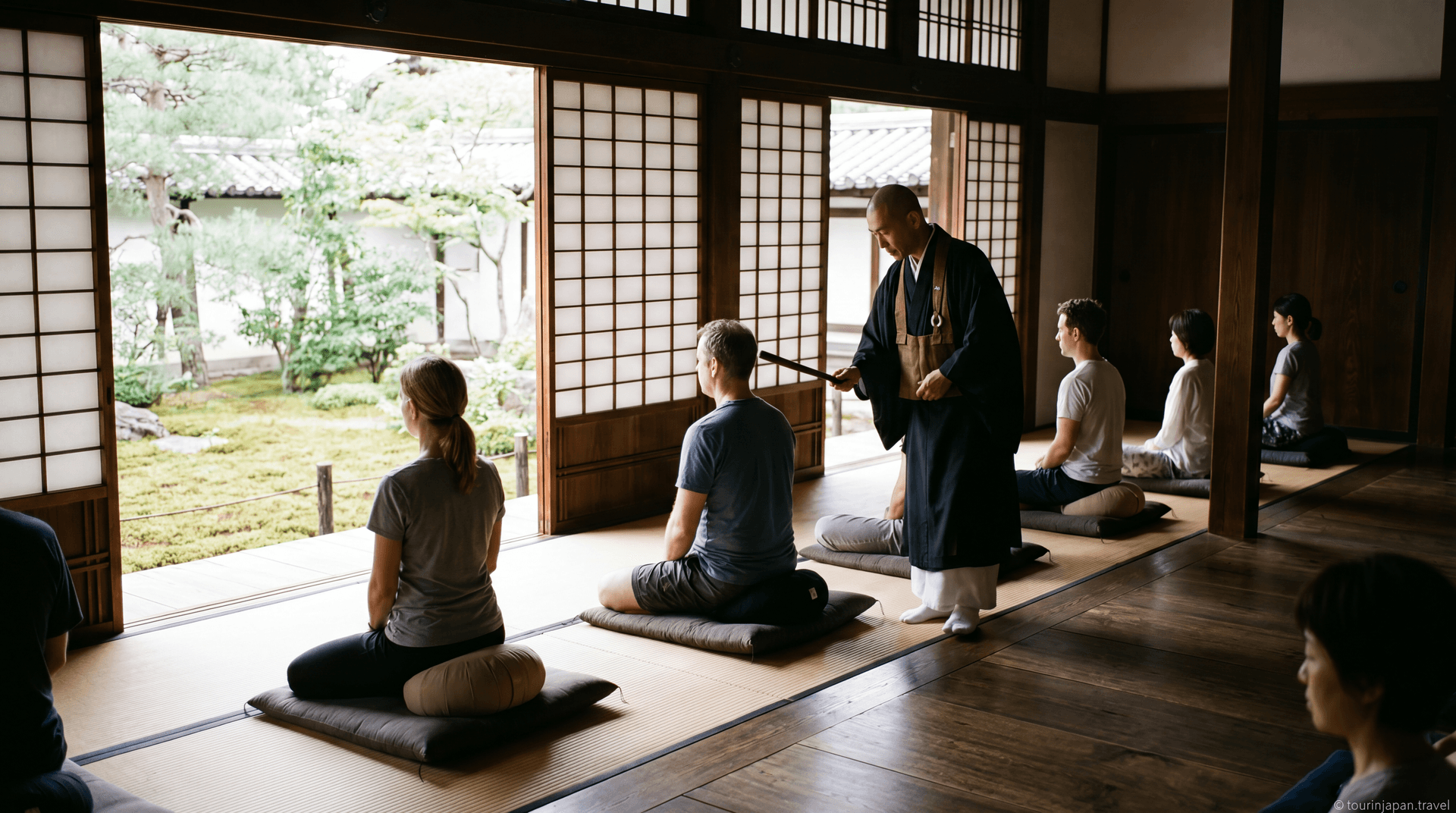
Participants sit on a round cushion called a zafu atop a flat mat (zabuton) in a specific cross-legged posture — full lotus, half lotus, or Burmese position — facing the wall. The back is straight, the hands form a specific oval mudra in the lap, and the eyes are cast slightly downward at a 45-degree angle, neither fully closed nor looking ahead. The instruction in Soto Zen is simply to sit and be aware, without attempting to control or follow thoughts. Periods of sitting zazen (kinhin) alternate with periods of slow walking meditation.
The kyosaku — a flat wooden stick — may be used by the monitoring monk to strike practitioners on the shoulders. This is not punishment but a stimulating wake-up, and you can request it by placing your palms together when the monk passes. The sound of the stick striking the wooden floors and other participants' shoulders, interspersed with silence, is part of the atmosphere of a zazen hall.
Best Temples for Zazen Experiences
- Engaku-ji (Kamakura): One of Japan's great Rinzai Zen temples holds weekly zazen sessions on Sunday mornings. No reservation required. Donation basis. Extremely atmospheric setting.
- Kencho-ji (Kamakura): Regular Friday evening zazen open to the public at Japan's oldest Zen training temple. 500 yen participation fee.
- Eiheiji Temple (Fukui): Soto Zen headquarters, one of Japan's most important monasteries. Intensive overnight zazen programs available — book well in advance. A genuine monastic experience.
- Daitoku-ji (Kyoto): Various sub-temples within this large complex run zazen mornings. Daisen-in is particularly welcoming of foreign visitors.
- Soji-ji (Tsurumi, Yokohama): Second headquarters of Soto Zen in Japan. Sunday morning zazen sessions open to public with English instruction available on request.
- Ryoan-ji (Kyoto): Early morning zazen before the temple opens to tourists. The famous rock garden as your meditation object — transformative.
Practical Preparation
Wear loose, comfortable clothing that allows you to sit cross-legged. Layers are advisable as temple meditation halls can be cold, especially in winter mornings. Arrive 10 to 15 minutes early to receive instruction on posture and etiquette. Leave your phone in your bag — complete silence is required. Most temples ask that you do not eat immediately before sitting. The cross-legged posture can become uncomfortable after 20 to 30 minutes if you are not accustomed to it; stretching beforehand helps. Do not be discouraged if your mind wanders constantly — this is the universal experience of beginners and is explicitly addressed in Zen teaching.
For a deeper commitment, several temples offer longer temple stay (shukubo) programs of 2 to 7 days that include multiple zazen periods daily, monastic meals, work practice, and lectures. Koyasan on the Kinki Pilgrim Route and Eiheiji in Fukui are the most established programs for international visitors. These experiences typically cost 8,000 to 15,000 yen per night including meals and represent some of the most profound travel experiences available in Japan.
Stay Connected in Japan
Yesim eSIMs work on arrival — no physical SIM needed. Japan data plans from $5.