
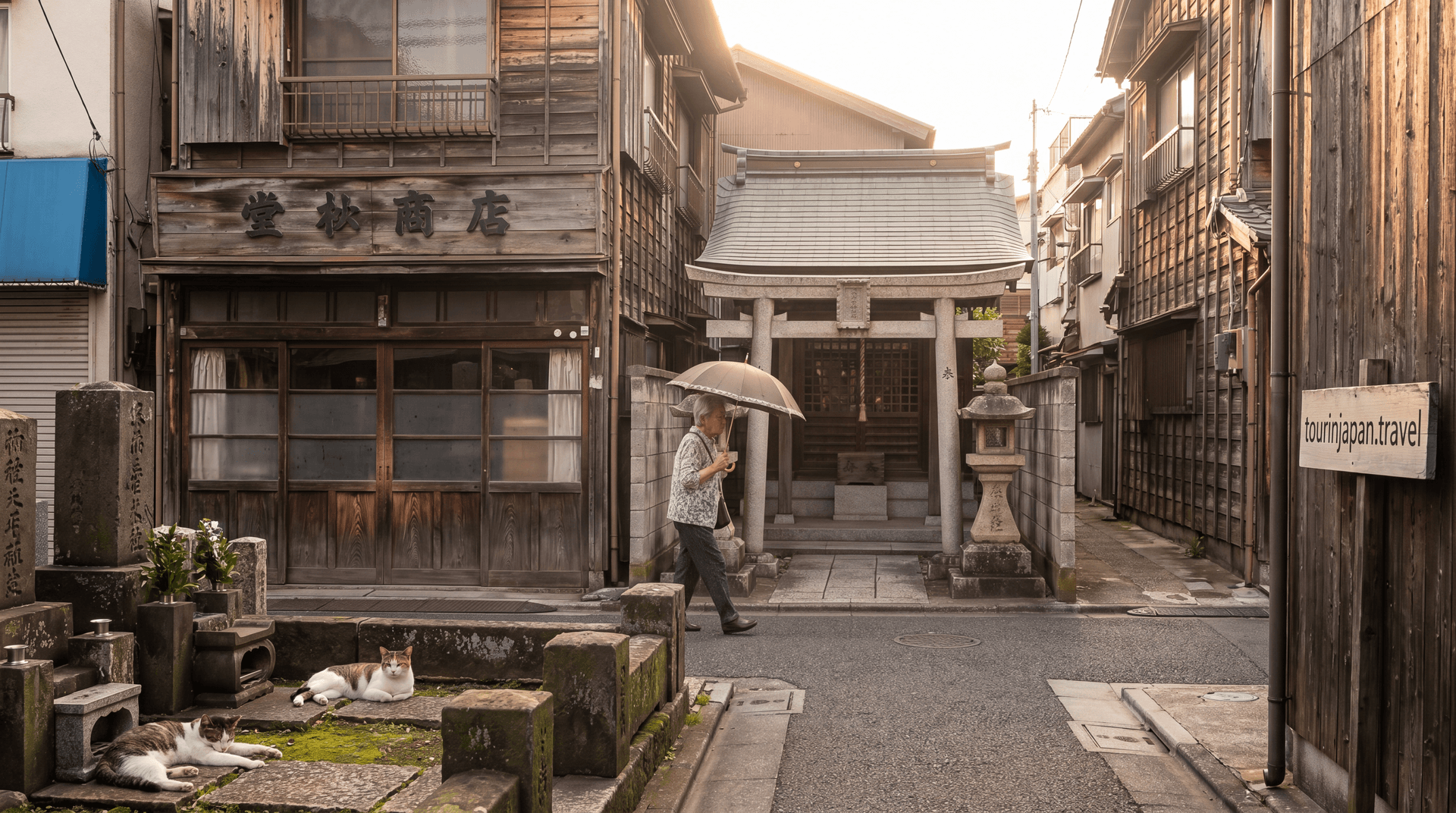
Yanaka: Walking Tokyo's Last Edo-Era Village
By Tour in Japan editors · Updated
Yanaka survived both the 1923 earthquake and World War II firebombing, leaving a neighbourhood of wooden temples, traditional craft shops, and cat-haunted cemeteries unchanged since the Edo period.
Yanaka is the Tokyo that survived. Most of the city was destroyed in the 1923 Great Kanto Earthquake and rebuilt, then destroyed again in the 1945 Allied firebombing raids, and rebuilt again into the modern city. Yanaka was spared both times, and the result is a neighborhood that preserves the street pattern, temple density, and low wooden building scale of Edo-period Tokyo. Walking Yanaka means entering a place where a hundred temples and shrines occupy a square kilometer, where craftspeople work in shops their grandparents opened, and where cats consider the cemetery their personal domain. It is ten minutes from Ueno and feels like another century.
Yanaka Ginza: The Showa Shopping Street
Yanaka Ginza is a 170-meter covered shopping street that has operated continuously since the postwar reconstruction era. Its sixty-odd shops sell traditional sweets, handmade accessories, fresh tofu, freshly grilled senbei rice crackers, and craftwork. The approach from Nippori Station descends through the Yuyake Dandan sunset stairs, a beloved local landmark from which the view west at dusk turns the whole horizon orange over the Tokyo skyline. The shopping street is busiest on weekends but the most atmospheric on a quiet weekday morning.
Look for Kayaba Coffee, a Taisho-era wooden building that operated as a coffee shop from 1938 to 2006 and has been restored to original condition. It now serves coffee and toast in the morning and wine in the evenings. Queue if necessary; it is worth it.
Yanaka Cemetery and Temple District
Yanaka Cemetery, established in 1874, contains the graves of the Tokugawa shogunate family and numerous Meiji-era literary figures. It is also home to dozens of semi-feral cats who live among the headstones and regard visitors with aristocratic indifference. The cemetery's main avenue is lined with cherry trees that make it one of Tokyo's most atmospheric hanami spots in late March. Entry is free and it is open at all hours.
The surrounding streets contain over 70 temples in a one-kilometer radius. Tenno-ji, at the cemetery's edge, is an eighth-century foundation with a large bronze Buddha. Nanzo-in at Setagaya preserves ancient scrolls. Most temples have free outer precincts and charge 200 to 500 yen for inner gardens or treasure houses. No single temple here is world famous, but the cumulative density of old spiritual places is extraordinary.
The Yanesen Triangle: Yanaka, Nezu, Sendagi
Yanaka blends into two neighboring districts, Nezu and Sendagi, collectively called Yanesen. Together they form the largest surviving low-rise traditional urban area in Tokyo. Nezu Shrine, with a small version of Fushimi Inari's torii tunnel gates, is postcard-worthy in April when azalea bushes bloom across the hillside behind it. Sendagi has the best concentration of independent art galleries and antique dealers. Walking the full triangle takes two to three hours at a leisurely pace.
- Getting there: Nippori Station (JR Yamanote Line) or Yanaka Station (Tokyo Metro Chiyoda Line)
- Yanaka Ginza: open daily from about 10 AM, most shops close around 6 PM
- Kayaba Coffee: 10 AM to 6 PM Wednesday to Sunday, cash only, morning toast set 600 yen
- Yanaka Cemetery: free, open always, best in late March for cherry blossoms
- Nezu Shrine: free, mini torii tunnel path, azalea festival late April to mid-May (500 yen during festival)
- Scai the Bathhouse: contemporary art gallery in a 200-year-old sentobuilding, free entry
- Combine with Ueno (15 minutes walk) for museums and Ameya-Yokocho market on the same day
Half a day is enough for a focused Yanaka visit; a full day for the complete Yanesen triangle with time for coffee and lingering in antique shops. The neighborhood is free to explore and spending is entirely optional, making it one of Tokyo's best low-budget activities. Go on a weekday morning for the most peaceful experience.
Stay Connected in Japan
Yesim eSIMs work on arrival — no physical SIM needed. Japan data plans from $5.