
Yamagata Prefecture: Mountain Temples, Hot Springs, and Cherry Blossom Fields
By Tour in Japan editors · Updated
Yamagata combines cliff-hanging temples, Japan's finest hot spring villages, summer festivals, and cherry blossom mountains into one extraordinary prefecture.
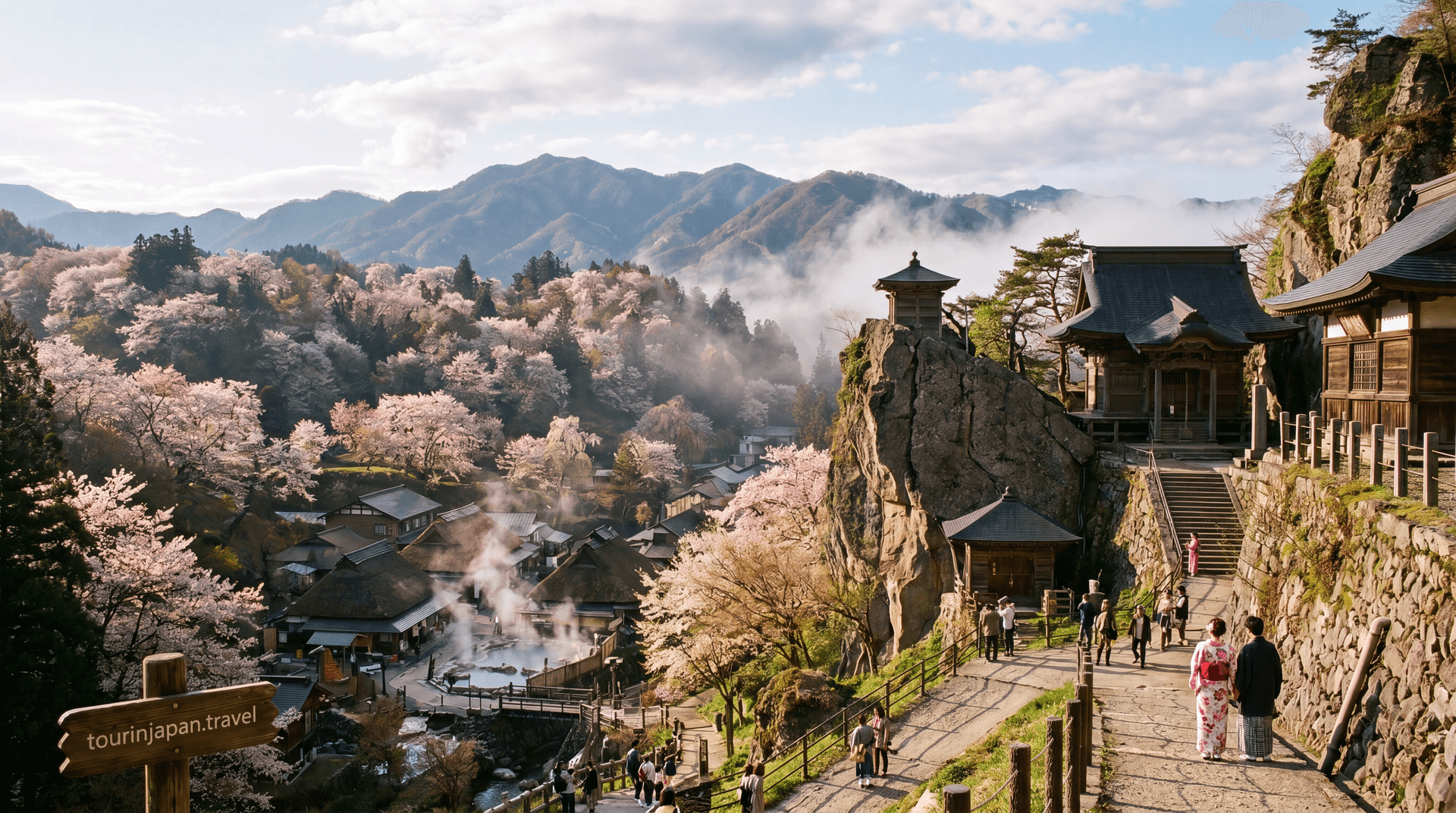
Yamagata Prefecture packs an implausible variety of experiences into a single Tohoku destination. The Yamagata travel experience begins with Risshaku-ji (Yamadera), a temple complex ascending a granite mountainside in a series of 1,015 stone steps lined with moss-covered statues. It extends to Ginzan Onsen, a hot spring village of Taisho-era wooden inns straddling a narrow gorge that is arguably the most photographed traditional village in Japan. Add the Zao ski resort and its snow monsters in winter, the Hanagasa festival in summer, and Gassan Mountain's sacred pilgrimage route, and you have a prefecture that deserves far more attention than it receives.
Yamadera: A Thousand Steps to Silence
Risshaku-ji Temple, universally known as Yamadera (mountain temple), was founded in 860 by the monk Ennin. The main ascent begins at Niomon Gate and climbs through cedar forest past stone lanterns and small sub-temples to the Okuno-in main hall clinging to a vertical cliff face. The views over the valley and the distant Yamagata plain at the top are extraordinary. Entry to the mountain section is 300 yen. The climb takes about thirty minutes at a gentle pace; rushing misses everything.
Yamadera is reachable on the JR Senzan Line from Yamagata city in about twenty minutes (310 yen). Visit on a weekday morning in autumn for the best combination of foliage color and minimal crowds. The maple trees covering the cliff face turn brilliant red and orange from late October.
Ginzan Onsen: Japan's Most Romantic Hot Spring Town
Ginzan Onsen sits at the end of a mountain road in Obanazawa city. The town grew around a seventeenth-century silver mine and its Taisho-era wooden ryokan, three to four stories high and illuminated by gas lamps after dark, line both sides of a rushing mountain river. The village is small enough to see in an afternoon but magnificent enough to stay overnight. Ryokan rates range from about 12,000 to 30,000 yen per person including dinner and breakfast.
A free public footbath sits at the entrance to the village. Several inns allow day visitors to use their baths for 500 to 800 yen if you arrive outside peak times. The walk from the village up through bamboo forest to a small waterfall takes about twenty minutes and passes through several small shrines that see almost no visitors.
Zao and the Dewa Sanzan Mountain Shrines
The Zao mountain range straddles the Yamagata-Miyagi border. In winter it is a major ski resort famous for juhyo, natural ice sculptures formed when wind-driven snow and ice encrust the Siberian fir trees, creating alien shapes called snow monsters. The Zao Ropeway (2,500 yen one way) reaches 1,661 meters where the most spectacular monsters form. Gassan, Yudono-san, and Haguro-san are the Dewa Sanzan, three sacred mountains with active yamabushi mountain ascetic training traditions. Haguro-san has a five-story pagoda reachable via 2,446 cedar-lined stone steps.
- Yamadera Temple: 300 yen, allow 1.5 hours, best in autumn foliage or after light snowfall
- Ginzan Onsen: free to walk, best experienced overnight; bus from Oishida Station takes 45 minutes
- Kajo Park in Yamagata city: 1,500 cherry trees rated among Tohoku's finest, peak late April
- Hanagasa Festival (August 5 to 7): 10,000 dancers parade Yamagata city streets wearing flower-covered straw hats
- Imoni-kai (autumn potato stew parties): riverside gatherings every September, locals welcome visitors
- Yonezawa beef: Yamagata's answer to Kobe beef, available at Yonezawa city restaurants from 3,000 yen
- Access: Yamagata Shinkansen from Tokyo takes about 2.5 hours (14,120 yen without pass)
Two to three nights works well for Yamagata. Stay one night in Yamagata city for Yamadera access, one night at Ginzan Onsen for the evening atmosphere. A rental car is highly recommended for the Dewa Sanzan and Zao areas, as bus schedules are infrequent. Yamagata city produces high-quality cherries in June and July, making it Japan's leading cherry-growing region, a novelty that local restaurants celebrate enthusiastically.
Stay Connected in Japan
Yesim eSIMs work on arrival — no physical SIM needed. Japan data plans from $5.