
Yakushima: Japan's Ancient Forest Island and Princess Mononoke Inspiration
By Tour in Japan editors · Updated
Yakushima's ancient cedar forests, some trees over 7,000 years old, inspired Studio Ghibli's Princess Mononoke and offer Japan's most atmospheric hiking in a UNESCO-listed wilderness.
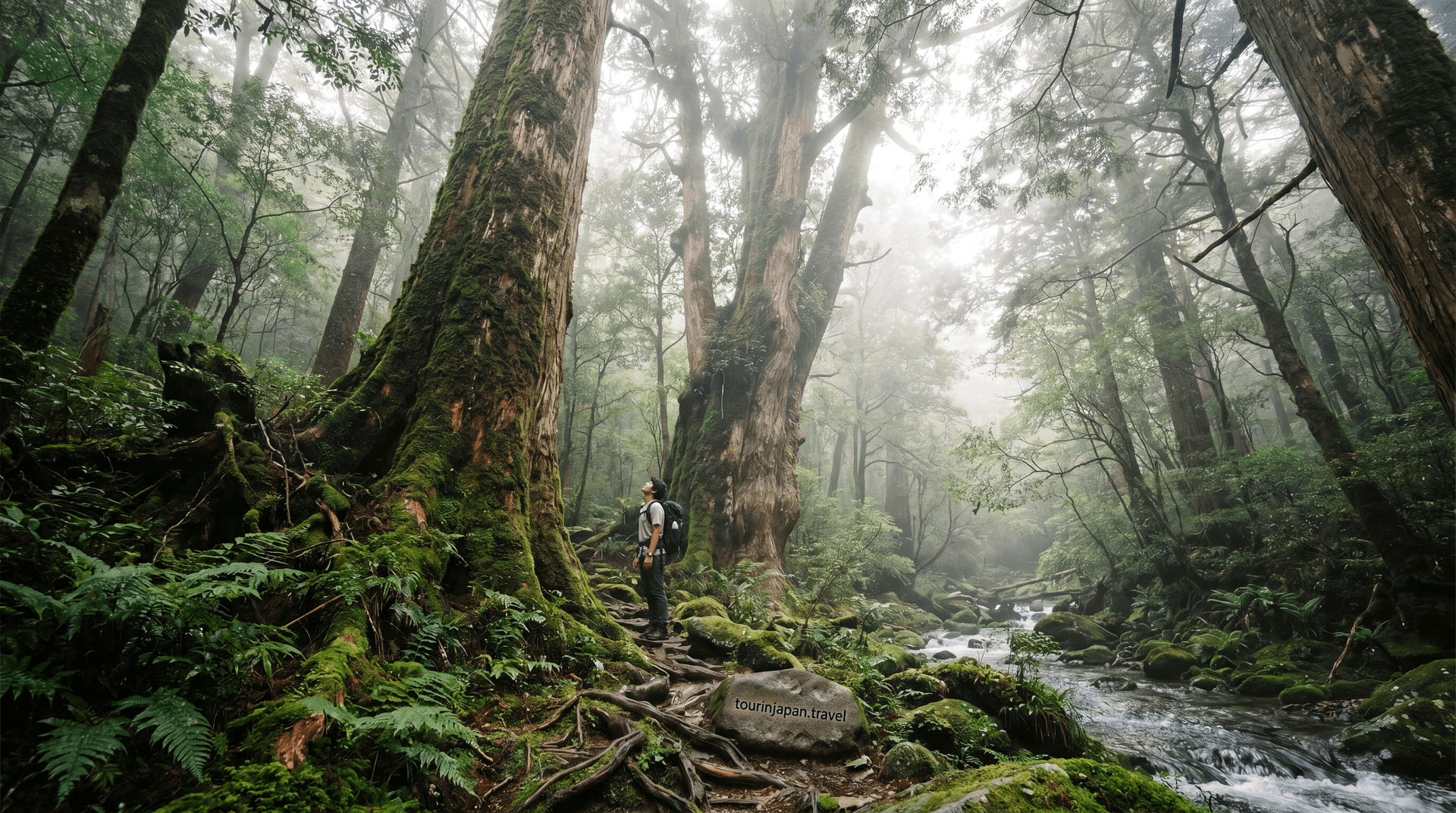
Yakushima is one of Japan's most extraordinary natural environments: a round island dominated by granite mountains so high they create their own weather, draped in ancient cedar forest that receives up to 10 meters of rainfall per year. The Yakushima ancient forest harbors Jomon Sugi, a cedar tree that may be 7,200 years old—the oldest living thing in Japan—as well as hundreds of other Yakusugi cedars over 1,000 years old. Studio Ghibli director Hayao Miyazaki visited Yakushima in 1993 and the moss-covered, root-tangled forest became the direct visual inspiration for Princess Mononoke's Spirit Forest. Today visitors who have grown up with the film make pilgrimages here to walk among trees that feel genuinely mythological. Yakushima was designated a UNESCO World Heritage Site in 1993.
The Jomon Sugi Hike: Japan's Most Famous Trail
The Jomon Sugi trail is a 22-kilometer round trip that most hikers complete in 8-10 hours. It begins at Arakawa trailhead (access by shuttle bus from Yakusugi Land parking area, mandatory from March to November) and follows an old logging railway track through dense forest before ascending to the tree itself. Jomon Sugi measures 16 meters in circumference and stands 25 meters tall, draped in ferns and moss. A viewing platform keeps visitors at a respectful distance.
Start by 5 AM to complete the hike comfortably in daylight. Bring rain gear regardless of the forecast—the mountain creates its own weather and afternoon downpours are routine. The path is well-marked and maintained but involves 1,300 meters of cumulative elevation gain on the return. Guided tours (15,000-20,000 yen) are strongly recommended for first-time visitors.
Shiratani Unsuikyo: The Princess Mononoke Forest
Shiratani Unsuikyo ravine is the most direct visual reference for Princess Mononoke's forest—moss covering every surface, ancient cedar roots creating cathedral-like archways over rushing streams, and a perpetual green twilight even on sunny days. The ravine is accessible via a trail network that ranges from a gentle 1-hour loop to a demanding 6-hour circuit reaching 1,000 meters. Admission costs 500 yen. Visit in morning light when mist fills the valleys and the moss glows luminescent green.
Unlike the Jomon Sugi hike, Shiratani Unsuikyo is accessible to moderately fit visitors with no mountain experience. Bring good waterproof shoes as the paths are perpetually damp. The ravine is beautiful year-round but peak moss season is the rainy period from May to July when rainfall maximizes.
Wildlife, Beaches, and Practical Yakushima Information
Yakushima's wildlife is remarkable: Yaku deer and Yaku macaques (smaller subspecies found only on the island) are so accustomed to hikers that they often walk alongside trail users. The deer are particularly tame and frequently appear near guesthouses at dawn. Sea turtles nest on the island's sandy beaches from May to August—organized night tours to observe nesting loggerhead turtles run 5,000 yen through the Yakushima Environmental Culture Foundation.
- Getting there: 35-min flight from Kagoshima (12,000-20,000 yen) or 2-hour high-speed ferry (9,500 yen)
- Getting around: rent a car (3,500-5,000 yen/day) to reach trailheads; shuttle buses run to Arakawa in season
- Best season: March-May and September-November; summer is rainy; winter can see snow at elevation
- Minimum stay: 3 nights to do both Jomon Sugi and Shiratani Unsuikyo without rushing
- Yakusugi Land: easier cedar forest walk with 30-150 minute courses, good for families (500 yen entry)
- Hirauchi Kaichu Onsen: coastal hot spring pools visible only at low tide, free to use (check tide tables)
- Accommodation: guesthouses in Miyanoura from 6,000 yen; mountain huts available for overnight hikers
- Pack layers: temperature varies 15 degrees between the coast and the mountain summit
Yakushima rewards those who slow down. Budget at least three nights, ideally four, with days dedicated to each major trail and a half-day for the coast and onsen. The island is relatively undiscovered by international travelers outside the Ghibli fan community, which means trails are quiet by Japanese standards even in peak season.
Stay Connected in Japan
Yesim eSIMs work on arrival — no physical SIM needed. Japan data plans from $5.