
Yakitori Guide: Skewers, Styles, and Best Bars in Tokyo
By Tour in Japan editors · Updated
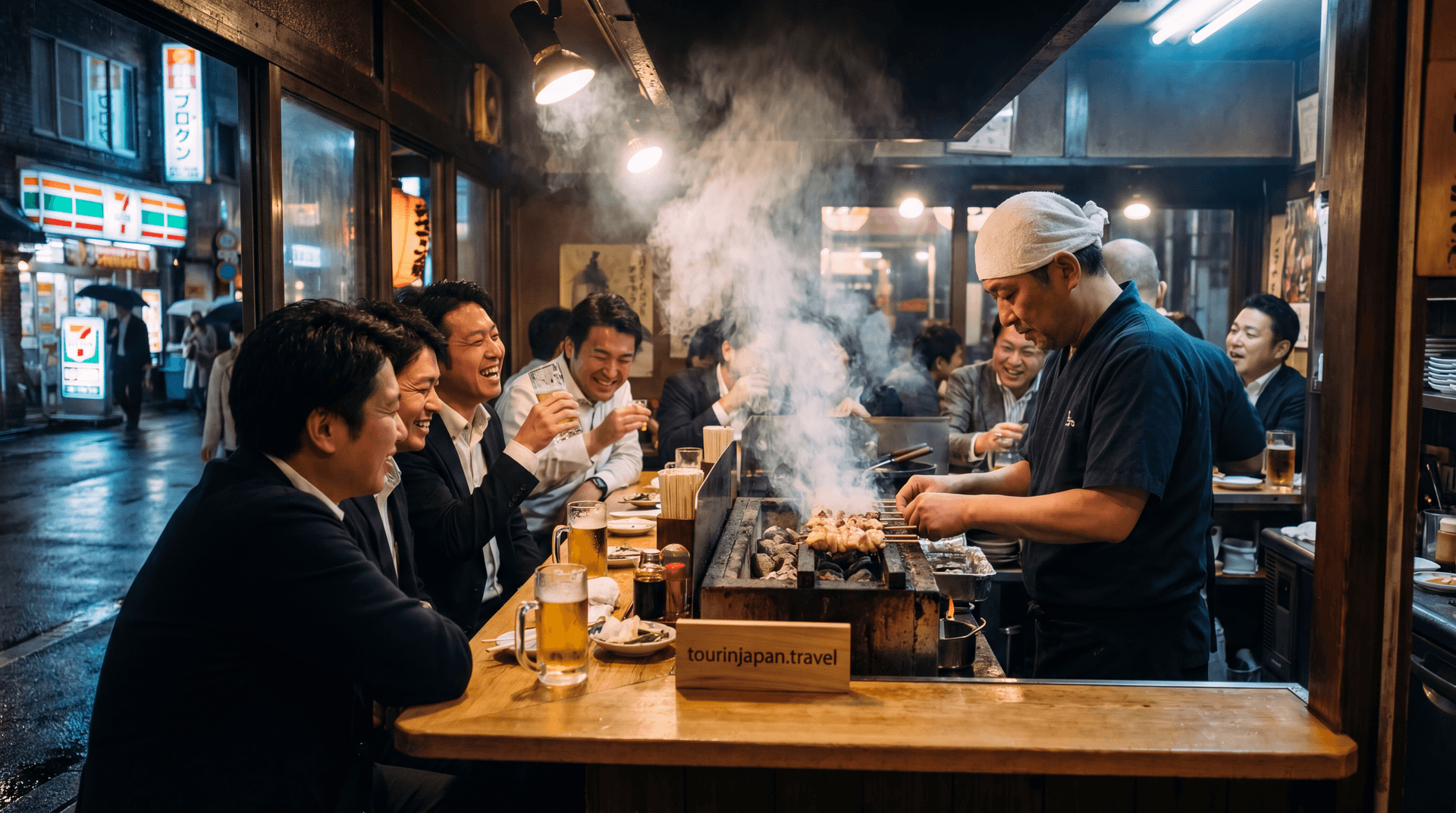
Yakitori (焼き鳥) — literally "grilled bird" — is Japan's most beloved drinking food. Tiny skewers of chicken grilled over binchōtan charcoal, seasoned with either tare (sweet soy glaze) or shio (salt), served alongside cold beer at smoky, intimate counter bars. It's the quintessential Japanese izakaya experience.
How Yakitori Works
The Basics
- Meat: Primarily chicken (but occasionally pork, beef, or vegetables)
- Cooking: Grilled over white binchōtan charcoal (備長炭) at extremely high heat
- Seasoning: Two styles — tare (タレ, sweet soy sauce) or shio (塩, salt)
- Serving: Skewers arrive in batches, 2–4 at a time
Tare vs Shio
| Style | Flavor | Best For | How to Order |
|---|---|---|---|
| Tare (タレ) | Sweet, savory, glossy | Fatty cuts, liver | "タレで" (tare de) |
| Shio (塩) | Clean, salty, smoky | Lean cuts, vegetables | "塩で" (shio de) |
Pro tip: Some shops let you choose tare or shio for each order. Ask "タレと塩、どちらがいいですか?" (Tare to shio, dochira ga ii desu ka?) — "Which is better, tare or shio?"
Chicken Parts Used in Yakitori
Yakitori uses the whole chicken — every part has its own character:
| Part | Japanese | Description | Texture | Price |
|---|---|---|---|---|
| Momo (もも) | Thigh | Juicy, flavorful | Tender, meaty | ¥100–¥150 |
| Negima (ねぎま) | Thigh + leek | Classic combo | Juicy, balanced | ¥120–¥180 |
| Tebasaki (手羽先) | Wing | Crispy skin | Crunchy, savory | ¥150–¥200 |
| Tsukune (つくね) | Ground chicken meatball | Soft, sweet | Bouncy, juicy | ¥120–¥180 |
| Kawa (皮) | Skin | Crispy, fatty | Crunchy | ¥100–¥150 |
| Reba (レバー) | Liver | Rich, iron-flavored | Creamy | ¥100–¥150 |
| Hatsu (ハツ) | Heart | Firm, meaty | Chewy | ¥100–¥150 |
| Sunagimo (砂肝) | Gizzard | Crunchy | Firm, chewy | ¥100–¥150 |
| Bonjiri (ぼんじり) | Tail bone | Fatty, crispy | Crunchy, rich | ¥100–¥150 |
| Nankotsu (軟骨) | Cartilage | Crunchy | Crackly | ¥100–¥150 |
| Torinankotsu | Soft cartilage | Softer crunch | Bouncy | ¥120–¥180 |
| Sasami (ささみ) | Breast | Lean, mild | Firm, dry | ¥100–¥150 |
| Shirako (白子) | Cod milt (seasonal) | Creamy, delicate | Soft | ¥200–¥300 |
| Tsukimi (月見) | Egg yolk on skewer | Rich, runny | Liquid gold | ¥150–¥200 |
Yakitori Set Menu (定食)
Many shops offer a set menu (omakase) that includes the chef's selection:
| Set Name | Contents | Price |
|---|---|---|
| Yakitori Set (焼き鳥定食) | 8–10 skewers + rice + soup | ¥1,200–¥1,800 |
| Omakase Set (おまかせ) | Chef's choice, 10–12 skewers | ¥2,000–¥3,500 |
| Nomihodai + Yakitori | All-you-can-drink + skewers | ¥3,000–¥5,000 |
Best Yakitori Spots
Tokyo
| Restaurant | Location | Style | Price | Notes |
|---|---|---|---|---|
| Birdland (バードランド) | Ginza | Premium, A5 wagyu | ¥5,000–¥10,000 | Michelin-starred |
| Toriki (鳥き) | Shibuya | Classic yakitori-ya | ¥2,000–¥4,000 | Counter seating |
| Yakitori Alley (鳥小路) | Shinjuku | Multiple small shops | ¥1,500–¥3,000 | Atmospheric |
| Toritama (鳥玉) | Meguro | Tsukune specialist | ¥2,000–¥4,000 | Egg yolk tsukune |
| Afuri (阿夫利) | Multiple | Yakitori + ramen | ¥1,500–¥3,000 | Trendy, fresh |
| Birds (バーズ) | Ebisu | Budget-friendly | ¥1,500–¥3,000 | Local favorite |
| Torikizoku (鳥貴族) | Multiple | Chain yakitori | ¥300/skewer | All items same price |
Osaka
| Restaurant | Location | Style | Price | Notes |
|---|---|---|---|---|
| Yaekatsu (やえかつ) | Namba | Osaka-style | ¥2,000–¥4,000 | Famous tsukune |
| Matsubaya (松葉屋) | Shinsaibashi | Budget chain | ¥1,000–¥2,000 | Quick, casual |
| Toriden (とり田) | Tennoji | Local favorite | ¥1,500–¥3,000 | Wide selection |
Kyoto
| Restaurant | Location | Style | Price | Notes |
|---|---|---|---|---|
| Giro Giro Hitoshina (ギロギロひとしな) | Downtown | Modern yakitori | ¥3,000–¥5,000 | Trendy atmosphere |
| Yakitori Ino (焼き鳥 猪) | Downtown | Traditional | ¥2,000–¥4,000 | Since 1960 |
How to Order
Step 1: Order Drinks First
Yakitori is drinking food. Start with:
- ビール (bīru): Beer — the classic pairing
- ハイボール (haibōru): Whisky highball — refreshing with grilled meat
- 酎ハイ (chūhai): Shochu highball — various flavors
- 日本酒 (nihonshu): Sake — pairs beautifully with yakitori
Step 2: Order Skewers
Start with the basics and explore:
Recommended Order for First-Timers:
- Negima (ねぎま) — the classic, can't go wrong
- Momo (もも) — juicy thigh meat
- Tsukune (つくね) — chicken meatball, often with egg
- Kawa (皮) — crispy skin
- Tebasaki (手羽先) — wings
- Reba (レバー) — if you're adventurous
Step 3: Add Sides
- Chāhan (チャーハン): Fried rice — filling and delicious
- Moyashi (もやし): Bean sprouts — light and refreshing
- Daikon Oroshi (大根おろし): Grated radish — palate cleanser
- Tamagoyaki (卵焼き): Rolled egg — sweet and savory
Yakitori Etiquette
Do's
- ✅ Say "tadaima" (ただいま) when entering — it means "I'm home"
- ✅ Order drinks first, then food
- ✅ Eat skewers directly from the stick
- ✅ Use the small dish of salt if provided
- ✅ Say "gochisōsama deshita" (ごちそうさまでした) when leaving
Don'ts
- ❌ Don't blow on hot skewers — let them cool naturally
- ❌ Don't put used sticks on the table — use the provided holder
- ❌ Don't order too many at once — they come in batches
- ❌ Don't be loud — yakitori-ya are intimate spaces
- ❌ Don't leave food on your plate — order what you can eat
Japanese Phrases
| Japanese | Pronunciation | Meaning |
|---|---|---|
| いらっしゃいませ | Irasshaimase | "Welcome" (staff greeting) |
| ビールください | Bīru kudasai | "Beer, please" |
| ねぎま、塩で | Negima, shio de | "Negima, salt style" |
| つくね、タレで | Tsukune, tare de | "Tsukune, tare style" |
| もう一つお願いします | Mō hitotsu onegai shimasu | "One more, please" |
| おすすめは何ですか? | Osusume wa nan desu ka? | "What do you recommend?" |
| ごちそうさまでした | Gochisōsama deshita | "Thank you for the meal" |
Budget Guide
| Budget | What You Get | Experience |
|---|---|---|
| ¥1,000–¥2,000 | Chain restaurant, 10–12 skewers | Casual, filling |
| ¥2,000–¥4,000 | Quality yakitori-ya, 15–20 skewers | Authentic, atmospheric |
| ¥4,000–¥8,000 | Premium shop, A5 wagyu skewers | Special occasion |
| ¥8,000–¥15,000 | Michelin-starred yakitori | Ultimate experience |
Tips for First-Timers
- Go early — popular shops fill up fast; arrive before 7 PM
- Sit at the counter — watch the chef work, it's part of the experience
- Try everything — chicken heart, gizzard, and skin are delicious
- Drink beer — it's the traditional pairing for a reason
- Don't be shy — point at what others are eating if you can't read Japanese
- Ask for the omakase — let the chef choose for the best experience
- Visit Yakitori Alley — Shinjuku's atmospheric alley of small yakitori shops
Related Articles
Stay Connected in Japan
Yesim eSIMs work on arrival — no physical SIM needed. Japan data plans from $5.