
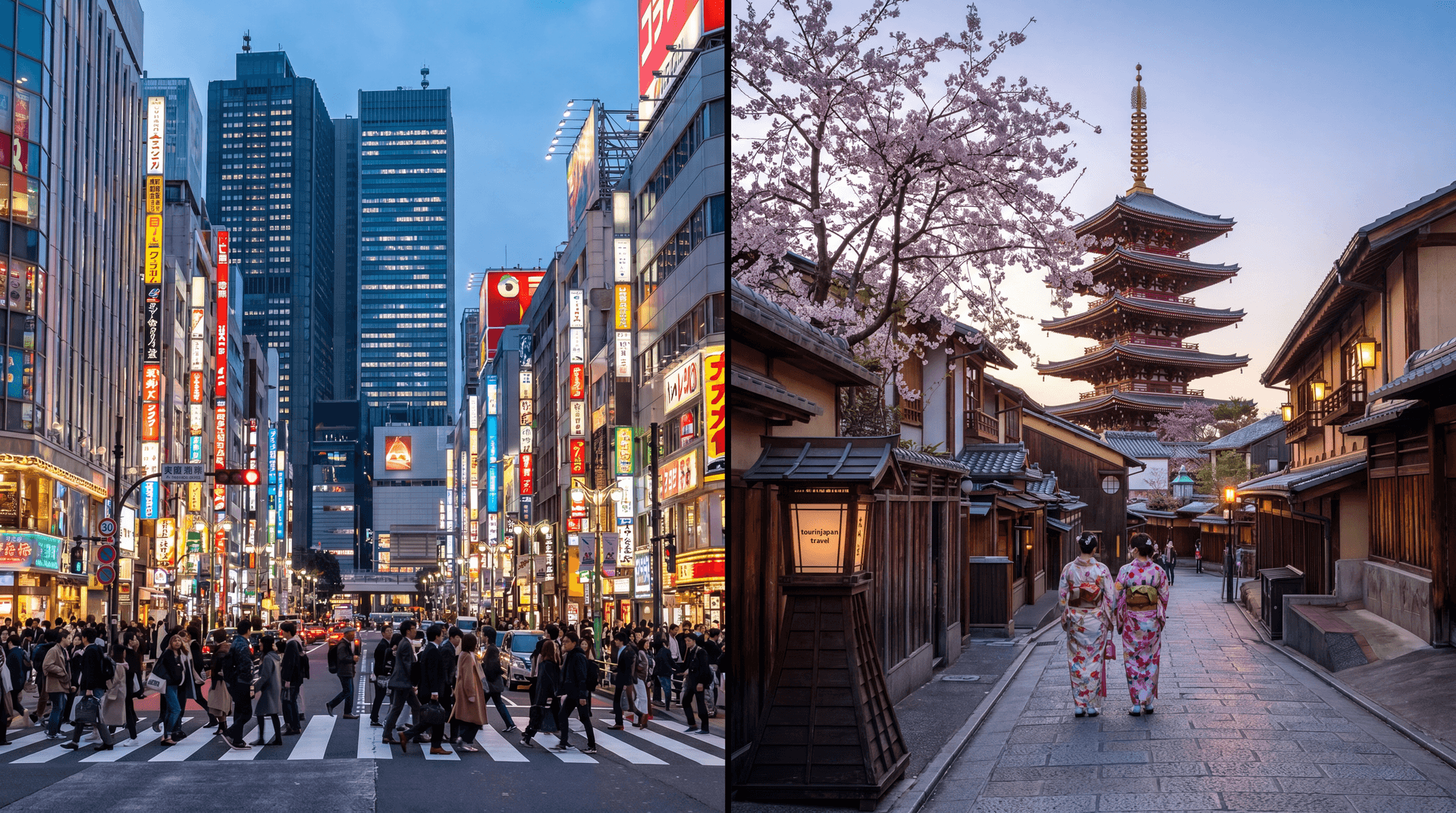
Best Neighborhoods to Stay in Tokyo for First-Timers
By Tour in Japan editors · Updated
Tokyo's best neighborhoods for first-time visitors — from Shinjuku's neon chaos to Asakusa's old-town calm. Find the right base for your trip.
Choosing where to stay in Tokyo is one of the most consequential decisions you'll make before your trip. The city is vast — 23 special wards spread across 622 square kilometers — and the neighborhood you pick as your base will shape everything from your morning commute to what kind of food you eat at midnight. For first-timers, the best neighborhoods to stay in Tokyo balance transportation access, safety, interesting streets, and a range of accommodation prices. This guide covers the top areas and who each one suits best.
Shinjuku: The Classic First-Timer Base
Shinjuku Station is the busiest railway station in the world, handling over 3.5 million passengers daily. That tells you everything about why it's the default choice for first-time visitors. From Shinjuku you can reach virtually anywhere in Tokyo within 30 minutes, and the Japan Rail Pass covers many of those journeys. Hotels range from budget business hotels (from around 6,000 yen per night) to luxury towers like the Park Hyatt and Hilton.
The east side of Shinjuku is home to Kabukicho — Tokyo's entertainment district — plus Golden Gai, a maze of tiny atmospheric bars each seating only 6-8 people. The west side holds the skyscraper district and several world-class restaurants. The Omoide Yokocho alley near the station serves grilled yakitori skewers under a canopy of lanterns. Shinjuku suits travelers who want maximum flexibility and don't mind noise.
Asakusa: Old Tokyo Atmosphere
Asakusa in the Taito ward preserves more of historic Tokyo than almost anywhere else in the city. The neighborhood clusters around Senso-ji temple — Tokyo's oldest and most visited — and the traditional shopping street Nakamise-dori. Rickshaws still operate here, kimono rental shops line the backstreets, and dozens of craft shops sell traditional toys, fans, and sweets. It's the most tourist-friendly neighborhood in a genuine, unhurried way.
Accommodation here leans toward smaller boutique hotels, traditional ryokan, and budget guesthouses. Expect to pay 7,000-15,000 yen for a decent double room. The Ginza and Ueno lines both stop at Asakusa, and the Tokyo Skytree is a five-minute walk. The main downside is that Shibuya and Harajuku require a 25-30 minute train ride. Best for: travelers who want atmosphere over convenience.
Shibuya and Harajuku: Pop Culture and Fashion
Shibuya's famous scramble crossing — where up to 3,000 people cross simultaneously — is one of Tokyo's defining images. The neighborhood surrounds it with department stores, live music venues, and the best nightlife in the city. Harajuku is adjacent, centered on Takeshita Street for youth fashion and Omotesando for high-end boutiques. Together they form the creative heart of Tokyo.
Hotels in Shibuya tend to be slightly pricier than Shinjuku, with mid-range options starting around 10,000 yen. The area is exceptionally well-connected: the Yamanote Line, Ginza Line, Fukutoshin Line, and Tokyu lines all converge here. For those whose Tokyo itinerary focuses on day trips to Kamakura, Nikko, or Hakone, Shibuya provides good shinkansen connections via Shinagawa (one stop on the Yamanote Line). Best for: shoppers, music fans, and travelers under 35.
Ginza and Marunouchi: Upscale Central Tokyo
Ginza is Tokyo's Champs-Elysees — a boulevard of flagship stores, Michelin-starred restaurants, and art galleries. It's the most expensive neighborhood in the city, with hotel rooms starting around 20,000 yen for mid-range. Marunouchi, adjacent to Tokyo Station, adds business hotels at more accessible prices and the cleanest, most efficient travel hub in the country. From Tokyo Station you can reach Kyoto in 2h15 by shinkansen.
Quick neighborhood comparison for first-timers
- Shinjuku: Best overall transport hub, huge range of hotels, lively nightlife, busy streets
- Asakusa: Traditional atmosphere, near Skytree, best for culture and craft shopping
- Shibuya/Harajuku: Pop culture, fashion, nightlife, younger crowd
- Ginza/Marunouchi: Luxury shopping, fine dining, best shinkansen access at Tokyo Station
- Akihabara: Electronics, anime, manga; great for enthusiasts but limited hotel options
- Roppongi: Art museums, upscale international dining, lively late-night scene
- Ueno: Near major museums, Ueno Park, zoo; good budget guesthouse options
- Ikebukuro: Slightly cheaper than Shinjuku, Sunshine City mall, department stores
Staying near a Yamanote Line station is the single most reliable rule for first-timers. This circular loop train connects Shinjuku, Shibuya, Harajuku, Akihabara, Ueno, and Tokyo Station in a continuous loop, running every 2-4 minutes from 5am to midnight. Any hotel within a five-minute walk of a Yamanote stop gives you access to the entire city without needing to understand Tokyo's complex subway map immediately.
Stay Connected in Japan
Yesim eSIMs work on arrival — no physical SIM needed. Japan data plans from $5.