
Best Neighborhoods to Stay in Kyoto
By Tour in Japan editors · Updated
From Gion's geisha streets to the quieter Arashiyama hills, here's how to pick the best neighborhood in Kyoto for your stay and travel style.
Choosing the best neighborhood to stay in Kyoto depends on whether you've come for temples and tradition, nightlife and food, or easy access to day trips. Unlike Tokyo, Kyoto is compact enough that any central neighborhood puts you within striking distance of most major sights. But the city's transport network is limited — the subway covers only two lines — so where you stay genuinely affects how much time you spend commuting versus exploring. Here is a practical guide to Kyoto's top accommodation areas.
Downtown Kyoto: Kawaramachi and Gion
Kawaramachi is Kyoto's main commercial and nightlife district, running along the Kamo River. It contains the densest concentration of restaurants, bars, and shops, and the Hankyu Kyoto Line stops directly here, connecting to Osaka in 40 minutes (around 400 yen). Hotels in this area range from affordable business hotels (7,000-12,000 yen) to a handful of boutique properties in restored machiya townhouses.
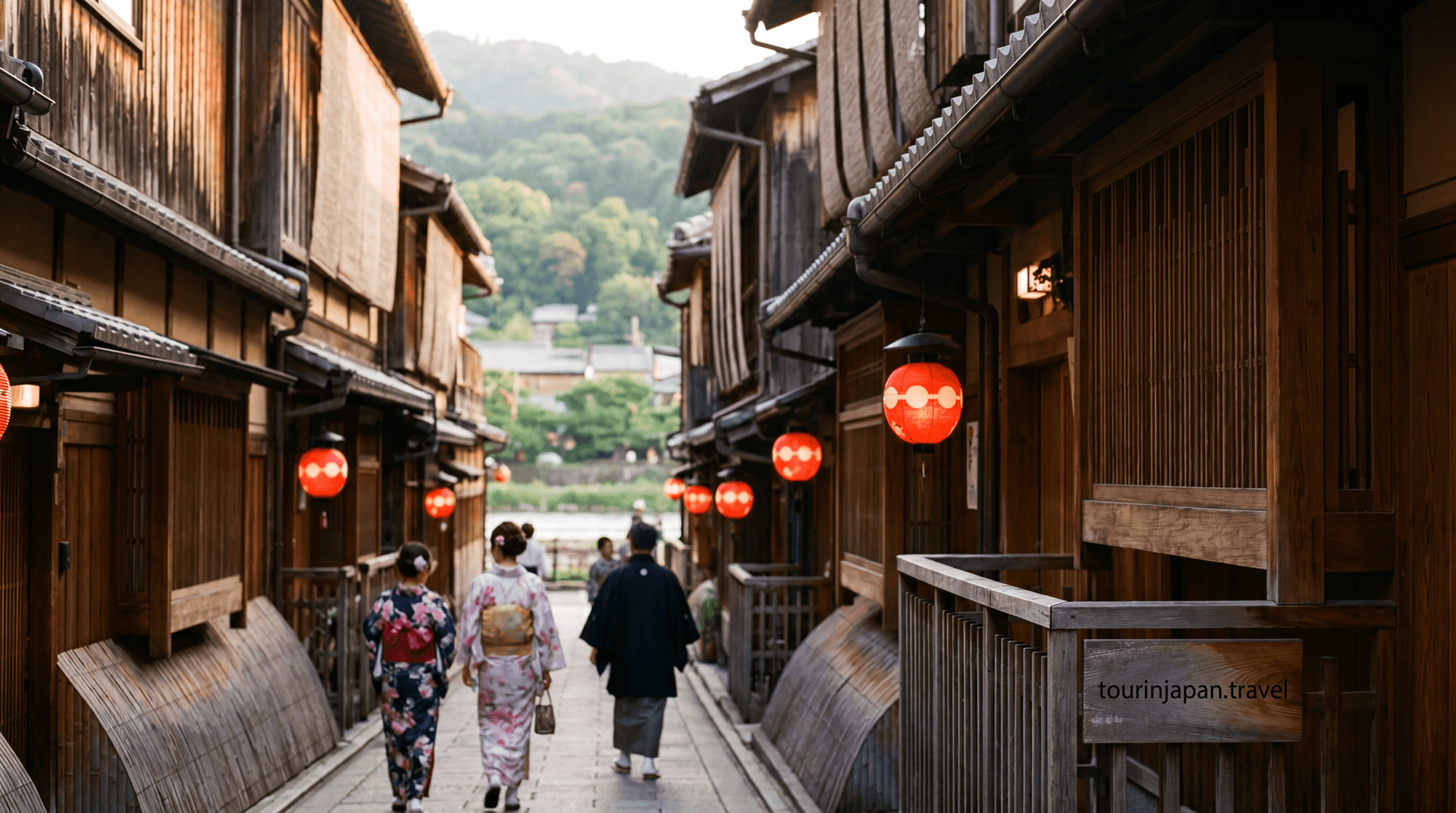
Gion — Kyoto's historic geisha district — is immediately east of Kawaramachi, separated by the Kamo River. Hanamikoji Street, the main artery, is lined with ochaya teahouses whose wooden latticed facades have barely changed in 300 years. Staying in Gion typically means a ryokan or high-end boutique hotel; budget options are scarce. If you spot women in full geisha makeup, don't follow them — it is considered deeply rude and local signs actively ask tourists not to photograph them.
Kyoto Station Area: Maximum Convenience
Kyoto Station is the transit hub of western Japan. The shinkansen, JR lines, Kintetsu railway, and multiple subway and bus lines all converge here. Hotels in this area — particularly the towers directly above and around the station — offer unbeatable convenience for early-morning departures to Nara, Osaka, or Tokyo. The station building itself houses Isetan department store, a 10-story restaurant floor (the Cube), and Kyoto Tower across the street.
The main drawback is that the area around the station feels utilitarian rather than atmospheric. It's the south end of Kyoto, somewhat removed from the main temple districts in the east and northwest. However, most temple areas are accessible within 30 minutes by bus from the station forecourt, and bus day passes (700 yen) make this manageable. Best for: travelers who prioritize efficient multi-city itineraries or those with heavy luggage.
Higashiyama: Walking Distance to Kiyomizudera
Higashiyama — the eastern hills — is the most scenic neighborhood in Kyoto for walking. Preserved stone-paved lanes like Ninenzaka and Sannenzaka connect temples, shrines, and traditional craft shops in a continuous atmospheric route that takes 2-3 hours to explore at a gentle pace. Kiyomizudera temple is at the top of the hill; Fushimi Inari's torii-lined paths are 20 minutes south by train.
Accommodation in Higashiyama includes some of Kyoto's finest ryokan, where rates typically start at 25,000 yen per person including dinner and breakfast. There are also a handful of mid-range hotels and a few guesthouses. Transport is limited — no subway station — but the neighborhood is walkable to Gion and buses run regularly. Best for: those on a honeymoon or cultural immersion trip who want to walk from their door to great temples.
Kyoto neighborhood overview for travelers
- Kawaramachi/Gion: Best for nightlife, dining, and easy Osaka access via Hankyu line
- Kyoto Station area: Best for transit convenience and budget hotel options
- Higashiyama: Best for walking, ryokan stays, and proximity to east-side temples
- Arashiyama: Bamboo grove, monkey park, Tenryu-ji; best for nature and day-trip feel
- Fushimi: Near the famous torii-lined shrine, more residential, cheaper accommodation
- Nishijin: Traditional weaving district, machiya guesthouses, authentic local feel
- Kyoto University area (Yoshida): Near Heian Shrine, quieter, popular with long-stay visitors
A practical tip for any Kyoto neighborhood: purchase a ICOCA card (a rechargeable IC card, 2,000 yen deposit with 1,500 yen usable credit) on arrival at Kyoto Station. It works on every bus, subway, and JR train in the city and removes the hassle of buying individual tickets for Kyoto's sometimes confusing multi-operator network. Buses are often faster than the subway for getting between temple districts.
Stay Connected in Japan
Yesim eSIMs work on arrival — no physical SIM needed. Japan data plans from $5.