
Wagashi (Japanese Sweets): Regional Varieties and Best Shops
By Tour in Japan editors · Updated
Wagashi are Japan's exquisite traditional confections, made from bean paste, rice flour, and seasonal ingredients. Explore regional varieties and where to find the best shops.
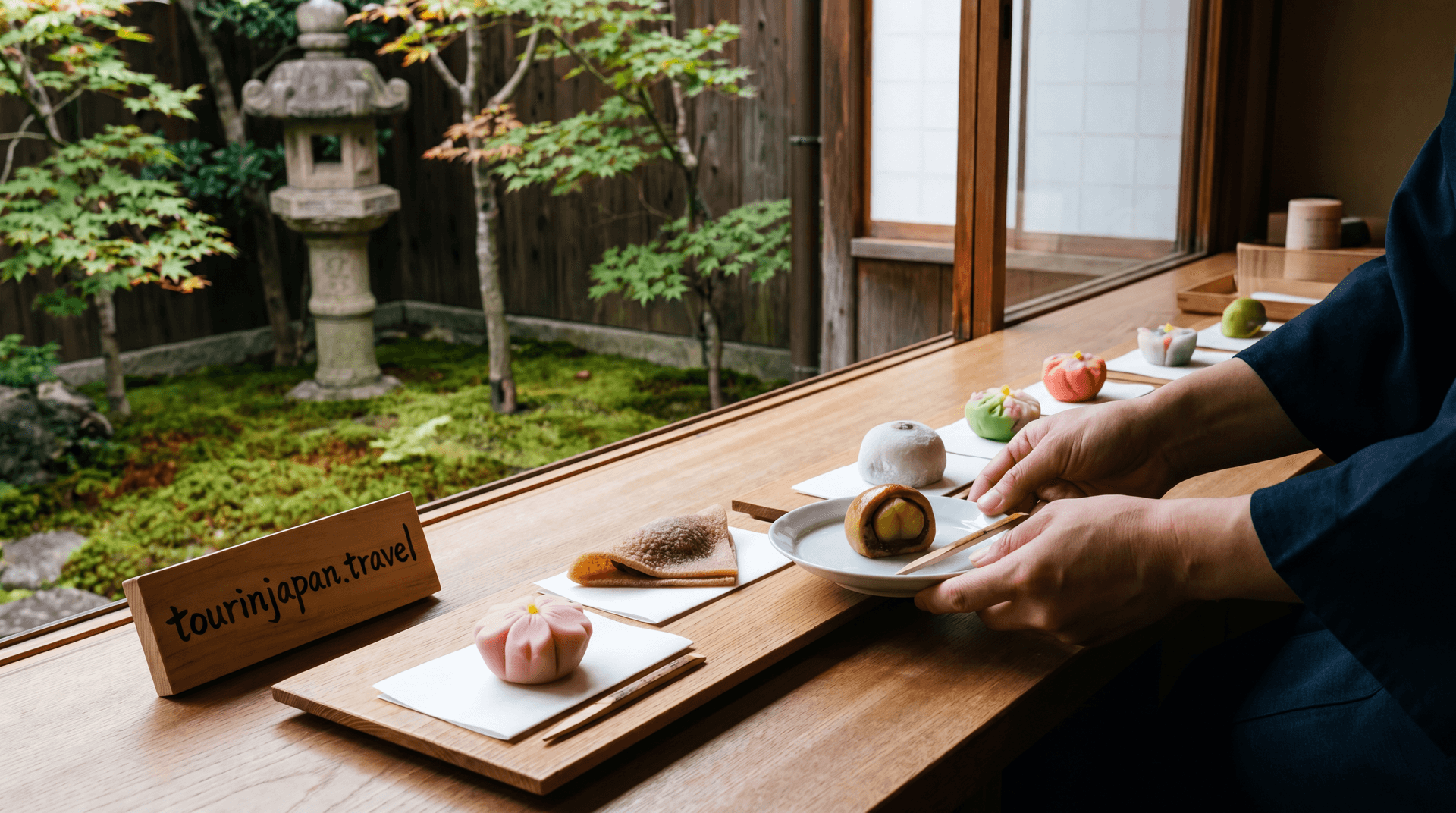
Wagashi are Japanese sweets with a history stretching back to the Heian period, refined over centuries into one of the world's most beautiful culinary traditions. Unlike Western confections that rely on butter, cream, and sugar as their primary indulgences, wagashi are built around azuki red beans, various rice flours, and the subtle sweetness of ingredients like chestnut, sweet potato, and seasonal fruits. The wagashi tradition encompasses dozens of distinct types, from the delicate pressed nerikiri that mimic spring blossoms to the rustic and deeply satisfying yatsuhashi of Kyoto. For visitors to Japan, wagashi shopping is one of the most rewarding ways to engage with local culture — many shops have remained in the same families for multiple generations, and the seasonal offerings change with the natural world.
Types of Wagashi Every Visitor Should Know
- Mochi: Pounded glutinous rice cakes. Daifuku mochi is filled with sweet red bean paste; sakura mochi is wrapped in a preserved cherry leaf for spring.
- Nerikiri: Sculptural sweets made from white bean paste and rice flour, hand-shaped into seasonal motifs. Often served at formal tea ceremonies.
- Yokan: Dense, firm jelly made from azuki beans, agar, and sugar. Comes in regular (neri-yokan) and softer (mizu-yokan) versions. Excellent with tea.
- Dorayaki: Two fluffy pancakes sandwiching sweet red bean paste. Available in many creative modern flavors across Japan.
- Higashi: Dry pressed sweets made primarily from wasanbon fine sugar. Delicate, beautiful, and meant to melt on the tongue before a sip of bitter matcha.
- Yatsuhashi: Kyoto's signature confection. Raw yatsuhashi is a soft dough wrapper around cinnamon-scented red bean paste; baked yatsuhashi is a crisp cinnamon wafer.
- Monaka: Crispy wafer shells filled with sweet bean paste, sesame, or chestnut. Light, elegant, and deeply satisfying.
- Kuzu mochi: Sweet starch jelly served with kinako powder and black syrup. A perfect summer sweet widely available at festivals and traditional sweet shops.
Regional Wagashi Specialties
Kyoto is the undisputed capital of wagashi, home to the most prestigious confectionery families in Japan. Toraya, founded in the early 16th century, still supplies the Imperial family and produces perhaps the finest yokan in existence. Nakamura Tokichi in Uji is famous for combining matcha (the region produces Japan's finest green tea) with traditional wagashi forms. Visitors to Kyoto can find dozens of small wagashi shops along Nishiki Market and the side streets near major temples.
Kanazawa, the cultural capital of the Hokuriku region, produces some of Japan's most sophisticated wagashi outside Kyoto, reflecting the area's history as a wealthy castle town with strong connections to the tea ceremony tradition. The city's confectionery district near Kenroku-en garden has numerous excellent shops. Hiroshima is known for momiji manju — maple leaf-shaped cakes filled with red bean paste — while Nagoya's signature is uiro, a dense, chewy steamed rice cake with subtle sweetness.
Best Wagashi Shops in Tokyo
Tokyo's department store basement food halls (depachika) carry wagashi from Japan's most revered shops. Isetan in Shinjuku, Takashimaya in Nihonbashi, and Mitsukoshi in Ginza all maintain remarkable wagashi sections where you can find seasonal offerings from Kyoto's finest makers alongside excellent Tokyo confectioners. For a more focused visit, Higashiya in Aoyama produces contemporary wagashi in clean, minimalist packaging that makes it ideal for gifting. Toraya's flagship Tokyo store in Akasaka is a must-visit, with a beautiful interior and a tea room where you can enjoy their confections with matcha (around 1,200 yen). Prices for individual wagashi typically range from 200 to 800 yen; boxed selections for gifts start around 1,500 yen.
Stay Connected in Japan
Yesim eSIMs work on arrival — no physical SIM needed. Japan data plans from $5.