
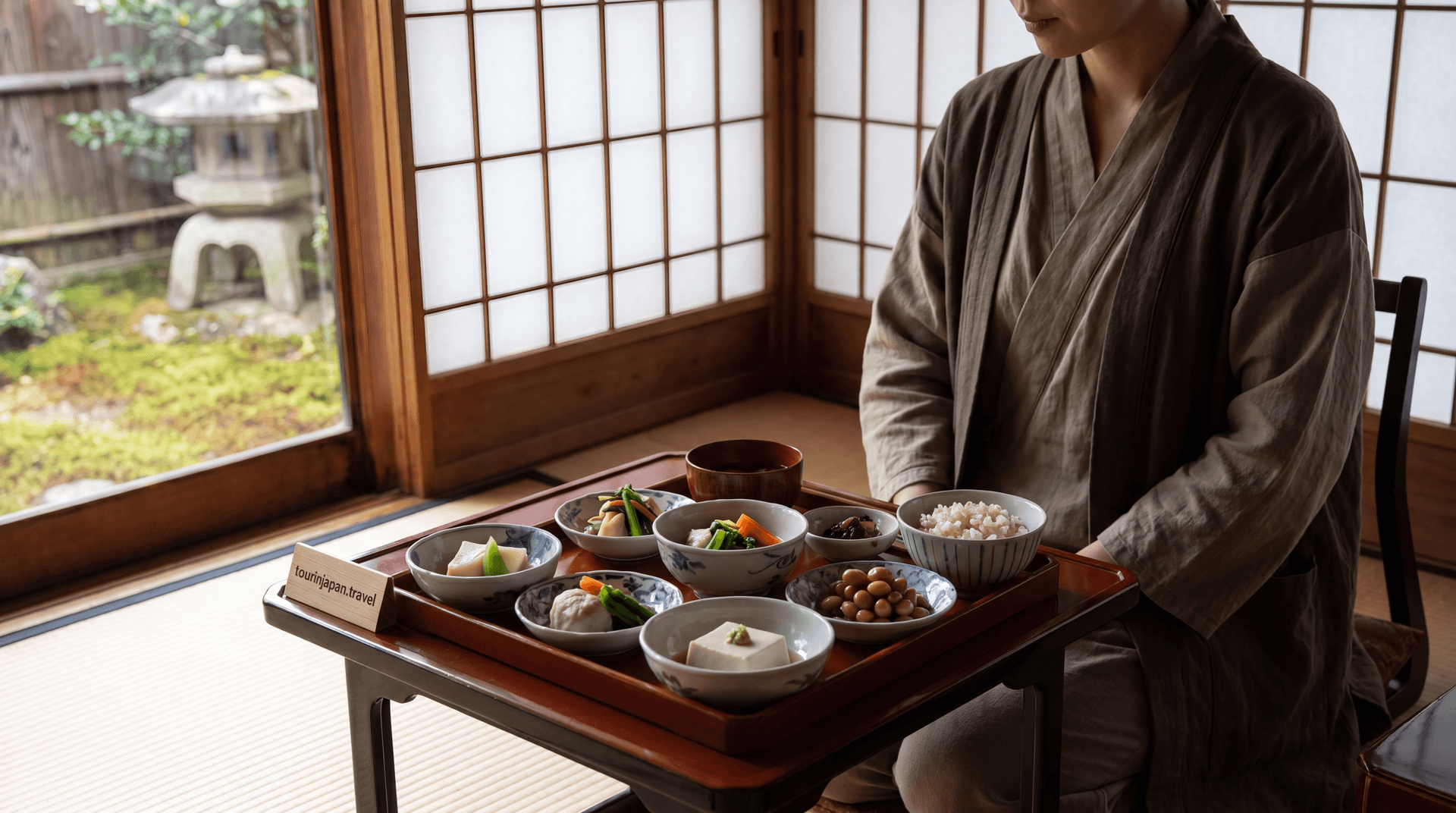
Japanese Cooking for Vegans: Where to Find Plant-Based Shojin Ryori
By Tour in Japan editors · Updated
Vegan food in Japan is more accessible than you think — from temple cuisine to modern vegan restaurants. Here's what to know.
Vegan food in Japan is more accessible than you think — from temple cuisine to modern vegan restaurants. Here's what to know.
What Is Shojin Ryori?
Shojin ryori (精進料理) is traditional Buddhist vegetarian cuisine — no meat, fish, or strong flavors. It's been practiced in Japan for over 1,000 years.
What's Included
- Tofu — in many forms
- Vegetables — seasonal, local
- Seaweed — wakame, nori, kombu
- Mushrooms — shiitake, maitake, enoki
- Rice — Japanese rice
- Pickles — various vegetables
What's NOT Included
- Meat — all animal meat
- Fish — all seafood
- Dairy — traditionally avoided
- Eggs — some versions allow, some don't
- Garlic/Onion — avoided in some traditions
Where to Find Vegan Food
Shojin Ryori Restaurants
| City | Restaurant | Price | Notes |
|---|---|---|---|
| Kyoto | Tenryu-ji Temple | ¥3,000–5,000 | Temple setting |
| Kyoto | Ippodo Tea | ¥1,000–2,000 | Tea + light meals |
| Tokyo | Ain Soph | ¥1,500–2,500 | Modern vegan |
| Tokyo | T's TanTan | ¥800–1,200 | Vegan ramen |
Vegan-Friendly Chains
| Chain | Price | What to Eat |
|---|---|---|
| CoCo Ichibanya | ¥500–800 | Vegetable curry (no egg) |
| MOS Burger | ¥400–600 | Vegetable burger |
| Saizeriya | ¥500–800 | Italian, some vegan options |
Convenience Store Options
| Item | Price | Notes |
|---|---|---|
| Onigiri (some) | ¥120–180 | Check ingredients |
| Edamame | ¥200–300 | Naturally vegan |
| Salad | ¥200–400 | Some with dressing |
| Fruit | ¥200–500 | Always vegan |
Vegan Japanese Dishes
| Dish | What It Is | Where |
|---|---|---|
| Agedashi tofu | Fried tofu in broth | Many restaurants |
| Yasai itame | Stir-fried vegetables | Many restaurants |
| Hiyayakko | Cold tofu | Many restaurants |
| Edamame | Soy beans | Izakaya, restaurants |
| Seaweed salad | Various seaweed | Many restaurants |
| Vegetable tempura | Fried vegetables | Tempura restaurants |
| Inari sushi | Sweet tofu pocket | Sushi restaurants |
Tips
- Learn key phrases — "no meat, no fish, no egg, no dairy"
- Check ingredients — dashi (fish stock) is in many dishes
- Carry a card — with dietary restrictions in Japanese
- Visit temples — shojin ryori is guaranteed vegan
- Use HappyCow app — find vegan restaurants
- Ask for modifications — many restaurants accommodate
- Try tofu — Japan has amazing tofu
- Have fun — vegan food in Japan is delicious
📱Get a Japan eSIM
Stay Connected in Japan
Yesim eSIMs work on arrival — no physical SIM needed. Japan data plans from $5.