
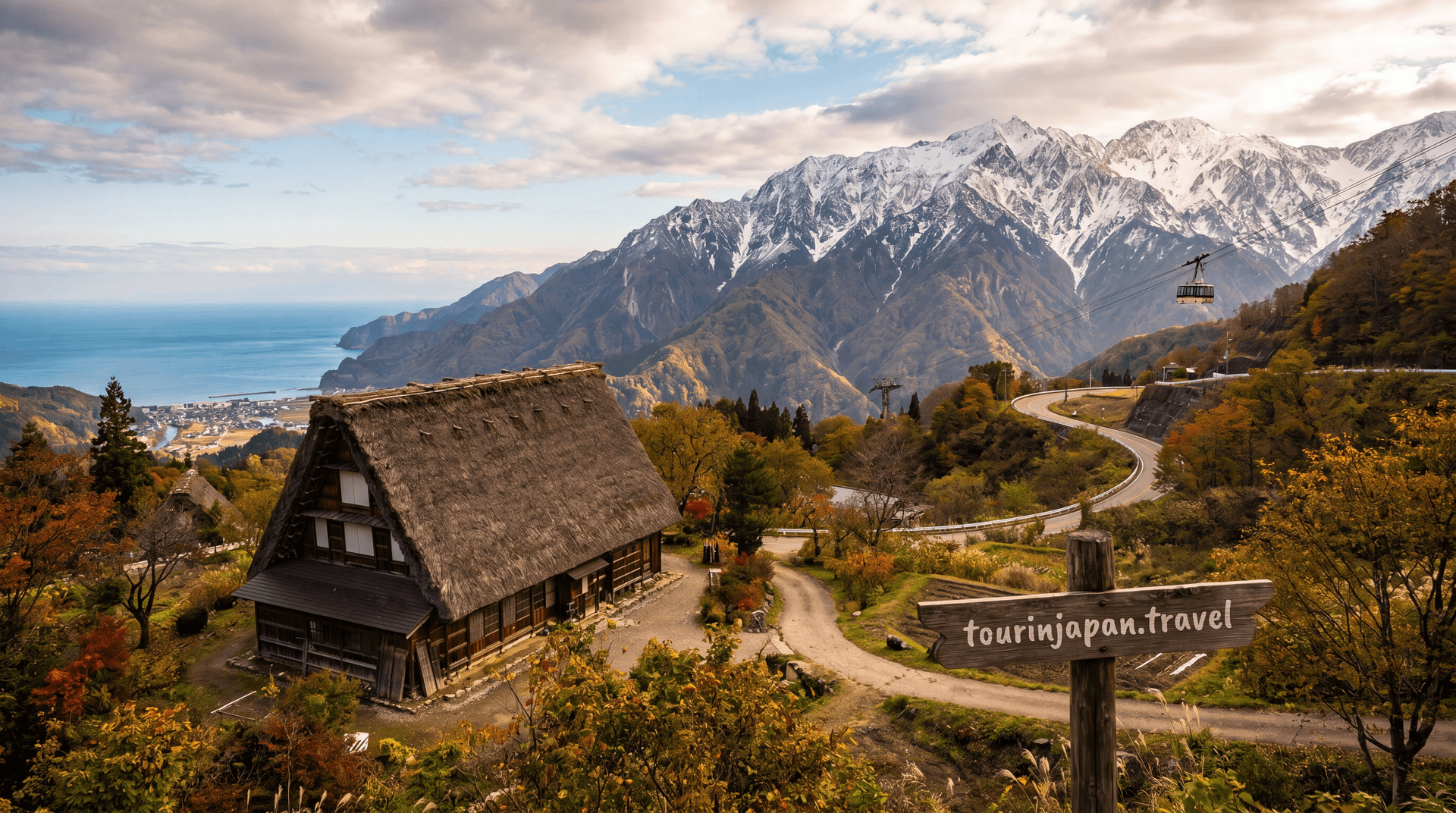
Toyama: The Underrated Prefecture With Alpine Views and Seafood Heaven
By Tour in Japan editors · Updated
Toyama sits between the Northern Alps and the Sea of Japan, offering the Tateyama Kurobe Alpine Route, firefly squid, and Gokayama's thatched farmhouses.
Toyama Prefecture sits in a geographic sweet spot between the 3,000-meter Northern Alps and the rich waters of Toyama Bay, creating conditions for extraordinary alpine scenery and some of the finest seafood in Japan. Toyama travel rewards visitors who can look past its unassuming prefectural capital to discover the Tateyama Kurobe Alpine Route, a mountain crossing that rivals anything in Switzerland, the UNESCO-listed thatched farmhouses of Gokayama, and the mysterious spring migration of firefly squid that makes the bay glow blue in the darkness. The Hokuriku Shinkansen connects Toyama to Tokyo in about two hours, and to Kanazawa in just eighteen minutes.
Tateyama Kurobe Alpine Route
The Tateyama Kurobe Alpine Route crosses the Northern Alps in a series of cable cars, funiculars, trolley buses, and a ropeway, reaching a maximum altitude of 2,450 meters at Murodo. The route operates from mid-April to late November. At its peak in mid-April and May, snowplow roads create corridors through walls of snow up to 20 meters high, a spectacle unique to this route and one of Japan's most photographed natural events. The full crossing from Toyama to Nagano takes about six hours and costs around 13,000 yen one way.
Kurobe Dam, Japan's tallest dam at 186 meters, is the route's central attraction. From late June to mid-October, the dam's 10 discharge valves release water in a spectacular display visible from observation decks above. The crossing ends at Ogizawa in Nagano Prefecture, from where buses connect to Shinano-Omachi Station on the JR Oito Line.
Gokayama: Thatched Farmhouses in a Hidden Valley
Gokayama, in the Nanto mountains south of Toyama city, shares UNESCO World Heritage status with the better-known Shirakawa-go in neighboring Gifu. Its gassho-zukuri farmhouses, built with steeply pitched thatched roofs designed to shed heavy mountain snow, are quieter and more atmospheric than Shirakawa-go because far fewer tourists make the journey. The Ainokura and Suganuma hamlets are the main clusters, each with fewer than twenty households. Some farmhouses operate as ryokan, offering an extraordinary immersive experience sleeping under the ancient rafters.
Toyama Bay Seafood and Firefly Squid
Toyama Bay is known among Japanese food lovers as a natural aquarium due to the dramatic depth change from coast to seabed, which creates an upwelling of nutrients supporting exceptional marine life. White shrimp (shiro ebi), called the jewel of Toyama Bay, is available only here and in no other prefecture. The firefly squid migration from March to May brings millions of bioluminescent squid to the surface at night, making the waters glow an unearthly blue. Guided night tours depart from Namerikawa at 3:00 AM and cost about 3,500 yen.
- Tateyama Kurobe Alpine Route: April to November, 13,000 yen one way, reserve transport in peak season
- Kurobe Dam: free viewing, June to October water discharge display, best 10 AM to 3 PM
- Gokayama Ainokura: 300 yen conservation fee, UNESCO farmhouse hamlet, 2 hours from Toyama by highway bus
- White shrimp (shiro ebi) kaisen-don: Toyama Manten Sushi near the station serves a famous version for 2,800 yen
- Firefly squid night tour: March to May from Namerikawa Port, book through Namerikawa Tourism at 3,500 yen
- Toyama Glass Art Museum: Japanese glass sculpture collection in a stunning Kengo Kuma building, 200 yen
- Combines well with Kanazawa (18 minutes by Shinkansen) or used as a base for Alpine Route crossing
Toyama city itself is pleasant but not the reason to come. Stay two nights: one in the city for market access and the Glass Art Museum, and one in Gokayama if you want the farmhouse experience. The Toyama Chitetsu local rail network is efficient for city navigation. For the Alpine Route and Gokayama, book transport and accommodation in advance during spring and autumn peak seasons, as capacity is genuinely limited.
Stay Connected in Japan
Yesim eSIMs work on arrival — no physical SIM needed. Japan data plans from $5.