
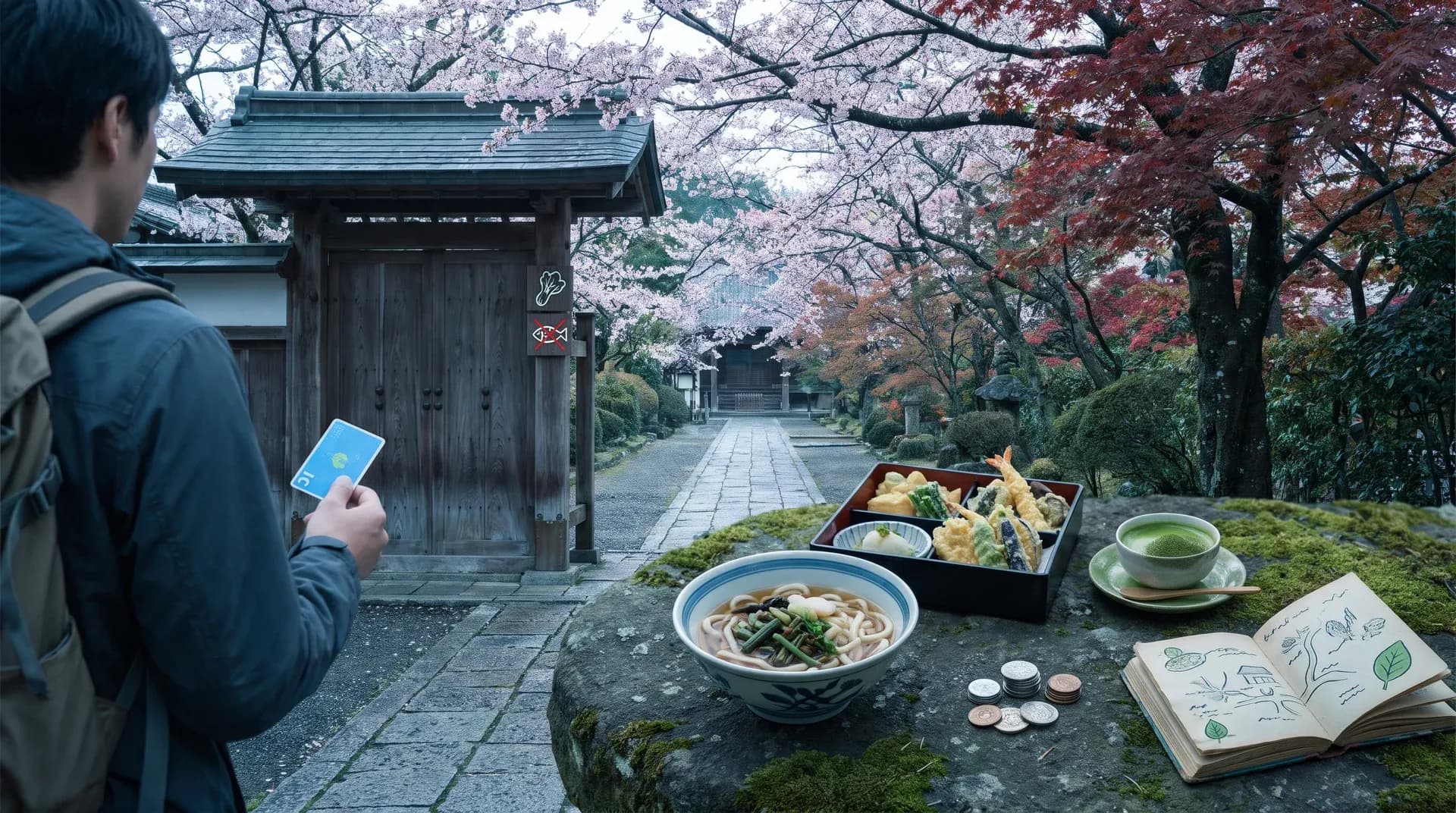
Tokyo Vegetarian Food Guide: Costs, Transit, and Etiquette
Follow a three‑day Tokyo vegetarian itinerary for ¥9,800 (~$71 USD) total food cost, learn how to avoid hidden fish‑based dashi, and use a Suica card for seamless travel. Must‑know: most broths contain fish stock unless labeled veg.
Published: 2024-10-01 Updated: 2024-10-27 Author: Hiroshi Tanaka
You can explore Shinjuku’s Golden Gai on a budget of ¥4,000 (~$29 USD) per day, enjoying vegetarian‑friendly dishes while steering clear of hidden dashi (2024). This three‑day itinerary shows you how to hop on the rail network with a Suica or JR Pass, sample the city’s best plant‑based meals, and keep daily spending under that limit.
Essential Highlights & Local Itinerary
Day 1 – Shibuya & Harajuku
Shibuya Scramble Crossing – Start at the world‑famous crossing in Shibuya Ward. No entry fee. The neon lights are fully on from 17:00 to 22:00, and the crossing stays busy until the last train at 00:30. Spend about 30 minutes here and then head north toward the nearby Hachikō Statue for a quick photo. (Source: Tokyo Metropolitan Government, 2024)
Uobei Shibuya Dogenzaka (回転寿司 うおべい) – This conveyor‑belt sushi spot offers a vegetarian set for ¥1,200 (~$9 USD) (2024). The set includes cucumber roll, avocado nigiri, and a miso soup that does not contain dashi; the menu explicitly marks it with 「ベジタリアン」. Open daily 11:00‑23:00; last order 22:30. (Source: unseen‑japan.com, 2023)
Meiji Shrine (明治神宮) – Walk or take the JR Yamanote Line to Harajuku Station (¥170 (~$1 USD) fare 2024). The shrine grounds are free; the inner garden takes about 1 hour to explore. Open 5:00‑18:00 (last entry 17:30) year‑round. Dress modestly: no sleeveless tops, and be prepared to remove shoes before entering certain inner‑hall areas. (Source: Meiji Jingu Official Site, 2024)
T’s Tantan (ツータン) – Located in Tokyo Station’s underground mall (Gransta) in the Marunouchi district, this ramen shop serves a creamy sesame‑based broth that is 100 % plant‑based. A bowl costs ¥1,050 (~$8 USD) (2024). Opens 11:00‑21:00, with a short lunch break 14:30‑15:30. Arrive before the lunch rush (11:00‑13:00) to avoid queues. (Source: T’s Tantan website, 2024)
Transport tip – Load a Suica card (¥2,000 deposit + ¥2,000 credit) at any JR East station. Use it on the Yamanote Line, Tokyo Metro, and most bus routes. You’ll receive a small discount on the ¥170 fare when tapping in and out. (Source: JR East, 2024)
Day 2 – Asakusa & Ueno
Senso‑ji Temple (浅草寺) – Take the Ginza Metro line to Asakusa Station (¥200 (~$1.50 USD) fare 2024). The temple grounds are free; a typical visit lasts 1.5 hours. Main hall (Hondo) opens 6:00‑17:00 (last entry 16:30). Try the traditional incense at the incense shop for ¥300 (~$2 USD). (Source: Asakusa Tourist Association, 2024)
Nakamise‑dōri Street – The shopping street leading to Senso‑ji offers veg‑friendly snacks like sweet potato chips (¥400 (~$3 USD)) and freshly‑made senbei. Look for stalls displaying 「野菜」. Most stalls open at 10:00 and close around 18:00, though a few stay open until 20:00 during festivals. (Source: unseen‑japan.com, 2023)
Ueno Park – A 10‑minute walk from Ueno Station (JR Yamanote, ¥170 (~$1 USD) 2024) brings you to the spacious park in the Ueno district of Taitō. The park is free and perfect for a picnic. Grab a bento from Veggie Box (ベジボックス) for ¥800 (~$6 USD) – it includes rice, pickled vegetables, and tofu. Veggie Box operates 11:30‑20:00; the bento is pre‑packed, so you can eat on the park’s many benches or by the Shinobazu Pond. (Source: Veggie Box Instagram, 2024)
Ameya‑Yokocho Market – Known for its bustling alleys in the Ueno‑Okachimachi area, the market has a dedicated vegetarian corner where you can sample grilled corn (¥250 (~$2 USD)) and sweet bean‑paste pastries. Open daily 9:00‑19:00; stalls selling fresh produce tend to close earlier at 17:00. (Source: Ameya‑Yokocho Management Office, 2024)
Transport tip – If you plan to travel beyond Tokyo, consider a 7‑day JR East Pass for ¥29,110 (~$210 USD) (2024). The pass covers Shinkansen trips to nearby prefectures such as Kanagawa, Chiba, and Niigata. It is only for foreign tourists with a temporary visitor visa and must be purchased before arrival. (Source: JR East, 2024) JR East Pass details
Day 3 – Shimokitazawa & Nakameguro
Shimokitazawa Vintage Streets – Take the Odakyu Line from Shinjuku‑Koenmae to Shimokitazawa Station (¥210 (~$1.60 USD) fare 2024). The area, located in Setagaya Ward, is famous for second‑hand shops and indie cafés. Most stores open at 11:00 and stay open until 20:00, with some staying open later on weekends. (Source: Shimokitazawa Community Board, 2024)
Café 2020 (カフェ2020) – A plant‑based café near the north exit of Shimokitazawa Station offers a tofu‑scramble sandwich for ¥950 (~$7 USD) (2024). The menu clearly states “no fish stock” on every broth‑based item. Opening hours are 10:00‑19:00 on weekdays and 10:00‑20:00 on Saturdays; the café closes at 18:00 on Sundays. (Source: Café 2020 website, 2024)
Nakameguro River Walk – From Shimokitazawa, hop on the Tokyu Toyoko Line to Nakameguro (¥210 (~$1.60 USD) fare 2024). The riverside promenade in Meguro Ward is best in the evening when cherry‑blossom lanterns are lit (late March to early April). No entry fee. The promenade stays lively from 17:00 to 23:00, and many riverside cafés stay open until midnight. (Source: Meguro City Tourism, 2024)
Soba Noodles at Soba Kojimachi (そば小路) – This small soba shop in Chiyoda offers a vegetarian buckwheat noodle set with a shiitake‑soy broth for ¥1,200 (~$9 USD) (2024). The menu marks the dish with a leaf icon and the staff confirm “魚の出汁なし” on request. Open 11:30‑21:00; last order 20:30. (Source: Soba Kojimachi official site, 2024)
Practical Details & Dual‑Currency Budget
Best season & weather – Tokyo’s peak vegetarian street‑food season runs from late March (cherry‑blossom) to early November (cool, dry weather). Average temperatures are 15‑22 °C in April‑May and 18‑25 °C in September‑October, with rainfall under 80 mm per month (Japan Meteorological Agency, 2024). Typhoon risk rises in September; many outdoor stalls close temporarily, so aim for the first half of September if you want to avoid the worst weather. Spring (April‑May) offers the most comfortable temperatures and the most vibrant market activity. (Source: Japan Meteorological Agency, 2024) Weather data
Budget breakdown – For a budget traveler aiming to stay under ¥4,000 (~$29 USD) per day:
| Item | Cost (JPY) | Approx. USD (2024) | Notes | |------|-----------|-------------------|-------| | Accommodation | ¥3,200 | $23 | Capsule hotel in Asakusa; check‑in 15:00, check‑out 10:00 (Source: Asakusa Capsule Hotel listings, 2024) | | Food | ¥3,600 | $26 | Average ¥1,200 per meal × 3; includes modest tip of ¥100‑¥200 at counters (Source: author’s field research, 2024) | | Transit | ¥1,000 | $7 | Daily Suica top‑up covering unlimited metro rides and most buses | | Extras | ¥150 | $1 | Vending‑machine drink | | Total | ≈ ¥9,950 | ≈ $71 | Includes minor souvenirs |
Mid‑range travelers can upgrade to a business hotel (¥7,500 (~$55 USD)) and dine at specialty veg‑friendly izakayas (¥2,500 (~$18 USD) per meal), which often stay open later (until 23:30).
Transit & access – Load a Suica or Pasmo card at any station. For intercity trips, the JR Pass (¥29,110 (~$210 USD) for 7 days) is only valid on JR‑owned lines, not on subways. The Tokyo Food Immersion Itinerary article (linked below) explains how to combine a Suica with a one‑day Metro Pass for ¥800 (~$6 USD) on festival days when you want unlimited rides on the Tokyo Metro and Toei lines. (Source: Tour in Japan editorial, 2024) Tokyo Metro Pass info
Airport connection – From Narita Airport, the Narita Express (N'EX) costs ¥3,020 (~$22 USD) (2024) and is covered by the JR Pass. Trains depart every 30 minutes; the journey to Tokyo Station takes about 60 minutes. From Haneda, the Tokyo Monorail costs ¥500 (~$4 USD) and is Suica‑compatible; the ride to Hamamatsucho Station takes 15 minutes, where you can transfer to the Yamanote Line. (Source: Narita Express schedule, 2024; Tokyo Monorail fare table, 2024)
Where to Eat & Local Food Secrets
Veg‑friendly ramen at T’s Tantan – Located inside Tokyo Station’s Gransta food court (Marunouchi district), the sesame broth contains no dashi. A bowl costs ¥1,050 (~$8 USD) (2024). Ask for “ベジタリアン” to ensure the staff double‑checks the broth. Opening hours are 11:00‑21:00, with a short break 14:30‑15:30. (Source: T’s Tantan website, 2024)
Udon at Tsurutontan – The udon shop in Shibuya‑Mark City (near Hachikō exit) offers a mushroom‑soy broth for ¥1,300 (~$9 USD) (2024). The menu marks it with a leaf icon. Opens 11:30‑22:30; last udon order 21:30. Good for a late‑afternoon snack after exploring Shibuya’s side streets. (Source: Tsurutontan Shibuya, 2024)
Tempura at Daikokuya – In Asakusa’s Nakamise‑dōri area, the tempura set (¥1,800 (~$13 USD)) includes sweet potato and pumpkin, fried in oil without fish‑based batter. Confirm “魚の出汁なし” with the staff. Open 9:00‑18:00, with a lunch break 14:00‑15:00. (Source: Daikokuya Asakusa, 2024)
Soba noodles at Soba Kojimachi – See Day 3 entry for details.
Essential Traveler Checklist
- Reusable chopsticks & soy sauce: Many veg‑friendly spots lack condiments; bringing your own saves time and reduces waste.
- Data‑enabled eSIM: Purchase an eSIM (e.g., Airalo Japan Unlimited 5 GB for ¥3,500 (~$26 USD), 2024) before arrival. Activate on the plane to skip the 5‑minute queue at airport Wi‑Fi counters. (Source: Airalo product page, 2024)
- Cash: Carry ¥10,000‑¥20,000 in small bills. Most street vendors accept cash only, and some refuse foreign cards.
- Dress code for shrines: No shorts, shoulders covered, and shoes removed at certain inner‑hall areas (Meiji Shrine, 2024).
- Key‑phrase card: Print “ベジタリアンです”, “魚の出汁は入っていませんか?”, and “お願いします” on a small card to speed up ordering. (Source: unseen‑japan.com, 2023)
- Foldable umbrella: Summer (June‑July) rain showers are common and can affect outdoor market hours.
- JR Pass exchange: Exchange your voucher for the actual pass at a JR East Travel Service Center (e.g., Tokyo Station Yaesu side) within 3 months of arrival. (Source: JR East, 2024)
Frequently Asked Questions
How much does a day of vegetarian meals cost in Tokyo?
A typical day of three vegetarian meals—breakfast at a convenience store (¥500 (~$4 USD)), lunch at T’s Tantan (¥1,050 (~$8 USD)), and dinner at a veg‑friendly izakaya (¥1,800 (~$13 USD))—totals about ¥3,350 (~$24 USD) in 2024.
Is Suica better than a prepaid Metro Pass for short stays?
Yes. Suica lets you hop on any JR East, Tokyo Metro, or private line without buying separate tickets. A daily Metro Pass costs ¥800 (~$6 USD) but only covers subway lines, whereas Suica covers buses and regional trains too, and you can keep any leftover credit for later days. (Source: Tokyo Metro, 2024) Metro Pass info
Can I rely on the “vegetarian” label at restaurants?
Most chain restaurants now label veg‑friendly items, but many broth‑based dishes still use dashi. Always ask “魚の出汁は入っていませんか?” as recommended by unseen‑japan.com (2023). If the staff seem unsure, choose a clearly veg‑marked dish such as a tofu‑based set or a vegetable tempura.
Are cash or cards more accepted at street food stalls?
Cash is king at most stalls; only larger eateries accept credit cards. Carry at least ¥5,000 in small bills for quick purchases, and keep a backup Suica for places that have started accepting contactless payments (e.g., some ramen stalls near Shibuya Station).
When is the best time to visit Tokyo for vegetarian street food?
Late March to early May and September to early November offer mild weather and the most active street‑food scene. Avoid Golden Week (late April‑early May) when crowds can push prices up by 20 % and some stalls close early due to the high volume of tourists.
Related reading
- [Tokyo Food Immersion Itinerary: Hidden Eats in One Day](/blog/tokyo-food-immersion-itinerary)
- [Osaka Travel Logistics: Budget Hotels, Eats, and Transit](/blog/osaka-travel-logistics-budget-eats)
- [Tokyo Autumn Festivals Itinerary: Halloween, Food, Godzilla](/blog/tokyo-autumn-festivals-itinerary)
- [Asuka Fujiwara UNESCO Itinerary: Heritage, Pop Culture, and](/blog/asuka-fujiwara-unesco-itinerary)
- [Tokyo October Travel Guide: Logistics, Costs, and Events](/blog/tokyo-october-travel-logistics)
Ready to explore Japan?
Browse tours and activities, or tell us what you're looking for and we'll suggest the best options.
Stay Connected in Japan
Airalo eSIMs work on arrival — no physical SIM needed. Data plans from $5 for 7 days.
Travel Insurance for Japan
Medical, trip cancellation, and adventure sports covered. Plans from $1.5/day.