
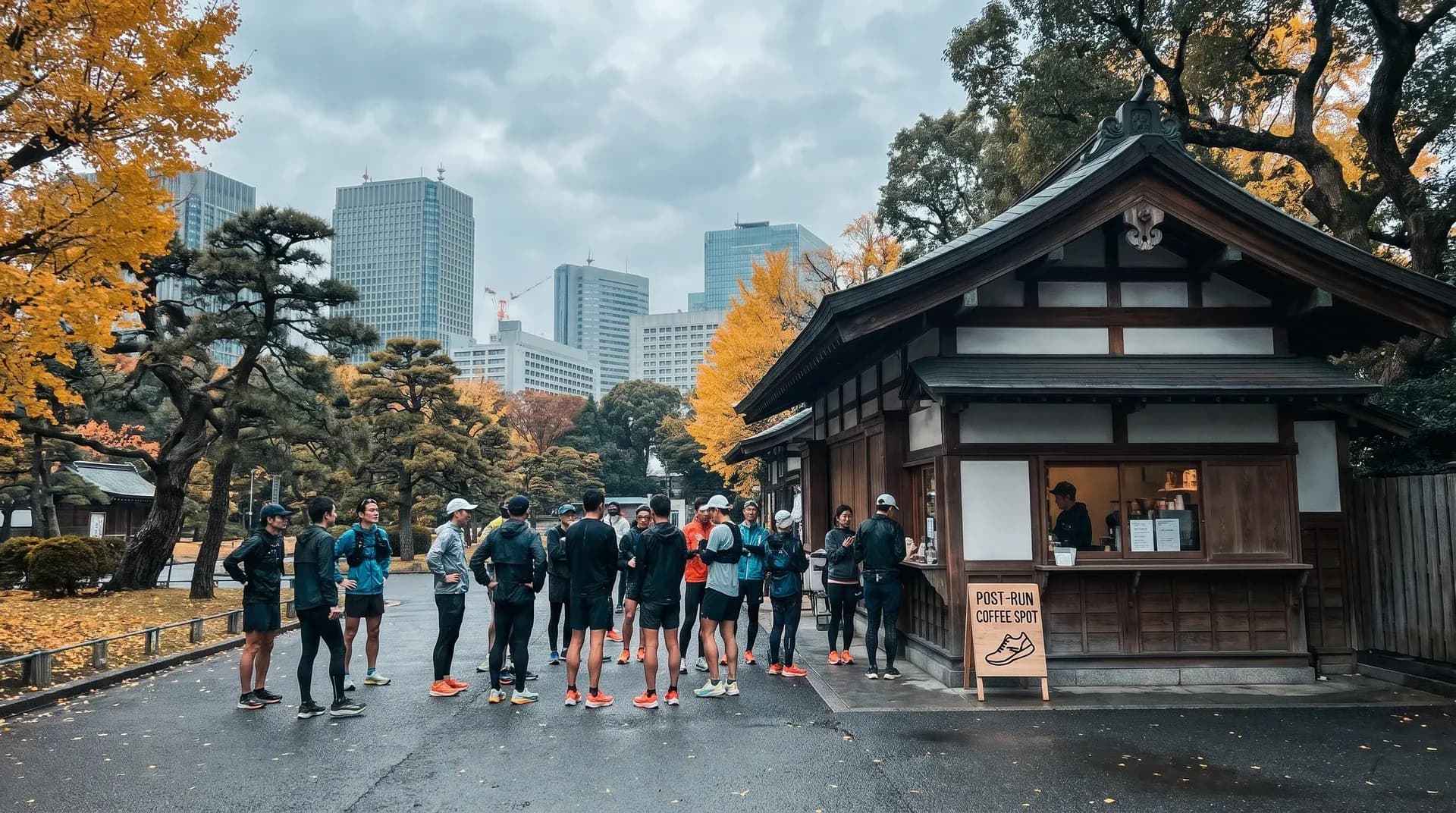
Tokyo Running Clubs Guide
This guide connects international visitors to Tokyo's growing coffee-centric running club scene, from free weekly Shibuya morning runs at 7 AM to evening groups gathering at 6 PM near Shinjuku Gyoen.
The first chill of autumn cuts through the humidity as you lace up your shoes at 6:30 AM in Shibuya. Around you, a dozen other runners—students, expats, salarymen in faded running shirts—are stretching near the Hachiko statue. This isn't a tourist sprint; it's Tokyo's quiet renaissance of running clubs, where the post-run ritual matters as much as the miles logged. These coffee-centric gatherings, many organized through apps like Meetup and Strava, offer something rare in a city of solitude: consistent human connection for active travelers who want to move through Tokyo on foot.
If you're visiting Japan and want to run beyond hotel treadmills or park loops around your accommodation, Tokyo's running club scene provides structured, welcoming options. This guide covers the essential weekly groups, their meeting points, and how to integrate into the culture without language barriers. Most clubs welcome walkers and slower paces—Japanese running culture values participation over pace.
Essential Highlights & Local Itinerary
Shibuya Morning Crew (Shibuya Running Club)
Meeting Point: Right outside Hachiko Statue, Shibuya Station Exit 1 (Tokyo Metro Fukutoshin Line, Ginza Line, JR Yamanote Line). Look for the blue and white sign with a coffee cup and running shoe.
Schedule: Every Tuesday and Thursday at 7:00 AM sharp. The group departs promptly—arrive 10 minutes early to sign in.
Route: A 5K loop through Shibuya's backstreets to Meiji Jingu's forested paths, then up to Yoyogi Park. Total distance: approximately 6 kilometers (3.7 miles). Average pace: 12-15 minutes per kilometer.
Cost: Free to join. Bring cash for the post-run coffee fund (typically 500-800 yen per person at Onibus Coffee, 2-3 blocks north).
Time Required: 1 hour total (45 minutes run, 15 minutes coffee/socializing).
Language Support: Most organizers speak basic English. Sign-in sheets have English columns. Bring your phone camera—the QR code on the sign links to their LINE group chat.
Shinjuku Gyoen Sunset Group
Meeting Point: South gate of Shinjuku Gyoen National Garden, near the Taito-dori shopping street entrance. Look for the informal cluster of runners with hydration packs near the koi pond.
Schedule: Every Monday, Wednesday, and Friday at 6:00 PM. Sessions continue year-round, though summer runs start earlier at 5:30 PM during humid season.
Route: A 7-kilometer loop through Shinjuku Gyoen's landscaped gardens, then along the Metropolitan Expressway to Kabukicho's neon-lit streets, ending back at the park. The route includes gentle inclines and offers views of Tokyo Tower.
Cost: Free. Participants typically share a group order at nearby café Koffee Mameya (5 minutes walk) for 600-900 yen per person.
Time Required: 1 hour 15 minutes (50 minutes run, 25 minutes socializing).
Seasonal Note: During cherry blossom season (late March to early April), the group meets at Ueno Park's running path instead to avoid garden crowds.
Nakameguro River Run Collective
Meeting Point: Near Nakameguro Station Exit 3, on the south side of the canal path. Look for the informal gathering spot by the bridge with the red telephone box.
Schedule: Saturdays at 9:00 AM, Sundays at 8:30 AM. The group is smaller—typically 8-12 runners—but very welcoming to beginners.
Route: A scenic 4-kilometer out-and-back along the Meguro River, famous for its cherry trees in spring. Turn around at the Onibus Coffee location for a natural turnaround point.
Cost: Free. Post-run coffee is optional but customary—budget 500-700 yen at Onibus or nearby Komeda's Coffee.
Time Required: 50 minutes total.
Cultural Note: This group is particularly popular with couples and families on weekend mornings. Running alongside the canal feels meditative compared to city-center routes.
Roppongi Hills After-Work Group
Meeting Point: Mori Tower's 22nd floor observation deck (free public access), then descend to the nearest exit for the group departure.
Schedule: Tuesdays and Thursdays at 6:30 PM. The group runs the circular Roppongi Hills loop, perfect for a quick urban workout before dinner.
Route: A 3.5-kilometer flat circuit through Roppongi's international district, passing the Mori Art Museum and Tokyo Tower view spots.
Cost: Free. The group often meets at Tritonal Coffee Bar inside Roppongi Hills for 800-1,000 yen coffee and light snacks afterward.
Time Required: 45 minutes total.
Best For: Business travelers with evening availability who want to combine exercise with views of the city skyline.
Tokyo Metro Community Runs (Seasonal)
Meeting Point: Various Tokyo Metro stations with designated running maps posted near ticket gates.
Schedule: Monthly weekend events coordinated through the Tokyo Metro website and their official Instagram account. Check @tokyo.metro.run for announcements.
Route: Different theme routes each month—historical sites, architectural tours, river paths. Distances vary from 5K to 10K.
Cost: Free. Some events include complimentary sports drink vouchers at designated convenience stores.
Time Required: 1-2 hours depending on distance.
Practical Details & Dual-Currency Budget
Best Season & Weather: The optimal months for running club participation are March through May (spring) and September through November (autumn). Temperatures range from 10-22 degrees Celsius (50-72 Fahrenheit), with comfortable humidity levels. Summer (June-August) brings heat indices above 30 degrees Celsius (86 Fahrenheit), making early morning runs essential. Winter runs (December-February) are mild but require layering—temperatures rarely drop below freezing.
Budget Breakdown:
- Budget Runner Daily Cost: 1,200-1,800 yen ($8-12 USD) for post-run coffee and occasional sports drink. Most clubs operate on a 'pay-what-you-use' model for group coffee orders.
- Mid-Range Runner Daily Cost: 2,500-3,500 yen ($17-24 USD) if joining specialty runs that include guided tours or premium café stops. Some groups charge 1,000 yen membership fees for access to exclusive routes and merchandise.
Transit & Access: All major running club locations are directly accessible via Tokyo Metro or JR Yamanote Line. Purchase a Suica or Pasmo IC card at any station for seamless transfers. A 24-hour Tokyo Metro pass costs 2,000 yen ($14 USD) and covers all club travel. For longer stays, consider the 3-day Tokyo Metro 24-hour Ticket at 3,000 yen ($20 USD) per day.
Language Preparation: Download Google Translate's offline Japanese pack before arrival. Most club organizers use LINE as their primary communication app—the Japanese equivalent of WhatsApp. Create an account and add contacts using QR codes posted at meeting points.
Running Etiquette: Japanese running culture emphasizes group harmony. Wait for others to finish stretching before starting your warm-up. Keep volume low on headphones during group runs. Always acknowledge fellow runners with a slight nod or verbal cue when passing.
Where to Eat & Local Food Secrets
The post-run ritual defines Tokyo's running culture. Unlike Western running groups that disperse for brunch, Tokyo clubs typically gather at specific cafés within 5-10 minutes of finishing.
Onibus Coffee (Nakameguro, Daikanyama): The unofficial headquarters for Nakameguro and nearby runs. Their house blend costs 500 yen ($3.50 USD) and is consistently rated among Tokyo's best. Order the melon pan (sweet bun) for 250 yen ($1.75 USD)—a local favorite to pair with coffee.
Koffee Mameya (Shinjuku): A tiny 4-seat counter café where the Shinjuku group meets. Their pour-over selection starts at 600 yen ($4 USD) for single-origin beans. The owner speaks English and will explain each coffee's flavor profile in detail.
Tritonal Coffee Bar (Roppongi Hills): Located inside the Mori Building complex, this spacious venue accommodates larger groups. Their specialty drip coffee costs 750 yen ($5 USD) and comes with complimentary Wi-Fi for post-run journaling.
Komeda's Coffee (Multiple locations): Japan's beloved chain offers the most budget-friendly post-run options. Their 'Shiro-Noir' drip coffee costs 450 yen ($3 USD) and includes a free refuel loyalty stamp. The chain's extensive food menu includes savory sandwiches starting at 600 yen ($4 USD).
Street Food Integration: Many running groups incorporate food stops into longer weekend runs. In Yoyogi Park, look for vendors selling yakitori (grilled chicken skewers) for 150-200 yen ($1 USD) per piece. The park's perimeter has several temporary stalls on weekends selling taiyaki (fish-shaped cakes) and dorayaki (red bean pancakes).
Ordering Tip: When groups order coffee, the organizer typically collects payment via LINE transfer before the meetup. Bring exact cash as backup—most Japanese cafés don't accept credit cards for orders under 1,000 yen.
Essential Traveler Checklist
- Hydration Strategy: Carry a small hand towel and compression socks for longer runs. Japanese convenience stores (konbini) sell electrolyte drinks and instant cold compresses—essential during humid summer months.
- Communication Setup: Install LINE app before arrival and join the 'Tokyo Running Community' international group (search in app directory). Most club organizers communicate exclusively through LINE messages 24 hours before runs.
- Cash Management: Keep 1,000-2,000 yen ($7-14 USD) in small bills for group coffee orders and snack stops. Japanese cafés often don't accept credit cards for orders under 1,000 yen.
- Cultural Preparation: Download the 'Running Japan' app for route maps and safety information. When joining temple or garden runs, carry a small towel for cleansing hands before entering sacred spaces.
- Group Integration Phrases: Learn these essential phrases: 'Sumimasen, kore wa dōdesu ka?' (Excuse me, how much is this?) for coffee orders, and 'Otsukare-sama desu' (You must be tired) as a greeting acknowledging others' effort.
Frequently Asked Questions
How much does joining a Tokyo running club cost?
Most Tokyo running clubs are completely free to join, with no membership fees or registration costs. You only pay for personal expenses like post-run coffee (typically 500-800 yen or $3.50-5.50 USD per person) and optional group orders. Some specialty runs may charge up to 1,000 yen ($7 USD) for guided tours with professional support.
Is it safe for foreigners to join Tokyo running groups alone?
Yes, Tokyo is one of the world's safest cities for solo travelers, and running clubs are particularly welcoming to foreigners. Groups typically include 2-3 non-Japanese speakers, and organizers make conscious efforts to include newcomers. All major meeting points are in well-lit, populated areas with clear exits and emergency access.
What should I wear when joining a Tokyo running club?
Wear comfortable athletic wear—Japanese runners prioritize functionality over fashion. Avoid flashy colors or logos that might draw unwanted attention. Bring a change of clothes if planning to stay at the café afterward, as most clubs gather there for 15-30 minutes post-run. Weather-appropriate layers are essential: light jackets for morning runs, sun protection for summer sessions.
How do I find the schedule for Tokyo running clubs?
Most clubs update their schedules weekly through LINE groups, Instagram accounts, or the Tokyo Metro running map posted at major stations. The primary communication channels are LINE (Japan's WhatsApp equivalent) and Instagram direct messages. Download these apps before arrival and search for 'Tokyo Running Club' or 'Tokyo Marathon Community' to find current contact information.
Can I bring my dog to Tokyo running clubs?
Most Tokyo running clubs are human-only due to the dense urban environment and strict park regulations. However, several groups organize separate dog-running sessions on weekends, typically meeting at larger parks like Showa-Kinen Park or Tachikawa Central Park. Check the 'Tokyo Dog Running' Facebook group for alternative options if traveling with a pet.
How do I integrate into the group dynamic without speaking Japanese?
Integration happens naturally through shared activity and mutual respect. Learn to say 'onegaishimasu' (please) and 'arigatou gozaimasu' (thank you) for basic politeness. Most organizers speak enough English for practical communication. Bring a small gift like omiyage (snacks) from your home country to share—this is deeply appreciated in Japanese culture and helps break the ice.
What happens if I'm late or miss a run?
Japanese running culture values punctuality, but most groups are understanding of occasional delays. If you're running 5-10 minutes late, send a quick message to the organizer via LINE. If you miss a session entirely, simply show up to the next one—there's no pressure to announce every absence. The community is built on consistency, not perfection.
Are there beginner-friendly options for someone who hasn't run in years?
Absolutely. The Nakameguro River Run Collective explicitly welcomes beginners, and most groups will slow down or walk portions if needed. Start with shorter routes like the 4K Nakameguro loop or the 3.5K Roppongi circuit. Many runners join after taking years off—your fellow club members will likely share similar concerns about getting back into running.
What equipment do I need beyond running shoes?
A small hydration belt is helpful for longer weekend runs, though most weekday sessions are short enough to complete without. Bring a small towel for wiping sweat and a change of clothes if you plan to stay at the café afterward. During summer, consider anti-chafe balm and a hat—Japanese summers can be intense even for experienced runners.
How do these clubs differ from Western running groups?
Japanese running culture emphasizes collective experience over individual achievement. There's less focus on personal records or competitive pacing. The post-run socializing is integral, not optional. Group decisions are made through consensus rather than vocal leadership. These differences create a uniquely meditative running experience that many visitors find surprisingly refreshing compared to Western approaches.
The beauty of Tokyo's running culture lies in its consistency—you'll find the same faces week after week, the same café recommendations, and the same warm welcomes regardless of your language skills. These groups aren't just about fitness; they're about belonging in a city that can feel overwhelming to navigate alone. Whether you're training for a marathon or just looking to stretch your legs after a day of temple-hopping, Tokyo's running community offers a genuine taste of local life, one coffee and conversation at a time.
Related reading
- [Gluten-Free Japan Travel Guide: Safe Eats & Simple Transit](/blog/gluten-free-japan-travel)
- [Asuka Fujiwara UNESCO Itinerary: Heritage, Pop Culture, and ](/blog/asuka-fujiwara-unesco-itinerary)
- [Navigating Summer Heat and Travel Logistics in Japan](/blog/navigating-summer-heat-travel-logistics-japan)
- Japan Summer Travel
- [Japan Tax-Free Shopping Changes 2024: Pay Now, Refund Later ](/blog/japan-tax-free-shopping-changes-2024-pay-now-refund-later)
Sources
- 'Lazy' running becomes fresh way for Tokyo runners to build community
- U.S. Marine arrested in Okinawa for driving under influence
- 6 National Parks in Japan Worth Building a Trip Around
- This semi-secret, totally free footbath in downtown Tokyo is completely awesome
Published: November 2026 Updated: November 2026 Author: Sarah Chen
Ready to explore Japan?
Browse tours and activities, or tell us what you're looking for and we'll suggest the best options.
Stay Connected in Japan
Airalo eSIMs work on arrival — no physical SIM needed. Data plans from $5 for 7 days.
Travel Insurance for Japan
Medical, trip cancellation, and adventure sports covered. Plans from $1.5/day.