
Tokyo November Local Itinerary: Events, Matcha & Transit
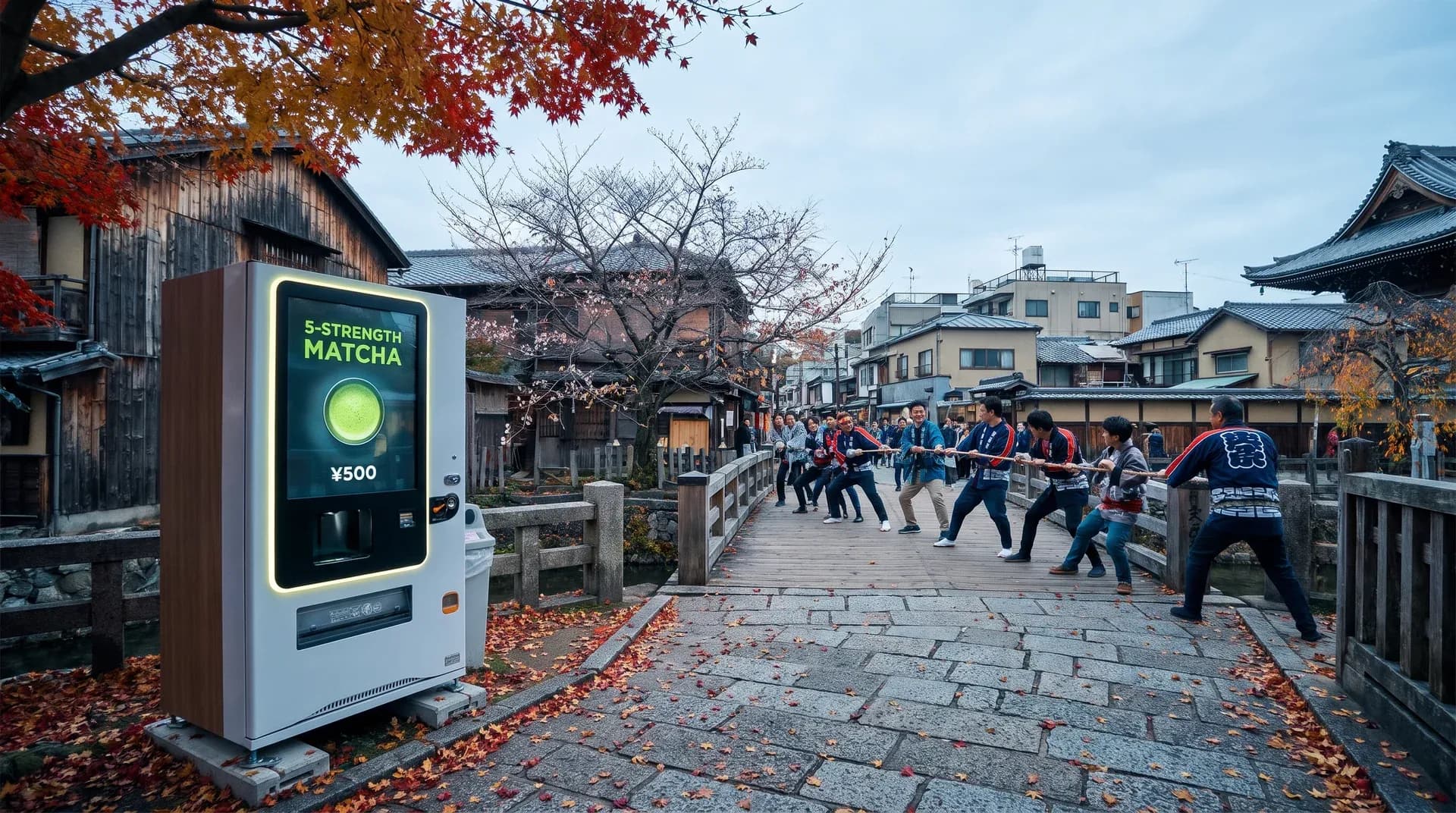
Exploring Tokyo in autumn unlocks unique local traditions, like the Sumida-Taito bridge tug-of-war, paired with new tech like freshly whisked 5-strength matcha vending machines for ¥500 (~$3.30 USD).
Affiliate link — we may earn a commission at no extra cost to you. Affiliate disclosure
By Haruto Tanaka | Published November 9, 2026 | Updated November 9, 2026
A warm, vegetal aroma fills the morning air near the station entrance as a newly installed automated vending machine freshly grinds dried green tea leaves and whisks a steaming cup of matcha to order inside its glass enclosure. Across town on the bridge spanning the Sumida River, hundreds of enthusiastic residents from Taito and Sumida wards gather under clear blue skies, grasping a massive braided rope for their annual neighborhood border tug-of-war. If you are building a Tokyo November local itinerary, late autumn in 2026 offers some of the most authentic urban experiences in Japan, pairing hyper-local ward rivalries with modern food technology.
This guide is written for independent travelers looking to move past standard tourist checklists. Whether you want to witness real community festivals, test automated food innovations, or understand how to navigate regional rail connections during seasonal safety drills, having clear logistics and up-to-date pricing makes all the difference. Late autumn in the capital delivers comfortable walking temperatures averaging 15°C (59°F), brilliant ginkgo foliage along major avenues, and minimal rainfall, making it an ideal season to explore on foot and via local rail networks.
To help you budget accurately for 2026 travel, all figures in this article are provided in Japanese Yen (JPY) alongside United States Dollars (USD) based on current conversion rates. From precise train transfers to real-world safety advisories following recent regional seismic activity in central Japan, this guide gives you the practical details needed for a smooth, rewarding trip.
Essential Highlights & Local Itinerary
Day 1: Taito and Sumida Ward Border Battle at Ryogoku Bridge
Start your morning in historic eastern Tokyo along the banks of the Sumida River. Every autumn, the neighbouring districts of Taito (home to Asakusa) and Sumida (home to Ryogoku and the Tokyo Skytree) meet on the border bridge to contest local bragging rights in an energetic tug-of-war event. Local residents pull with all their strength to symbolically shift the recognized border toward their rival's side for the coming year. It is a lively, free spectator event that showcases true Tokyo neighborhood spirit without large international tourist crowds.
To reach the bridge, take the JR Sobu Line to Ryogoku Station (¥170 / ~$1.10 USD from Tokyo Station) or take the Toei Asakusa Subway Line to Asakusa Station (¥220 / ~$1.45 USD). Plan to arrive by 9:30 AM to secure a clear viewing position along the pedestrian sidewalk of the bridge. Expect to spend about two hours enjoying the match, listening to ward marshals shout instructions over megaphones, and browsing nearby street food stalls set up for the occasion. For more context on autumn events across the capital, read our [Tokyo November Travel Guide](/blog/tokyo-november-travel-guide-weather-costs-festivals).
Day 2: Hunting Japan's Fresh Matcha Vending Machines
Automated dining in Tokyo took a major leap forward in November 2026 with the rollout of new specialty beverage machines that grind whole tea leaves and whisk fresh matcha on demand inside the machine chassis. Unlike standard canned green tea, these machines allow travelers to select from five distinct strength levels, ranging from a light, smooth matcha latte style to an intensely rich, dark ceremonial whisk.
You can find these machines positioned inside major transit hubs, including Tokyo Station (near the Marunouchi Underground Central Gate) and Shinjuku Station (near the South Exit concourse). A standard cup costs between ¥350 and ¥500 (~$2.30 to ~$3.30 USD), payable via IC cards like Suica or Pasmo, as well as cash coins. Visiting during mid-morning off-peak travel hours (10:00 AM to 11:30 AM) lets you watch the internal whisking process without blocking busy commuter traffic. Combine a beverage run with a self-guided walking tour around the Imperial Palace outer gardens, as detailed in our guide to the [Tokyo Forest Escape: From Imperial Palace Cafe to Ogasawara](/blog/tokyo-forest-escape-imperial-palace-cafe-ogasawara).
Day 3: Excursions & Regional Safety Awareness
When planning day trips outside Tokyo in late 2026, stay informed regarding regional weather and seismic activity. On November 8, 2026, a magnitude 5.7 earthquake struck Shizuoka Prefecture in central Japan at 1:04 AM. While no tsunami warning was issued and Tokyo experienced only minor tremors, bullet train (Tokaido Shinkansen) services temporarily operated under speed restrictions between Shin-Yokohama and Nagoya for safety track inspections.
Additionally, safety drills are a routine part of public administration across Japan. On November 8, 2026, local authorities in Hokkaido conducted a major nuclear disaster response exercise involving roughly 8,500 residents near the Tomari power plant, including plant-based drills for the first time in ten years. For travelers, these events highlight the importance of downloading official disaster readiness applications like "Japan Official Travel App" or "NERV Disaster Prevention" onto your smartphone. These apps deliver real-time English notifications regarding train delays, seismic activity, and weather warnings. If you plan to travel south toward Kansai or west toward historic UNESCO sites, check our [Asuka Fujiwara UNESCO Itinerary](/blog/asuka-fujiwara-unesco-itinerary) for routing tips.
Practical Details & Dual-Currency Budget
Best Season & Weather Logistics
November falls right in Tokyo's prime autumn window. High temperatures average 15°C to 17°C (59°F to 63°F), while night temperatures dip to 7°C to 10°C (45°F to 50°F). Rain is rare, with an average of only five rainy days throughout the entire month. Pack light layers, including a fleece or mid-weight jacket, comfortable walking shoes for long days on concrete, and a light scarf for breezy evenings along the Sumida River.
Daily Budget Breakdown (2026 Rates)
Planning a realistic budget depends on your travel style, but Tokyo remains very accessible compared to other major global capitals:
- Budget Traveler (¥8,500 – ¥11,000 / ~$56 – ~$72 USD daily):
- Accommodation: Dorm bed or capsule hotel (¥4,000 – ¥5,500 / ~$26 – ~$36 USD)
- Meals: Convenience store breakfasts, ramen shops, and street markets (¥3,000 – ¥4,000 / ~$20 – ~$26 USD)
- Transit: Tokyo Subway 24-Hour Ticket (¥800 / ~$5.30 USD)
- Attractions: Free neighborhood events, temple grounds, and public parks (¥700 – ¥1,000 / ~$4.60 – ~$6.60 USD)
- Mid-Range Traveler (¥20,000 – ¥28,000 / ~$132 – ~$185 USD daily):
- Accommodation: Business hotel near Yamanote Line (¥12,000 – ¥16,000 / ~$79 – ~$105 USD)
- Meals: Sit-down izakaya dinners, specialty matcha, and lunch sets (¥6,000 – ¥8,000 / ~$39 – ~$53 USD)
- Transit: Prepaid Suica IC card rides including private railways (¥1,500 / ~$9.90 USD)
- Attractions: Entry fees for museums, observation decks, and specialty exhibits (¥1,500 – ¥2,500 / ~$9.90 – ~$16.50 USD)
Transit & Access Logistics
Navigating Tokyo relies on IC cards (Suica or Pasmo). Short-term tourists can obtain a physical Welcome Suica or Pasmo Passport card at Narita Airport (NRT) or Haneda Airport (HND) terminals without paying a card deposit. Alternatively, digital Suica cards can be added directly to Apple Wallet on compatible iPhones before arrival.
- From Haneda Airport: Take the Tokyo Monorail to Hamamatsucho Station (¥500 / ~$3.30 USD, 13 minutes) or the Keikyu Airport Line to Shinagawa Station (¥330 / ~$2.15 USD, 15 minutes).
- From Narita Airport: The Keisei Skyliner reaches Nippori Station in 36 minutes (¥2,570 / ~$17 USD), while the JR Narita Express (N'EX) reaches Tokyo Station in 55 minutes (¥3,070 / ~$20.25 USD).
- JR Pass Eligibility: National 7-day JR Passes cost ¥50,000 (~$330 USD). For itineraries focused mainly on Tokyo and surrounding day trips like Yokohama or Kamakura, individual ticket purchases or local subway passes are far more economical than buying a nationwide rail pass.
Where to Eat & Local Food Secrets
Ward Specialty Dishes near Ryogoku and Asakusa
When exploring the Sumida and Taito ward border areas, take advantage of traditional dining options rooted in local history:
- Chanko Nabe (Sumo Stew): Ryogoku is Tokyo's sumo heartland. Local restaurants serve Chanko Nabe, a hearty soup packed with chicken broth, pork, tofu, cabbage, and mushrooms. A generous lunch set at restaurants like Chanko Tomoegata near Ryogoku Station costs around ¥2,200 to ¥2,800 (~$14.50 to ~$18.50 USD) per person.
- Ningyo-yaki Cakes: In Asakusa near Senso-ji Temple, street stalls bake small sponge cakes filled with sweet red bean paste. A freshly baked bag of 8 pieces costs ¥500 (~$3.30 USD).
- Monjayaki in Tsukishima: A short subway ride south on the Toei Oedo Line takes you to Tsukishima Monja Street. Monjayaki is a savory batter dish cooked directly on a tabletop griddle. Expect to pay ¥1,200 to ¥1,800 (~$7.90 to ~$11.80 USD) per serving.
Navigating Fresh Matcha Vending Machines
The new 2026 matcha vending machines feature bilingual touchscreens (Japanese and English). Here is what to expect when ordering:
- Select your preferred style: Hot Matcha Latte, Iced Matcha Latte, Straight Hot Matcha, or Dark Ceremonial Matcha.
- Choose your strength setting (Level 1 through Level 5). Level 1 has a sweet, milky profile; Level 5 delivers a bold, bitter flavor profile favored by tea purists.
- Pay using your Suica IC card or 100-yen coins. A standard cup costs ¥350 (~$2.30 USD), while the Level 5 ceremonial pour costs ¥500 (~$3.30 USD).
- Wait roughly 45 seconds while the internal mechanism grinds the leaves and whisks the liquid with warm water at 80°C (176°F).
If you plan to stay in the city through late December, combine your culinary exploration with seasonal evening festivities featured in our [Tokyo New Year's Eve 2026 guide](/blog/tokyo-new-years-eve-2026-guide). Alternatively, if your travel plans extend southwest toward Kansai, review updated transport rules in our guide to the [Kyoto Ghibli Exhibition 2026](/blog/kyoto-ghibli-exhibition-2026-zen-taxi-rules).
Dining Etiquette Tips
- Eating While Walking: In crowded areas like Asakusa's Nakamise Street, eating while walking (tabe-aruki) is discouraged. Consume your food standing directly beside the shop stall where you purchased it.
- Trash Disposal: Public trash cans are rare in Tokyo. Carry a small plastic bag in your daypack to hold your trash until you return to your hotel or find bin stations located beside drink vending machines (for bottles and cans only).
- Paying at Cash Registers: Place your money or credit card on the small plastic tray provided at the register rather than handing cash directly to the cashier.
Essential Traveler Checklist
- Pack Versatile Layers: Bring a warm fleece jacket, comfortable walking sneakers, and a compact umbrella for seasonal weather shifts in late autumn.
- Setup Mobile Data: Order an eSIM from providers like Ubigi or Airalo before flying; 5GB of data valid for 30 days costs approximately ¥2,000 (~$13 USD).
- Carry Cash Coins: While cards are widely accepted, carry at least ¥10,000 (~$66 USD) in paper cash and coins for small street vendors and older transit ticket machines.
- Install Safety Apps: Download NERV Disaster Prevention and Japan Official Travel App to receive real-time notifications for earthquakes or train service changes.
- Learn Basic Phrases: Master three key expressions: Sumimasen (Excuse me / Sorry), Arigatou gozaimasu (Thank you very much), and Kore o kudasai (Please give me this).
Keep your daily transit flexible, check regional safety updates before taking long-distance Shinkansen trips, and enjoy discovering Tokyo's distinct autumn atmosphere.
Frequently Asked Questions
How much do the new matcha vending machine drinks cost in Japan?
The freshly whisked matcha drinks from Japan's newly introduced vending machines cost between ¥350 and ¥500 (~$2.30 to ~$3.30 USD) per cup in late 2026. Payment can be made using digital or physical IC cards like Suica, as well as standard yen cash coins.
How do central Japan earthquakes affect travel between Tokyo and Kansai?
When moderate earthquakes occur, such as the magnitude 5.7 quake in Shizuoka Prefecture on November 8, 2026, High-speed Shinkansen trains automatically apply safety power cuts or speed reductions while track inspection crews verify line safety. Delays typically last between 30 and 120 minutes, so checking live updates on the NERV app or JR Central website helps you adjust transfer plans.
Is the national JR Rail Pass recommended for a Tokyo-focused itinerary?
No, the national 7-day JR Pass costing ¥50,000 (~$330 USD) is not cost-effective if you stay primarily in Tokyo. Local travel on the subway and Yamanote Line costs only ¥800 to ¥1,500 (~$5.30 to ~$9.90 USD) per day using local subway day passes or an IC card like Suica.
Where can I watch local neighborhood events like the Sumida-Taito tug-of-war?
The annual Sumida and Taito ward border tug-of-war takes place along the pedestrian bridge connecting the two Tokyo districts near Ryogoku. Visitors can watch for free from the riverbank or bridge sidewalks, with the event usually taking place in early November mornings starting around 9:30 AM.
Sources
- Japan’s new matcha vending machines serve freshly prepared matcha in five different strengths
- Magnitude 5.7 quake injures dozens in central Japan
- Japan holds nuclear disaster drill simulating Tomari plant accident
- Two Tokyo neighborhoods to gather on bridge and shift their recognized border through tug-of-war
Ready to explore Japan?
Browse tours and activities, or tell us what you're looking for and we'll suggest the best options.
Stay Connected in Japan
Airalo eSIMs work on arrival — no physical SIM needed. Data plans from $5 for 7 days.
Travel Insurance for Japan
Medical, trip cancellation, and adventure sports covered. Plans from $1.5/day.